The Hungarian Grand Prix, often dubbed “Monaco without the walls” due to its tight and twisty nature, presented a unique challenge to Formula 1 teams and drivers. The demanding Hungaroring circuit, known for its emphasis on mechanical grip and downforce rather than outright engine power, delivered a captivating spectacle with unexpected turns of events. As the dust settled, several drivers emerged as standout performers, while others found themselves grappling with the complexities of the weekend. This detailed review delves into the highs and lows, the strategic masterstrokes, and the unfortunate mishaps that defined the race, celebrating the stars who shone brightest and examining the struggles faced by others.
Stars of the Hungaroring
Pierre Gasly: A Masterclass in Maximizing Potential
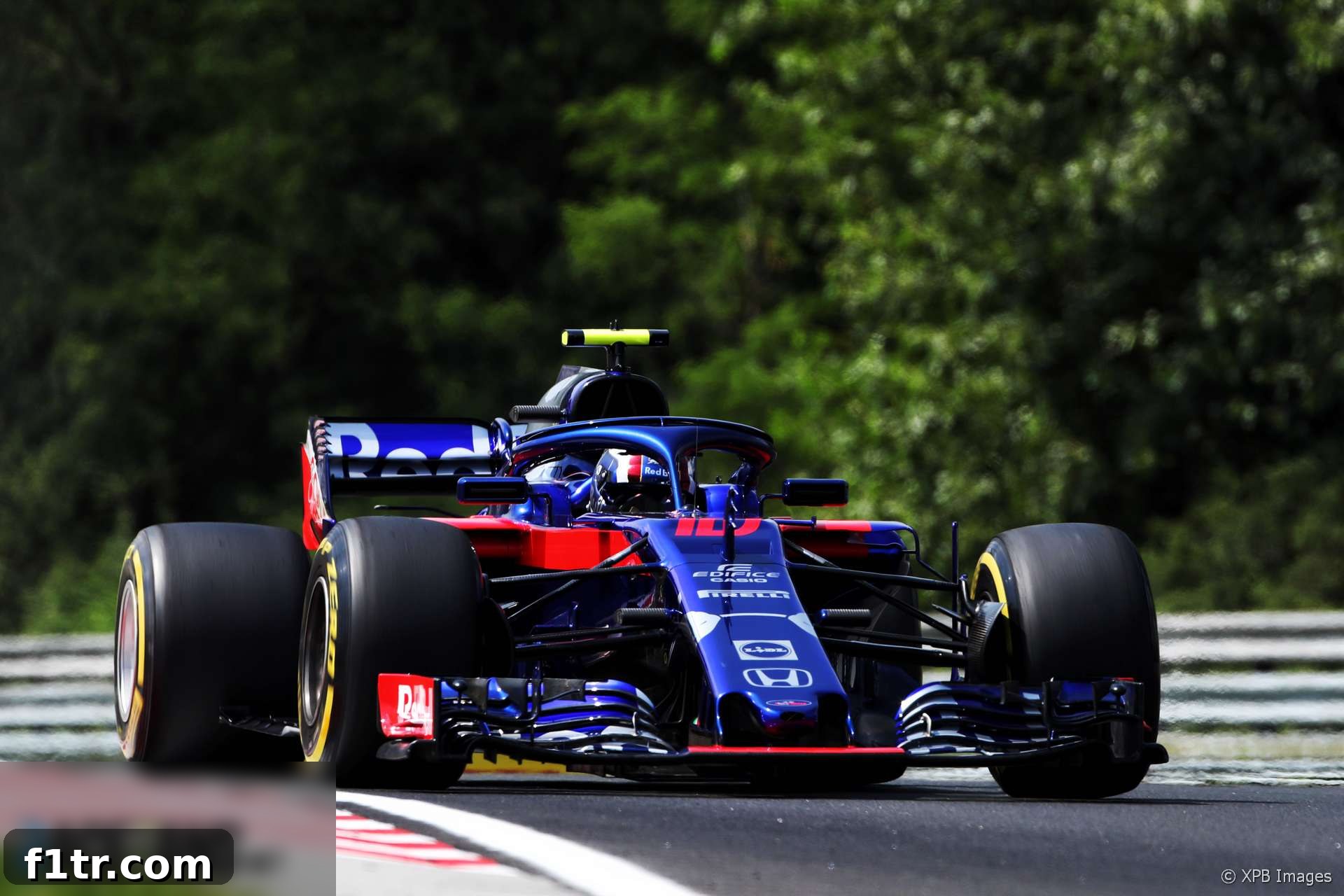
Pierre Gasly delivered one of his most impressive performances of the season at the Hungaroring, marking his best finish since the Bahrain Grand Prix. The Frenchman, driving for Toro Rosso, demonstrated exceptional skill in maximizing the potential of his STR13 chassis on a track that inherently suited its characteristics and masked its known deficiencies. In a crucial qualifying session, Gasly not only outperformed his highly-rated teammate, Brendon Hartley, by a significant six-tenths of a second but also managed to clock a faster time than the Red Bull of Max Verstappen. This stunning qualifying effort highlighted his innate ability to extract every ounce of pace from his machinery under pressure.
The conditions on race day, particularly the high track temperature and the Hungaroring’s low power sensitivity, were exceptionally promising for Toro Rosso, playing perfectly into their strengths. As the lights went out, Gasly showcased excellent racecraft, capitalising on Carlos Sainz running wide at Turn 1 to consolidate his strong starting position. From there, he drove a flawless race, maintaining a consistent pace and expertly managing his tyres. His performance was characterized by precision and unwavering focus, allowing him to hold off faster cars and ultimately finish as the undisputed “best of the rest” – a remarkable achievement that underscored his growing maturity and skill behind the wheel. This result was not just a personal triumph but a significant boost for the Toro Rosso team, proving their car’s capabilities in specific track conditions and solidifying Gasly’s reputation as a future star.
Lewis Hamilton: Dominance in the Rain, Precision in the Race
Lewis Hamilton’s victory at the Hungarian Grand Prix was a testament to his adaptability and strategic acumen, particularly against the backdrop of Mercedes’ struggles on a dry track. While Ferrari appeared to hold a clear pace advantage in dry conditions, and Red Bull was also expected to be formidable, a sudden downpour in qualifying dramatically shifted the balance, transforming Mercedes into the clear favorites. Hamilton, renowned for his prowess in wet conditions, delivered a breathtaking final lap, crossing the line three-tenths faster than his teammate Valtteri Bottas, securing a crucial pole position. This extraordinary performance not only put him at the front of the grid but also orchestrated a vital front-row lockout for Mercedes, setting the stage for a strategic masterclass on Sunday.
The front-row lockout proved absolutely critical in the race. Bottas played an instrumental role, expertly defending against the quicker Ferrari cars for the majority of the Grand Prix, creating a buffer that allowed Hamilton to manage his race from the front. Hamilton himself drove a mistake-free weekend, converting his pole position into a dominant victory. His measured approach, combined with the strategic advantage gained in qualifying, enabled him to control the pace, conserve his tyres, and avoid any unnecessary risks. This crucial win before the summer break significantly extended his championship lead, sending a powerful message to his rivals about Mercedes’ ability to seize opportunities and execute under pressure, even when they might not have the outright fastest car.
Fernando Alonso: Strategic Brilliance and Relentless Drive
Fernando Alonso once again showcased his enduring talent and strategic prowess at the Hungarian Grand Prix, delivering a performance that maximized the potential of his McLaren MCL33. Despite the car’s inherent limitations, which prevented him from finding the necessary pace to enter Q3, Alonso nonetheless put on a commendable qualifying display, handily out-qualifying his teammate Stoffel Vandoorne yet again. This consistent superiority over his teammate underscored his ability to extract more from the car than anyone else.
At the start of the race, Alonso, starting on the soft compound tyres, maintained his position without making any immediate gains. Inevitably, he briefly lost out to the charging Daniel Ricciardo, who was battling his way through the field after a challenging qualifying. However, Alonso’s race was defined by a brilliant long first stint on those soft tyres, a strategic masterstroke that allowed him to overcut several rivals during the pit stop window. By extending his run, he leapfrogged Nico Hulkenberg, Carlos Sainz, Brendon Hartley, and Romain Grosjean, demonstrating McLaren’s astute race strategy combined with his exceptional tyre management. He then switched to the medium compound tyres, which he meticulously preserved to the very end of the race, crossing the finish line in an impressive eighth position. This result, achieved against tough competition and with a car not inherently designed for top-tier finishes, was a clear demonstration of Alonso’s relentless drive, strategic intelligence, and unwavering commitment to securing every possible point for his team, further cementing his legend as a truly gifted racer.
Strugglers of the Hungaroring
Valtteri Bottas: A Weekend of What-Ifs and Costly Errors
Valtteri Bottas entered the Hungarian Grand Prix weekend with a promising outlook, showcasing decent pace in the dry practice sessions. However, the wet qualifying conditions proved to be his undoing, as Lewis Hamilton demonstrated a superior command of the challenging circumstances, pulling away from Bottas in the crucial final runs. This initial deficit set the tone for a challenging race day, where Bottas found himself unable to match Hamilton’s pace in the opening laps, consistently running a few tenths behind his teammate.
Adding to his difficulties, Bottas was dealt a tough strategic hand, being kept out on increasingly worn soft tyres for an extended period to defend against the Ferraris and protect Hamilton’s lead. While he performed admirably in this role for the majority of the race, clinging on until the final five laps, the toll on his tyres became evident. It was in these closing stages that Bottas made two significant, and ultimately costly, lapses of judgment that saw his race unravel. His clash with Sebastian Vettel, while deemed a racing incident by the stewards, saw Bottas leave himself in a position where he clearly wasn’t going to win the corner, resulting in damage and a loss of pace. Worse was his subsequent tangle with Daniel Ricciardo: Bottas was plainly over-committed, attempting an overtake while off-line, on severely worn tyres, and with an already damaged front wing. He was fortunate not to take both himself and Ricciardo out of the race entirely. These late-race incidents transformed what could have been a solid defensive drive into a performance marred by errors, highlighting the immense pressure and razor-thin margins at the pinnacle of motorsport.
Romain Grosjean: A Challenging Weekend with a Fortuitous Point
The Hungarian Grand Prix proved to be a particularly challenging weekend for Romain Grosjean and the Haas F1 Team, with the wet qualifying conditions doing no favours for either driver. Throughout all three stages of qualifying, Grosjean consistently found himself slower than his teammate Kevin Magnussen, ultimately finishing seven-tenths down – a significant margin that underscored his struggle to adapt to the circuit and conditions. This deficit meant a poor starting position, setting him up for an uphill battle on Sunday.
In the race, Grosjean started on the ultra-soft tyres, opting for an aggressive strategy with a long 29-lap first stint. While this approach aimed to gain track position, it eventually saw him pushed out of the points as his tyres degraded and other drivers made their pit stops. After his own pit stop, he re-joined the race in 12th position, seemingly out of contention for points. However, fortune smiled upon Grosjean during the course of the race as several retirements ahead of him – most notably Stoffel Vandoorne’s – allowed him to inherit a position within the top ten. While he did manage to secure a solitary point for his efforts, it was undeniable that this point was largely “gifted” to him by the misfortunes of others, rather than being earned through sheer pace or overtakes. The weekend highlighted a persistent struggle for Grosjean to find consistency and optimize his performance, especially when compared to his teammate, making it a weekend to quickly forget despite the salvaged point.
The Rest of the Field: Mixed Fortunes and Strategic Gambles
The Hungarian Grand Prix was a race of fluctuating fortunes for many, with strategic decisions, track conditions, and unexpected incidents shaping the final outcome for the majority of the grid.
Ferrari: Missed Opportunity and Strategic Split
The Ferrari drivers, Sebastian Vettel and Kimi Raikkonen, looked set for a certain front-row lockout after dominant performances in the dry practice sessions. However, the sudden rain in qualifying snatched this advantage away, with Mercedes capitalizing on the treacherous conditions. Raikkonen, demonstrating strong form, out-qualified Vettel for the first time since Australia, a rare victory over his teammate. However, in the race, Vettel swiftly capitalized on Raikkonen’s typically indifferent starts to gain track position. Both Ferrari drivers ran alternate strategies: Raikkonen opted for a two-stopper, which saw him manage his tyres effectively, while Vettel embarked on an ambitious 39-lap opening stint on the soft tyres. This long first stint meant Vettel lost significant time battling in traffic, and a subsequent slow pit stop further compounded his woes, crucially dropping him behind Valtteri Bottas. This lost time and track position effectively ruined his shot at chasing down Lewis Hamilton for the victory, turning a potential win into a hard-fought second place and widening the championship gap. Ferrari’s strategic choices, while aggressive, ultimately cost them dearly against a resurgent Mercedes.
Red Bull Racing: Frustration and a Resilient Recovery
The Red Bull drivers, Max Verstappen and Daniel Ricciardo, experienced a frustrating weekend, particularly in qualifying, where a surprising lack of grip in the rain left Ricciardo down in 12th and Verstappen in seventh. The team’s strategic call in Q2 for Ricciardo, putting him on soft tyres on a drying track while almost everyone else opted for ultra-softs, proved to be a miscalculation that severely compromised his starting position. Verstappen’s race was unfortunately cut short on lap 5 due to an MGU-K failure, a bitter disappointment for a driver and team who expected to be victory contenders at the Hungaroring. Despite the setbacks, Daniel Ricciardo showcased his remarkable recovery driving skills. From a challenging starting position, he systematically fought his way through the field, executing precise overtakes and demonstrating impressive pace to ultimately recover to a commendable fourth place. While not the victory Red Bull had hoped for, Ricciardo’s tenacious drive mitigated some of the team’s weekend disappointments, highlighting the raw speed of the RB14 once it found its footing.
The Midfield Scramble: Hits and Misses
Kevin Magnussen had a strong weekend for Haas, consistently beating his teammate Romain Grosjean by a substantial margin in both qualifying and the race. His consistent performance underlined his strong season, although he was ultimately unable to challenge Pierre Gasly for the coveted “best of the rest” spot in the midfield battle. Brendon Hartley achieved a significant personal milestone by reaching Q3 for the first time in his Formula 1 career, a testament to his improving pace. However, a questionable race strategy unfortunately left him out of the points, frustrating his efforts after a promising qualifying. Carlos Sainz equalled his best-ever starting position after a superb qualifying session and got off the line well, despite being on the harder soft-compound tyres. His race was severely compromised at Turn 1 when he was hung out wide, losing several crucial places. Had he maintained his position, he could have enjoyed a much stronger race, but the early incident saw him lose out to Gasly and then the McLarens on strategy. Nico Hulkenberg, driving for Renault, lacked pace all weekend at a track that simply didn’t suit the characteristics of the RS18, leaving him struggling for points.
The Backmarkers: Challenges and Glimmers of Hope
Force India endured a particularly tough weekend on track, with little respite from their ongoing struggles. Both drivers, Esteban Ocon and Sergio Perez, were knocked out in Q1, with Ocon also suffering from persistent brake problems. Neither driver managed to make it into the points, underscoring the team’s difficulties at the time. Marcus Ericsson delivered a rare qualifying victory over his highly-rated Sauber teammate Charles Leclerc, a notable achievement. However, both Sauber drivers were involved in collisions with other cars at the start of the race. Leclerc retired from the incident, while Ericsson continued, though points never looked likely. Williams’ challenging season continued, but Lance Stroll briefly gave the team reason to cheer by reaching Q2. This glimmer of hope was short-lived, as he then crashed, necessitating a change in front wing specifications and a start from the pit lane. By the end of the race, both FW41s were lapped twice, illustrating the deep-seated performance issues plaguing the once-mighty team. The Hungarian Grand Prix provided a stern test for every driver and team, highlighting the relentless demands and unpredictable nature of Formula 1.
Over to you
Vote for the driver who impressed you most last weekend and find out whether other RaceFans share your view here:
- Vote for your 2018 Hungarian Grand Prix Driver of the Weekend
2018 Hungarian Grand Prix
- No win for Raikkonen in his last 30 podium appearances
- Top ten pictures from the 2018 Hungarian Grand Prix
- 2018 Hungarian Grand Prix Star Performers
- Hamilton extends points lead as Mercedes contain Ferrari
- Vettel doubts slow pit stop ended his victory shot
Browse all 2018 Hungarian Grand Prix articles