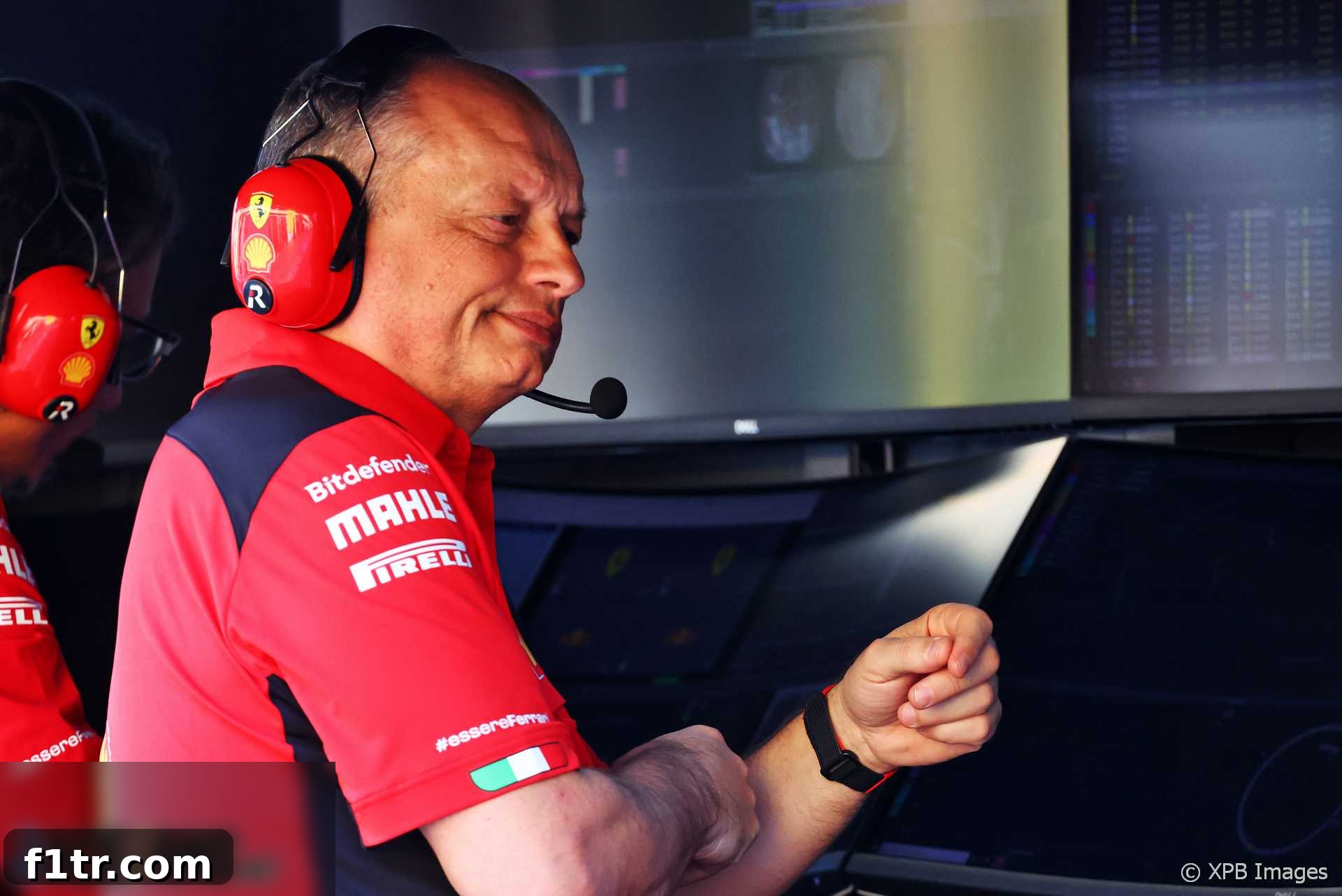
Ferrari’s Strategic Overhaul: Vasseur’s Vision for a Revitalized Scuderia in F1
Ferrari’s new team principal, Frederic Vasseur, has initiated a sweeping review of the Scuderia’s strategy division, culminating in the significant decision to promote Ravin Jain as the chief strategist, taking over from Inaki Rueda. This move signals a profound commitment to rectify the tactical shortcomings that plagued the team during the previous Formula 1 season and marks a pivotal moment in Ferrari’s ongoing quest for championship glory.
The 2022 Formula 1 season saw Ferrari grappling with intense scrutiny and widespread criticism following a series of strategic missteps. These perceived errors often occurred at critical junctures, costing the team valuable points and squandering numerous opportunities for race victories. The team’s inability to consistently convert strong qualifying performances into race wins led to immense pressure, both internally and from the passionate Tifosi, culminating in an urgent need for fundamental change within its operational framework.
Advert | Become a Supporter & go ad-free
The Weight of 2022: Why Change Was Imperative for Ferrari’s Future
The echoes of 2022’s strategic blunders resonated deeply within the Ferrari camp. Moments like Monaco, Silverstone, and Hungary became stark reminders of opportunities lost, frustrating drivers, fans, and management alike. The constant question marks over tyre calls, pit stop timings, and reaction to safety car periods undermined the potential of what was, at times, a championship-contending car. This sustained pressure ultimately contributed to the departure of Mattia Binotto as team principal at the end of the season, paving the way for Frederic Vasseur to step in from Alfa Romeo with a clear mandate for improvement across all departments.
Vasseur’s arrival heralded a new chapter for the Maranello-based squad. Tasked with injecting fresh impetus and a winning culture, one of his immediate priorities was to address the perceived Achilles’ heel of the team: race strategy. The appointment of Ravin Jain, a bright 28-year-old talent, to the crucial role of chief strategist ahead of the 2023 season was not merely a personnel change but a statement of intent – a commitment to a more data-driven, agile, and effective approach to race management.
When questioned by RaceFans about the rationale behind this significant personnel shift, Vasseur articulated that the decision was part of a broader, more comprehensive review aimed at enhancing the team’s performance across every single area. He emphasized that this overhaul was not a knee-jerk reaction but rather a process that had been set in motion even before his tenure officially began, underscoring a deep-seated recognition within Ferrari that fundamental changes were necessary.
Beyond the Pit Wall: Frederic Vasseur’s Holistic Approach to Strategy
Vasseur provided crucial insight into his philosophy on strategy, asserting that its efficacy extends far beyond the individual making calls on the pit wall. “Strategy is not about the person that you have on the pit wall,” Vasseur explained. This perspective highlights a modern Formula 1 team’s intricate structure, where success hinges on a multitude of interconnected elements working in perfect harmony. He elaborated, “Strategy is the addition of tons of things: The software that you have at home, the team that you have at home, the communication flow is crucial and then you have a guy on the pit wall.”
This comprehensive definition underscores the complexity of modern F1 strategy. It’s a symphony of cutting-edge simulation software, vast computational power, and a highly skilled team of engineers and analysts operating remotely from the factory. These “at home” resources are responsible for crunching immense amounts of data, predicting race scenarios, optimizing tyre usage, and developing contingency plans. Equally vital is the “communication flow” – the seamless, rapid, and unambiguous exchange of information between the factory team, the pit wall, and the drivers. Only when these foundational elements are robust and interconnected can the individual on the pit wall, like Ravin Jain, effectively execute decisions under immense pressure.
Vasseur’s comments indicate a move away from relying solely on a single individual’s intuition towards a more systematic, data-driven, and collaborative approach. “For different reasons, we decided to do the move, but the move was also a bit initiated last year. We will review completely the approach on the strategy,” he affirmed, stressing the ongoing, evolutionary nature of this strategic re-evaluation. This suggests that the process of fine-tuning Ferrari’s strategic capabilities is an continuous journey, adapting to new challenges and learning from every race weekend.
Ravin Jain: A Fresh Mind for Ferrari’s Strategic Future
The appointment of Ravin Jain, at just 28 years old, is particularly noteworthy. It signals a willingness within Ferrari to embrace young talent and potentially a more analytical, less experience-bound approach to strategy. Jain, who has grown through the ranks within Ferrari, is expected to bring a fresh perspective, leveraging advanced data analytics and predictive modeling to inform race decisions. His background and rise within the team suggest a deep understanding of Ferrari’s internal workings and, crucially, its areas for improvement.
Jain’s promotion represents a calculated risk and a bold statement by Vasseur. While Inaki Rueda possessed considerable experience, the perception of inconsistent results under his leadership necessitated a change. Jain’s mandate will be to streamline decision-making, enhance communication clarity, and develop more robust strategic frameworks that minimize errors and maximize performance, ultimately restoring confidence in Ferrari’s race management capabilities.
The Relentless Pursuit of Excellence: Learning from Formula 1’s Best
Drawing parallels with the sport’s most successful teams, Vasseur highlighted the importance of a ceaseless pursuit of improvement. Sitting alongside Red Bull boss Christian Horner in the team principals’ press conference, Vasseur pointed to the world champions’ own approach to enhancing their performance as a benchmark Ferrari must strive to emulate. Red Bull Racing has consistently demonstrated its ability to evolve, adapt, and refine every aspect of its operation, a trait central to its recent dominance.
“We need to have this approach in every single area of the team, in every single department and we have to do this job,” Vasseur asserted. He acknowledged that this culture of continuous improvement is not unique to Ferrari but is a fundamental requirement for success at the pinnacle of motorsport. “I’m pretty sure that Christian is doing the same to try to improve in every single area.” This understanding underscores a critical reality in Formula 1: stagnation is equivalent to regression.
Vasseur’s powerful statement, “If you stay at the same level two weeks in a row, you are dead – because everybody is improving,” encapsulates the cutthroat nature of Formula 1. Every team is constantly innovating, pushing boundaries, and seeking marginal gains. To merely maintain performance is to fall behind. This philosophy underpins Ferrari’s current drive for change. “It’s part of the process. We tried to review what was working last year and what was not working and we took action. But it’s not about the person,” Vasseur reiterated, reinforcing that the changes are systemic, aimed at cultivating a culture of perpetual progress rather than scapegoating individuals.
Bahrain Grand Prix: Early Tests and Adaptive Development
The first practice session for the Bahrain Grand Prix provided an early glimpse into Ferrari’s initial preparations for the 2023 season. Charles Leclerc and Carlos Sainz Jnr completed their runs on medium compound tyres, with Leclerc finishing fifth and Sainz 20th. While practice times are rarely fully indicative of true pace, they offer initial data and opportunities for testing new components and configurations.
During the session, observers noted Charles Leclerc’s rear wing visibly flexing at high speeds – a phenomenon that can significantly impact aerodynamic performance and spark questions about legality. However, Vasseur was quick to address the issue, explaining that this specific wing configuration was merely a test item. “It was a test item that we are not able to do last week,” he clarified, indicating that the team was using the practice session to evaluate designs that could not be assessed during pre-season testing. “We tried to do it this morning but, as you saw, it was not very positive. We won’t run the wing during the weekend but we will be back soon.” This swift decision to withdraw the component demonstrates an adaptive and pragmatic engineering approach, where lessons from testing are immediately applied to optimize performance for the race weekend.
Forging Ahead: Ferrari’s Ambitious Path in the 2023 Season and Beyond
As Ferrari embarks on the 2023 season under Frederic Vasseur’s leadership and with Ravin Jain at the strategic helm, the expectations are undeniably high. The comprehensive review of its strategy division, combined with a commitment to holistic improvement across all departments, reflects a determined effort to reclaim its position at the front of the grid. The Scuderia faces formidable challenges from established rivals like Red Bull and a resurgent Mercedes, making the consistent execution of flawless strategies more critical than ever.
The journey ahead for Ferrari will be defined by its ability to integrate its new strategic philosophy with its potent car design and the undeniable talent of its drivers, Charles Leclerc and Carlos Sainz Jnr. Success will hinge on meticulous preparation, decisive action under pressure, and a continuous cycle of learning and adaptation. The promotion of Ravin Jain is a bold step, symbolizing a fresh, dynamic approach that aims to leverage every possible advantage in the relentless pursuit of Formula 1 World Championships. The Tifosi, eager for a return to glory, will be watching closely as Ferrari navigates this new, strategically refined era.
Bringing the F1 news from the source
RaceFans strives to bring its readers news directly from the key players in Formula 1. We are able to do this thanks in part to the generous backing of our RaceFans Supporters.
By contributing £1 per month or £12 per year (or the equivalent in other currencies) you can help cover the costs involved in producing original journalism: Travelling, writing, creating, hosting, contacting and developing.
We have been proudly supported by our readers for over 10 years. If you enjoy our independent coverage, please consider becoming a RaceFans Supporter today. As a bonus, all our Supporters can also browse the site ad-free. Sign up or find out more via the links below:
- Become a RaceFans Supporter
- RaceFans Supporter FAQ
Advert | Become a RaceFans supporter andgo ad-free
2023 Bahrain Grand Prix
- FIA no longer applying its limit on F1 cars ‘porpoising’
- Why F1’s 2023 tyres are requiring drivers to change their management style
- The familiar and unfamiliar problems holding McLaren back at the start of 2023
- ‘Not like a rookie’: How McLaren glimpsed Piastri’s potential in curtailed debut
- “I’m a shouty guy”: Tsunoda told to rein in “emotional” radio chatter
Browse all 2023 Bahrain Grand Prix articles