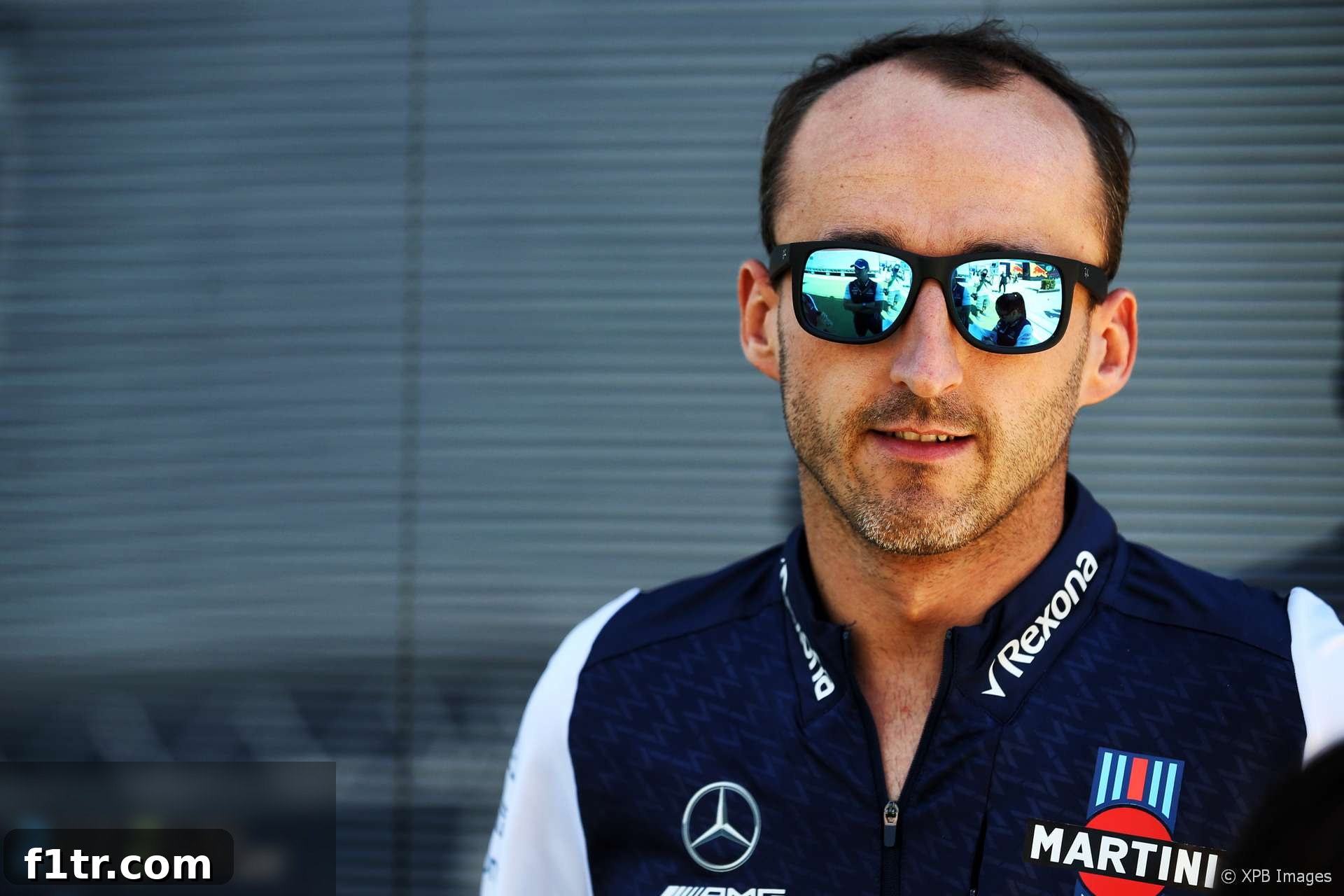
Robert Kubica: The Ferrari Dream Lost and an Unyielding F1 Comeback
In the high-octane world of Formula 1, careers can be defined by moments of breathtaking triumph or sudden, devastating setback. Few drivers embody this duality more profoundly than Robert Kubica. Once hailed as a future world champion, his journey through the sport is a compelling narrative of immense talent, a dream on the verge of realization, and a life-altering accident that reshaped his destiny. His story not only highlights the inherent dangers of motorsport but also the incredible resilience of the human spirit.
Kubica recently offered a rare and poignant insight into the pivotal moments leading up to his catastrophic rally accident in 2011. He revealed the startling fact that he nearly chose not to participate in the Rally Andorra – the very event that would critically injure him, snatching away a coveted seat at Scuderia Ferrari for the 2012 Formula 1 season. This revelation adds another layer of tragic irony to a career already marked by extraordinary highs and devastating lows, underscoring the delicate balance between choice, chance, and destiny in elite sports.
The Fateful Rally: A Decision Fraught with Irony
Initial Hesitation After Grueling F1 Tests
The circumstances surrounding Kubica’s participation in the Rally Andorra were far from straightforward. The event immediately followed an intensive Formula 1 test session in Valencia, a demanding period that would test any driver’s physical and mental endurance. For Kubica, the thought of transitioning directly from the precision of an F1 car to the raw challenge of a rally stage, compounded by the logistical complexities, was initially unappealing.
Reflecting on that morning, Kubica candidly admitted his reluctance: “I woke up and I said ‘ah well, it was after the test, I have to fly to Milan, drive here, drive there, I don’t want to do it.’” This sentiment speaks volumes about the relentless schedule and pressures faced by top-tier racing drivers. Even for someone as dedicated and passionate as Kubica, the idea of immediate further competition, with all its travel and preparation, felt like an unnecessary burden. It was a moment of hesitation that, in hindsight, carries immense weight.
Swathes of Guilt and Obligation: The Rally Team’s Role
Despite his initial reservations, Kubica ultimately changed his mind, a decision influenced by unique circumstances involving his rally car’s entrant. He described the offer to compete in the Rally Andorra as coming under “strange circumstances,” born from the team’s sense of remorse. They felt guilty about numerous mechanical failures that had plagued Kubica in previous rallies with them, and this entry was offered as a gesture of compensation or apology.
Kubica recounted the internal conflict: “I said I don’t want to go to this rally. And I called the guy and he was so happy that he organised everything that I didn’t tell him that I didn’t want to go.” This human element — the interplay of professional obligation and personal inclination — proved crucial. His inability to disappoint the grateful team, combined with a deep-seated commitment to competition, ultimately led him to the ill-fated start line, unknowingly stepping into a moment that would redefine his life.
The Catastrophic Accident and Life-Altering Injuries
On February 6, 2011, while competing in the first special stage of the Ronde di Andora rally, Kubica’s Skoda Fabia S2000 veered off course, tragically colliding with a guardrail. The barrier penetrated the car, causing horrific injuries to Kubica, who was then a leading driver for the Renault F1 team. The impact resulted in severe damage to his right arm, hand, shoulder, and leg, necessitating extensive medical intervention. Doctors initially feared he might lose his right hand, a stark indicator of the gravity of the situation.
The subsequent recuperation was arduous, stretching over six grueling years. It involved multiple complex surgeries and an immense commitment to rehabilitation. This period became a testament to Kubica’s extraordinary resolve, his unwavering determination to not only recover but to defy all odds and return to the pinnacle of motorsport. The accident not only threatened his career but reshaped his entire physical being, forcing him to confront challenges few athletes ever face.
The Ferrari Dream: An Almost-Realized Ambition
The Pinnacle of Motorsport: Joining Scuderia Ferrari
Perhaps the most devastating consequence of the accident was the loss of a pre-contracted seat with Scuderia Ferrari for the 2012 Formula 1 season. Kubica had been slated to join the legendary Fernando Alonso, replacing Felipe Massa. For any racing driver, signing with Ferrari represents the ultimate validation, a realization of childhood dreams and a testament to one’s place among the sport’s elite. Kubica, with his deep roots in Italian motorsport, understood this significance more than most.
He described the Rally Andorra as the “last rally I was doing in my life,” precisely because of this impending move. The Ferrari contract explicitly prohibited participation in risky activities like rallying, a standard clause for top-tier F1 drivers. This illustrates how meticulously Kubica had planned his career, making a conscious decision to forego rallying for the ultimate prize – a seat at Maranello. The proximity to this dream, only to have it snatched away, makes his story all the more poignant.
Kubica’s Defined Path: Three Career Milestones
Kubica openly shared his career philosophy, outlining three distinct goals that guided his journey in Formula 1. These goals highlight his methodical approach and deep understanding of what it takes to succeed at the highest level: “There are three goals. The first one is to enter Formula One. The second one is to become an established driver in Formula One, so you have good value, good reputation, which is more difficult than to enter. Third one is you win the world championship or you become a Ferrari driver.”
By 2011, Kubica had undeniably achieved the first two goals. He was a highly respected, established F1 driver, celebrated for his raw speed, technical feedback, and uncompromising race craft. The third goal, the ultimate aspiration, was tantalizingly within reach. “I haven’t won the world championship, in the end I haven’t become a Ferrari driver, but I was very close. That’s it,” he concluded, a statement tinged with a profound sense of what might have been. This missed opportunity stands as one of F1’s most heartbreaking ‘what ifs.’
A Glimpse of Glory: The 2008 F1 Season
Maiden Victory and a Brief Championship Lead in Canada
Before the shadow of his 2011 accident, Robert Kubica had already demonstrated his championship pedigree. His sole Formula 1 victory came at the 2008 Canadian Grand Prix with the BMW Sauber team. This was no ordinary win; it propelled him to the lead of the Drivers’ World Championship standings, momentarily placing him ahead of the sport’s biggest names. For a brief, glorious period, Kubica was at the pinnacle, a testament to his exceptional talent and the impressive strides made by BMW Sauber.
The 2008 season was a fiercely contested battle, with Kubica, Lewis Hamilton, and Felipe Massa all demonstrating strong championship potential. His Montreal victory was a masterclass in exploiting opportunities, coming after a dramatic pit lane incident involving Hamilton and Kimi Räikkönen. It showcased not only Kubica’s skill but also the BMW Sauber team’s capability to challenge the sport’s established powerhouses, hinting at even greater successes to come.
BMW’s Corporate Ambitions Versus Sporting Opportunity
Despite leading the championship, Kubica harbored a stark and frustrating realization about his team’s priorities. He understood that BMW Sauber operated with a very corporate mentality, where once a primary objective was met, resources would be reallocated. “The moment we won the grand prix we knew we would continue but we would not develop anymore,” he revealed. This decision, driven by internal corporate directives rather than the pursuit of a world title, effectively curtailed any realistic chance of sustaining their championship challenge.
BMW’s primary goal for the 2008 season was to secure a race victory, a target proudly achieved in Canada. With this milestone met, the company’s focus immediately shifted towards the drastic technical regulation changes slated for 2009, specifically the highly anticipated Kinetic Energy Recovery System (KERS). This strategic pivot, while logical from a business perspective, was profoundly disappointing for a driver with a genuine opportunity to fight for the ultimate prize in Formula 1.
The KERS Debacle of 2009 and a Champion’s Plea
The decision to halt development on the championship-contending 2008 car and pour resources into the unproven KERS technology for 2009 proved to be a critical misjudgment. “The BMW team was run like a company. We had a target to win a race, and that’s it we won the race, we focused on 2009 there was KERS, BMW was so keen on KERS. It didn’t work at all, it never worked,” Kubica explained with evident frustration. The KERS system ultimately proved unreliable and ineffective for BMW, putting them at a significant disadvantage in the subsequent season and leading to a rapid decline in their competitiveness.
Recognizing the fading opportunity in 2008, Kubica attempted to subtly influence the team’s direction through public statements, navigating the delicate line between professional loyalty and sporting ambition. “I couldn’t say ‘I’m worried that we will stop,’” he elaborated. “I said to the press conference ‘we have to keep pushing’. It means that you are worried that people will stop pushing.” This was a thinly veiled plea for the team to maintain its focus on the present championship fight, a testament to his unwavering commitment and belief in what they could still achieve, even as corporate priorities diverged.
The Long Road to Redemption and the Improbable Return
Years of Rehabilitation and Unwavering Spirit
The six years that followed the Rally Andorra accident were an extraordinary odyssey of pain, perseverance, and unwavering hope for Robert Kubica. His journey through rehabilitation was agonizingly slow and incredibly demanding, pushing the limits of physical and mental endurance. Each incremental gain in movement, each excruciating exercise, represented a monumental step in a relentless battle against severe physical limitations. The mental fortitude required to endure such a prolonged period of recovery, all while knowing the magnitude of the career and dreams that had been lost, is truly remarkable.
During this period, Kubica explored various forms of motorsport, including rallying and endurance racing, to regain his feel for competition and adapt to his changed physical capabilities. These endeavors were not merely about racing; they were crucial components of his rehabilitation, allowing him to push boundaries, test his limits, and reaffirm his profound connection to the world of speed. His participation in these diverse events served as a powerful declaration of his unyielding passion, laying essential groundwork for an improbable return to the highest echelon.
Defying All Odds: The F1 Comeback
True to his defiant and indomitable spirit, Robert Kubica eventually defied all medical prognoses and the skepticism of many within the motorsport world. Six years after the accident that threatened to end his life and career, he finally managed to drive a Formula 1 car again in a test session. This was a moment charged with profound emotion for Kubica, his fans, and the entire motorsport community, a powerful symbol of his incredible determination and spirit.
His full-time return to Formula 1 with Williams in 2019, albeit for a single season, was nothing short of miraculous. While his performance might not have mirrored his pre-accident peak, his sheer presence on the grid was a monumental victory in itself. Kubica’s comeback inspired countless individuals both within and outside the sport, cementing his legacy not just as a fast driver, but as an icon of resilience and an enduring testament to the power of the human will.
Conclusion: A Legacy of Resilience and Unfulfilled Potential
Robert Kubica’s story is a compelling blend of raw talent, cruel fate, and an unyielding human spirit that refused to be broken. His career, forever marked by a sole F1 victory and the tantalizing proximity to a Ferrari seat, remains one of Formula 1’s most poignant narratives of unfulfilled potential. Yet, his incredible perseverance through a life-altering accident and his improbable return to the sport’s highest echelon have cemented his legacy as far more than just a fast driver.
He stands as an enduring icon of resilience, a testament to what an individual can achieve when faced with seemingly insurmountable odds. While the question of ‘what if’ regarding his Ferrari dream and a potential Formula 1 world championship will forever linger in the minds of motorsport enthusiasts, Kubica’s remarkable journey has provided a deeper, more profound message: the power of determination, the refusal to surrender, and the enduring passion for a sport that can both elevate and challenge the human spirit to its absolute limits. His indelible mark on Formula 1 transcends statistics, residing instead in the unwavering strength of his character.