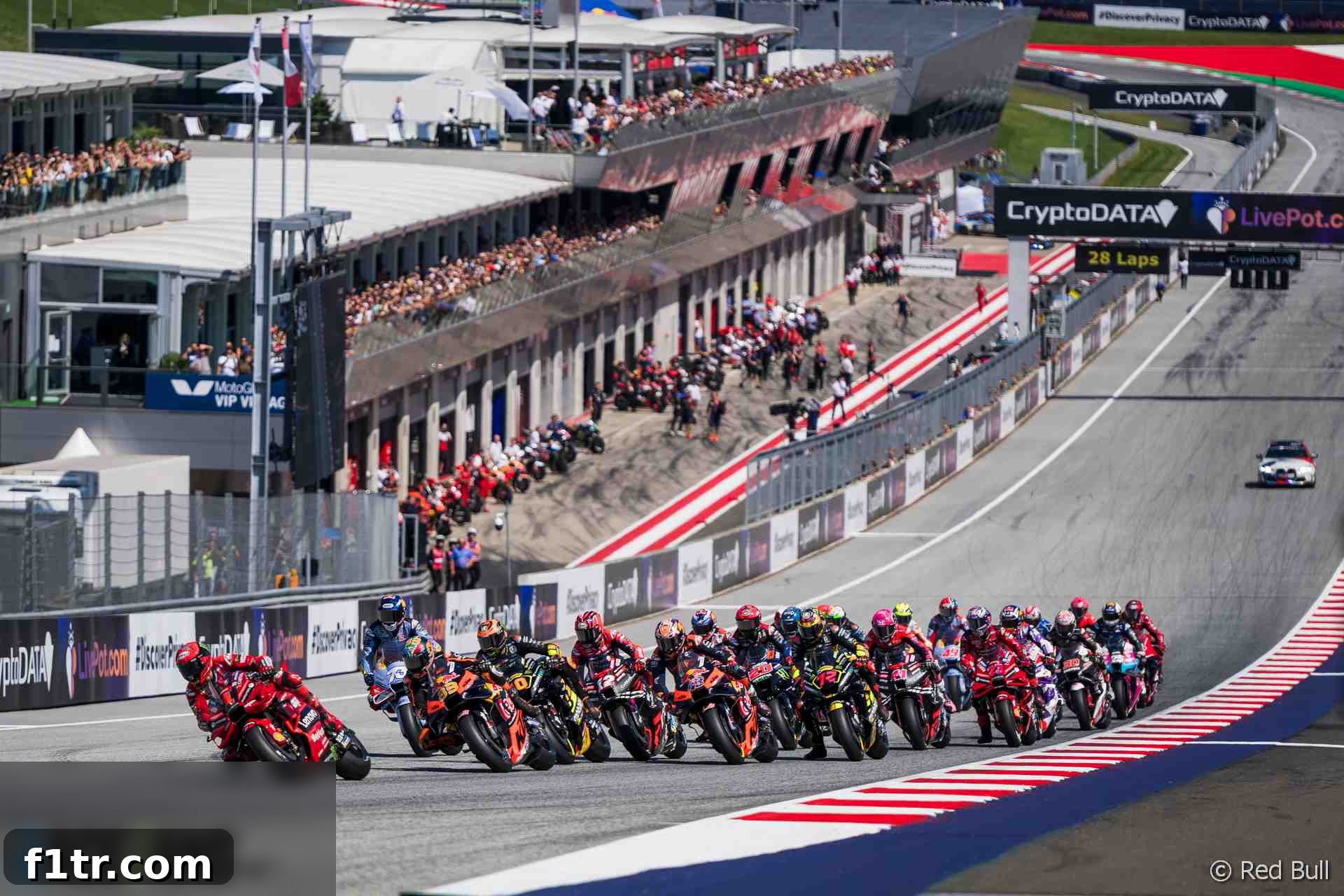
Liberty Media Acquires MotoGP: Uniting Two Motorsport Giants
In a landmark deal set to redefine the global motorsport landscape, Liberty Media, the commercial rights holder of Formula 1, has announced its acquisition of MotoGP owner Dorna Sports. This strategic move, valued at approximately £3 billion (€3.5 billion), will see the premier two-wheeled racing series join forces with the world’s leading four-wheeled championship under a single ownership umbrella. The acquisition marks a pivotal moment, promising new avenues for growth, fan engagement, and commercial expansion across both exhilarating sports.
Since its transformative acquisition of Formula 1 in 2017, Liberty Media has been widely credited with revitalizing the sport, broadening its appeal, and significantly enhancing its global footprint. The company’s innovative approach, leveraging digital platforms, targeted marketing campaigns, and groundbreaking content like the “Drive to Survive” docu-series, has attracted a new generation of fans and propelled F1 into unprecedented commercial success. With this proven track record, the motorsport community eagerly anticipates a similar renaissance for MotoGP.
The Deal Details: A Strategic Investment
The agreement involves Liberty Media acquiring 86% of Dorna Sports, the commercial and television rights holder for MotoGP, from its current owners, Bridgepoint and Canada Pension Plan Investment Board. The remaining 14% stake will be retained by MotoGP management, ensuring continuity and experienced leadership at the helm of the series. Carmelo Ezpeleta, who has been instrumental in shaping MotoGP’s success for decades, will continue in his role as CEO of Dorna Sports, a move that signals stability and a commitment to the sport’s core values.
According to Liberty Media, the deal values the entire motorcycling series at an impressive £3.59 billion (€4.2 billion). The company confirmed that MotoGP will be added to the same tracking stock as Formula 1, underscoring the strategic synergies envisioned between the two properties. This financial structure allows investors to track the performance of these distinct assets while benefiting from the broader Liberty Media portfolio, which includes other entertainment and media ventures.
Greg Maffei, President and CEO of Liberty Media, expressed immense enthusiasm for the acquisition, highlighting MotoGP’s inherent strengths. “MotoGP is a global league with a loyal, enthusiastic fan base, captivating racing and a highly cash flow generative financial profile,” Maffei stated. “Carmelo and his management team have built a great sporting spectacle that we can expand to a wider global audience. The business has significant upside, and we intend to grow the sport for MotoGP fans, teams, commercial partners and our shareholders.” His comments reflect a clear strategic intent: to leverage Liberty Media’s expertise to unlock MotoGP’s full potential on a global scale.
A New Era for MotoGP: Learning from Formula 1’s Success
The parallels between Liberty Media’s current plans for MotoGP and its successful blueprint for Formula 1 are evident. When Liberty acquired F1 for approximately £6 billion ($8 billion) seven years ago, the sport was facing declining viewership and an aging fan base. Through a concerted effort to modernize its image, embrace digital media, and foster greater accessibility, Liberty transformed F1 into a global entertainment phenomenon. Key strategies included:
- Digital Transformation: Expanding social media presence, developing engaging digital content, and enhancing online fan experiences.
- Content Innovation: Partnering with Netflix for “Drive to Survive,” which brought F1 to a massive new audience, particularly in the crucial North American market.
- Market Expansion: Introducing new races in strategic locations and reigniting interest in existing markets.
- Fan Engagement: Creating more immersive event experiences and fostering greater interaction between fans and the sport.
These strategies, proven effective in F1, offer a compelling roadmap for MotoGP. The motorcycle racing series already boasts a passionate fan base and thrilling competition, but Liberty Media’s marketing prowess and global network could elevate it to new heights. Potential synergies could include cross-promotional activities between F1 and MotoGP events, shared broadcast and media rights negotiations to maximize value, and the implementation of advanced data analytics to better understand and serve fans.
For MotoGP fans, the acquisition could mean greater access to races, improved broadcast quality, more engaging digital content, and potentially new formats or events designed to enhance the spectacle. For teams and riders, increased commercial revenue and broader global exposure could lead to greater financial stability and opportunities for growth within the sport.
Regulatory Scrutiny: A Familiar Hurdle
Despite the immense potential, the acquisition is not without its challenges, particularly concerning regulatory approval. The transaction is expected to attract the attention of antitrust regulators, who will scrutinize the implications of one company owning both of the world’s premier motorsport championships. The concern is primarily focused on potential market dominance and whether such consolidation could stifle competition, limit consumer choice, or impact the smaller racing series.
History offers a cautionary tale: CVC Capital Partners, the private equity firm that previously owned Formula 1, was compelled to divest its ownership of MotoGP when it acquired F1 in 2006. Regulators at the time expressed concerns about a single entity controlling both major global motorsport properties. However, the commercial landscape and regulatory environment have evolved significantly since then. Liberty Media has expressed confidence that it can navigate these regulatory waters, emphasizing that Formula 1 and MotoGP operate in distinct market segments – four-wheeled versus two-wheeled racing – and serve different, though sometimes overlapping, fan bases.
Liberty Media’s confidence is rooted in a detailed understanding of the market and likely extensive discussions with legal and regulatory experts. The company will likely argue that owning both series will create efficiencies and unlock new growth opportunities for both sports, ultimately benefiting fans and stakeholders, rather than creating an anti-competitive environment. This perspective suggests that any regulatory concerns could potentially be addressed through specific undertakings or conditions rather than an outright blocking of the deal.
Leadership’s Vision and Future Outlook
Carmelo Ezpeleta, the long-standing CEO of Dorna Sports, echoed Liberty Media’s optimistic outlook, calling the deal “the perfect next step in the evolution of MotoGP.” He emphasized, “We are proud of the global sport we’ve grown, and this transaction is a testament to the value of the sport today and its growth potential. Liberty has an incredible track record in developing sports assets and we could not wish for a better partner to expand MotoGP’s fanbase around the world.” Ezpeleta’s continued involvement is crucial, as his deep understanding of MotoGP’s culture, teams, and technical aspects will ensure that the sport’s unique identity and heritage are preserved amidst new commercial strategies.
The combination of Liberty Media’s commercial expertise and Dorna Sports’ deep industry knowledge promises a powerful synergy. The focus will be on maintaining the authenticity and thrilling nature of MotoGP racing while strategically expanding its global appeal. This involves investing in infrastructure, enhancing the fan experience at circuits, and leveraging storytelling to bring the captivating personalities of the riders and the drama of the championship to a wider audience.
Liberty Media anticipates concluding the deal by the end of the year, subject to regulatory approvals. Once finalized, this acquisition will usher in a new era for both Formula 1 and MotoGP, creating a dominant force in global motorsport. The potential for cross-pollination of ideas, technologies, and marketing strategies between the two series is immense, promising an exciting future for fans of high-octane racing on both two and four wheels. This unified vision aims not only to expand market share but also to elevate the entire motorsport ecosystem, ensuring that both championships remain at the pinnacle of sporting entertainment for decades to come.
More: Liberty “very confident” regulators won’t block bid to own both F1 and Moto GP
Formula 1 Insights and Analysis
- F1 returning to India soon after 2027 sounds like wishful thinking
- Verstappen loathes F1’s new generation of cars – but what do his rivals reckon?
- The ‘throwback weekend’ is back in fashion. But it’s a flawed concept – especially for F1
- Is Formula 1’s double race cancellation a blessing in disguise?
- Todt admits Schumacher crashed on purpose – but did it really cost him two titles?
Browse all Formula 1 articles