Red Bull Racing’s Resurgent Form: Christian Horner on Post-Summer Break Progress and Future Ambitions
Red Bull Racing’s team principal, Christian Horner, recently shed light on the notable strides the team has made in their performance since the Formula 1 summer break. Despite some mixed results, Horner emphasizes that the underlying improvements have become increasingly apparent, particularly during the fiercely competitive United States Grand Prix at the Circuit of the Americas. This renewed vigor signals a promising trajectory for the Milton Keynes-based squad as they look to conclude the current season on a high and carry crucial momentum into the next championship campaign.
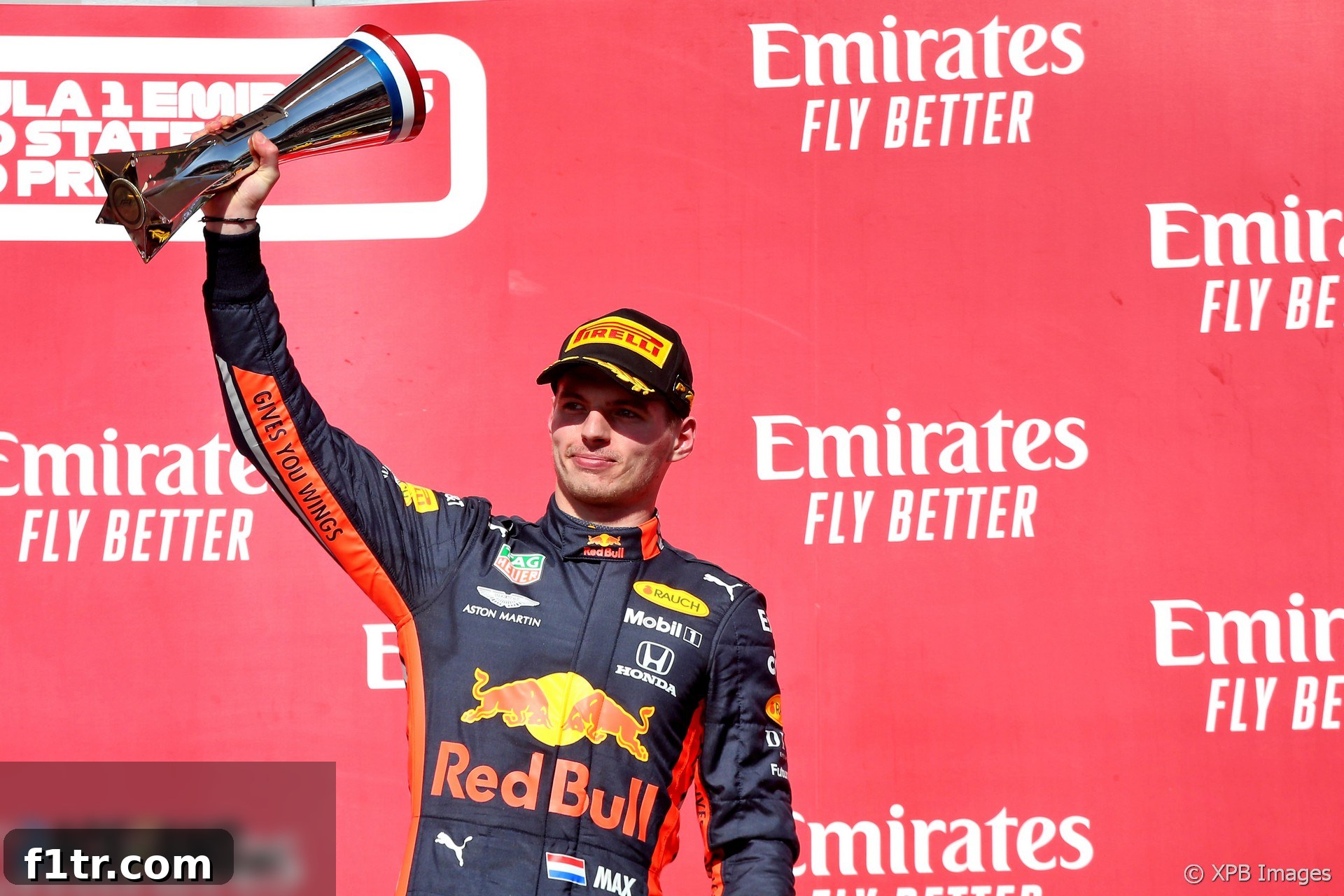
The Austin weekend served as a clear indicator of this progress, where star driver Max Verstappen demonstrated exceptional pace. Verstappen narrowly missed out on pole position by an incredibly slim margin – less than a tenth of a second – underscoring the RB15’s raw speed and competitive edge. He ultimately secured a commendable third place in the race, finishing behind the dominant Mercedes duo, a result that, while not a victory, was a testament to the team’s enhanced capabilities and strategic execution in challenging conditions.
A Competitive Edge in Austin: Overcoming Adversity at COTA
Christian Horner highlighted the RB15’s impressive handling at the Circuit of the Americas, a track known for its demanding characteristics and susceptibility to variable weather. Horner specifically pointed to the car’s resilience against strong winds, a factor that he admitted would have severely hampered their performance earlier in the season. This stark contrast underscores the significant advancements made in aerodynamics and chassis setup, allowing the Red Bull machinery to maintain stability and performance even when faced with external challenges.
“We were competitive throughout the Austin weekend, and that’s a real positive takeaway for the team,” Horner stated, reflecting on the overall performance. He further elaborated on Verstappen’s qualifying effort, suggesting that a minor lock-up at Turn 1 prevented them from potentially securing pole position. “Had it not been for a little lock-up at turn one, arguably we could have achieved the pole; we were only half a tenth off. The car’s been competitive in every session, and a competitive third place in the race further solidifies that.” This consistent competitiveness across practice, qualifying, and the race itself showcases a holistic improvement rather than just isolated flashes of pace.
Beyond Max Verstappen’s stellar drive, the recovery performance of Alex Albon in the sister car also served as a powerful indicator of the RB15’s inherent strength. Albon, who started further down the grid, fought his way through the field with determination, showcasing the car’s ability to overtake and maintain strong race pace. Horner acknowledged Albon’s effort, remarking, “And Alex’s recovery as well, I think, again highlights our competitiveness.” This collective strong performance from both drivers suggests that the developments are yielding positive results across the board, providing a robust platform for both experienced and emerging talents within the team.
Navigating Missed Opportunities: Lessons Learned Since the Summer Break
While the progress at Austin was evident, Horner candidly admitted that Red Bull Racing had encountered several missed opportunities for even better results in the preceding races following the summer break. These instances, though frustrating at the time, have been crucial learning experiences, allowing the team to refine their strategies, car setup, and operational efficiency. Each challenge has contributed to a deeper understanding of the RB15’s characteristics and how to extract its maximum potential under diverse circumstances.
The Mexican Grand Prix: A Tale of What Could Have Been
One such opportunity arose at the Mexican Grand Prix, where the team felt they had a genuinely competitive car capable of challenging for victory. However, their hopes were significantly dampened by an early race incident involving Max Verstappen. “I think in Mexico we had a really competitive car, and that was a missed opportunity for us following the first-lap incident,” Horner recalled. This incident, which saw Verstappen make contact with Lewis Hamilton and then tangle with Valtteri Bottas, severely compromised his race, forcing him to recover from the back. Despite a valiant recovery drive, the potential for a podium or even a win was unfortunately lost, serving as a bitter pill for the team given the car’s evident speed on the high-altitude track.
Suzuka’s Unfulfilled Potential: A Missed Benchmark
The Japanese Grand Prix at Suzuka presented another scenario where the true capabilities of the RB15 remained largely unseen. Max Verstappen was eliminated early in the race due to an unfortunate collision, preventing him from demonstrating the car’s potential on one of Formula 1’s most iconic and challenging circuits. Horner expressed his belief that Suzuka could have mirrored Austin’s strong performance. “At Suzuka, we never got to see what the car was really capable of with Max being eliminated early on. I suspect Suzuka could have been similar to Austin. It’s a similar type of circuit,” he speculated. Both tracks feature high-speed corners and require a well-balanced chassis, suggesting that the advancements seen in Austin were likely already present, albeit unproven, in Japan.
Singapore’s Strategic Setback: Learning from the Marina Bay Circuit
The Singapore Grand Prix also offered its share of lessons. In a race known for its unique demands on car setup and tyre management, Red Bull Racing faced challenges that ultimately cost them dearly. Horner openly acknowledged the strategic missteps: “Singapore, we recognise where we made a mistake. Obviously, we lost out to the Ferraris that day and beat Mercedes but felt that we left a bit on the table.” This candid assessment highlights the team’s commitment to self-analysis and continuous improvement. The street circuit’s intricate nature often punishes even minor setup imperfections or strategic miscalculations, and Red Bull’s experience there provided invaluable data for future race preparations and car development.
Building for the Future: Stability and Optimism for the RB16
Despite these varied experiences, the overarching sentiment from Christian Horner remains one of genuine optimism and confidence in the team’s trajectory. He firmly believes that the RB15 is “genuinely performing pretty well the last few races,” and this consistent upward trend is a significant morale booster as the season draws to a close. The accumulated knowledge and refined operational practices are not merely for immediate gains but are strategically designed to lay a solid foundation for the future.
A crucial factor underpinning this optimism is the stability of the technical regulations over the upcoming winter period. This regulatory continuity provides Red Bull Racing with a unique advantage: any lessons learned and improvements made on the RB15 in the latter half of the current season can be directly translated and incorporated into the design and development of next year’s challenger, the RB16. “And I think the encouraging thing for us is that with stability of the rules over the winter, anything we learn this year we carry into RB16,” Horner emphasized. This direct transfer of knowledge means that the team won’t be starting from scratch with a completely new concept, but rather building upon a proven and progressively refined platform.
The ability to carry forward technical insights and performance gains is invaluable in the highly competitive world of Formula 1. It allows engineers to focus on incremental improvements and optimize existing concepts rather than expending resources on adapting to entirely new rule sets. This stability fosters a more efficient development cycle, potentially enabling Red Bull to hit the ground running at the start of the next season with a highly competitive package. The team’s commitment to pushing the boundaries of car development, combined with the proven talent of its drivers and strategic acumen, positions Red Bull Racing as a formidable force for the seasons to come, aiming to challenge at the very forefront of the sport.
In conclusion, Christian Horner’s recent comments paint a picture of a Red Bull Racing team that is not only making tangible progress but also strategically leveraging every race weekend as a learning opportunity. The impressive showing at Austin, coupled with honest reflections on past missed chances, underscores a mature and focused approach to car development and championship aspirations. With the stability of regulations offering a clear pathway for transferring current gains into future designs, the outlook for the RB16 and Red Bull’s upcoming campaigns appears exceptionally bright.