The Force India Driver Market: Unpacking the 2019 F1 Season Lineup Battle
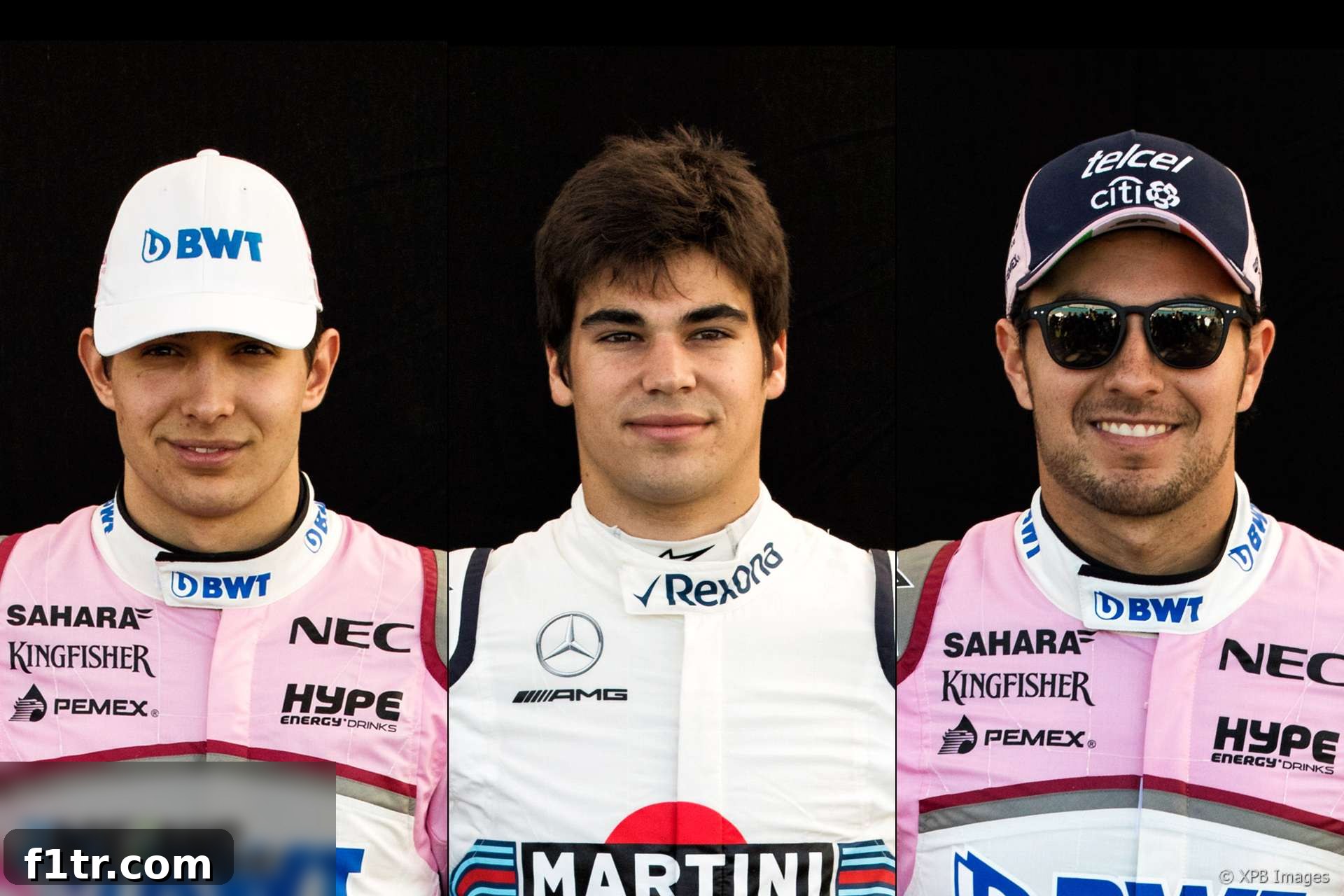
The dramatic turn of events surrounding the Force India Formula 1 team has ignited one of the most intriguing driver market sagas for the upcoming 2019 season. Following its triumphant exit from administration, the Silverstone-based outfit, now under new ownership, faces critical decisions regarding its driver lineup. With three prominent drivers all vying for a coveted seat, and whispers of immediate changes even before the next race, the F1 paddock is abuzz with speculation. This in-depth analysis delves into the prospects of Sergio Perez, Lance Stroll, and Esteban Ocon, examining the complex interplay of talent, finance, and team politics that will ultimately shape Force India’s future on the grid.
Force India’s New Dawn: Stability and Ambition
The recent rescue of Force India by a consortium led by Canadian billionaire Lawrence Stroll marks a pivotal moment for the team, promising a significantly brighter future. For weeks, the team’s very existence hung in the balance, creating immense uncertainty for its employees and, critically, its drivers. Now, with robust financial backing and renewed stability, the team is poised to solidify its position on the grid for the Formula 1 2019 season and beyond. This injection of capital not only secures jobs and ongoing development but also fundamentally shifts the dynamics of its driver recruitment.
Prior to the takeover, Force India was a prime example of a team consistently punching above its weight, delivering impressive results despite chronic financial constraints. Its well-engineered cars and strong operational efficiency were often lauded. The new ownership promises to unlock the team’s full potential, providing the resources necessary to compete more consistently at the front of the midfield, and perhaps even challenge the top teams on occasion. Such ambition naturally attracts top talent and, conversely, ensures that any driver selection is scrutinised through a lens of both performance and strategic value. The focus now turns from mere survival to aggressive growth, and the driver lineup will be instrumental in achieving those goals.
Sergio Perez: The Indispensable Anchor
At the heart of Force India’s current driver discussion is Sergio Perez, a driver whose value extends far beyond his undeniable speed. Perez brings a crucial combination of on-track talent, extensive Formula 1 experience, and significant sponsorship backing, making him an incredibly attractive asset for any team, especially one rebuilding its foundations. His consistent points scoring ability and mature race craft have made him a reliable performer throughout his tenure with the team.
Perez’s role in initiating the administration process, a radical but ultimately team-saving move, solidified his standing. While widely reported after the fact, his initial comments about having “a couple of options” for 2019 were actually made prior to the legal proceedings. This timing suggests a calculated strategy rather than a desperate scramble. It’s hard to imagine Perez and his manager, Julian Jakobi, taking such a drastic step without some form of guarantee or strong understanding regarding his future with Force India under new management. This context makes him, arguably, the most secure of the three drivers currently involved in the speculation.
Despite his apparent security at Force India, the F1 driver market always presents potential alternatives. For Perez, the doors at Mercedes, Ferrari, and Red Bull are currently closed, primarily due to their established lineups or young driver programmes. Renault has also seemingly solidified its plans with Daniel Ricciardo. This leaves one primary alternative if Perez were to genuinely explore moving elsewhere: Haas F1 Team. Haas has previously featured a Mexican driver, Esteban Gutierrez, and Mexico represents a significant market for the American company. Team principal Guenther Steiner has openly expressed frustration with the inconsistent performances and points lost by Romain Grosjean. In Perez, Haas could find a capable, experienced, and financially well-supported replacement, offering stability and proven performance. However, given Force India’s renewed stability and Perez’s integral role in its revival, remaining with the team he helped save appears to be his most logical and mutually beneficial path.
Lance Stroll: The Inevitable Arrival
The involvement of Lawrence Stroll in the consortium that saved Force India instantly makes his son, Lance Stroll, a prime candidate for a seat at the newly invigorated team. The move is seen by many as a foregone conclusion, driven by the significant investment made by Stroll Senior, who has a well-documented history of guiding his son’s racing career. Several other investors in the consortium also have close ties to Lawrence Stroll through the fashion business, reinforcing the family’s strategic influence over the team’s future direction.
The critical question surrounding Lance Stroll’s move isn’t if, but when. Speculation has even suggested a mid-season switch, potentially as early as the next race at Spa, placing him alongside Sergio Perez. Such an immediate transfer would be unprecedented and complex, requiring the negotiation and termination of existing contracts with both Williams and Force India, a process that is often fraught with legal and financial hurdles. However, given the new ownership structure and the clear intent to elevate the team’s performance, a rapid integration of Stroll cannot be entirely dismissed.
Moving to Force India would represent a significant step up for Lance Stroll. While he has shown flashes of brilliance at Williams, including a podium finish, the team has struggled significantly, often providing a less competitive package. A switch to Force India, a team with greater immediate potential and robust financial backing, would offer him a more competitive car and a more stable environment for his development as an F1 driver. It would also align the team’s commercial interests more directly with its primary investor, creating a cohesive vision for the future.
Esteban Ocon: A Talent Under Pressure
The likely arrival of Lance Stroll puts Esteban Ocon’s position at Force India under severe threat for the 2019 F1 season. Ocon, a highly-rated Mercedes junior driver, has consistently demonstrated exceptional talent and made significant gains this year, showcasing his potential as a future star. His displacement would be a harsh verdict on a driver who has proved his mettle in a competitive environment, mirroring the somewhat unfortunate scenario of Carlos Sainz Jnr’s enforced departure from Renault despite strong performances.
The dilemma for Ocon is multifaceted. As a Mercedes protégé, his career path is often dictated by the availability of seats within the Mercedes-powered ecosystem. While a drive with the Mercedes works team is currently blocked, a seat at Williams, who also uses Mercedes engines, has often been touted as a logical progression for Mercedes-backed juniors. If Lance Stroll were to depart Williams for Force India, the resulting vacancy at Williams would present a clear and logical opportunity for Ocon. This scenario is widely considered the “simpler arrangement” compared to a more complex mid-season merry-go-round.
However, the F1 driver market is rarely simple. Beyond Williams, Ocon’s options appear limited. Most top teams have stable lineups, and other midfield teams like Haas or McLaren have their own driver considerations. This scarcity of attractive seats highlights the harsh reality of Formula 1, where pure talent sometimes takes a backseat to commercial interests and political maneuvering. Ocon’s situation is a stark reminder that in F1, politics and economics often have a greater, if not equal, say in who occupies a seat, regardless of their performance or potential. His future hinges precariously on the domino effect initiated by the Force India takeover and Stroll’s anticipated move.
The Williams Conundrum and Kubica’s Hopes
The potential departure of Lance Stroll from Williams would leave a significant vacancy at the historic British team. While the most pragmatic solution, as discussed, would likely see Esteban Ocon slotting into the Mercedes-powered Williams, another name has captivated the imaginations of fans: Robert Kubica. The prospect of Kubica, who suffered a career-altering rally accident in 2011, finally making a shock return to full-time F1 racing is a compelling narrative, brimming with emotional appeal and a fairytale quality.
Kubica’s journey back to F1 has been an arduous one, marked by immense dedication and numerous tests. His many supporters fervently hope for his full-time return, and a Williams seat, particularly if Stroll vacates it, could appear to be the perfect opportunity. However, it is crucial to temper this optimism with realism. While a storybook return is undeniably appealing, the harsh competitiveness of modern Formula 1 demands peak physical and mental performance, which Kubica, despite his incredible resolve, has struggled to consistently demonstrate at the required level in recent test outings. The physical limitations from his injury, however slight, would place an immense burden on both him and the team in the relentless F1 schedule.
Therefore, while the emotional allure of a Kubica comeback is strong, the more rational assessment points to Ocon as the likely successor at Williams. His status as a Mercedes junior, combined with his proven, current F1 performance, makes him a more straightforward and performance-driven choice for Williams, especially considering their power unit partnership with Mercedes. The scenario of Kubica making a sudden mid-season return to a top-tier racing seat, especially one vacated due to a complex contractual change, remains largely wishful thinking when weighed against the practical considerations of modern F1 team management and driver development strategies.
Anticipating the Final Grid for the 2019 F1 Season
The reverberations of the Force India takeover are set to define a significant portion of the 2019 F1 season driver market. The complex interplay between driver talent, financial backing, strategic alliances, and contractual obligations creates an endlessly fascinating, albeit often ruthless, landscape. Sergio Perez appears relatively secure, his dual value of speed and sponsorship making him an almost indispensable part of the rebranded team’s foundation. Lance Stroll’s move seems an inevitability, driven by his father’s significant investment, which will open a cascade of effects across the grid.
The greatest uncertainty, and perhaps the most poignant aspect of this saga, revolves around Esteban Ocon. A driver of immense talent and promise, his future hangs in the balance, a stark illustration of how F1’s economic and political currents can override pure merit. His potential displacement, despite strong performances, would be a tough pill to swallow for fans who champion talent above all else. As the F1 circus prepares for the next phase of the season, all eyes will be on Force India, Williams, and the intricate dance of contracts and ambitions that will ultimately determine the shape of the 2019 grid. The coming weeks promise to deliver definitive answers to these compelling questions, ensuring the driver market remains a hot topic long after the final checkered flag of the current season.