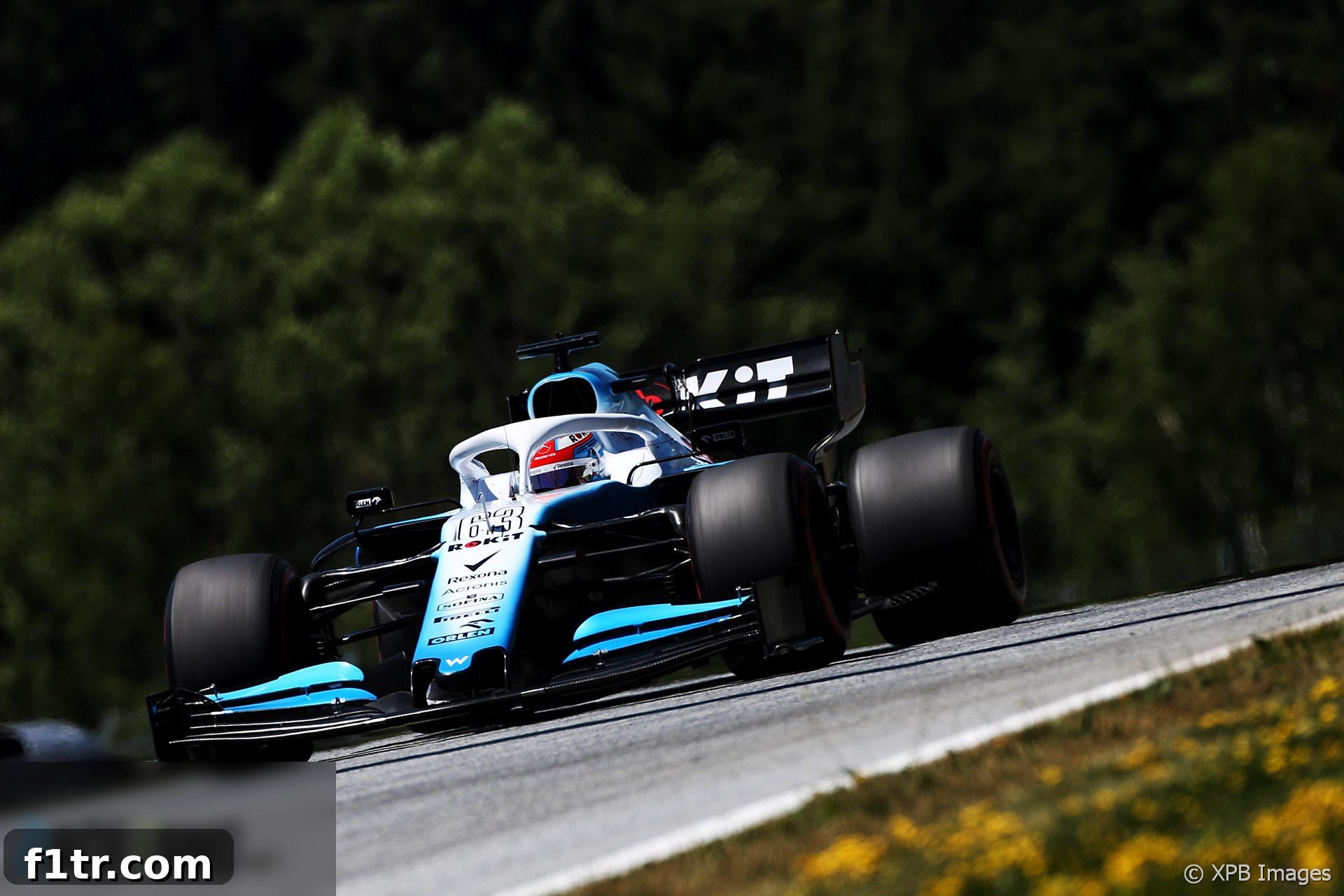
George Russell Handed Grid Penalty for Impeding Kvyat at 2019 Austrian Grand Prix
The high-stakes environment of Formula 1 qualifying demands precision, speed, and impeccable track management. In a moment that underscored these critical requirements, then-rookie driver George Russell found himself on the receiving end of a stewards’ ruling that would significantly impact his starting position for the 2019 Austrian Grand Prix. Russell was handed a three-place grid penalty after the stewards determined he “unnecessarily impeded” Daniil Kvyat during the frantic Q1 session.
The incident, which unfolded at the demanding Turn Nine of the Red Bull Ring, saw Toro Rosso driver Daniil Kvyat forced to abandon his final flying lap. Kvyat, on a crucial attempt to improve his qualifying time, encountered Russell’s slower Williams at speed, necessitating a sharp evasive manoeuvre that pushed him wide onto the run-off area. This disruption not only ruined Kvyat’s lap but also raised immediate concerns about sporting fairness and safety in such a competitive environment.
The Stewards’ Investigation and Unanimous Decision
Following the qualifying session, the stewards initiated a thorough investigation into the incident. Both George Russell and Daniil Kvyat were summoned to present their accounts, a standard procedure for any alleged breach of sporting regulations. The stewards meticulously reviewed all available evidence, including telemetry data, onboard camera footage from both cars, and crucial radio communications between Russell and his Williams team.
After careful consideration, the stewards concluded that Russell had indeed “unnecessarily impeded car 26 [Kvyat] after the apex of Turn Nine.” This verdict highlighted a breach of Article 31.4 of the FIA Formula 1 Sporting Regulations, which mandates that “any driver who, in the opinion of the stewards, unnecessarily impedes another driver during practice or qualifying will be subject to the penalties referred to in Article 31.1.”
Critical Communication Breakdown Cited
A significant factor in the stewards’ decision, and one that often plays a pivotal role in impeding incidents, was the communication from the Williams pit wall. The official report noted, “Car 63 [Russell] was not given the requisite warning by the team in a timely fashion about car 26 approaching on a fast lap.” This lapse in communication is a critical element, as drivers heavily rely on their engineers to provide real-time updates on traffic situations, particularly during qualifying when every tenth of a second counts and drivers are pushing the absolute limits.
Furthermore, the situation was compounded by another car, identified as car 23 (Alexander Albon, then driving for Toro Rosso), overtaking Russell during a slow lap just prior to the incident with Kvyat. This additional factor likely created a more complex scenario for Russell to manage, though ultimately, the responsibility for not impeding a faster car rests with the driver and their team’s ability to provide adequate information.
Beyond the grid penalty, George Russell also received the first endorsement point on his super licence. Endorsement points act as a cumulative penalty system; accumulating 12 points within a 12-month period results in a one-race ban. While a single point is minor, it serves as a formal warning and a marker on a driver’s record.
Impact on George Russell and the 2019 Season
For a young talent like George Russell, the 2019 Formula 1 season was an immense learning curve. Driving for Williams, a team that was significantly struggling for performance, every qualifying position was hard-fought and incredibly valuable. A three-place grid penalty, while not a race-ending sanction, undoubtedly made his already challenging task even more formidable. Starting further back on the grid meant a greater risk of getting caught in first-lap incidents and a more difficult climb through the field, especially in a car lacking outright pace.
This incident also served as an early lesson in the relentless demands of Formula 1. Beyond raw speed, a driver must possess exceptional situational awareness, track craft, and the ability to interpret and react to real-time information from their team. For Williams, the communication breakdown highlighted areas for improvement in their operational procedures, vital for supporting their rookie driver effectively. The pressure on pit walls to manage traffic for their drivers is immense, especially on shorter circuits like the Red Bull Ring, where lap times are quick and the density of cars can be high.
The Broader Context of F1 Impeding Regulations
Impeding incidents are a recurring theme in Formula 1, underscoring the delicate balance between a driver’s need to prepare for a flying lap (which often involves driving slowly to cool tyres or create a gap) and the absolute necessity of not hindering another competitor. The regulations are designed to ensure fair play and, crucially, driver safety. A driver on a flying lap is pushing the limits of their car and relying on clear track; an unexpected slower car can lead to dangerous situations or significant performance loss.
Stewards take these incidents seriously, applying penalties that can range from grid drops to, in more severe cases, disqualifications from a session or even points on the super licence. The consistency and application of these rules are paramount to maintaining the integrity of the sport. Drivers are constantly reminded during briefings about their responsibilities regarding track awareness and traffic management, particularly in qualifying when the stakes are highest.
Daniil Kvyat’s Perspective and the Unfair Advantage
For Daniil Kvyat, the incident meant the forfeiture of a crucial qualifying lap. In the fiercely competitive midfield of 2019, every tenth of a second and every grid position could dictate a team’s strategy and potential for points. Being forced wide onto the run-off area at speed not only destroyed his lap time but could also put additional stress on his tyres or car, potentially affecting subsequent efforts or even race performance. The frustration of having a good lap ruined by another competitor is palpable for any racing driver, impacting their rhythm and confidence.
While Kvyat did not gain a direct advantage from the penalty issued to Russell, the ruling acknowledged the unfair disadvantage he suffered. It reinforced the principle that all drivers must be afforded a clear and unimpeded path during their flying laps, particularly in the pressure cooker environment of Q1 where drivers are fighting to avoid early elimination.
Lessons Learned and Looking Ahead
The penalty at the 2019 Austrian Grand Prix was a significant moment in George Russell’s formative F1 career. It highlighted the steep learning curve for rookies and the absolute importance of effective team communication in modern Formula 1. As Russell’s career progressed, moving from the back of the grid with Williams to a front-running role with Mercedes, his understanding and execution of race craft, including traffic management, undoubtedly matured. This incident, while a setback at the time, contributed to the wealth of experience that has shaped him into the accomplished driver he is today.
Ultimately, the stewards’ decision served as a reminder to all competitors about the strict adherence required to Formula 1’s sporting regulations. Fair play, safety, and transparent communication remain cornerstones of the sport, ensuring that the ultimate determinant of success is pure performance on track, not avoidable interference.
Related Insights from the 2019 F1 Season
The 2019 Formula 1 season, which saw Lewis Hamilton clinch his sixth world title, was packed with drama, controversies, and remarkable performances across the grid. Incidents like Russell’s penalty were just one facet of a year filled with intense competition and evolving narratives. From strategic masterclasses to unexpected podium finishes, the season provided numerous talking points. The pressure on teams and drivers, especially those in the midfield and at the back, was immense, often leading to decisions and moments that captured headlines. Understanding these individual events helps paint a fuller picture of the year’s challenges and triumphs, showcasing the relentless pursuit of perfection that defines Formula 1.