Red Bull’s Christian Horner: Team Orders “Increasingly Significant” in F1 Title Showdown
As the Formula 1 season hurtles towards its thrilling conclusion, the pressure on teams and drivers intensifies with each passing Grand Prix. With championships on the line, every strategic decision, every point scored, and every competitive advantage gained becomes critical. Red Bull team principal Christian Horner has openly stated that team orders are poised to play an “increasingly significant role” in the final, decisive stages of this fiercely contested world championship fight. His remarks underscore the high stakes involved and the difficult choices that await team management as they aim to clinch both the Drivers’ and Constructors’ titles.
The 2021 season has been a captivating spectacle, marked by an epic rivalry between two of the sport’s titans: Red Bull’s Max Verstappen and Mercedes’ Lewis Hamilton. Heading into the penultimate races, Verstappen holds a precarious 12-point lead over his seven-time world champion adversary. This narrow margin means that every single race, every overtake, and every strategic call could prove pivotal. Both championship protagonists have already seen their respective teammates called upon to lend crucial support, highlighting the collaborative nature of Formula 1 despite its individualistic heroics.
The Delicate Balance: Team Ambition vs. Individual Glory
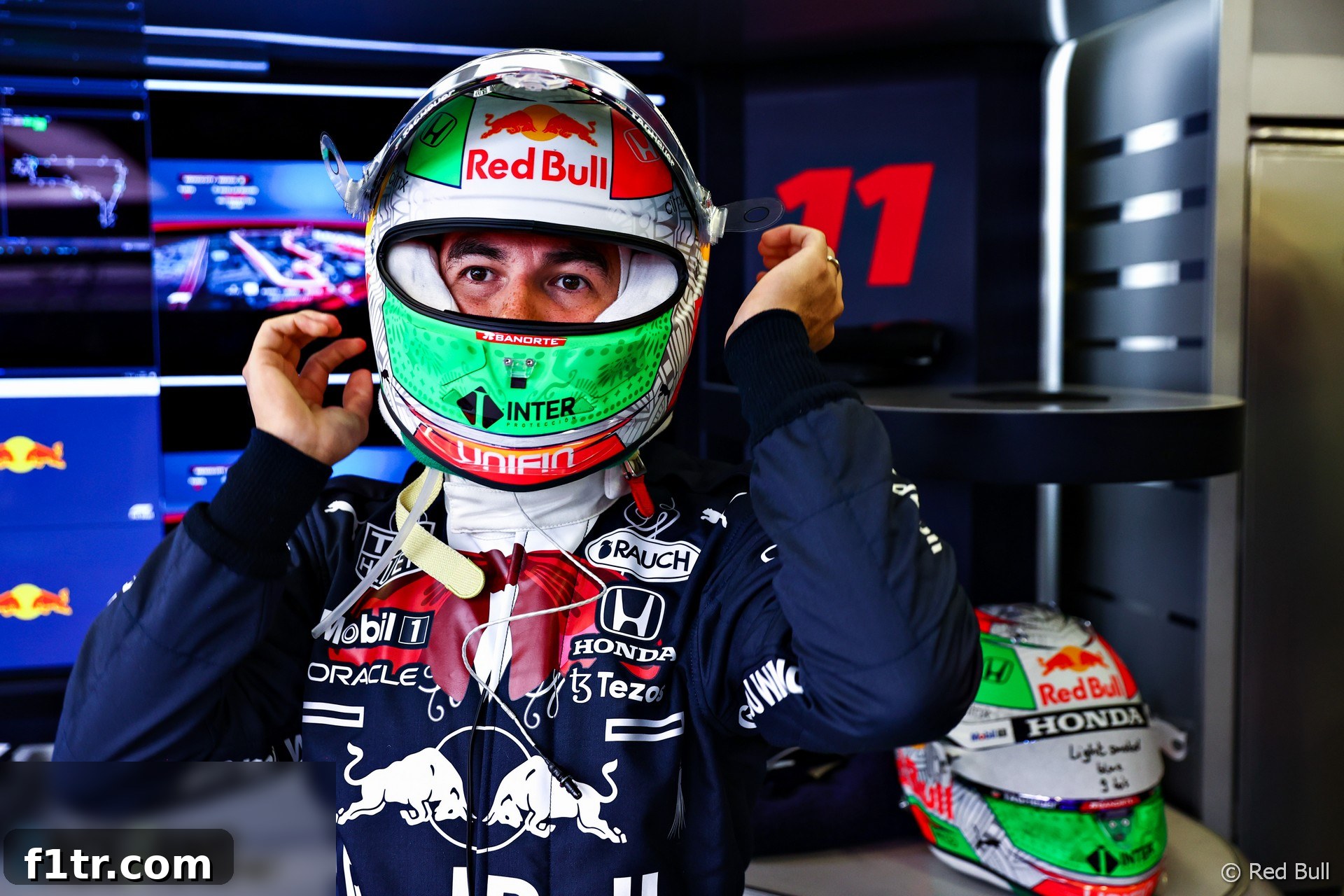
One of the most contentious aspects of motorsport, team orders often spark fierce debate among fans and pundits alike. The notion of a driver sacrificing their personal aspirations for the greater good of the team is a complex one, particularly when a potential victory is on the line. Christian Horner openly acknowledged this delicate balance, indicating his preparedness to ask Verstappen’s teammate, Sergio Perez, to cede a potential home victory at the Mexican Grand Prix if the championship scenario demanded it. While admitting it would be an “incredibly tough” request to make of the popular Mexican driver, Horner’s stance is unequivocal: the team’s overarching objectives take precedence.
“Our main objective is to win both championships, and both drivers know the task involved to achieve that,” Horner emphasized. This statement clearly lays out the hierarchy of goals within the Red Bull camp. While the dream of a home victory for Perez would undoubtedly be celebrated by millions, the bigger picture of securing the Constructors’ and Drivers’ championships ultimately dictates strategy. Horner explained that myriad “scenarios, what-ifs can happen,” and that decisions would be contingent on the positioning of their main rivals, Mercedes.
The preference, as Horner articulated, would naturally be for Perez to win his home race should he find himself in a commanding position. He acknowledged the immense significance of such an achievement, stating, “There is no bigger result for a home driver.” However, he quickly added a caveat that speaks volumes about the pragmatic realities of elite-level motorsport: “But as a team, we have to keep an eye on both of these championships and know what’s at stake, and this race, like any other, has the same number of points attributable to it.” This reinforces the cold, hard logic that every point is equal, regardless of the emotional context of its acquisition.
Sebastian Vettel’s Dissent and Horner’s Measured Response
The discussion around team orders gained further traction when former Red Bull driver Sebastian Vettel, a four-time world champion, voiced his disagreement with the practice. Vettel, known for his strong sense of sporting integrity, publicly stated that Red Bull should allow Perez to win his home race if the opportunity arose, arguing against the imposition of team directives that could deny a driver a monumental triumph. His comments sparked a broader conversation about fairness and the spirit of competition in Formula 1.
When asked by RaceFans about Vettel’s comments, Christian Horner delivered a sharp, yet measured, retort. He pointed out, quite tellingly, that “Sebastian’s benefited and been on the receiving end of team orders” during his own illustrious career. This historical perspective serves to highlight the pervasive nature of team orders within Formula 1, suggesting that while they may be unpopular with some, they are an undeniable part of the sport’s strategic landscape. Horner’s response effectively framed the debate not as a matter of pure principle, but as a practical reality that every team and driver, including past champions, must navigate.
Horner further elaborated on his philosophical stance: “Team orders are part of the sport being a team sport. Formula 1 isn’t just about the drivers; the drivers are one element of the team. Their contract is with the team, and the Constructors’ Championship has equal and more weight to it. Perhaps not the prestige, but that is where the money is paid out.” This statement is particularly insightful, revealing the underlying financial mechanics that often drive strategic decisions. The Constructors’ Championship, while perhaps lacking the individual glory of the Drivers’ title, is the lifeblood of teams, directly impacting their budget, resources, and future competitiveness. This economic reality adds another layer of justification for potentially unpopular team orders.
The Inevitable Surge: Team Orders in the Championship’s Final Stages
With the championship battle tightening, Horner anticipates an increasing frequency of team orders as Red Bull and Mercedes relentlessly vie for supremacy. The final races become a high-stakes chess match where every move is calculated, and no stone is left unturned in the pursuit of victory. “Drivers are part of the team, and we operate as a team, and that’s why team orders sometimes are necessary for the best interest of the sport,” Horner asserted. This perspective frames team orders not as a regrettable necessity, but as a fundamental aspect of operating within a highly competitive team environment.
He expressed little doubt that fans would witness “more and more of that at the sharp end of this championship over the remaining five races.” This prediction speaks to the heightened tension and the absolute imperative for teams to maximize their points haul, no matter the means. The strategic implications extend beyond just the fight for first place in the Drivers’ or Constructors’ championships. Horner noted that such tactics could also be employed in battles further down the grid, such as for “P3 in the Constructors’ or whatever battles are going further beyond that.” His concluding thought reiterated the core principle: “Formula 1 is a team sport. Everybody has their role to play as part of that team.” This emphasis on collective effort underscores the idea that individual heroics, while celebrated, must ultimately serve the broader team objectives.
The Ethical Quandary and Fan Perspective
The use of team orders in Formula 1 invariably ignites passionate discussions among the sport’s global fanbase. For some, they represent an unfortunate manipulation of the competition, detracting from the purity of racing where the fastest driver on the day should, in theory, emerge victorious. Denying a driver a win, especially a home victory, can feel unfair and engineered, robbing the sport of its spontaneous drama and the raw emotion of individual achievement. Fans invest emotionally in drivers, and seeing their hero potentially sacrificing a personal triumph for a strategic directive can be a source of frustration and disappointment.
However, another segment of the fanbase, often those with a deeper understanding of the team sport dynamic and the financial realities, views team orders as a necessary evil, or even a sophisticated element of strategy. They argue that F1 is not just about individual brilliance but also about the thousands of engineers, mechanics, strategists, and support staff who work tirelessly behind the scenes. From this perspective, maximizing points for the Constructors’ Championship, which underpins the team’s entire operation, is a perfectly logical and professional decision. It’s a reflection of a sport where multi-million-dollar investments hang in the balance, and where success is measured by overall team performance.
The tension between these two viewpoints makes team orders a perpetual ethical quandary. They test the boundaries between sporting integrity and strategic pragmatism, between individual glory and collective success. As the 2021 F1 season moved towards its dramatic conclusion, Christian Horner’s frank comments served as a potent reminder that in the high-stakes world of Formula 1, difficult decisions are often required, and the lines between fair play and ruthless ambition can become incredibly blurred. The ultimate outcome of the championship, and the role team orders play within it, will undoubtedly become a significant part of this season’s rich narrative.
2021 Mexico City Grand Prix Related Articles
- No one will win more F1 races than Verstappen this year
- Alfa Romeo’s misjudgement which prompted Giovinazzi’s sarcastic radio ‘thanks’
- “Nice catch”: How Verstappen’s canny bid to thwart Bottas almost succeeded
- 2021 Mexico City Grand Prix Star Performers
- Wolff “surprised” stewards did not investigate Ricciardo over Bottas collision
Browse all 2021 Mexico City Grand Prix articles