F1 Chinese Grand Prix: Unlocking Enhanced Energy Recovery for Strategic Advantage
The exhilarating world of Formula 1 constantly evolves, pushing the boundaries of engineering and strategy. This weekend’s Chinese Grand Prix marks a significant shift in energy management, as drivers will be granted greater flexibility to generate and deploy electrical energy compared to the season’s opening races. This regulatory adjustment, tailored to the unique characteristics of the Shanghai International Circuit, promises to inject an extra layer of strategic depth and excitement into both qualifying sessions and the main race.
A key area where this change will be most apparent is in qualifying. Formula 1 drivers will be permitted to recharge their power units with a substantial 9 Megajoules (MJ) of electrical energy in Shanghai. This higher limit applies to both the Sprint Race Qualifying and the Grand Prix Qualifying sessions. This stands in stark contrast to the 7MJ limit imposed for the traditional qualifying session in Melbourne, representing a considerable increase that could fundamentally alter the approach to setting flying laps.
Furthermore, the energy recharge limits for the two races this weekend – both the Sprint Race and the main Grand Prix – will also see a 0.5MJ increase over the previous event. Drivers will now be allowed to utilize up to 8.5MJ under normal racing conditions, with this figure rising to a potent 9MJ when the crucial ‘Overtake Mode’ is activated. As per established regulations, this strategic boost will be available when a driver is within one second of the car ahead, a proximity measured precisely at the entrance of the final corner, Turn 16, ensuring fair and regulated overtaking opportunities. This elevated 9MJ limit will also extend to all practice sessions, allowing teams ample time to fine-tune their energy management strategies.
Understanding F1 Energy Recovery Systems (ERS)
To fully grasp the significance of these changes, it’s essential to understand the intricate workings of Formula 1’s Energy Recovery System (ERS). At its core, ERS is a hybrid technology designed to recover kinetic and heat energy that would otherwise be lost during braking and exhaust processes, converting it into electrical energy stored in a battery. This stored energy can then be deployed to provide an additional surge of power, vital for acceleration, defending, or launching an overtake.
The ERS system comprises two main motor-generator units: the MGU-K (Kinetic) and the MGU-H (Heat). The MGU-K recovers kinetic energy during braking, similar to KERS systems of the past, converting it into electricity. The MGU-H is connected to the turbocharger and recovers energy from the exhaust gases, turning the turbo into a generator. This complex interplay allows modern F1 power units to achieve astonishing levels of efficiency and performance, making energy management a critical component of every lap.
The Unique Demands of the Shanghai International Circuit
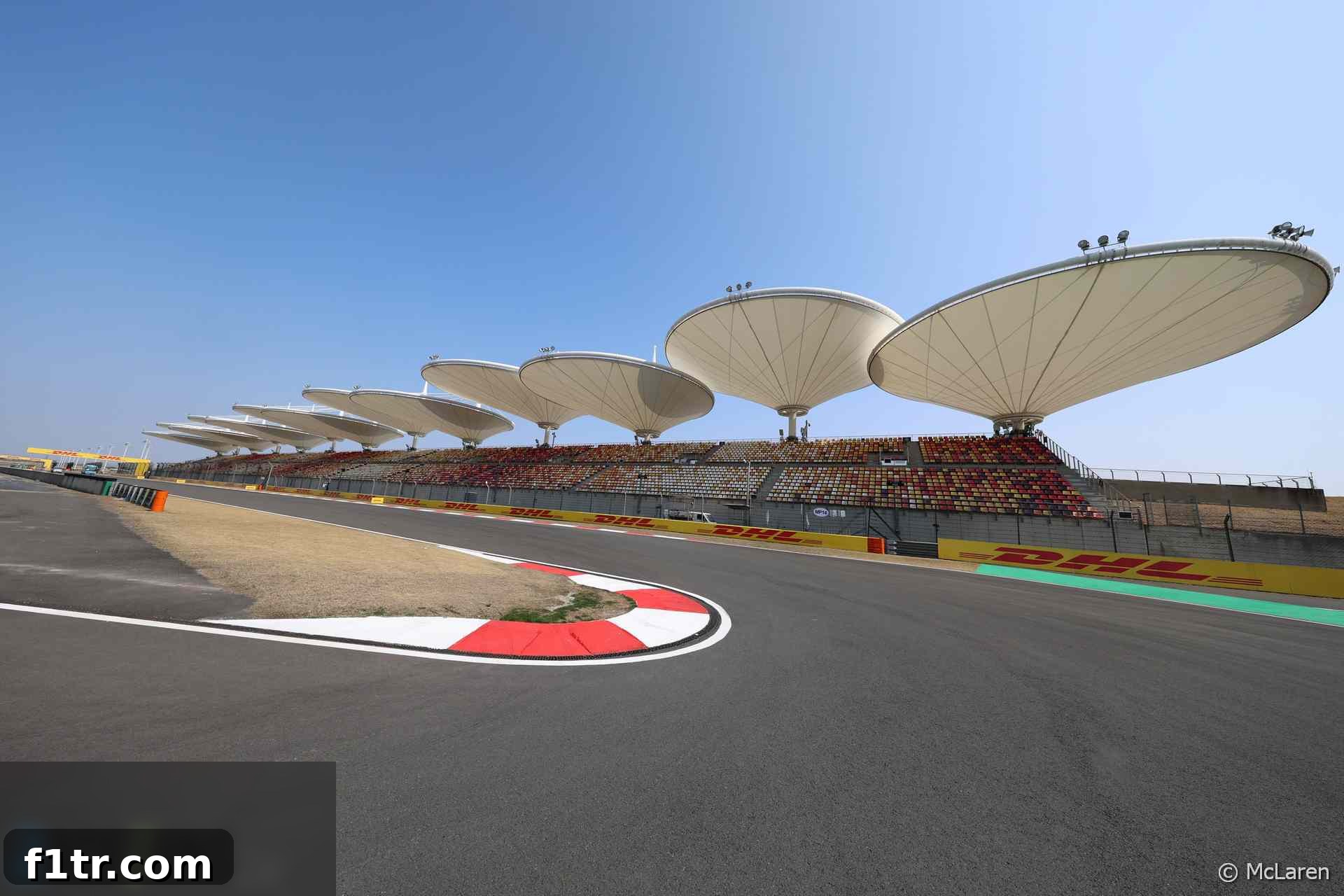
The decision by the FIA to raise the energy recovery limits for the Chinese Grand Prix is not arbitrary; it is a direct response to the distinctive layout of the Shanghai International Circuit. This 5.451-kilometer track is renowned for its blend of long, sweeping corners, technical sections, and crucially, some of the longest straights and heaviest braking zones on the Formula 1 calendar. These characteristics provide vastly different opportunities for energy regeneration compared to a circuit like Albert Park.
Track Layout and its Influence on ERS
The Shanghai circuit’s design, particularly its notorious snail-like Turns 1-4 and the lengthy back straight, dictates a specific approach to energy management. The long acceleration zones preceding significant braking points are prime candidates for maximizing MGU-K regeneration. Drivers spend considerable time under braking here, providing ample opportunity for the ERS to harvest electrical energy. For instance, Turn 14 is a particularly brutal braking zone, following an acceleration stretch of approximately 1.4 kilometers. Here, drivers shed over 230 kilometers per hour, slowing down to around 77 kph for the sharp hairpin. This single braking event alone presents a massive window for energy recovery, far surpassing what is typically available at other circuits.
Braking for Power: A Key Advantage
According to brake supplier Brembo, drivers at the Chinese Grand Prix are estimated to spend, on average, over 16 seconds per lap actively braking. This is more than double the braking time observed in Melbourne, highlighting the track’s inherent regenerative potential. This extended braking duration translates directly into increased chances for the MGU-K to generate electrical energy, making the higher recovery limits both necessary and strategically valuable. Teams will undoubtedly be pushing their drivers to maximize this regenerative capacity, turning what might seem like a mere deceleration into a vital power-generating opportunity.
Increased Energy Limits: A Strategic Game-Changer for China
The upward adjustment of energy limits at the Chinese Grand Prix introduces a new layer of strategic complexity for teams and drivers alike. The ability to harvest and deploy more electrical energy will have tangible impacts on performance across all sessions.
Qualifying Advantage
The significant leap from 7MJ to 9MJ for qualifying is a game-changer. In modern F1, marginal gains are paramount, and an extra 2MJ can translate into precious tenths of a second over a single lap. This increased allowance means drivers can deploy more sustained bursts of power throughout their qualifying runs, potentially allowing for harder pushes out of corners or longer boosts down straights. This could lead to tighter battles for pole position and a more aggressive qualifying spectacle, as teams attempt to optimize every joule of available energy.
Race Day Dynamics: Overtake Mode and Strategic Deployment
On race day, the higher limits – 8.5MJ ordinarily and 9MJ with Overtake Mode enabled – will fundamentally impact racecraft and strategy. Drivers will have more flexibility to manage their energy reserves, choosing when to save and when to deploy for maximum effect. The enhanced Overtake Mode, triggered within one second of a competitor, becomes an even more powerful weapon. With 9MJ at their disposal, drivers can execute more aggressive and sustained overtaking maneuvers, potentially reducing the reliance on DRS alone and fostering more organic wheel-to-wheel racing. The ability to have this extra surge of power more frequently or for longer periods will be a critical factor in determining race positions and overall strategy, from tire management to pit stop timings.
Free Practice and Out Laps
The extension of the 9MJ limit to all practice sessions is equally important. It allows teams to gather crucial data on energy management strategies under conditions that accurately reflect qualifying and race scenarios. This extensive data collection will enable them to fine-tune deployment maps and optimize driver feedback, ensuring they arrive at qualifying and the race fully prepared to exploit the new limits. Even during out laps, the higher 9MJ limit allows for more efficient warm-up and data gathering, contributing to overall session optimization.
FIA Regulations and the “Power Limited Distance”
The FIA’s technical regulations play a crucial role in balancing performance and fair competition. One such regulation defines the “power limited distance” – a metric that quantifies how much of a lap drivers are able to run at full power. For the Shanghai International Circuit, the FIA has determined that its “power limited distance” is lower than Melbourne’s, falling under the 3.5km threshold defined in the rules. Specifically, Shanghai’s power limited distance is 3.125km, compared to Melbourne’s 3.518km.
Because Shanghai’s track characteristics allow for more natural energy recovery, the regulations permit a higher maximum power reduction rate. Drivers are allowed a power reduction rate of 100kW per second, which is double the 50kW per second permitted in Melbourne. This higher reduction rate acknowledges the track’s design and ensures that the power units can efficiently regenerate energy without exceeding regulatory thresholds, while still maintaining the competitive balance.
Comparative Analysis: Shanghai vs. Melbourne
A direct comparison between the Albert Park Circuit in Melbourne and the Shanghai International Circuit clearly illustrates the basis for these energy recovery adjustments. The table below summarizes the key differences:
| Parameter | Albert Park | Shanghai |
|---|---|---|
| Maximum Recharge Per Lap | ||
| Race – Without Overtake Mode | 8MJ | 8.5MJ |
| Race – With Overtake Mode | 8.5MJ | 9MJ |
| Qualifying | 7MJ | 9MJ |
| Free Practice | 8.5MJ | 9MJ |
| Out Laps (except in races) | 8.5MJ | 9MJ |
| Track Details | ||
| Track Length | 5.278km | 5.451km |
| Power Limited Distance | 3.518km | 3.125km |
| Maximum Power Reduction Rate | 50kW/s | 100kW/s |
| Overtake Mode Detection Gap | 1s | 1s |
| Areas where reduction can exceed 150kW | T11-13 | T7-9, T11-12 |
This table clearly shows a consistent uplift in allowed energy recovery for Shanghai across all sessions, reflecting its longer track length and, more importantly, its numerous heavy braking zones. The reduced “power limited distance” and doubled maximum power reduction rate further emphasize the track’s inherent regenerative capabilities. These differences necessitate a distinct approach to energy management, allowing teams to fully exploit the power unit’s potential on this demanding circuit.
Driver Perspective and Team Strategy
For the drivers, these increased limits translate into a more dynamic driving experience. They can afford to push harder into braking zones, knowing that the recovered energy will quickly replenish their battery. This allows for more aggressive cornering and potentially more daring overtaking maneuvers. However, it also demands precise management; deploying energy too early or too late can still cost valuable lap time or battery life. Drivers will need to fine-tune their braking points and acceleration zones to maximize both regeneration and deployment.
From a team strategy perspective, the higher limits open up a wider array of tactical choices. Engineers will work tirelessly to optimize power unit settings, energy maps, and deployment strategies. Qualifying will become a balance of raw pace and efficient energy use. In the race, the timing of Overtake Mode deployment, combined with tire strategy and pit stop windows, will be even more critical. Teams might explore different energy harvesting profiles in various parts of the track, or save larger bursts for specific overtaking opportunities, leading to unpredictable and thrilling race outcomes.
Conclusion
The elevated energy recovery limits at the Chinese Grand Prix are a testament to Formula 1’s commitment to adapting its regulations to suit the unique characteristics of each circuit. By allowing drivers to harvest and deploy more electrical energy, the FIA has created an environment ripe for intense competition and intricate strategic battles. From the cut-throat qualifying sessions where every millijoule counts, to the main race where Overtake Mode will be a more potent weapon, the Shanghai International Circuit is set to host a captivating event. These adjustments promise to showcase the pinnacle of hybrid motorsport technology and strategic prowess, making the Chinese Grand Prix a must-watch for all Formula 1 enthusiasts.