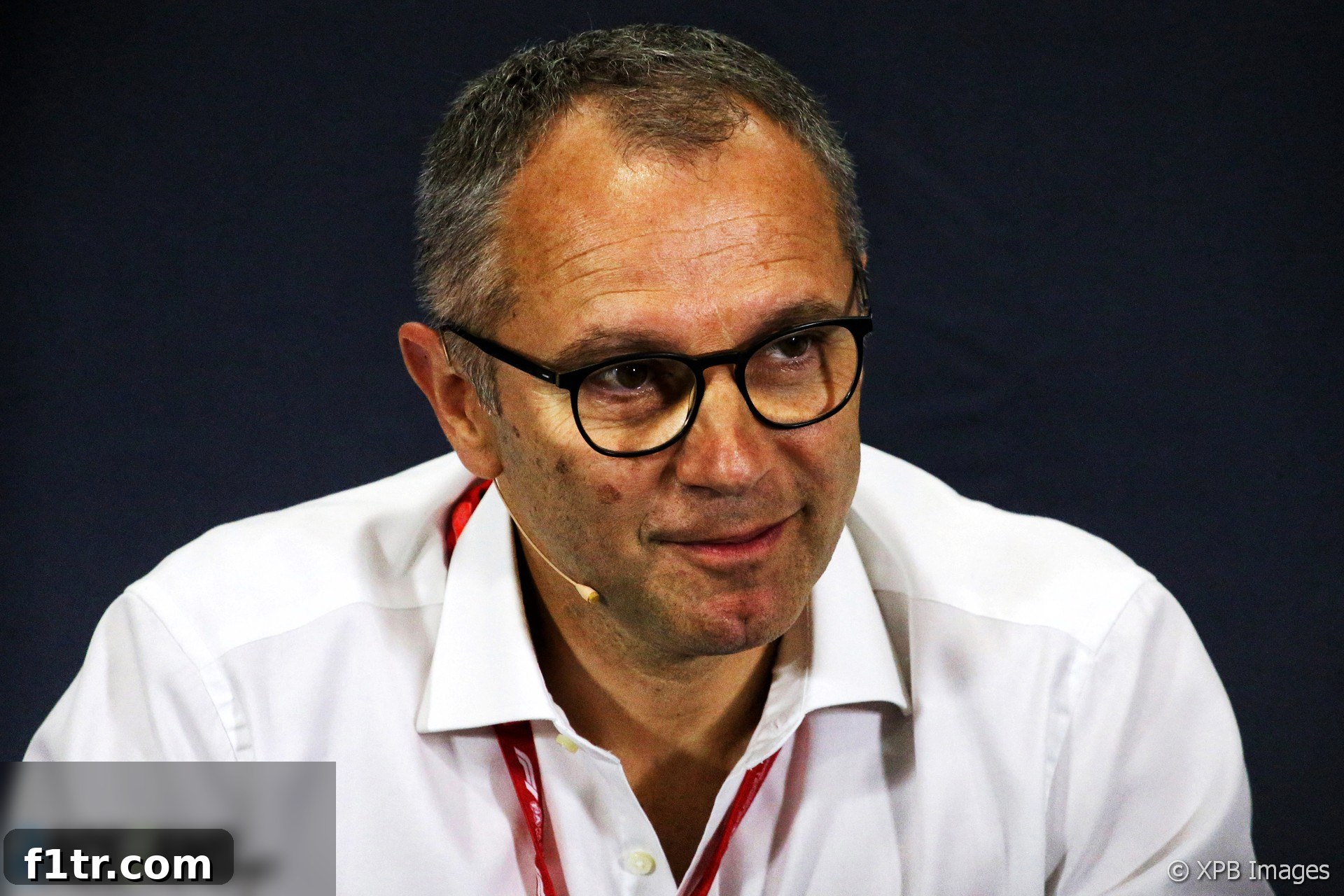
Stefano Domenicali Set for Surprising Return as Formula 1 CEO: A New Era Dawns
Former Ferrari team principal Stefano Domenicali is poised to make a surprise return to Formula 1 as the sport’s new Chief Executive Officer, a significant development confirmed by sources close to the situation. This highly anticipated appointment marks a pivotal moment for Formula 1, signaling a strategic shift in leadership as the sport navigates a rapidly evolving global landscape and prepares for its next chapter.
Advert | Become a Supporter & go ad-free
Your advertisement here
The helm of Formula 1 will soon transition from Chase Carey, who has diligently served as CEO since January 2017. Carey spearheaded Liberty Media’s transformative takeover of the sport and has recently achieved a monumental milestone: the successful negotiation and signing of a new Concorde Agreement with all ten competing teams. This crucial agreement ensures the long-term stability and future direction of Formula 1, a testament to Carey’s strategic acumen. While stepping down from the CEO role, Carey, who also holds the title of F1 chairman, is expected to maintain close ties with the sport, likely transitioning into a more outward-facing, non-executive or ambassadorial capacity, continuing to leverage his extensive experience and relationships for F1’s benefit.
Stefano Domenicali: A Distinguished Career Leading to F1’s Pinnacle
Stefano Domenicali, aged 55, brings a wealth of experience and an unparalleled network within the motorsport world to his new role. His deep connections extend to key figures such as Formula 1 managing director Ross Brawn and FIA president Jean Todt, relationships forged during his formative and successful tenure at the iconic Ferrari Scuderia. Born in Imola, Italy, a town synonymous with motorsport, and having pursued his education at the prestigious University of Bologna, Domenicali’s roots are firmly entrenched in the heart of Italian racing culture.
From Finance to Ferrari Team Principal
Domenicali’s journey with Ferrari began in 1991, where he initially joined the company’s financial administration. His exceptional talent, dedication, and innate understanding of both the sporting and commercial aspects of racing quickly propelled him through the ranks. He moved into the sporting department, eventually becoming the team manager for the GT racing program before transitioning to Formula 1. His meticulous approach and calm demeanor were evident as he progressed to become Sporting Director of the F1 team in 1998, working closely alongside the legendary Jean Todt and Michael Schumacher during Ferrari’s golden era of dominance.
In 2007, Domenicali took over the formidable responsibility of team principal from Jean Todt, inheriting a team accustomed to winning but also facing immense pressure and expectation. Under his leadership, Ferrari secured its most recent Constructors’ Championship success in 2008, a thrilling season that saw Kimi Räikkönen and Felipe Massa battle fiercely. Though a Drivers’ Championship narrowly eluded the team during his tenure – notably in 2008 with Massa and again in 2010 and 2012 with Fernando Alonso – Domenicali’s period at the helm was characterized by unwavering commitment, strategic decision-making, and a persistent drive for excellence in a highly competitive era. He navigated the team through significant regulatory changes and fierce rivalries, earning respect for his integrity and leadership qualities, before eventually stepping down in 2014.
Beyond Maranello: FIA and Lamborghini
After departing Ferrari, Domenicali’s expertise remained in high demand. In December 2014, he was appointed as the head of the FIA’s single-seater commission, a role crucial in overseeing the development and regulation of junior categories such as Formula 2 and Formula 3, which serve as vital feeders for Formula 1. This position allowed him to contribute significantly to the broader motorsport ecosystem, focusing on talent development and the future of racing at its foundational levels.
Two years later, in 2016, Domenicali embarked on a new challenge, taking the reins as CEO of luxury sports car manufacturer Lamborghini. His tenure at Lamborghini was marked by impressive growth, brand expansion, and the introduction of highly successful models, including the Urus SUV, which significantly boosted the company’s sales and profitability. This experience provided him with invaluable insights into global business strategy, brand management, and the luxury automotive market, skills that are highly transferable and beneficial for the commercial leadership of Formula 1. Intriguingly, Lamborghini is now widely believed to be under consideration for sale by its parent company, Audi, adding another layer of context to Domenicali’s transition.
A Strategic Appointment for Formula 1’s Future
The appointment of Stefano Domenicali as F1 CEO is anticipated to take effect before the commencement of the next Formula 1 season. When approached for comment regarding this significant leadership change, Liberty Media, the commercial rights holder of Formula 1, courteously declined to provide an immediate statement, maintaining discretion until an official announcement. However, the industry consensus points towards Domenicali’s vast experience and proven track record as key reasons for his selection.
His deep understanding of the sport from both a team perspective and a regulatory viewpoint, coupled with his recent success in the high-stakes luxury automotive sector, positions him uniquely to lead Formula 1 into a dynamic and challenging future. Domenicali’s ability to foster strong relationships with teams, manufacturers, sponsors, and governing bodies will be crucial as F1 seeks to expand its global footprint, innovate technologically, and enhance fan engagement.
The Ferrari Connection: A Powerful Alliance at F1’s Helm
Domenicali’s appointment creates a fascinating dynamic at the very top of motorsport. With Stefano Domenicali as F1 CEO and Jean Todt serving as FIA President, the sport’s commercial rights holder and its governing body will both be led by former Ferrari principals. This alignment of leadership, while unique, underscores a shared vision for the sport’s health and growth. Jean Todt, who assumed the FIA presidency in 2010, has indicated that he will not seek re-election when his current term concludes at the end of next year, meaning this particular synergy will evolve. Nevertheless, the immediate collaboration between two figures of such stature and intertwined history promises a period of stable and informed leadership for Formula 1.
Their collective experience covers every facet of Formula 1, from the technical intricacies of car design and racing strategy to the complex political and commercial negotiations that underpin the sport. This could lead to a more harmonized approach to crucial decisions affecting technical regulations, sporting formats, and the overall direction of F1, ensuring that the sport remains thrilling, relevant, and sustainable for generations to come.
Charting the Course: Challenges and Opportunities Ahead for F1
Stefano Domenicali steps into the CEO role at a critical juncture for Formula 1. The sport has successfully navigated the immediate impacts of the global pandemic, showcasing resilience and adaptability. With the new Concorde Agreement firmly in place, providing financial stability and a framework for fairer revenue distribution among teams, the foundation for future growth is robust. However, significant challenges and exciting opportunities lie ahead.
Key priorities for Domenicali will undoubtedly include expanding F1’s global appeal, particularly in burgeoning markets, while retaining its traditional fan base. This involves exploring new race venues, continuing the successful digital transformation efforts initiated under Chase Carey, and deepening fan engagement through innovative content and experiences. The sport’s ambitious sustainability agenda, aiming for Net Zero Carbon by 2030, will also require decisive leadership and investment in greener technologies and operational practices.
Furthermore, maintaining competitive balance on track, managing the delicate relationships between the sport’s various stakeholders (teams, manufacturers, promoters, sponsors), and adapting to evolving technological landscapes will be constant undertakings. Domenicali’s background in both team management and the high-performance automotive industry makes him exceptionally well-suited to address these complex issues, bridging the gap between the sport’s technical heart and its commercial aspirations. His appointment signals a clear intent from Liberty Media to usher in an era defined by astute leadership, deep motorsport understanding, and a forward-thinking vision.
Don’t miss anything new from RaceFans
Follow RaceFans on social media to stay updated with the latest news, analyses, and insights from the world of Formula 1:
- Join RaceFans on Facebook
- Follow RaceFans on Twitter
- Get daily email updates from RaceFans
Advert | Become a RaceFans supporter andgo ad-free
Your leaderboard advertisement here
2020 F1 Season: Related Articles & Updates
For more news and in-depth coverage of the 2020 Formula 1 season and beyond, explore these related articles:
- Grosjean to make F1 test return tomorrow for first time since Bahrain horror crash
- Pictures: Wrecked chassis from Grosjean’s Bahrain fireball crash to go on display
- Bottas vs Rosberg: Hamilton’s Mercedes team mates compared after 78 races each
- F1 revenues fell by $877 million in Covid-struck 2020 season
- Hamilton and Mercedes finally announce new deal for 2021 season
Browse all 2020 F1 season articles