Sebastian Vettel to Mercedes for 2021 F1 Season: A Deep Dive into the Debate
The Formula 1 driver market for the 2021 F1 season exploded with speculation following the announcement of Sebastian Vettel’s departure from Ferrari. As one of the most decorated drivers in the sport’s history, Vettel’s availability sent ripples through the paddock, leading to intense speculation about his next move. With Ferrari days numbered, and Red Bull indicating they wouldn’t meet his salary requirements or perhaps weren’t interested in a reunion, a tantalizing prospect emerged: a potential move to Mercedes.
For many fans, the idea of a four-time world champion like Vettel joining the dominant Mercedes-AMG Petronas F1 Team presented a thrilling narrative. It promised not only a chance for Vettel to reignite his career in a highly competitive car but also the potential for an epic showdown against fellow multi-world champion Lewis Hamilton. But beyond the fan fantasy, serious questions arose: Should Mercedes genuinely consider offering him a drive? This article delves into the comprehensive arguments for and against such a significant decision.
The Vettel-Mercedes Conundrum: Analyzing the Potential Partnership
The prospect of Sebastian Vettel in a Mercedes ignited intense debate among pundits, fans, and within the F1 community itself. On one hand, the chance to sign a proven championship winner seemed too good to pass up. On the other, Mercedes already boasted an incredibly strong and stable driver lineup, raising concerns about disrupting a winning formula. Let’s explore the multifaceted considerations that would weigh on Mercedes’ decision-makers.
Arguments For a Vettel Move to Mercedes
A Rare Opportunity: A Champion on the Market
The availability of a four-time Formula 1 world champion who is out-of-contract is an exceedingly rare occurrence in the sport. Such a driver brings not only immense talent and experience but also a unique blend of technical feedback and championship-winning mentality. Mercedes, knowing they could offer him a highly competitive car for 2021, might have been in a position to acquire Vettel for considerably less than Ferrari was paying him. This could represent a strategic acquisition of top-tier talent at a discounted rate, a shrewd business move in any sport.
The Most Successful Driver Line-Up in History
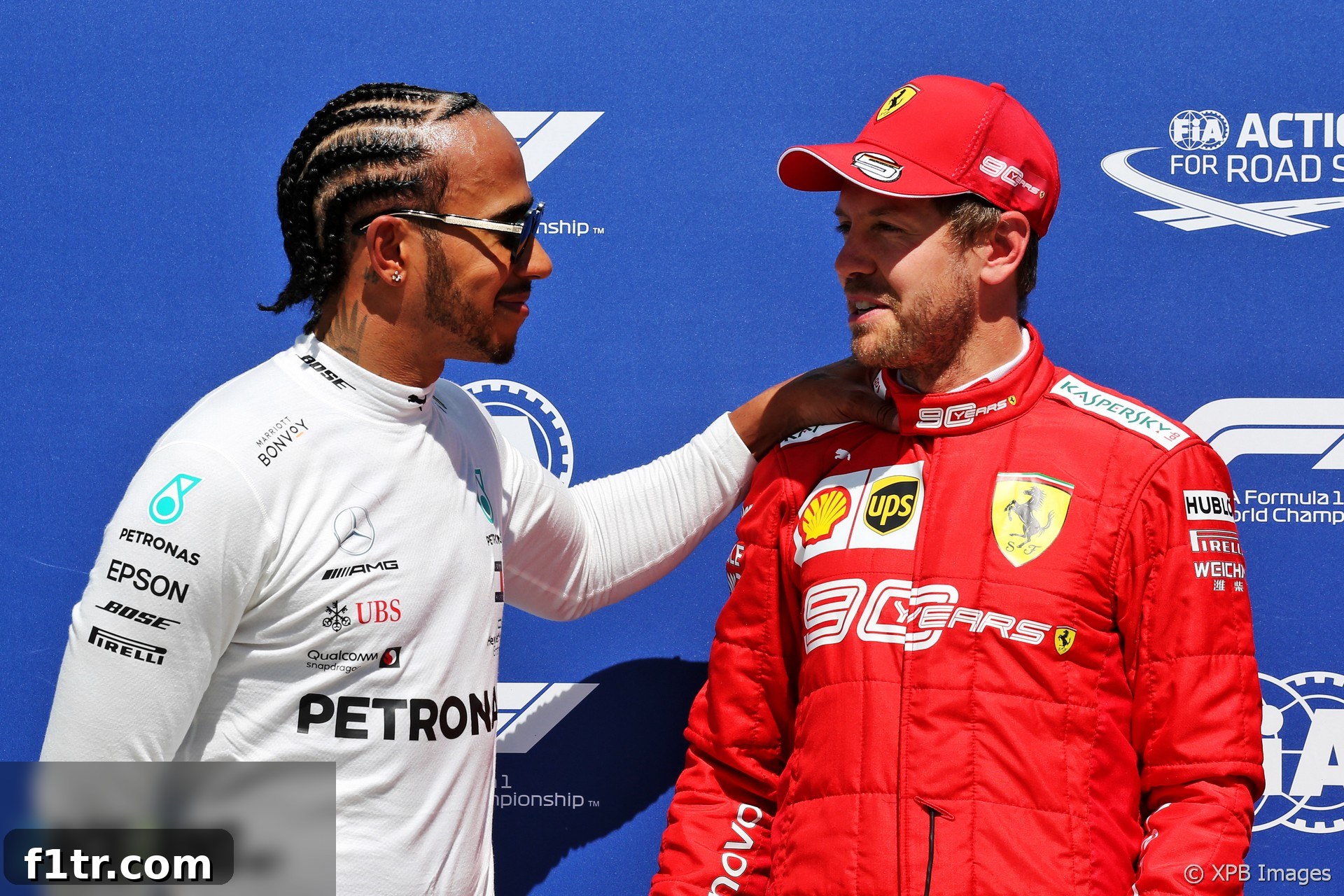
If Mercedes were to pair Sebastian Vettel with Lewis Hamilton, it would instantly create the most successful driver line-up Formula 1 has ever witnessed. At the time of this debate, their combined statistics represented an astonishing achievement: 137 race victories and 10 world championships. Such a partnership wouldn’t just be historic; it would be a marketing dream, captivating audiences worldwide and generating unprecedented media attention. The sheer star power and competitive allure of these two titans battling it out in identical machinery would elevate the sport to new heights.
A Partnership Forged in Mutual Respect, Not Animosity
A Hamilton-Vettel partnership is not as unrealistic as it might initially sound, particularly when compared to other legendary, but often acrimonious, pairings in F1 history (e.g., Senna-Prost). While they have gone head-to-head for world championships twice in recent seasons (2017 and 2018), there has been surprisingly little real animosity or “needle” between them. The notable exception was the Azerbaijan Grand Prix in 2017, but generally, their rivalry has been characterized by a profound sense of mutual respect. Both drivers have consistently spoken highly of each other’s talents and achievements, suggesting a professional environment could be maintained, even under intense championship pressure. This mutual respect could foster a healthy competitive environment, potentially pushing both drivers and the team to even greater heights.
A Fresh Perspective and Development Insight
Bringing in a driver of Vettel’s caliber, with his experience from Red Bull and Ferrari, could inject fresh perspectives into Mercedes’ technical development. His insights could challenge existing assumptions, offering new directions for car setup and development that might not be apparent from within the current setup. Even a dominant team can benefit from external experience, and Vettel’s nuanced understanding of different car philosophies could prove invaluable in fine-tuning future championship contenders.
Arguments Against a Vettel Move to Mercedes
Disrupting a Proven and Stable Winning Formula
Neither a Bottas-Vettel line-up nor a Hamilton-Vettel partnership is straightforward for Mercedes. The former would mean dropping Formula 1’s undisputed star driver, Lewis Hamilton, which is simply a non-starter for any team, let alone Mercedes. As for replacing Valtteri Bottas, Mercedes had, and continues to have, an enviable driver line-up. Lewis Hamilton is at the peak of his form, delivering record-breaking performances consistently. Valtteri Bottas, on the other hand, while not always matching Hamilton’s pace, has been making steady, incremental gains on him. Crucially, Bottas has achieved this while taking meticulous care not to destabilise the team’s harmonious working environment, a stark contrast to the intense and ultimately destructive rivalry with Nico Rosberg. There is simply no compelling reason to disturb such a perfectly balanced and high-performing setup, even for a driver of Vettel’s immense stature, risking team cohesion and performance.
Significant Financial Implications and Public Perception
Combining even a reduced salary for Vettel with the sky-high retainer Lewis Hamilton commands would still represent a huge financial burden for Mercedes. This concern extends beyond the direct cost to the F1 team. Irrespective of the specific financial realities of Mercedes’ F1 program to its parent company, Daimler, such high driver salaries would draw extremely unfavourable attention. This was particularly pertinent given that the parent company was already seeking to cut approximately 15,000 staff globally even before the devastating economic hammer blow dealt by the COVID-19 pandemic. In an era of increasing fiscal responsibility and public scrutiny, lavish driver contracts could be perceived poorly by shareholders, employees, and the general public, potentially harming Mercedes-Benz’s corporate image.
The Risk of Internal Conflict and Team Dynamics
While the mutual respect between Hamilton and Vettel is often highlighted, putting two highly ambitious and fiercely competitive world champions in the same team, battling for the ultimate prize, inevitably introduces a significant risk of internal conflict. Even with the best intentions, the pressure of a championship fight can strain relationships, as evidenced by numerous historical examples in F1. Mercedes experienced this first-hand with the Hamilton-Rosberg rivalry, which, while ultimately successful in securing constructors’ titles, caused immense stress and friction within the team. The meticulously cultivated atmosphere of unity and mutual support, a hallmark of Mercedes’ recent success, could be jeopardized by such a high-stakes pairing, potentially leading to a detrimental impact on team morale and overall performance.
Questions Over Recent Form and Adaptation
While Sebastian Vettel’s past record is undeniable, his recent form at Ferrari had been inconsistent, marked by several unforced errors and struggles to adapt to the car’s characteristics. While a change of environment can often rejuvenate a driver, there’s always a risk involved. Would Vettel immediately rediscover his championship-winning consistency in a new team and car, or would his adaptation period be longer and more challenging? Mercedes, a team accustomed to precision and near-flawless execution, would need to consider this potential performance variability and the impact it could have on their championship aspirations.
The Author’s Perspective
As a passionate follower of Formula 1, the idea of seeing the two most successful drivers of the modern era, Lewis Hamilton and Sebastian Vettel, going head-to-head against each other in what would surely be a championship-contending car in 2021, is nothing short of exhilarating. Imagine the drama, the strategic battles, the sheer intensity of two legends vying for supremacy. Add to that the narrative of Vettel, potentially fired up to prove a point after his Ferrari exit, and you have a storyline that transcends typical motorsport. It’s the kind of dream scenario that every F1 enthusiast craves – an ultimate benchmark between two phenomenal talents.
With all due respect to Valtteri Bottas, who has consistently driven very good seasons for Mercedes and played a crucial role in their success, the chance to witness two all-time great champions in identical, top-tier machinery is an unparalleled spectacle that surely all F1 fans would want to see. It elevates the sport, creates iconic moments, and defines eras.
However, while the fan in me yearns for this epic showdown, the realist acknowledges the immense practical hurdles. Do I think it was going to happen? Sadly, not a chance. F1 teams, especially those at the pinnacle like Mercedes, operate with meticulous strategic planning, financial prudence, and an absolute priority on team stability and long-term success. The romantic notion of a dream lineup often collides with these pragmatic realities.
What are Your Thoughts?
Having considered the compelling arguments for and against Sebastian Vettel joining Mercedes for the 2021 F1 season, what is your stance? The discussion surrounding such a high-profile driver move encapsulates the very essence of Formula 1 – a blend of sporting ambition, strategic maneuvering, and human drama. Whether driven by financial considerations, team harmony, or the pursuit of sporting glory, every decision in F1 carries significant weight. We encourage you to reflect on these points and form your own conclusions regarding this fascinating ‘what if’ scenario.
Related Formula 1 Debates and Polls
Explore more discussions and opinions from the world of Formula 1:
- What must Formula 1 fix with its new rules – and what should it leave unchanged?
- ADUO: Do F1 teams who fall behind deserve to get help to catch up?
- F1 is considering doubling its sprint races. Do you want more or fewer?
- Will this be a fight or a rout? 20 questions for the 2026 Formula 1 season
- Which Formula 1 team has the best-looking car – and the worst – for the 2026 season?
Browse all debates and polls