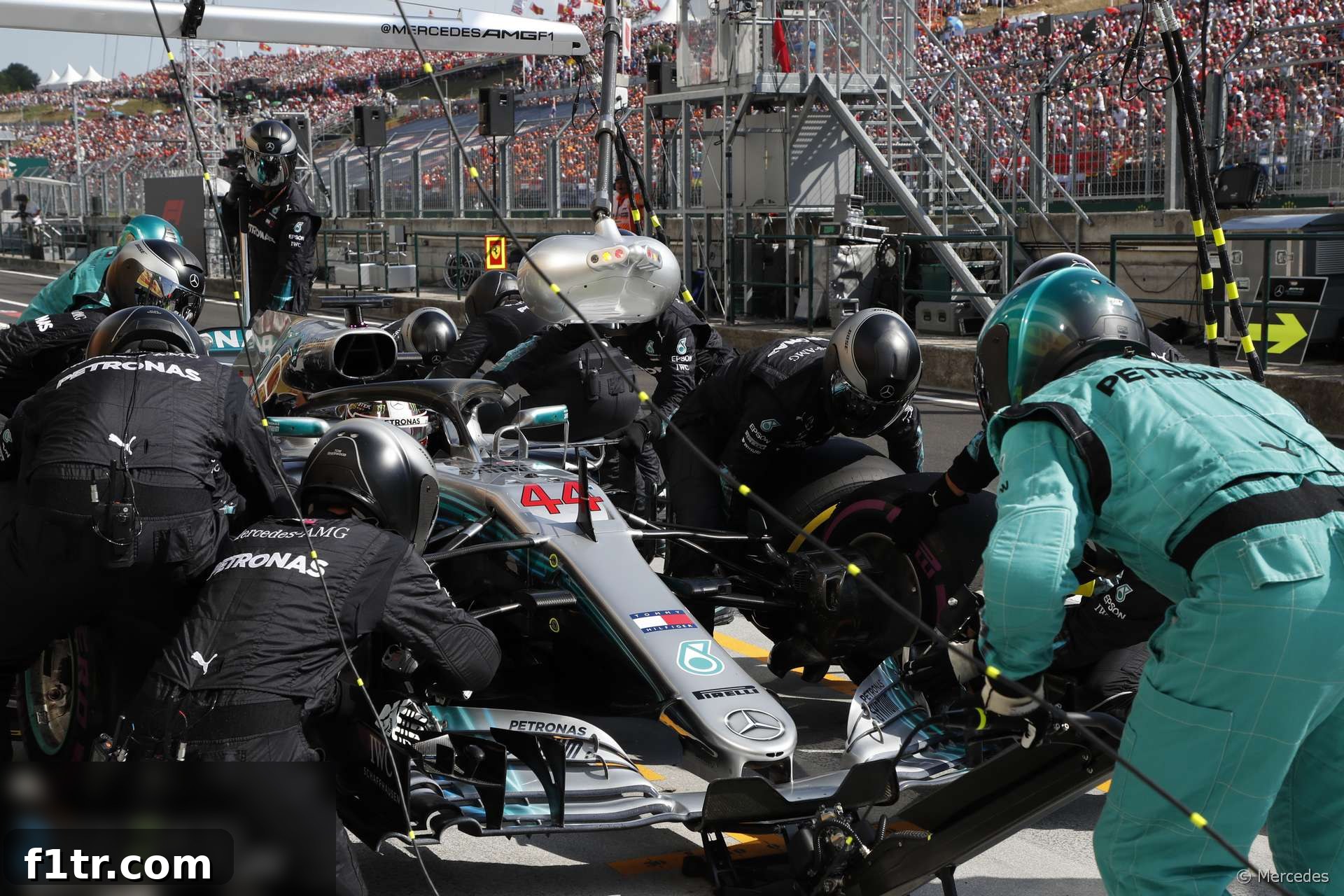
In the dynamic world of Formula 1, where every millisecond and strategic decision can dictate the outcome of a race, the interpretation and enforcement of regulations are paramount. Race director Charlie Whiting, a central figure in upholding the integrity of the sport, recently offered his perspective on a nuanced area of the Sporting Regulations: the occasional appearance of pit crews in the pit lane even when their drivers are not scheduled for a pit stop. This seemingly minor detail often sparks debate among fans and competitors, highlighting the fine line between strategic maneuvering and potential rule infringement. Whiting’s comments provide valuable insight into how race control views these tactical bluffs, considering them an integral part of the show rather than a cause for concern, as long as they adhere to the spirit of the rules.
F1 Pit Lane Etiquette: Race Director Charlie Whiting on Team Tactics
Understanding Article 28.12 and Strategic Bluffs
Article 28.12 of the Formula 1 Sporting Regulations explicitly states that “team personnel are only allowed in the pit lane immediately before they are required to work on a car and must withdraw as soon as the work is complete.” This regulation is fundamentally designed to ensure safety within the confined and high-speed environment of the pit lane, preventing unnecessary congestion and potential hazards. However, in the intensely competitive landscape of F1, teams often push the boundaries of these rules, seeking every conceivable advantage.
It has become a common sight to observe team members appearing in the pit lane, often with equipment ready, only for their driver to bypass the pit entry. This tactic is widely understood to be a strategic bluff, a psychological ploy aimed at misleading rival teams. The objective is clear: to sow seeds of doubt, prompt competitors to make a premature or unnecessary pit stop, or simply to gain a fleeting tactical advantage by influencing their race strategy. Such mind games are an inherent part of Formula 1, adding another layer of complexity to the already intricate chess match played out on track.
Race Director Charlie Whiting, who possesses the authority to report any perceived incidents to the stewards, addressed this very practice following an instance involving Mercedes during a recent race. Despite the potential for such actions to be seen as a breach of the regulations, Whiting expressed a pragmatic and somewhat lenient view, indicating that he is not overly concerned about these occasional tactical displays.
It was clear they could have been stopping. Whether they had any intention to do it I don’t know.
The rule’s in place purely to stop people hanging around all the time if you remember they used to be out in the pit lane nearly all the time. I think it works pretty well. They all play little games occasionally.
If they’d been hanging around in that area for a couple of minutes at the same time Ferrari were coming for example then we might have something to say about it. I think that’s all part of the show.
Whiting’s comments shed light on the FIA’s interpretation of Article 28.12. He acknowledges that the possibility of a pit stop must be credible; teams must genuinely appear ready to perform work on the car. The essence of the rule, according to Whiting, is to prevent continuous loitering in the pit lane, a practice that was more prevalent in the past and posed significant safety risks. The current regulation, in his view, effectively achieves this primary goal. Furthermore, his stance suggests a recognition of the “little games” played by teams as a legitimate, if sometimes mischievous, aspect of F1 strategy, provided they do not cross a line into deliberate obstruction or prolonged unnecessary presence.
The distinction lies in the duration and intent. A brief appearance, creating a plausible scenario for a pit stop, is considered part of the tactical repertoire. However, if a pit crew were to remain in the pit lane for an extended period, particularly coinciding with a rival’s actual pit stop window, it could then be deemed an impediment or an unfair advantage, warranting intervention from race control. This nuanced approach allows for the strategic dynamism of F1 while upholding fundamental safety and fairness principles. It reinforces the idea that Formula 1 is not just about raw speed and engineering prowess, but also about the psychological warfare and strategic acumen deployed by teams and drivers, making these “little games” an exciting, albeit controversial, element of the Grand Prix spectacle.
Quotes: Dieter Rencken
Advert | Become a RaceFans supporter andgo ad-free
F1 Social Media Buzz: Reactions, Transfers, and Throwbacks
The Pulse of Formula 1 Beyond the Track
Social media has become an indispensable platform for Formula 1 teams, drivers, and fans to connect, share news, and react to the sport’s ever-evolving narrative. From major driver announcements to nostalgic glances back in time, the digital landscape buzzes with activity, offering a real-time reflection of the F1 world’s collective sentiment. Here’s a snapshot of some notable posts that captured attention:
The Mercedes-AMG F1 team shared a behind-the-scenes moment, showcasing the intensity and camaraderie within their championship-winning squad:
https://www.instagram.com/p/BmBnUnCA02y/?taken-by=mercedesamgf1
A significant highlight was the immediate reaction to Daniel Ricciardo’s surprising move to Renault. Nico Hülkenberg, Ricciardo’s new teammate, extended a warm welcome:
Welcome to the family Brooo.. 👊🏼
Looking forward to go hunting together next year! 😉 @danielricciardo #F1 #RSspirit pic.twitter.com/4qs4QUZsg1— Nico Hülkenberg (@HulkHulkenberg) August 3, 2018
The news quickly resonated with fans and pundits alike, with many acknowledging the magnitude of Renault’s acquisition:
That’s one hell of a coup for Renault! 👀
— Deano (@deanobowers81) August 3, 2018
Another F1 figure, Mia Sharizman Ismail, celebrated Ricciardo’s move with a nostalgic photo, highlighting the long journey of the Australian driver:
I think this photo with my son long long time ago and a certain @danielricciardo looks appropriate for today. Welcome to @RenaultSportF1 mate. pic.twitter.com/3veVj53hzM
— Mia Sharizman Ismail (@MiaSharizman) August 3, 2018
Beyond Ricciardo’s transfer, other discussions animated the F1 Twittersphere, including speculation about Fernando Alonso’s future and the complexities of driver-engine manufacturer relationships:
I would love to see @alo_oficial at @redbullracing in 2019. But having watched the @amazon McLaren Doc last night, sadly I can’t imagine there is enough humble pie in all of Japan for #FA14 to reconcile with #Honda! #F1
— JB (@27_5Motorsport) August 3, 2018
Veteran F1 journalist Fritz-Dieter Rencken shared a glimpse into his work, reflecting on past high-profile F1 cases:
Spring (summer?) cleaning my office during @F1 break, & find 3 dossiers of clippings re B Ecclestone $40m fraud case, ready for writing a column – then he settled it by way of $100m payment… pic.twitter.com/y1nSYxSZre
— Fritz-Dieter Rencken (@RacingLines) August 3, 2018
And finally, a nostalgic trip down memory lane from former F1 driver David Coulthard, reminiscing about his early karting days:
Seems like only yesterday when the innocent days of Karting saw me only reassure myself that I was at the apex when I had clouted the kerb!! #happydays #karting pic.twitter.com/smYZFvktmA
— David Coulthard (@therealdcf1) August 3, 2018
- Find more official F1 accounts to follow in the F1 Twitter Directory
Further Reading: Key Motorsport Insights
Explore More News and Analysis from the F1 World
For those eager to delve deeper into the latest happenings and expert analyses in motorsport, a selection of compelling articles from leading sources provides invaluable context to the ongoing discussions in Formula 1. These links offer insights ranging from driver market dynamics to technical testing observations, enriching our understanding of the sport’s intricate layers.
Advert | Become a Supporter & go ad-free
McLaren came ‘pretty close’ to getting Ricciardo (Racer)
This article explores the behind-the-scenes negotiations and the competitive landscape of the driver market. It reveals that McLaren was significantly in contention for Daniel Ricciardo’s services, suggesting the Australian driver had a strong desire for a change of environment. The report offers a glimpse into how close teams like McLaren come to securing top talent, underscoring the fierce competition not just on track, but also in the boardroom for driver contracts. The quote, “I think he had a strong desire to leave and I think it was probably pretty close between us and Renault, but ultimately Daniel would be best to tell you how close,” hints at the complex decision-making process drivers face when considering their future in F1.
Norris’ Diary: F1 Testing Hungary (Sky)
Lando Norris, a rising star in the motorsport world, shares his experiences from F1 testing in Hungary. His personal diary offers a candid look at the challenges and learning curves faced by young drivers stepping into the pinnacle of motorsport. Particularly insightful are his comments on driving an F1 car in wet conditions for the first time, highlighting the significant differences and demands compared to his F2 experience. “The final hour on Tuesday was quite tricky because it was the first time I’d driven an F1 car in the wet and it was quite a different experience to my F2 car,” illustrates the unique skills and adaptability required to master Formula 1 machinery, especially in variable conditions. This offers fans a unique perspective from the driver’s seat during a critical development phase.
We always endeavour to credit original sources. If you have a tip for a link to feature in the next RaceFans round-up please send it in here:
- Contact RaceFans
Advert | Become a RaceFans supporter andgo ad-free
Daniel Ricciardo’s Renault Move: A Deep Dive into a Brave Decision
Analyzing the Implications for Driver and Teams
The announcement of Daniel Ricciardo’s transfer to Renault sent shockwaves through the Formula 1 paddock and fan community alike. It was a move few anticipated, given Red Bull Racing’s competitive standing and the promising developments with their new engine partner, Honda. The “Comment of the Day” from user ‘Wobs’ perfectly encapsulates the initial bewilderment and subsequent analysis surrounding this pivotal career decision.
What a signing for Renault but I have to say I am shocked. From a fan’s perspective, Red Bull-Honda is for sure his best to win a championship, he is pretty much guaranteed the best if not joint best chassis on the grid, the big unknown being Honda, but it’s agreed in the paddock now Honda and Renault power unit is on par.
So why choose Renault then? Better chassis? No. Better power unit? Probably not. Bigger potential/budget? Again no, Red Bull are Formula ‘A’, Renault ‘B’ and have a ton of work to do to join ‘A’. They are still not even consistently ‘best of the rest’.
Maybe being team mates with Verstappen has something to do with it? I think we will all agree for a driver to challenge for the championship he needs number one status, he will get that at Renault but will always be 50:50 at Red Bull. Red Bull will now have Verstappen as number one to enable him to challenge for the championship with support from Sainz/Gasly.
I really hope it works out for Ricciardo. Top, top driver and a great character, a very brave move.
Wobs
Wobs’ analysis hits on several crucial points that define the intrigue of Ricciardo’s transfer. From a performance standpoint, Red Bull, with its proven championship-winning chassis design philosophy and the high potential of the Honda power unit, appeared to be the more logical choice for a driver aspiring for a world championship. The prevailing paddock consensus, as noted, suggested a parity between Honda and Renault power units, negating any immediate engine advantage for the move.
The Lure of Being a Team Leader
The core of Wobs’ argument, and indeed a widely discussed factor, revolves around Ricciardo’s desire for unequivocal ‘number one’ status. At Red Bull, particularly with Max Verstappen’s meteoric rise and the team’s growing investment in the young Dutchman, Ricciardo’s position as an undisputed team leader was arguably diminishing. While Red Bull has historically maintained an equal-opportunity policy for its drivers, the perceived shift in dynamic, coupled with several high-profile on-track incidents between the two, likely played a significant role in Ricciardo’s decision-making process.
At Renault, Ricciardo is positioned as the clear spearhead of the team’s long-term project. This provides him with the opportunity to shape the team’s development, influence strategic decisions, and enjoy the full backing necessary for a championship challenge, should Renault reach that level. For a driver of Ricciardo’s caliber and ambition, having a team built around him could be a more appealing prospect than being one of two fiercely competitive drivers vying for equal attention within an established top team.
A Bet on Renault’s Future
The move is undoubtedly a significant gamble. Renault, while a factory team with vast resources and a rich F1 history, has been in a rebuilding phase, often struggling to consistently break into the ‘best of the rest’ category. Ricciardo’s transfer signifies a profound belief in Renault’s long-term vision and its potential to climb the grid. It’s a statement of faith that the French manufacturer can evolve from a ‘Formula B’ team to a genuine ‘Formula A’ contender, as Wobs describes it.
This decision might not yield immediate championship contention for Ricciardo. It’s a long-term play, a commitment to a project that requires patience and dedication. However, if Renault succeeds in their ambitious climb, Ricciardo would be remembered as the driver who led them there, cementing his legacy not just as a race winner, but as a pivotal figure in a team’s resurgence. It’s a brave move for a top-tier driver with a vibrant personality, one that will be closely watched by the entire F1 community.
RaceFans Community Calendar: Happy Birthday!
Today, our RaceFans community wishes no one a happy birthday. While the roar of engines might be quiet for a moment, the spirit of Formula 1 always burns bright. We believe in celebrating every member of our global family.
If you want a birthday shout-out on our daily round-up, make sure to let us know your special day! You can tell us when yours is via the contact form or by adding your details to our dedicated list here. We love celebrating with our readers and sharing these personal milestones within our passionate motorsport community. Make sure your birthdate is recorded so you can be part of our next celebration!
On This Day in F1 History: Remembering Iconic Moments
History often provides a rich tapestry against which current events are viewed. “On This Day in F1” serves as a reminder of the sport’s enduring legacy, showcasing moments of triumph, remarkable skill, and the dramatic evolution of Formula 1 over the decades.
- 50 years ago today, Jackie Stewart won at a soaked Nurburgring Nordschleife by a massive four minutes. This incredible feat, achieved on August 4th, 1968, stands as one of the most dominant performances in Formula 1 history. Driving in torrential rain and dense fog on the perilous 22.8-kilometer Nordschleife circuit, often dubbed “The Green Hell,” Sir Jackie Stewart showcased unparalleled car control and bravery. His margin of victory—an astounding four minutes over Graham Hill in second place—is a testament to his legendary skill and the treacherous conditions that defined that era of motorsport. Such a monumental achievement highlights the raw talent and courage of drivers from a bygone era, where human skill was often the deciding factor against the elements and unforgiving tracks. It remains a legendary chapter in the annals of Grand Prix racing, showcasing an almost superhuman effort in one of F1’s most iconic venues.