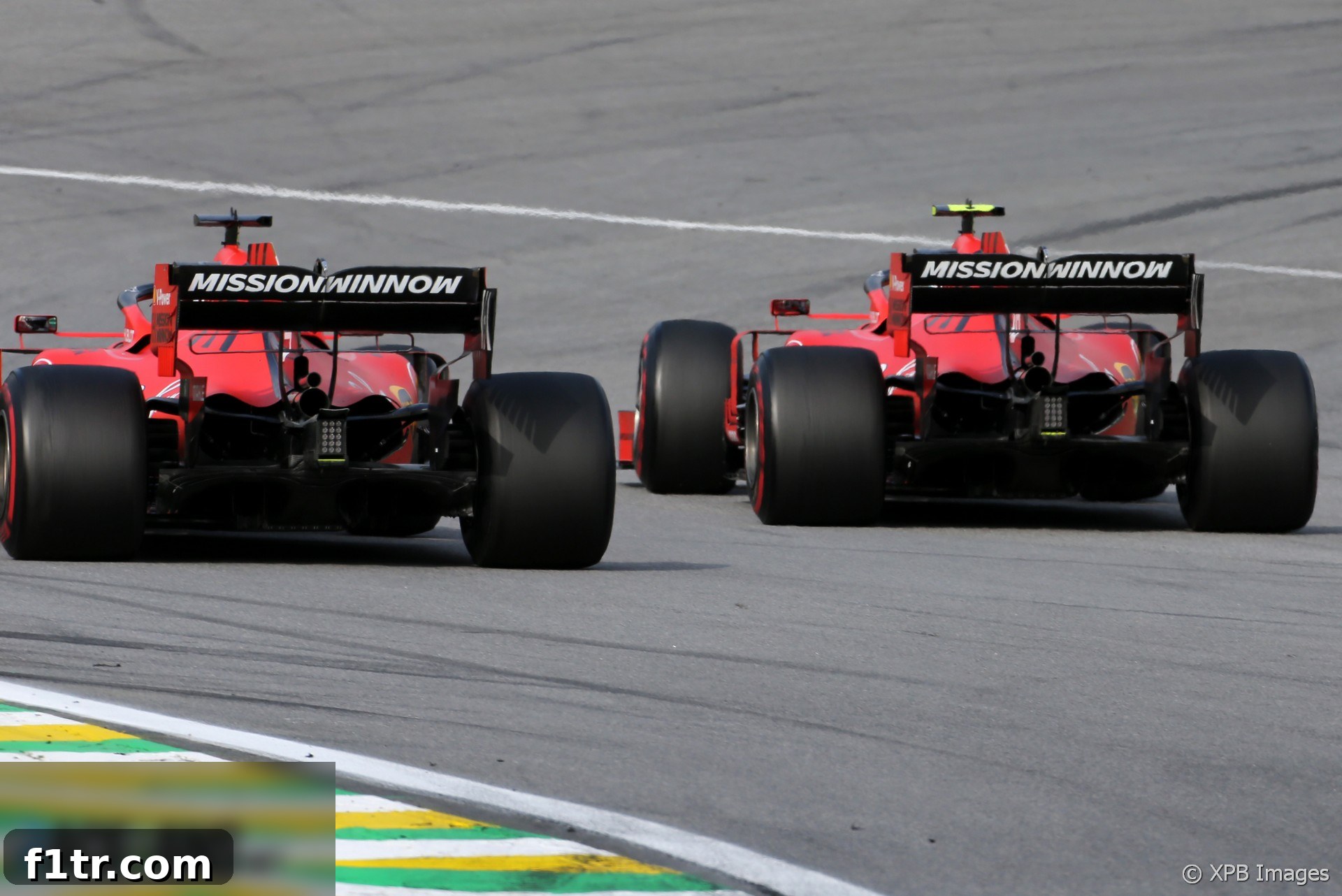
Brazilian Grand Prix: Leclerc and Vettel Escape Penalty After Ferrari F1 Collision
A contentious moment in Formula 1 history unfolded at the 2019 Brazilian Grand Prix when Scuderia Ferrari teammates Sebastian Vettel and Charles Leclerc made contact, bringing a premature end to both their races. Despite the significant implications for the team and the palpable tension between the drivers, F1 stewards ultimately ruled against penalizing either competitor, declaring no single driver was predominantly at fault for the dramatic clash.
Become a Supporter & go ad-free
The Incident: A High-Stakes Collision at Interlagos
The collision occurred on the main straight between turns three and four at the Autódromo José Carlos Pace, a critical overtaking zone known for its high speeds and challenging close-quarters racing. Both Ferrari cars, locked in a fierce battle for position, came together with devastating consequences. The impact caused significant damage to both SF90s, forcing both Vettel and Leclerc to retire from the race on the spot. This incident not only cost Ferrari valuable points but also ignited a firestorm of discussion regarding team orders, driver responsibility, and the escalating internal rivalry within the iconic Italian team.
The highly anticipated intra-team battle had been a narrative weaving through much of the 2019 season. Leclerc, in his maiden year with Ferrari, had consistently challenged the four-time world champion Vettel, often demonstrating impressive pace and a fearless approach. The Brazilian Grand Prix clash, however, transcended mere competition; it was a physical manifestation of the simmering tensions, culminating in a disastrous outcome that left the team principal, Mattia Binotto, visibly frustrated.
Stewards’ Verdict: No Fault Predominantly Assigned
Following the race, Formula 1 stewards launched an immediate investigation into the incident, summoning both drivers and a representative from Ferrari to provide their accounts. After a thorough review of telemetry, onboard footage, and driver testimonies, the stewards delivered a verdict that, while preventing penalties, did little to soothe the underlying issues. They concluded that “both drivers had the opportunity to avoid or mitigate the incident and therefore that neither driver is predominantly at fault.”
This ruling is often reserved for racing incidents where culpability cannot be clearly assigned to one party over another. While it avoided penalizing individual drivers with grid drops or points deductions, it effectively placed shared responsibility on both Vettel and Leclerc for their lack of caution and spatial awareness in a critical racing scenario. The decision highlighted the razor-thin margins in F1 and the subjective nature of judging racing incidents, especially when involving teammates fighting for the same patch of tarmac.
Driver Reactions: Conflicting Narratives Emerge
The aftermath saw both drivers offering differing perspectives on the collision, underscoring the competitive friction between them.
Charles Leclerc’s Account: “I Left the Space”
Charles Leclerc stated his belief that he had left sufficient room for his experienced teammate to avoid contact. He recounted the sequence of events:
“He went around the outside, there was little space, but I left the space. He took [me] and then towards the end of the straight he started to squeeze me a little bit to the inside and we were very close. Everything happened very quick and as soon as he went to the inside we touched and I had a puncture.”
Leclerc’s perspective painted a picture of an aggressive defensive maneuver by Vettel, suggesting he was pushed into a compromised position that ultimately led to the contact and the subsequent tire puncture that sealed their fate. His narrative hinted at a frustration with Vettel’s uncompromising approach, especially considering they were teammates.
Sebastian Vettel’s Response: “It Doesn’t Matter Now”
In contrast, Sebastian Vettel adopted a more subdued, albeit equally frustrated, tone. When asked for his explanation of the collision, he offered a terse response:
“It doesn’t matter now. We know we both didn’t finish the race, which obviously is bad for us as a team.”
Vettel had previously claimed he did not have much space, implicitly suggesting Leclerc was also to blame. His reluctance to delve into specifics immediately after the race underscored the intense disappointment and perhaps a desire to avoid publicly escalating the internal conflict. However, his choice of words also conveyed a sense of resignation, acknowledging the collective failure rather than pinning blame, even if privately he felt otherwise.
Team’s Perspective: Binotto’s Call for Caution
Ferrari team principal Mattia Binotto was unequivocal in his assessment, stating that both drivers were partly responsible for the collision. Binotto, tasked with managing two highly competitive and ambitious drivers, expressed his disappointment and emphasized the need for better judgment from both his stars.
Binotto’s comments reflected the immense pressure on team management to reconcile internal rivalries with the overarching goal of securing championship points. He stressed that such “silly mistakes” were unacceptable, particularly when they resulted in a double retirement for a top team. The incident forced Ferrari to confront the delicate balance between allowing drivers to race freely and imposing team discipline to prevent self-sabotage.
Implications for Ferrari: Managing a Volatile Pairing
The Brazilian Grand Prix incident was more than just a momentary lapse; it was a significant indicator of the internal dynamics at Ferrari. The rising star, Leclerc, was challenging the established veteran, Vettel, for supremacy within the team. Such rivalries, while sometimes beneficial for pushing performance, can also become destructive, as was evident at Interlagos.
For Ferrari, the incident posed critical questions about their approach to driver management. How could they harness the competitive spirit of their drivers without it boiling over into costly errors? The double retirement in Brazil was a stark reminder of the financial and reputational damage such clashes could inflict. It added another layer of complexity to a season that had already seen Ferrari struggle with consistency and strategic decisions, often falling short of challenging Mercedes for the championship title.
The stewards’ decision, while neutral, did not offer a clear resolution for the team’s internal tensions. Instead, it left Ferrari to manage the fallout, emphasizing the need for both drivers to learn from the mistake and prioritize the team’s success above individual ambitions. This incident served as a powerful lesson in the delicate art of managing a volatile, yet supremely talented, driver pairing in the cutthroat world of Formula 1.
Beyond the Race: The Wider Context of F1 Rivalries
Teammate collisions are not new to Formula 1, with famous instances like Prost-Senna or Hamilton-Rosberg defining eras and rivalries. The Vettel-Leclerc crash at Interlagos etched itself into this legacy, albeit with a less definitive “culprit.” It highlighted the inherent challenge for any F1 team boasting two top-tier drivers: how to maximize individual performance without jeopardizing collective success. The 2019 season, in particular, was marked by several instances of close racing and strategic tensions between the Ferrari pair, making this particular incident feel almost inevitable to some observers.
Don’t miss anything new from RaceFans
Follow RaceFans on social media to stay updated with the latest Formula 1 news and analysis:
- Join RaceFans on Facebook
- Follow RaceFans on Twitter
- Get daily email updates from RaceFans
Become a RaceFans supporter and go ad-free
2019 F1 Season Insights
Delve deeper into the memorable 2019 Formula 1 season with these related articles:
- Crying in the Melbourne car park at 2019 grand prix was my career low – Ocon
- McLaren Racing reports reduced £71 million loss in 2019
- Kvyat: Hockenheim podium last year was “my biggest achievement” so far
- How the FIA’s new encrypted fuel flow meter targets Ferrari’s suspected ‘aliasing’ trick
- “He smashed my office door”: 23 must-see moments from ‘Drive to Survive’ season two
Browse all 2019 F1 season articles