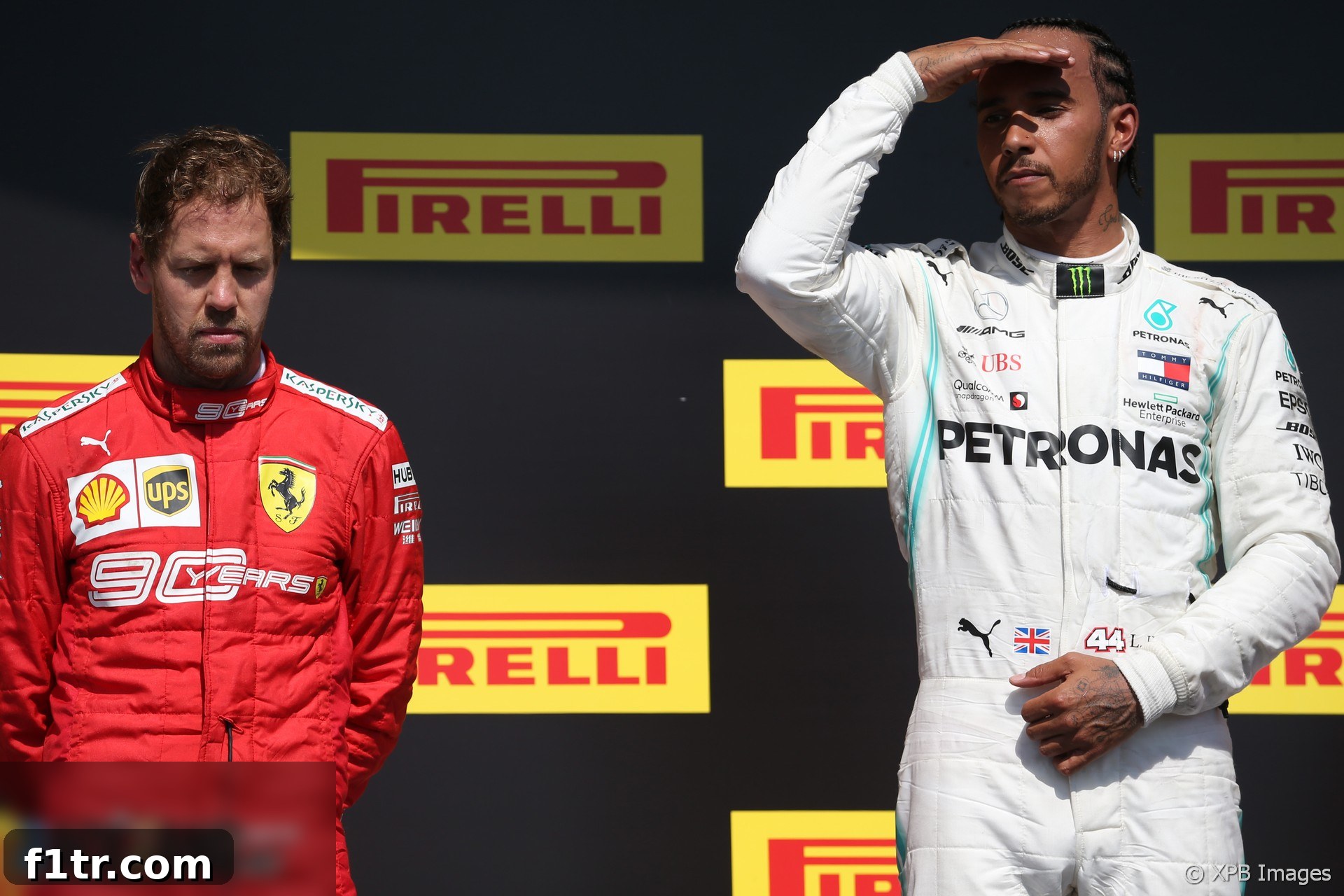
In a detailed analysis of a pivotal moment from the 2019 Formula 1 season, Sebastian Vettel publicly expressed his profound frustration following the Canadian Grand Prix. The Ferrari driver argued that the controversial penalty, which ultimately cost him victory, was particularly galling because he had successfully fended off a significantly faster car driven by Lewis Hamilton. This incident sparked widespread debate among fans, pundits, and within the sport’s governing body regarding the consistency and interpretation of racing rules, specifically concerning rejoining the track safely.
The race saw Vettel lead much of the event under immense pressure from Hamilton. On lap 48, while defending his position, Vettel ran wide at turn 3, briefly going onto the grass before rejoining the track. His re-entry was deemed unsafe by the stewards, as it forced Hamilton to take evasive action, squeezing him towards the wall. A five-second time penalty was subsequently applied, relegating Vettel to second place despite crossing the finish line first. This decision ignited a firestorm of discussion, with many believing it was too harsh and robbed the sport of a true on-track resolution between two of its greatest champions. Vettel’s impassioned comments after the race highlighted his belief that he had done nothing wrong and that the penalty undermined the spirit of hard, fair racing.
Vettel’s Candid Reaction to the Canadian GP Penalty
I think it’s a shame, a great shame, because we were not the fastest car that day. I believe Lewis was undeniably faster, and we must accept and appreciate that he had superior pace throughout the race. However, we crossed the line first, secured an incredible pole position, and managed to hold him off for the entire duration of the race, staying ahead under immense pressure. So, for that effort to be undone by a penalty, it felt deeply unjust and incredibly disappointing.
My actions were simply me trying to maintain control of my car after an error and defend my position vigorously, as any racing driver would. I had nowhere else to go but back onto the track. The track itself guides you in a certain direction, and my priority was to prevent a collision while rejoining. To then be penalized for what I considered a racing incident, especially when I felt I had successfully executed my defence against a quicker rival, was a bitter pill to swallow. It truly felt like the victory was taken from us rather than earned by our competitors on the track.
Quotes: Dieter Rencken, RaceFans
Advert | Become a RaceFans supporter andgo ad-free
Social Media Pulse: Esports, Le Mans, and F1 Debates
The world of motorsport is a vibrant ecosystem, constantly abuzz with activity across social media platforms. From thrilling esports victories to spirited debates about the merits of different racing series, here’s a snapshot of notable discussions and updates from Twitter, Instagram, and beyond:
https://www.instagram.com/p/BypdykBBCB3/
Instagram continues to be a hub for fans to connect with their favorite teams and drivers, offering a more visual and personal insight into the paddock and beyond. Posts often include behind-the-scenes glimpses, driver celebrations, and updates that build a stronger connection between the sport and its global audience.
The @VeloceEsports gamers win the first #LeMansEsports Series final
@Veloce_Virus @Veloce_Jaaames and @Sauber_Dave https://t.co/V6kXQocoVW— 24 Hours of Le Mans (@24hoursoflemans) June 15, 2019
The burgeoning world of motorsport esports continues to gain significant traction, as evidenced by Veloce Esports’ triumph in the inaugural Le Mans Esports Series final. This victory underscores the growing professionalism and competitive intensity within virtual racing, where skilled gamers like Veloce_Virus, Veloce_Jaaames, and Sauber_Dave demonstrate incredible precision and strategy. The integration of esports into major racing events like the 24 Hours of Le Mans not only broadens the appeal of motorsport to a new generation but also provides an accessible platform for aspiring talent to shine on a global stage. The series mimics the strategic depth and teamwork required in real-world endurance racing, making it a compelling spectacle for fans and participants alike.
I love Le Mans, but the people using it to criticise F1, not so much. This is four categories in one race. Yes, top cars in F1 disappear, and so too do the Toyota LMP1s.
They’re so different. Enjoy both, enjoy only one, enjoy neither, but why use one to kick the other? #LeMans24
— Chris Medland (@ChrisMedlandF1) June 15, 2019
Motorsport journalist Chris Medland weighed in on the perennial debate comparing Formula 1 with the 24 Hours of Le Mans. His tweet brilliantly highlights the fallacy of using one iconic race to disparage another. Medland points out the fundamental differences, noting that Le Mans, by its nature, features multiple categories racing simultaneously, which naturally leads to varied performance levels across the field. This can be likened to how top teams often dominate in F1, just as the leading LMP1 prototypes (like Toyota) often set themselves apart in endurance races. He advocates for an appreciation of each discipline’s unique challenges and entertainment value, encouraging fans to enjoy both sports for what they are rather than fostering an unnecessary rivalry. This perspective promotes a more inclusive and appreciative view of the diverse motorsport landscape, recognizing the distinct appeals of single-seater sprints versus multi-class endurance marathons.
- For more official F1 accounts and key figures to follow, explore our comprehensive F1 Twitter Directory, a valuable resource for staying connected with the sport.
Further Motorsport Insights: A Curated Collection of Key Stories
Beyond the immediate headlines, the motorsport world continues to evolve with significant developments across various championships. Here’s a selection of insightful links exploring pivotal stories and discussions:
Advert | Become a Supporter & go ad-free
Fernando Alonso: #7 Toyota hard to match on pure pace at Le Mans (Crash.net)
“‘My stint went okay. We are still in the race, we are not out of contention,’ Alonso said. ‘Last year we were two-and-a-half minutes behind and we won the race. It’s difficult to match the other car on pure pace but we will push. The race is long.'” This quote from Fernando Alonso during the 2019 Le Mans 24 Hours race highlights the intense internal battle within the dominant Toyota Gazoo Racing team. Alonso, piloting the #8 car, acknowledged the superior raw speed of the sister #7 car, emphasizing the challenges of matching its pace. His determination, however, remained undeterred, drawing parallels to their victorious comeback in the previous year’s event despite a significant time deficit. This perspective showcases the strategic depth required in endurance racing, where overall race management, reliability, and consistent performance over 24 hours often outweigh raw single-lap speed, keeping the race dynamic and unpredictable even among dominant entries.
IMSA Reacts to ACO/FIA Hypercars Announcement: A Divided Future for Prototype Racing (Racer.com)
“IMSA will continue doing its own thing with prototypes. Europe’s ACO and FIA World Endurance Championship will do theirs. And, for the better part of the next decade, an alignment between top prototype formulas will not be possible as different visions play out between Hypercars and Daytona Prototype internationals.” This report delves into the significant divergence between the visions for top-tier prototype racing in North America (IMSA’s Daytona Prototype international – DPi) and globally (ACO/FIA World Endurance Championship’s Hypercars). It clarifies that, for the foreseeable future, a complete alignment of regulations, which many fans and manufacturers had hoped for, will not materialize. This split has profound implications for manufacturers, teams, and drivers, forcing them to choose between different paths for their prototype racing ambitions. The article outlines how these distinct approaches reflect differing philosophies on cost control, technology, and market relevance, setting the stage for two compelling yet separate eras of sportscar racing.
Jean Todt on Formula E Calendar Clashes: Acknowledging Scheduling Complexities (Eracing365)
“‘We have 52 weekends in the year and we’re mentioning the number of events we have so, unfortunately, there are some clashes between some dates and championships.'” FIA President Jean Todt’s comments shed light on the inherent challenges of managing a global motorsport calendar, particularly with the proliferation of new and expanding championships like Formula E. With a finite number of weekends in a year and an ever-increasing roster of events across Formula 1, Formula E, World Endurance Championship, IndyCar, and more, calendar clashes are almost inevitable. Todt’s remarks suggest that many of these conflicts arise from complex logistical planning and the difficulties of coordinating across various stakeholders and promotors worldwide, rather than deliberate scheduling choices. This issue affects driver availability, fan viewership, and media coverage, making comprehensive scheduling a critical, ongoing challenge for international motorsport governing bodies.
Phil Hanson: The 19-Year-Old Prodigy Tackling His Third Le Mans 24 Hours (Motorsport Magazine)
“Hanson is among a group of young drivers who – initially at least – are turning their backs on single-seater racing for high-level sports car racing, where there’s greater opportunity to succeed.” This feature spotlights Phil Hanson, a remarkable 19-year-old driver embarking on his third appearance at the iconic Le Mans 24 Hours. His career trajectory exemplifies a growing trend among talented young racers who are opting for a path in elite sports car racing rather than exclusively pursuing the often financially challenging and highly competitive single-seater ladder towards Formula 1. The article explores the reasons behind this shift, including more accessible opportunities, robust professional programs, and the allure of multi-class endurance racing. Hanson’s journey highlights the diverse and rewarding career avenues available in motorsport, showcasing how drivers can build successful careers outside of the traditional F1 pipeline by excelling in world-class endurance championships.
We always endeavour to credit original sources and provide diverse perspectives. If you have a tip for a link to feature in the next RaceFans round-up, please send it in via the contact form. Your contributions help keep our content rich and engaging for all motorsport enthusiasts.
Advert | Become a RaceFans supporter andgo ad-free
Decoding F1 Performance Gains: The Impact of the Cost Cap and Technical Regulations
Today’s insightful comment from DrMouse provides crucial clarification on how Formula 1 teams achieve performance gains, particularly in the context of the sport’s upcoming cost cap and stringent technical regulations. This deep dive helps demystify where hundreds of millions of dollars are truly spent and why the pursuit of marginal gains is so relentless.
Tyres are standard parts. They are the same for everyone. The things which change that are how they are driven (including how the engine is set up) and how the chassis affects them.
The power unit has restrictions on it to try to keep performance similar. By restricting maximum revs and fuel flow, there is a limit to the power input to the engine. The only way to get more performance is to make it more efficient, extracting more of that input power into the wheels, but there is a physical limit to the amount of power available.
On top of this, all teams use one of 4 engines. Each of these engines is, and must be, supplied equally to the teams using it. Therefore, all teams using the Mercedes engine get the same performance (given constraints from their chassis).
When it comes to the chassis, this is where money talks and large amounts of work can be put into finding a few hundredths here or there. However, even here there are strict regulations which limit what is available. The reason the top teams spend so much more is that every hundredth takes now and note work and money to find.
The cost cap is a reasonable attempt to restrict this further, as even the top teams will no longer have unlimited resources to find that extra hundredth.
DrMouse’s analysis underscores a fundamental truth in modern Formula 1: while key components like tires and power units are either standardized or strictly regulated to ensure a baseline level of performance equality, the true battleground for competitive advantage lies in chassis development. The comment meticulously explains that all teams receive identical tires, and power units, despite coming from different manufacturers, operate under severe restrictions on revs and fuel flow, pushing engineers towards efficiency rather than raw power. This ensures that the engine performance across customer and works teams for the same supplier remains largely consistent.
Therefore, the financial disparity and the relentless pursuit of perfection manifest most acutely in the aerodynamic and mechanical design of the chassis. Even with strict regulations governing car dimensions and technical specifications, the top teams leverage vast budgets, extensive research and development (R&D), state-of-the-art simulation tools, and thousands of skilled personnel to meticulously optimize every component. This effort is aimed at shaving mere hundredths of a second off lap times – a monumental task that becomes exponentially more expensive as teams chase ever-smaller gains. The introduction of a comprehensive cost cap represents a pivotal shift, aiming to curb this ‘arms race’ by limiting the total expenditure of teams. This measure seeks to foster greater competitive parity, forcing even the wealthiest teams to prioritize their R&D efforts and operate more efficiently, thereby creating a more level playing field and potentially more unpredictable racing outcomes for the benefit of the sport as a whole.
Happy Birthday to Fellow RaceFans!
We’d like to extend our warmest birthday wishes to Plushpile and Jennikate Wallace! We hope you both have a fantastic day filled with celebration and all things motorsport.
If you’d like to receive a special birthday shout-out on RaceFans, simply let us know when yours is via our contact form or by adding your date to our dedicated list here. We love celebrating with our community!
On This Day in F1 History: A Canceled Grand Prix and Unfulfilled Dreams
- Exactly 40 years ago today, the Swedish Grand Prix was conspicuously absent from the Formula 1 calendar. It had been initially scheduled to take place, but its cancellation a month prior marked a significant moment in F1 history. The reason for its sudden removal was the organizers’ failure to make a necessary financial payment to the Formula One Constructors’ Association (FOCA), led by Bernie Ecclestone. This financial dispute ultimately led to the permanent disappearance of the Swedish Grand Prix from the F1 schedule, a race known for its unique atmosphere and the innovative Tyrrell P34 six-wheeler victory in 1976. Despite hopes for its return over the decades, the Scandinavian country has not hosted a Formula 1 Grand Prix since, leaving a void for many fans who remember its rich, albeit brief, history.