Red Bull Teammates Verstappen and Perez United Against Rivalry Claims Ahead of Mexico Grand Prix
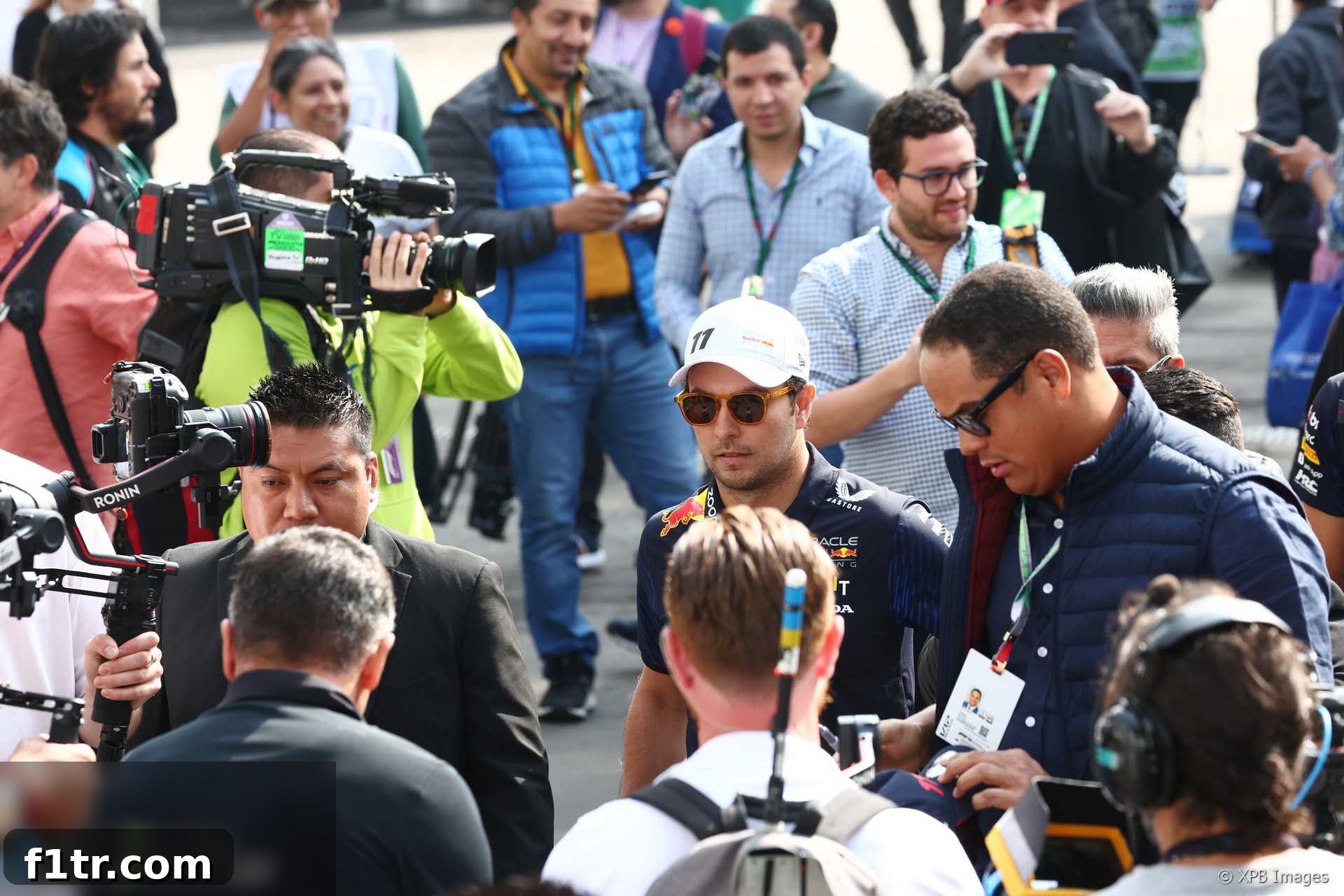
As the Formula 1 circus rolls into Mexico City for the much-anticipated Mexican Grand Prix, all eyes are on Red Bull Racing’s dynamic duo, Sergio Perez and Max Verstappen. Despite intense media speculation and passionate fan support dynamics, both drivers emphatically deny any underlying animosity or rivalry between them, particularly as Perez prepares to race in front of his adoring home crowd at the iconic Autodromo Hermanos Rodriguez.
The Mexican Grand Prix weekend holds significant weight for Perez, who carries the hopes and dreams of an entire nation on his shoulders. As the sole Mexican driver on the grid, his presence ignites an unparalleled atmosphere of fervent support, transforming the circuit into a sea of orange and vibrant Mexican flags. Yet, this incredible support often comes with the added pressure of expectation, particularly when juxtaposed against the backdrop of his teammate’s record-breaking season.
A Season of Contrasts: Verstappen’s Dominance vs. Perez’s Home Challenge
The 2023 Formula 1 season has been a tale of two halves for Red Bull’s drivers. While Max Verstappen has delivered an unprecedented level of dominance, securing 15 Grand Prix victories and clinching his third consecutive World Championship well before the season’s close, Perez’s season has seen its share of ups and downs. His last Grand Prix victory dates back to the Azerbaijan round in April, and while he has secured numerous podiums, the consistent top step has eluded him in recent months. This disparity in performance, coupled with the unique pressures of a home race, has often fueled narratives of tension and rivalry, particularly in the media.
The previous race weekend at the Circuit of the Americas in the United States served as a potent example of the emotional landscape surrounding these two drivers. Verstappen, despite winning the United States Grand Prix, was met with boos from certain sections of the crowd on the podium – a stark contrast to the overwhelming vocal support that Perez enjoyed throughout the event from many of the Mexican fans who had crossed the border. This incident further amplified the discussion around fan behavior and the perceived ‘rivalry’ between the teammates.
Promoting Respect: The #Racepect Campaign
In response to such incidents and to proactively foster a positive atmosphere, the organizers of the Mexican Grand Prix have launched a commendable ‘#racepect’ campaign. This initiative aims to encourage respect for all drivers from racegoers this weekend, specifically seeking to avert any potential hostility towards Verstappen or any other competitor. It’s a proactive step towards ensuring that the passionate support for one driver does not translate into disrespect for others, promoting the core values of sportsmanship that Formula 1 champions.
Verstappen himself weighed in on the campaign, deeming it a “good thing” for race promoters to take a more assertive stance against unsportsmanlike conduct from fans. However, he was quick to emphasize that this issue is far from being exclusive to Mexico, highlighting a broader problem within the sporting world. “I think in general the behaviour of the crowds in some places I think can be a bit better,” Verstappen commented, reflecting on the wider implications.
“For example in Austin, maybe it was a bit towards me. In general I think the behaviour of supporting your favourite driver is fine, but then I think you also have to respect the competition. But this is not only in our sport. I think it is a general problem in a lot of sports that I think needs to be looked at and needs to be improved.” His words underscore a universal challenge: maintaining competitive passion while upholding mutual respect for all athletes and teams.
Verstappen and Perez: United Front Against Fabricated Rivalry
Despite the external narratives, Verstappen remains steadfast in his assertion that any talk of a rivalry between him and Sergio Perez is unfounded. “That’s made up,” he stated unequivocally. “I mean, Checo and I, we get along really well. For us, I don’t think there is any rivalry.” He elaborated on the professional nature of their relationship, acknowledging the inherent drive to be faster but stressing the foundational respect they share. “Of course, as a driver on track, you always try to be first or you try to be faster, but I think we have a lot of respect for each other and we appreciate each other’s performances.” This sentiment reflects the professional ethos often seen in elite sports, where intense on-track competition does not necessarily equate to personal animosity.
Perez echoed his teammate’s sentiments, suggesting that any animosity between them has been significantly exaggerated by external forces, particularly the media. “I think it’s important that we give this message, because I think the media likes to create this sort of rivalry outside the track and I think we are a great sport,” he explained. His perspective highlights the media’s powerful role in shaping public perception and the potential for sensationalism to overshadow the genuine dynamics within a team.
As a global sport, Formula 1 serves as a role model for many, especially younger generations. Perez stressed the importance of focusing on the sporting aspect and ensuring that whatever rivalries emerge on the track, they remain confined to the circuit. “We are a great example for a lot of young generations and we should just be focused on the sport side. And whatever happens on track should always stay there and that’s the best message we, as a country, want to give to the rest of the world. There is nothing else going on. The most important thing is that everything stays on track.”
On-Track Battles vs. Off-Track Relationships
Perez further clarified the distinction between professional competition and personal relationships, urging fans to understand this crucial difference. He illustrated his point by stating, “Max and myself, we are in the same team so we both want to win and we are all giving our best so I don’t think that there should be any rivalry.” He drew a parallel to other drivers on the grid: “For example, if I’m fighting in the race with Fernando [Alonso], he’s not my rival out of the track, it’s just that we are just fighting on track. But like I say, the media likes to create this rivalry out of the track which I don’t think is right and it’s important for the fans to understand that.”
This perspective is vital for cultivating a healthy fan culture, emphasizing that the intense competition witnessed during a Grand Prix is a testament to the drivers’ dedication and skill, not an indicator of personal animosity. Understanding this distinction can help mitigate the aggressive fan behavior that sometimes spills over from the virtual world into real-life events.
The Pervasive Challenge of Social Media Toxicity
Beyond the boos and cheers at the circuits, Formula 1 drivers, like many public figures, frequently endure abuse on social media platforms. Max Verstappen candidly addressed this issue, advocating for more robust measures to curb the relentless online harassment sportspeople face. “Luckily I don’t spend a lot of time on social media, because it’s quite a toxic place,” he admitted, highlighting a sentiment shared by many in the public eye.
He attributed much of this toxicity to the anonymity afforded by online platforms. “People who don’t need to show their face or whatever, they can say whatever they want.” This lack of accountability often emboldens individuals to engage in behavior they would never exhibit in face-to-face interactions. Verstappen stressed that this is not a problem unique to Formula 1 but is rampant across various sports and society at large. “And again, this is not only in our sport. In a lot of different sports, it’s the same problem, or in general.” His call for action is clear: “So I think it needs to be much better regulated, what can be said and done and written to people in general.” The ongoing struggle to moderate online discourse and protect individuals from cyberbullying remains a significant challenge, with implications extending far beyond the realm of professional sports.
Conclusion: A Call for Unified Sportsmanship
As the Mexican Grand Prix weekend approaches, the message from the Red Bull garage is clear and unified: there is no personal rivalry between Max Verstappen and Sergio Perez. Their relationship is characterized by mutual respect and professional competitiveness, essential elements for any successful Formula 1 team. Their collective plea for improved fan behavior, both at the track and online, resonates as a vital reminder of the sportsmanship that should define the spirit of Formula 1. The #racepect campaign serves as a timely initiative, hoping to channel the immense passion of the Mexican fans into an atmosphere of celebration and respect for all competitors. Ultimately, the focus remains on the thrilling on-track action, where both drivers will undoubtedly push to deliver their best performances for their team and their fans.