The Lingering Aftermath of Abu Dhabi: FIA’s Reforms and Driver Reactions to a Contentious Finale
Almost 100 days have passed since the dramatic and bitterly contested conclusion of the 2021 Formula 1 season at Yas Marina. The motorsport world eagerly awaited the FIA’s final revelations regarding its exhaustive investigation into the handling of the now-infamous Abu Dhabi Grand Prix. The controversy, which undeniably altered the outcome of the world championship on the final lap, prompted an unprecedented review of the sport’s officiating and regulatory framework.
Unpacking the FIA’s Post-Abu Dhabi Reforms
The sport’s governing body had already outlined key outcomes of its inquiry over a month prior to this full disclosure. These significant reforms include a structural overhaul of the race director role, which will now be shared between two individuals. This aims to distribute the immense pressure and responsibility previously held by one person, reducing the potential for isolated errors and enhancing decision-making capacity. Furthermore, a permanent senior advisor has been appointed to assist the race directors, offering expert guidance and ensuring greater consistency. A groundbreaking addition is the introduction of a virtual race control room, designed to provide real-time support, review incidents, and offer additional layers of oversight, mirroring the Var (Video Assistant Referee) system seen in other sports.
A direct consequence of the investigation was the replacement of F1 Race Director Michael Masi. Masi found himself at the center of the storm following his contentious call to restart the Abu Dhabi race on the final lap. This decision was compounded by two critical issues: first, only a select portion of lapped cars were permitted to unlap themselves, creating an immediate disadvantage for Lewis Hamilton who was leading at the time. Second, the Safety Car was brought in a lap earlier than stipulated by the rules, denying teams and drivers the customary opportunity to prepare for a racing restart under clear and consistent guidelines. These actions sparked immediate outrage and led to the comprehensive review.
Adding to the structural and personnel changes, the FIA has also revised the specific rule concerning lapped cars under a Safety Car period. Previously, the regulation stated that “any cars that have been lapped by the leader will be required to pass the cars on the lead lap and the safety car.” This rule was controversially interpreted by Masi in Abu Dhabi in a manner contrary to his own past application and the established precedent. The updated regulation now unequivocally refers to “all cars”, removing any ambiguity and ensuring that such a selective unlapping scenario cannot occur again. This clear amendment underscores the FIA’s commitment to preventing a repeat of the 2021 season finale’s chaotic conclusion.
Divergent Views from the Championship Contenders
Given that the controversy dramatically swung the world championship outcome on the season’s final lap, it was inevitable that the FIA’s impending analysis would be viewed through the lens of its impact on the two primary contenders: Max Verstappen and Lewis Hamilton. Their reactions to the impending report were largely predictable, reflecting their positions in the championship battle. Hamilton vocally emphasized the crucial need for transparency, seeking a full and public accounting of the events and decisions. In stark contrast, Max Verstappen expressed that there was no necessity for the full report on the matter to be published, suggesting it was time to move on.
These differing opinions highlight the deep divide created by the incident, with one side seeking complete closure through accountability and the other preferring to leave the contentious events in the past. The championship itself, decided on such a controversial note, ensured that every subsequent comment from the key players would be heavily scrutinized and interpreted through the lens of that fateful race.
The Wider Impact: Drivers Demand Clarity
The controversy in Abu Dhabi extended far beyond just the title contenders, impacting numerous other drivers whose races and championship positions were also compromised. During press conferences, a recurring theme emerged among the remaining drivers: a collective demand for clarity and explanation regarding the officiating decisions. Similar to the aftermath of the 2021 Brazilian Grand Prix, where stewards controversially allowed Verstappen to run Hamilton wide without penalty, drivers consistently sought answers to ensure such ambiguity wouldn’t plague future races.
Carlos Sainz Jnr, who secured a hard-fought third place in Abu Dhabi, expressed his strong conviction that the unprecedented circumstances of the restart robbed him of a genuine chance to fight for his maiden F1 victory. The sudden and chaotic restart, with its altered track order, nullified his strategic position and left him with little opportunity to challenge for the top spot. His perspective highlights how the race control’s decisions had tangible, negative consequences for competitors beyond the title duel.
In one of the subsequent press conferences covering all 20 competitors, Pierre Gasly unequivocally stated, “we need transparency and we need clarity to know what to expect.” He further elaborated, acknowledging that “what’s done is done. Whether it was the right thing or wrong thing, it’s important for us drivers going forward to learn how these situations are going to be treated and to know what to expect. The sooner we can get this information, the better.” Gasly’s comments underscore a critical need for consistent application of rules and clear communication from race control, ensuring drivers can compete without fear of unpredictable officiating.
Lance Stroll, the Aston Martin driver, echoed these sentiments with even greater force. Stroll was one of a trio of drivers explicitly told not to unlap themselves while the cars positioned between Hamilton and Verstappen were selectively moved aside in Abu Dhabi. “I think there needs to be absolute consistency and clarity in the rules,” he asserted, adding, “What happened was unacceptable.” His personal experience of being caught in the arbitrary application of the rules gave his statement particular weight, encapsulating the frustration felt by many drivers who were disadvantaged by the chaotic final laps.
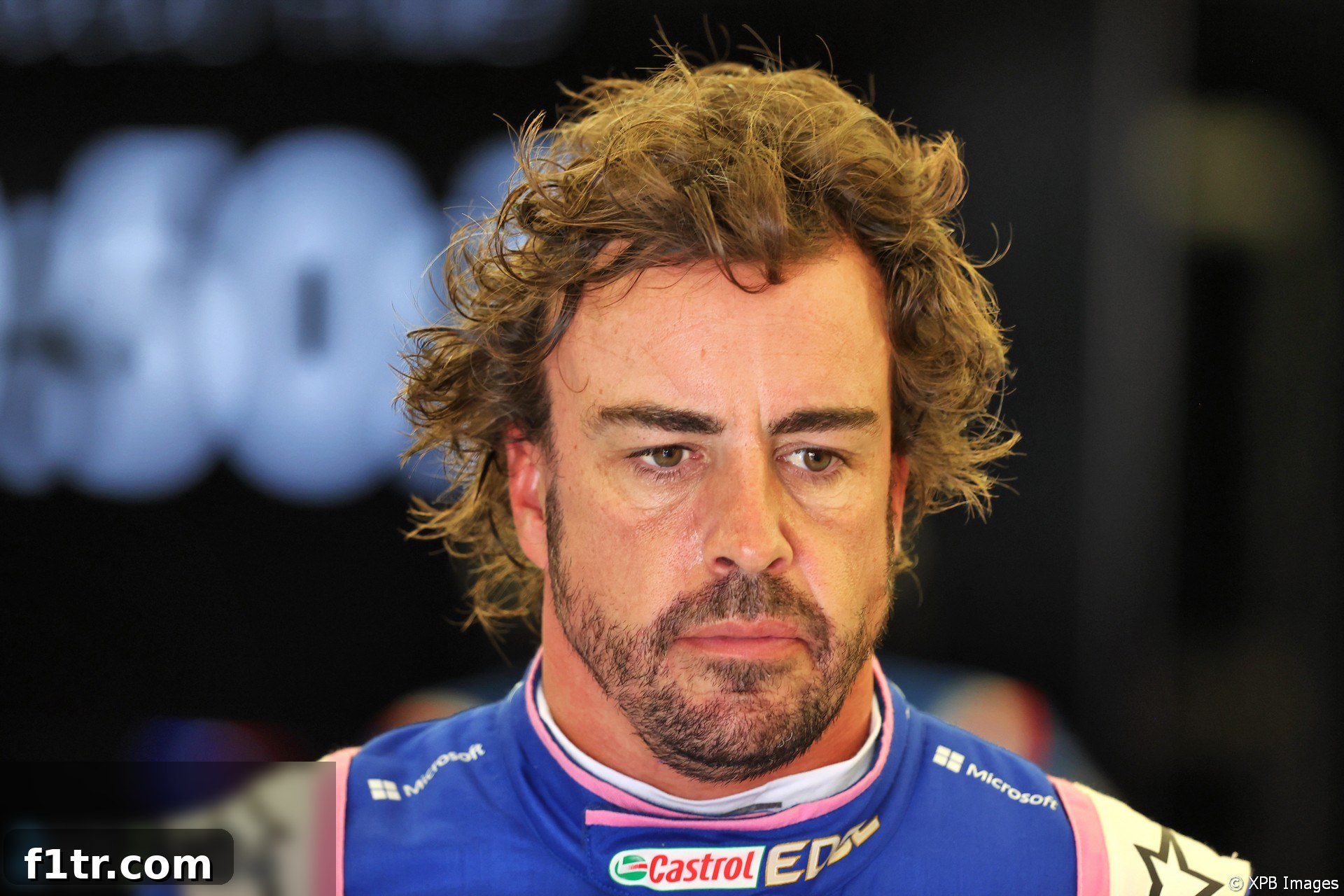
Fernando Alonso’s Enigmatic Stance: A Shift in Perspective?
Amidst the widespread calls for transparency and clarity, one notable dissenting voice emerged, distinct from both the Red Bull and Mercedes camps: that of Fernando Alonso. Speaking shortly after Stroll, the two-time world champion and one of F1’s most experienced racers offered a surprising perspective. “No, I don’t think we need to read anything,” Alonso declared, seemingly dismissing the need for a detailed public report. “It’s done, it’s over already. There are many race direction decisions that we can understand or we cannot understand sometimes and always we move on, and this time, it’s no different.”
When pressed to elaborate, Alonso maintained his seemingly indifferent stance: “I don’t know. I honestly don’t care, either. It was what it was, you know. Right or wrong, in that moment race direction felt right. Over the season, in 21 races there are always decisions that we could agree with, or maybe we don’t agree and we never have to study anything in detail. So there are different rules, I think, this year for Safety Cars and lapped cars and things like that. So as usual we move on and let’s see. Also this year, track limits are different so there is a normal evolution in the sport.” His comments suggested a pragmatic acceptance of the fluctuating nature of F1 rules and their interpretation, advocating for a focus on the future rather than dwelling on past controversies.
A Season of Frustration: Alonso’s 2021 Battle with Race Control
On the surface, Alonso’s apparent reticence and ‘move on’ attitude seemed starkly at odds with numerous comments he made throughout the 2021 season. Time and again, the Alpine driver vociferously voiced his dissatisfaction with how F1’s rules were applied by Michael Masi and his race control team. His season was punctuated by moments of intense frustration over what he perceived as inconsistent and unfair officiating.
One notable incident occurred in Austria, where one of Alonso’s crucial qualifying runs was severely compromised when he encountered Sebastian Vettel’s Aston Martin, which itself was being held up by a train of other cars. Alonso was quick to criticize the stewards for not obeying the letter of the rules, arguing they should have punished not just Vettel but all the drivers ahead of him who were slowing unnecessarily. “There was a rule in place this weekend that you cannot slow down from [turns] nine to 10,” said Alonso. “So when you see now 12 cars in front of Sebastian at 5kph between nine and 10, in my opinion, that’s a penalty for 12 cars.” His passionate protest highlighted his demand for rigorous and equitable application of the regulations.
At the same Austrian track, which hosted two races that year, Alonso was twice infuriated to witness other drivers gaining an unfair advantage at the start by running wide at the first corner without penalty. Again, he openly fumed at race control for failing to enforce the track limits rules as he understood them, expressing that he felt “a little bit stupid” for adhering to the regulations while others benefited from ignoring them. This series of events led Alonso to a pivotal decision: he vowed to stop complaining about the application of rules after the fact and instead take matters into his own hands. His philosophy shifted: “We tried to be fair and we tried to say the referee, ‘look they are playing with their hands in the penalty area’,” he explained. “But if the referee is doing nothing, we understand that we can play also with the hands in the penalty area.” This marked a significant change in his approach, signaling his intention to exploit grey areas if race control wouldn’t enforce the rules strictly.
He made good on his promise at the Russian Grand Prix. At the start, Alonso deliberately launched his car onto the Turn 2 run-off area, taking full advantage of a much swifter run to the next corner than he would have achieved by staying on track. This audacious move went unpunished, reinforcing his belief that selective rule enforcement was prevalent. As Daniel Ricciardo observed afterwards, “He obviously felt at times this year that he was hard done by people gaining an advantage.” Following his public resolution to no longer be a pushover, Alonso became increasingly vocal and assertive on the team radio, directly challenging race control’s decisions. While Red Bull and Mercedes certainly exerted the most pressure on Masi throughout the year, Alonso was arguably a close third in terms of his persistent and pointed critiques.
At the Circuit of the Americas, Alonso was mystified by the stewards’ willingness to allow Kimi Raikkonen to overtake him off-track on the outside of Turn 1 without penalty. He vehemently urged his race engineer, Karel Loos, to raise the matter with race control and reacted angrily when he was informed that Raikkonen would not be penalized. Later in the same race, embroiled in a fight with Antonio Giovinazzi’s Alfa Romeo, Alonso deliberately ran off the track himself to maintain his position, reflecting his pragmatic approach to rules that weren’t being consistently applied. Meanwhile, Alpine’s Sporting Director Alan Permane was actively disputing the Raikkonen decision with Masi over the radio, underscoring the team’s shared frustration.
By the time F1 arrived in Abu Dhabi, it was evident that Alonso’s patience with race control had truly run out. He found himself embroiled in yet another argument over impeding in qualifying, reinforcing his season-long struggle with rule enforcement. At the end of his first season back in F1 after a two-year hiatus, Alonso critically assessed the standard of rules enforcement, stating it was “definitely much worse than in 2018.” That year was the last under Masi’s respected predecessor, Charlie Whiting, who tragically passed away on the eve of the following season, leaving a significant void in race direction.
Abu Dhabi: Alonso’s Radio Calls and Tactical Acumen
So, when Nicholas Latifi spun his Williams into the Turn 16 barrier in Abu Dhabi, inadvertently setting in motion the sequence of events that would lead to a deeply controversial call by race control which swung the outcome of the world championship, it wasn’t just Red Bull who were lobbying Masi to let some cars unlap themselves. Alonso, positioned ninth and a lapped car trailing Norris who had race leader Hamilton ahead of him, immediately began urging his team to help him get his lap back, demonstrating his astute understanding of race dynamics and regulations even under pressure:
| Speaker | Comment |
|---|---|
| Alonso | I think we need to unlap ourselves so what do we do? |
| Loos | Not yet, let’s wait for race control to give that instruction. |
| […] | |
| Alonso | Yeah we should unlap and get the job done until they retire [Latifi’s] car because if not it’s going to be too late. |
| Loos | Copy that. |
| Alonso | I mean, they need to start the procedure now so meanwhile they clear the up car, they pick the car. And we are ready to go. |
| Loos | Okay. We’re going to do some brake and tyre warming. We’ve got margin for that. |
| […] | |
| Alonso | Yeah, come on, unlap the guys and next lap it’s green. Or, in two laps’ time. |
| Loos | So he’s not going to allow us to unlap ourselves. |
| Alonso | (Laughs) Understood. |
| Loos | Okay so we’ve got Verstappen in P2 he’s about you. four cars behind |
| Alonso | Yeah and he should be two cars in front of me. |
| Loos | So at the end of this lap, two laps remaining. |
Alonso’s radio communications at this critical juncture demonstrated his exceptional knowledge of the rule book and his tactical thinking. When the sudden and controversial call was made to let only five of the eight lapped cars unlap themselves on the penultimate tour, he immediately understood the implications. He knew that under the rules as they were then, the Safety Car *had* to stay out for one further lap after the unlapping procedure, which would have consequently left no time for a racing restart. Therefore, he was surprised when the Safety Car was called in anyway, a lap earlier than it should have been, creating the chaotic and decisive final lap:
| Speaker | Comment |
|---|---|
| Alonso | Safety Car has the green light |
| Loos | Yep you can overtake. Norris is first. |
| Alonso | Yeah, but this has to be done two laps ago. Unbelievable. |
| Loos | Just keep the speed up because they might call the Safety Car in this lap. Okay Safety Car is in this lap, so. |
| Alonso | Okay, copy. So I can’t go flat out? |
| Loos | No overtaking yet until the control line. |
By his own admission, Alonso’s attitude to race control evolved significantly over the course of the 2021 season. He grew increasingly frustrated at seeing others bypass what he felt were firmly established rules, becoming weary of trying to urge race control to take a firmer and more consistent stance. This frustration ultimately led him to adopt a similar strategy to the championship contenders, actively lobbying race control for any possible advantage. For Alonso, much like for the title rivals, this was a logical and pragmatic reaction to rules that had, in his view, become increasingly malleable. He pursued every possible avenue for advantage, a clear demonstration of the competitive spirit and strategic thinking that his team pays him to exhibit.
The Road Ahead: A New Era for Formula 1 Race Control
Whatever further details the FIA reveals from its comprehensive investigation, a profound revolution has swept through race control during the off-season. The implementation of dual race directors, a permanent senior advisor, and a virtual race control room represents a fundamental shift in how Formula 1 intends to officiate its races. These reforms aim to restore confidence in the regulatory process, ensuring greater consistency, transparency, and accountability moving forward.
The paramount need for consistency, clarity, and trust in the officiating process is critical for the integrity of the sport. The Abu Dhabi controversy severely tested this trust, not just among the teams and drivers, but also among the global fanbase. The new regime, with its multi-layered approach to decision-making and oversight, is specifically designed to prevent a recurrence of the chaotic and controversial scenarios that marred the 2021 season finale. It seeks to provide a more robust and equitable framework for competition, ensuring that races are decided purely by driver skill, team strategy, and car performance, rather than by ambiguous or inconsistent interpretations of the rules.
It will be fascinating to observe how formidable competitors like Fernando Alonso, who meticulously studies the rules and exploits every strategic angle, adapt to this new era of officiating. His past experiences and his evolution from critic to tactical lobbyist highlight the intense pressures and grey areas that existed under the previous system. The success of these reforms will ultimately be measured by the restoration of universal trust in Formula 1’s race control and the ability of drivers to race knowing that the rules will be applied fairly and consistently for all. The sport now embarks on a new chapter, hoping to leave the acrimony of the past behind and build a future founded on clear regulations and unwavering integrity.
Become a RaceFans Supporter
RaceFans is run thanks in part to the generous support of its readers. By contributing £1 per month or £12 per year (or the same in whichever currency you use) you can help cover the costs of creating, hosting and developing RaceFans today and in the future.
Become a RaceFans Supporter today and browse the site ad-free. Sign up or find out more via the links below:
- Become a RaceFans Supporter
- RaceFans Supporter FAQ
Related Articles: 2022 Bahrain Grand Prix
- How “class act” Hulkenberg’s reserve outings showed his readiness for an F1 return
- Alfa Romeo working on fix for Bottas and Zhou’s “very poor” starts
- China is first country to score points on its debut since the championship began
- “I don’t hold back”: Verstappen’s full radio transcript from his luckless Bahrain GP
- Mercedes’ straight-line speed deficit due to drag levels, not power unit – Wolff
Browse all 2022 Bahrain Grand Prix articles