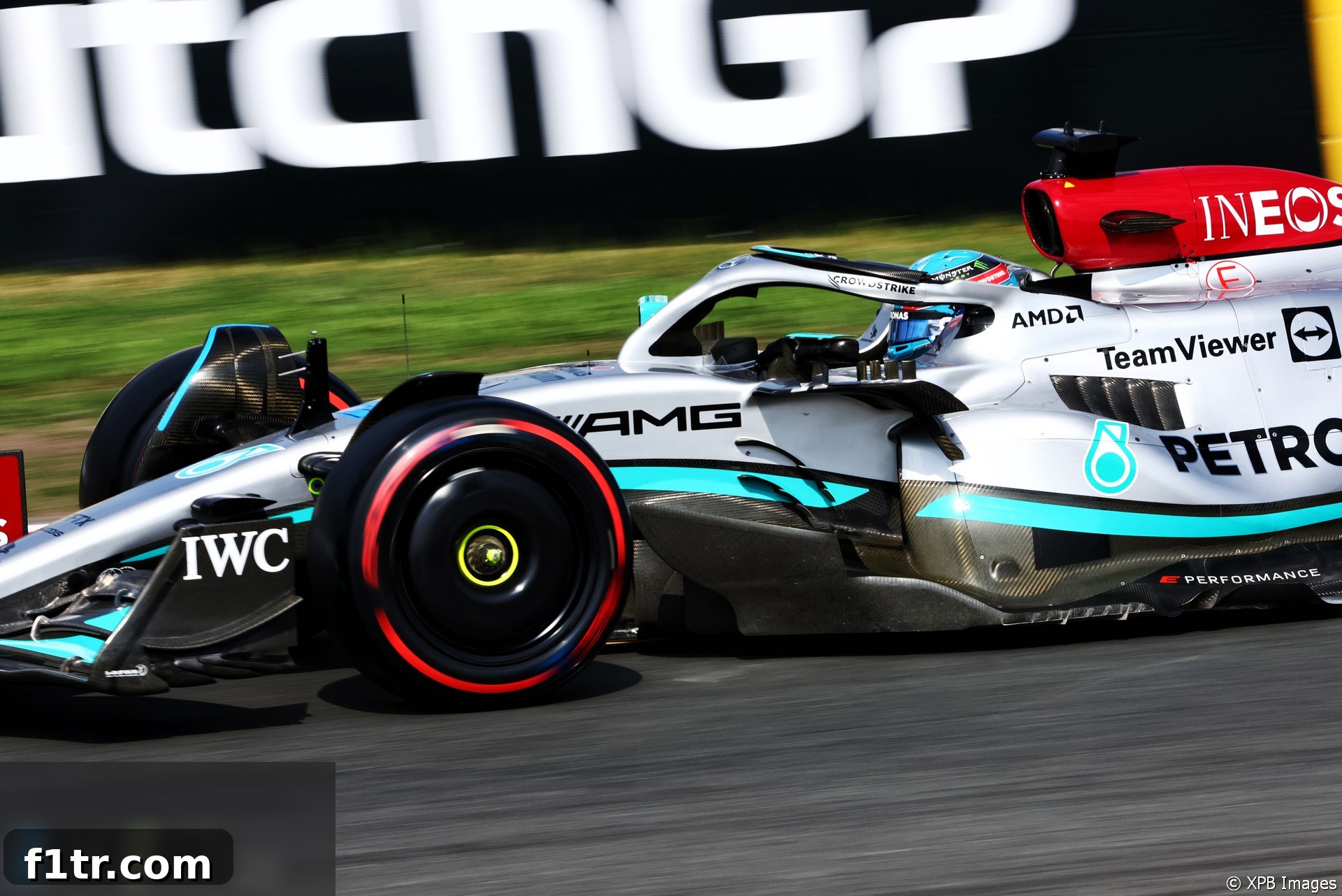
Mercedes-AMG Petronas F1 Team arrives at the highly anticipated Zandvoort circuit for the Dutch Grand Prix with a renewed sense of optimism following a challenging but ultimately progressive 2022 season. While the team acknowledges a significant step forward in car performance, particularly when compared to their struggles at Spa, they are maintaining a pragmatic outlook on their prospects for pole position. The unique circumstances that led to George Russell’s sensational pole at the Hungaroring are seen as an outlier rather than a definitive shift in their single-lap qualifying prowess, suggesting that while they are certainly closer to the front, outright qualifying dominance remains a formidable challenge.
The practice sessions leading up to the Dutch Grand Prix provided valuable insights into the W13’s improved handling characteristics. Lewis Hamilton showcased the team’s enhanced competitiveness, clocking times that placed him within a mere tenth of a second of the pace-setting Ferrari machines during the critical practice sessions. His performance underscored the significant strides Mercedes has made in understanding and optimizing their complex challenger. Teammate George Russell, while slightly further back in fifth place, echoed a similar sentiment, confirming the car felt considerably more balanced and responsive compared to its tricky nature at the Belgian Grand Prix, where the team found themselves grappling with a staggering 1.8-second deficit in qualifying. This positive feedback from both drivers points towards a more predictable and driver-friendly package, a crucial development as the season progresses.
Advert | Become a Supporter & go ad-free
Despite the improved feeling and closer practice times, Mercedes remains acutely aware of its persistent Achilles’ heel: single-lap qualifying performance. George Russell highlighted this ongoing challenge, emphasizing that while the car has made undeniable progress, it still tends to be weaker over a single flying lap compared to its rivals. This characteristic often forces the team to start further down the grid than their race pace might otherwise suggest. The tight and unforgiving nature of the Zandvoort circuit, with its narrow confines and limited overtaking opportunities, magnifies the importance of a strong qualifying position. Russell anticipates a fiercely competitive qualifying session, noting that not only the usual front-runners but also midfield contenders like McLaren and Aston Martin could pose a significant threat. He stressed, “It’s going to be close tomorrow. I think McLaren will be quick, even Aston Martin.” Securing a spot on the front two rows will be paramount to unlocking the W13’s full potential on race day.
The team’s confidence, however, surges when considering their long-run pace. A consistent theme throughout Mercedes’ challenging 2022 campaign has been their robust performance over a race stint, often demonstrating superior tire management and sustained speed. Russell reiterated this optimism, stating, “We still know qualifying is our weak point. I think the race will come towards us and I think our long-run pace is looking strong.” This belief in their race day capabilities is a powerful asset, especially on a circuit known for its physical demands on both car and driver, and potential tire degradation. However, the crucial caveat remains: harnessing this strong race pace necessitates starting from an advantageous grid position. Russell candidly admitted, “But you’ve got to be starting in the right position. If we’re starting on row three it’s going to be difficult to battle for first or second.” The strategic imperative for Mercedes will be to maximize their qualifying performance, even if pole position seems out of reach, to give their strong race pace a fighting chance at podium contention.
The memorable pole position scored in Hungary stands as a singular highlight for Mercedes in the 2022 season, a moment where Russell expertly navigated the Hungaroring to edge out the formidable Ferrari duo by a mere four-hundredths of a second. While Zandvoort shares some characteristics with Hungary, particularly the demand for high downforce, Russell is cautious about a repeat performance. He reflected on the Hungarian Grand Prix as “a bit unique,” attributing their success there to a combination of factors, including rivals not quite optimizing their setup on the day and Mercedes executing an “absolutely stellar job” where “everything just sort of went towards us.” This perspective underscores the team’s realistic assessment that the Hungary pole was a perfect storm rather than a definitive indicator of consistent front-row contention. Zandvoort, with its unique banked corners and seaside environment, presents a distinct challenge, and while the car has improved, the competitive landscape has also evolved.
Russell further emphasized his view on the unique nature of their Hungarian success, stating, “I’d be very shocked if we can have a repeat of Hungary.” This sentiment is not born of pessimism, but rather a deep understanding of the competitive nuances of Formula 1 and the specific characteristics of their W13 car. However, this realism is tempered with genuine progress. He added, “But I think we’re definitely closer than we’ve been in a long time so let’s see what tomorrow brings.” The focus for the Silver Arrows at Zandvoort is not necessarily on securing another pole, but rather on consolidating their improved form, extracting maximum performance from the car, and demonstrating their enhanced competitiveness consistently. The team’s ongoing development efforts are clearly yielding results, pushing them closer to the front-running pace, even if the ultimate step to pole remains challenging on a week-to-week basis.
Assessing the true extent of their long-run pace during practice proved to be “a little bit difficult” for Russell, as he candidly admitted, “because the timing screen wasn’t working.” This technical glitch meant that drivers and engineers couldn’t instantly compare their sustained performance against rivals in real-time, making it harder to get an immediate read on their standing. He continued, “So you couldn’t really actually see where our long-run pace is really at.” Despite this temporary data blind spot, the team remains confident in their extensive analytical capabilities. Russell assured that the overnight debrief and data analysis would be thorough: “I’m sure we’re going to dive into it tonight and try to gather as much data as possible but I think we’re in a relatively good spot.” This dedication to deep analysis and continuous optimization is a hallmark of Mercedes’ approach, ensuring that every piece of available information is utilized to refine their strategy for qualifying and the race.
Advert | Become a RaceFans supporter andgo ad-free
As the weekend progresses, Mercedes’ primary objective will be to translate their improved car performance and strong race pace into meaningful championship points. While qualifying remains a hurdle, the team’s consistent ability to perform well on Sundays, often making up positions through strategic acumen and reliable performance, positions them as strong contenders for a solid result at Zandvoort. The focus is on a holistic weekend performance rather than just a single-lap glory. The Dutch Grand Prix promises to be another fascinating chapter in the 2022 Formula 1 season, and Mercedes is poised to demonstrate their ongoing evolution and resilience in the face of intense competition. The journey of understanding and taming the W13 continues, with Zandvoort offering another critical test and opportunity for the Silver Arrows to consolidate their progress.
2022 Dutch Grand Prix
- Ferrari’s season of missed chances led to “difficult” criticism for Binotto
- How many victory chances did Hamilton have in his first winless F1 season?
- Why F2’s role as F1’s sustainable fuel guinea pig ‘isn’t going to be a reliability issue’
- Straight-line speed deficit will continue to “bite” Mercedes in qualifying – Wolff
- Verstappen achieves his longest winning streak with second home victory
Browse all 2022 Dutch Grand Prix articles