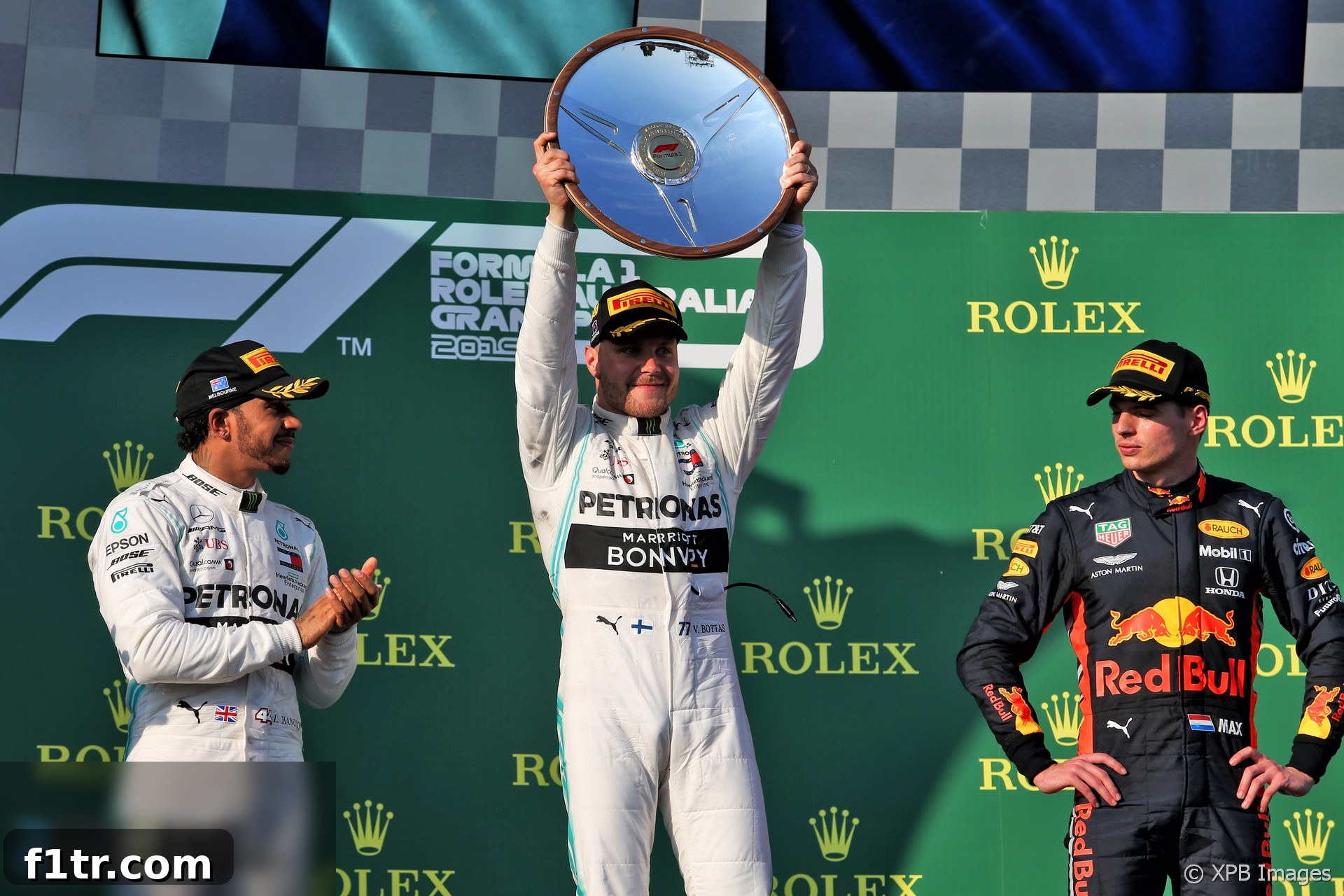
In the vibrant tapestry of Formula 1, few seasons capture the imagination quite like those marked by intense intra-team rivalries. The 2019 F1 season, particularly within the dominant Mercedes-AMG Petronas Motorsport camp, promised such a narrative, initially ignited by the spectacular resurgence of Valtteri Bottas. After a winless 2018 campaign, the Finnish driver burst onto the scene with a commanding victory at the season-opening Australian Grand Prix. This triumph immediately sparked widespread speculation, giving birth to the popular moniker ‘Bottas 2.0’ and an amusing flurry of ‘porridge memes’ that underscored the renewed optimism around his championship prospects. For a brief, electrifying period, the F1 paddock buzzed with the possibility of a genuine challenge to his formidable teammate, Lewis Hamilton.
Bottas’s early momentum wasn’t a mere flash in the pan. He followed up his Australian success with another impressive win at the Azerbaijan Grand Prix, a circuit known for its challenging street layout and high-stakes racing. Returning from the initial fly-away races, Bottas found himself at the pinnacle of the drivers’ standings, leading the championship and fueling genuine belief that he could replicate a ‘Nico Rosberg’ moment – the improbable feat of a teammate dethroning the reigning champion from within the same powerhouse team. This period represented the peak of Bottas’s challenge, demonstrating a newfound aggression, confidence, and raw pace that had previously seemed elusive.
Advert | Become a Supporter & go ad-free
However, the difficulty Bottas ultimately faced in sustaining that championship challenge served as a stark reminder of just how overwhelmingly competitive and relentless Lewis Hamilton truly is. While the Mercedes duo collectively dominated the early part of the season, securing seven one-two finishes in the first twelve races and consistently demonstrating the W10’s superiority, the internal dynamic soon shifted. The first five races saw a fairly even split of victories, setting the stage for what many hoped would be a season-long battle. Yet, it was Hamilton who subsequently embarked on an extraordinary run of four consecutive victories, a blistering display of consistency and unmatched performance that firmly re-established his supremacy and began to deflate the ‘Bottas 2.0’ narrative.
By the halfway point of the season, after ten races, Bottas was still within touching distance in the championship standings, a testament to his earlier form. However, a series of costly incidents and a noticeable dip in performance during the crucial mid-season stretch led to a significant collapse of his title hopes. A calamitous crash at the German Grand Prix, followed by a rash first lap incident in Hungary, effectively extinguished his championship ambitions. These setbacks were not just points losses; they represented a significant psychological blow, allowing Hamilton to pull away decisively and solidify his grip on what would become his sixth World Championship title.
The question that inevitably arose from this downturn was whether these incidents had also jeopardized Bottas’s chances of retaining his seat at Mercedes for the following season. On the surface, such a decision might appear harsh given the context. Mercedes, as a team, had achieved remarkable success, underscored by their consistent one-two finishes. Furthermore, Bottas’s individual statistics offered a compelling defense: he had matched Hamilton’s pole position count with four poles and, on average, had qualified within a mere tenth of a second of his multi-world champion teammate on Saturdays. These numbers painted a picture of a driver who, on raw pace over a single lap, was incredibly close to the very best in the sport.
From Bottas’s personal perspective, despite the championship outcome, the 2019 campaign represented his strongest showing to date. “On paper, I think it’s been best so far,” he openly admitted, reflecting on his performance. Yet, he was also candid about areas for improvement. “For sure it still could be better. If I point out different races there’s for sure a few that I could have gained more points, especially [Germany].” His self-assessment highlighted a strong qualifying performance as a general positive, while acknowledging that his race pace, though improved from the previous year, remained “an area I need to work on, improve on.” This honest reflection indicated a driver acutely aware of the nuances that separated him from the absolute top tier of consistency required to beat Hamilton over an entire season.
Advert | Become a RaceFans supporter andgo ad-free
The core problem for Valtteri Bottas, despite his strong start, was the stark reality that by the time the summer break arrived, he would have endured four months without a single race victory. This prolonged drought, especially in a team capable of winning almost every weekend, put immense pressure on his position. Bottas himself attributed the shifting fortunes to the inherent unpredictability of elite motorsport. “I think the first few [races] I had the wind on my side,” he mused. “[Then] I think Lewis got it. Then it’s been just a bit mixed and every race has been different. That’s just how this sport sometimes goes.”
He articulated the immense challenge of consistently performing at the absolute peak: “It all comes down to me being at my best level weekend, which is obviously in any sport or anything you do, that’s the tricky part, to get that one hundred percent or the maximum you can get out of yourself and nail every single session and set-up direction and lap in qualifying that matters and also in the race. There’s so many details to get right.” Despite the setbacks and the fading championship dream, Bottas maintained a remarkable resilience and self-belief. “But I still believe in myself as hard as I did after the first race of the season and I know I can win.” This unwavering conviction is a crucial attribute for any driver competing at the pinnacle of motorsport, especially when facing a champion of Hamilton’s caliber.
The crucial decision facing Mercedes was whether they still shared that profound belief in their driver’s ability to consistently deliver. The team was meticulously weighing Bottas’s impressive, yet ultimately inconsistent, record against the undeniable potential offered by Esteban Ocon. Ocon, a highly-rated junior driver with strong ties to Mercedes, had spent the season on the sidelines as a reserve driver, eagerly awaiting an opportunity to return to a full-time F1 seat. Given how exceptionally close Bottas had been to Hamilton on raw performance metrics, particularly in qualifying, any decision by Mercedes to promote Ocon would not merely signify a change but would dramatically underscore their extraordinarily high regard for the young Frenchman’s capabilities and future potential. Such a move would suggest Mercedes believed Ocon possessed the consistency and racecraft to either challenge Hamilton more effectively or provide a more robust long-term solution as a championship-contending second driver, despite Bottas’s demonstrable speed. This internal debate highlighted the brutal meritocracy of Formula 1, where even strong performances can be deemed insufficient when placed next to the extraordinary. It was a pivotal moment for both drivers, with Bottas fighting to secure his future and Ocon hoping to finally claim his spot on the grid within one of the sport’s most coveted teams.
Advert | Become a RaceFans supporter andgo ad-free
Lewis Hamilton vs Valtteri Bottas: Key Stats and Performance Breakdown
The 2019 season offered a compelling statistical narrative that, while favoring Hamilton for the championship, showcased Bottas’s growth. Across qualifying sessions, Bottas frequently matched Hamilton’s pace, as evidenced by his equal number of pole positions. This strong single-lap performance indicated a mastery of the Mercedes W10’s speed potential. However, the true differentiator lay in race conditions, where Hamilton consistently extracted more performance, managed tires better, and capitalized on opportunities. The seven one-two finishes for Mercedes underscored the team’s engineering brilliance, but also highlighted Hamilton’s unparalleled ability to convert strong qualifying positions into race victories and maintain championship-winning consistency. While Bottas had moments of brilliance, particularly in the early races, Hamilton’s sustained pressure and ability to deliver under all circumstances proved insurmountable. The key stats, if fully visualized, would illustrate Bottas’s competitive raw speed but also Hamilton’s superior racecraft and mental fortitude over a full season.
Lewis Hamilton vs Valtteri Bottas: Who Finished Ahead at Each Round
The ebb and flow of the 2019 season between Hamilton and Bottas is best understood by looking at their head-to-head results across each Grand Prix. Bottas started with a bang, but Hamilton’s relentless consistency soon took over. Below is a detailed round-by-round comparison of their qualifying and race positions, highlighting the moments of Bottas’s early dominance and Hamilton’s subsequent championship-defining run, including the critical races in Germany and Hungary where Bottas’s title challenge ultimately faltered.
| AUS | BAH | CHI | AZE | SPA | MON | CAN | FRA | AUT | GBR | GER | HUN | ||
|---|---|---|---|---|---|---|---|---|---|---|---|---|---|
| Lewis Hamilton | Q | P2 | P3 | P2 | P2 | P2 | P1 | P1 | P1 | P4 | P2 | P1 | P3 |
| R | P2 | P1 | P1 | P2 | P1 | P1 | P1 | P1 | P5 | P1 | P9 | P1 | |
| Valtteri Bottas | Q | P1 | P1 | P1 | P1 | P1 | P2 | P2 | P2 | P3 | P1 | P2 | P2 |
| R | P1 | P2 | P2 | P1 | P2 | P3 | P4 | P2 | P3 | P2 | DNF | P8 |
Lewis Hamilton vs Valtteri Bottas: Qualifying Gap Analysis
One of the most impressive aspects of Bottas’s 2019 season was his significant improvement in qualifying performance. The data consistently showed him lapping, on average, within a tenth of a second of Lewis Hamilton on Saturdays. This incredibly tight margin underscored his raw speed and his ability to extract the maximum from the Mercedes machinery over a single, flying lap. The qualifying gap charts, if dynamically displayed, would vividly illustrate the fine margins that often separated the two drivers in the pursuit of pole position. This closeness in qualifying made his struggles in race trim all the more frustrating, both for Bottas and for those hoping for a sustained championship challenge. While qualifying pace is a vital metric, it is the ability to maintain that speed, manage tires, execute strategy, and fend off rivals over a full race distance that ultimately defines a championship contender, an area where Hamilton consistently held the edge.
Times based on the last qualifying round at each race weekend in which both drivers set a time
2019 F1 Season: Related Insights and Developments
The 2019 Formula 1 season was rich with memorable moments and significant developments that extended beyond the Mercedes rivalry. From emotional reflections on career lows to crucial financial reports and innovative technical discussions, the season provided ample fodder for discussion and analysis. These related articles offer deeper dives into various aspects of that thrilling year in F1.
- Crying in the Melbourne car park at 2019 grand prix was my career low – Ocon
- McLaren Racing reports reduced £71 million loss in 2019
- Kvyat: Hockenheim podium last year was “my biggest achievement” so far
- How the FIA’s new encrypted fuel flow meter targets Ferrari’s suspected ‘aliasing’ trick
- “He smashed my office door”: 23 must-see moments from ‘Drive to Survive’ season two
Browse all 2019 F1 season articles