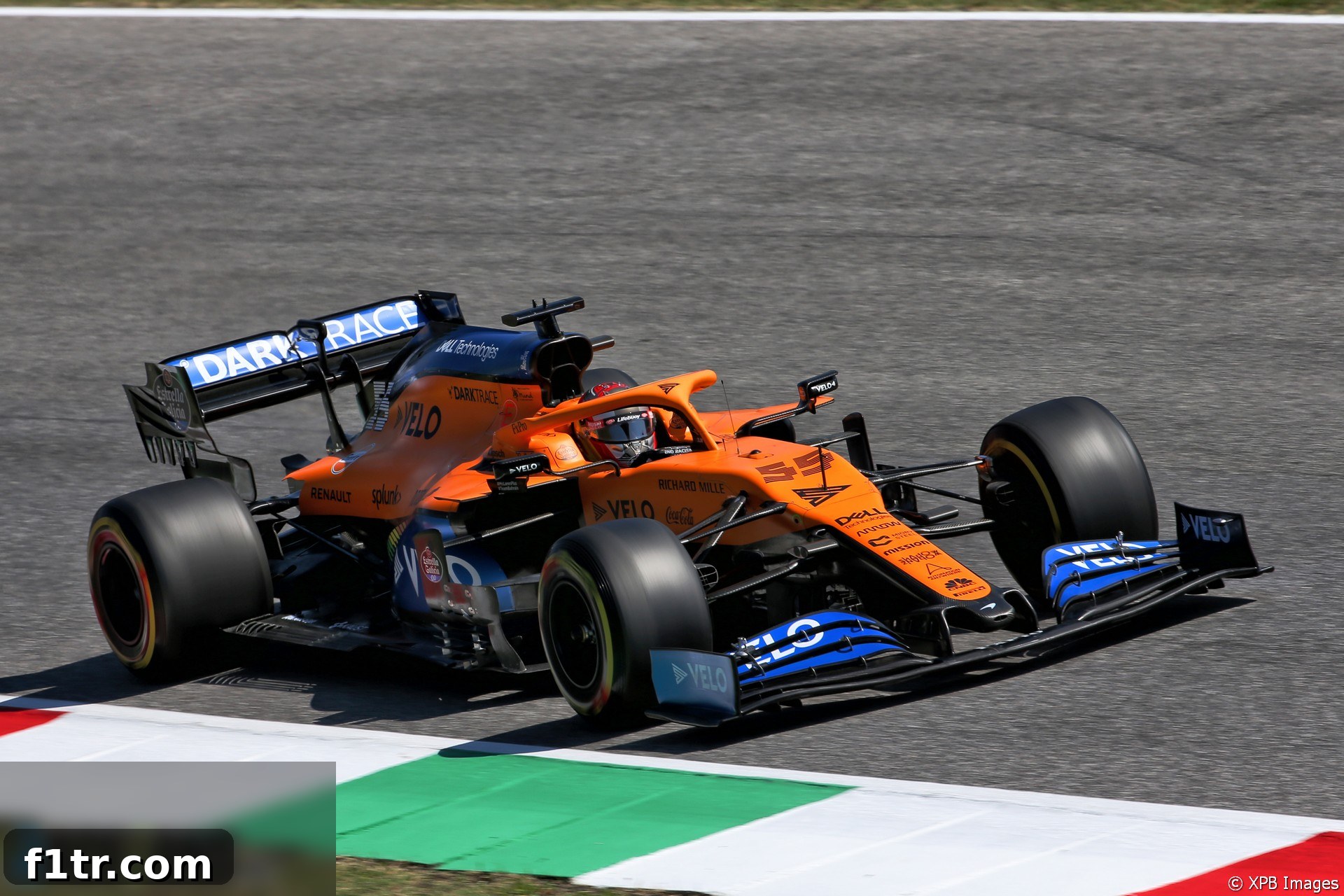
Carlos Sainz Jnr articulated the collective sentiment within the McLaren Racing team, describing their performance at the inaugural
Mugello Circuit as a “nasty surprise.” This candid admission underscored the unpredictable nature of Formula 1, particularly within its fiercely competitive midfield. Just a week after an impressive display at the revered Monza circuit, the Tuscan Grand Prix presented an unexpected and formidable challenge, forcing McLaren to critically re-evaluate their expectations and deepen their understanding of their MCL35 challenger’s intricate characteristics.
Advert | Become a Supporter & go ad-free
McLaren’s Unexpected Struggle at Mugello: A Post-Monza Reality Check
Following a triumphant weekend at the Italian Grand Prix in Monza, where both Lando Norris and Carlos Sainz Jnr showcased remarkable pace and secured vital championship points, McLaren arrived at the picturesque Mugello circuit with considerable optimism. The team’s pre-race analysis suggested that the track’s fast, sweeping corners would ideally suit the strengths of their MCL35. However, the reality of the Tuscan Grand Prix quickly diverged from their initial projections, as McLaren found themselves struggling significantly for pace compared to their direct rivals in the midfield. Sainz, through a commendable effort, managed to qualify ninth. Yet, his teammate Lando Norris experienced a more challenging session, failing to reach Q3 for the first time in the 2020 season, a clear indicator of the team’s unexpected dip in competitive form.
Sainz openly conveyed McLaren’s initial positive outlook before the weekend commenced. “On paper, we felt this track was going to be good for us. We thought this kind of circuit was going to suit us,” he explained, highlighting the team’s confidence built on previous performances. This initial optimism, however, swiftly dissipated as McLaren grappled with a noticeable deficit in outright speed compared to key competitors such as Renault and Racing Point. “But in Formula 1 the midfield always has surprises for you and this has been a nasty surprise,” Sainz elaborated, perfectly encapsulating the team’s disappointment and the relentless, often unforgiving, competition that characterizes the sport’s middle order. The sudden shift in performance order underscored the fine margins that separate teams in F1 and how track-specific characteristics can expose different strengths and weaknesses.
The Aerodynamic Conundrum: Understanding McLaren’s Tailwind Sensitivity
A critical factor identified by Carlos Sainz as contributing to McLaren’s struggles at Mugello was the MCL35’s particular sensitivity to specific aerodynamic conditions, most notably tailwinds. This phenomenon was not exclusive to McLaren; even front-running drivers like Lewis Hamilton and Max Verstappen had commented on the challenging tailwind conditions prevalent during qualifying. Sainz offered a detailed and insightful explanation into how these conditions impacted their car’s performance: “Our car is very sensitive to tailwind, mainly, and tailwind corners. It’s also very good in headwind corners, so both sides of it.”
The implications of tailwinds on a Formula 1 car’s aerodynamic performance are profound. A tailwind effectively diminishes the relative air speed flowing over the car’s various aerodynamic surfaces, leading directly to a substantial reduction in downforce. This loss of downforce renders the car less stable, particularly when navigating high-speed corners, and can severely compromise mechanical grip and a driver’s confidence in pushing the limits. Conversely, a headwind increases the relative air speed, thereby enhancing downforce and improving stability. Mugello, with its demanding, high-speed sweeping sections and elevation changes, likely amplified these aerodynamic effects, especially in corners exposed to the prevailing, challenging wind patterns.
Sainz further elucidated how this aerodynamic characteristic had even influenced McLaren’s strategic considerations at Monza, a circuit renowned for its high-speed slipstreaming battles. “Once you get in a tow, what you have is a lot more tailwind. You basically have tailwind in every corner. That’s why in places like Monza, we were talking about trying not to go in the tow of some of our competitors because we felt that that generated tailwind in our car and we don’t like that,” he revealed. This invaluable insight sheds light on a complex and perhaps less intuitive aerodynamic trait that McLaren is actively working to comprehend and, ultimately, mitigate. “It’s something we are investigating and we are trying to improve and trying to understand why is this causing these kind of effects and why are we suffering a bit more,” Sainz confirmed, signalling the team’s unwavering commitment to resolving this critical performance differentiator and optimizing their car across a broader range of conditions.
The Ever-Shifting F1 Midfield: A Battle of Adaptability
The 2020 Formula 1 season, despite the dominant presence of Mercedes at the very front of the grid, was largely characterized by an incredibly tight, fluid, and often unpredictable midfield battle. Carlos Sainz’s observations at Mugello powerfully reinforced this ongoing reality, underscoring that significant performance swings from one track to another are not merely common but are an inherent expectation within this segment of the sport. “The midfield is what it is,” Sainz stated unequivocally. “I think it’s not going to be the last time where we see this kind of performance swing between teams from track to track.” This sentiment perfectly captured the dynamic and often volatile nature of the fight for ‘best of the rest,’ where subtle differences in car characteristics, specific circuit layouts, and even prevailing environmental conditions could dramatically reshape the competitive order in any given Grand Prix weekend.
Teams such as Renault, Racing Point, and AlphaTauri were all fiercely vying for similar championship positions, and their fortunes often fluctuated wildly across the diverse range of venues on the F1 calendar. A car optimized for high-downforce circuits might consequently struggle on tracks requiring lower downforce settings, and vice-versa. McLaren, having enjoyed a robust start to the season and firmly entrenched in the battle for third place in the Constructors’ Championship, regrettably found themselves on the less favourable side of this variability at Mugello. Despite the initial setback and the challenging circumstances, Sainz lauded his team’s remarkable resilience and focused approach: “We kept our heads down and we managed to improve the car quite a lot going into qualify. So we also need to be happy and proud as a team that we kept our hands down and we didn’t lose our heads too much.” This inherent ability to adapt, to meticulously extract maximum performance even when the car is not ideally suited to the track, stands as a defining characteristic of a truly strong and ambitious racing outfit.
McLaren’s 2020 Campaign: Highs, Lows, and the Pursuit of Third
The 2020 season represented a pivotal and significant chapter in McLaren’s ongoing journey to re-establish themselves among Formula 1’s leading contenders. Under the astute leadership of Andreas Seidl and boasting a highly talented and harmonious driver pairing in Sainz and Norris, the Woking-based squad had consistently showcased improved performance levels and demonstrated operational excellence throughout the championship. Their substantial points haul in the preceding races, particularly their standout performance at Monza, had positioned them strongly in the Constructors’ Championship battle, frequently engaging directly with formidable rivals like Racing Point and Renault for the highly coveted third position.
The “nasty surprise” encountered at Mugello, therefore, served as a poignant and timely reminder of the inherent complexities and persistent challenges within Formula 1’s relentless development race. Every circuit on the calendar presents a unique and distinct set of demands, and a car’s inherent strengths and weaknesses can be dramatically brought to the fore depending on precise track characteristics, tire degradation profiles, and myriad environmental factors. While the team’s relative struggles at Mugello undeniably constituted a setback, they simultaneously provided invaluable data and critical insights into the MCL35’s behavioural nuances, especially concerning its aerodynamic sensitivities. Thoroughly understanding these intricate nuances is absolutely crucial for the team’s long-term development trajectory and for effectively optimizing performance across the increasingly diverse and demanding F1 calendar.
Looking Ahead: Adapting and Overcoming Challenges
The Tuscan Grand Prix at Mugello, a unique and memorable addition to the significantly revised 2020 calendar and a special event marking Scuderia Ferrari’s 1000th Grand Prix start, ultimately offered a steep yet invaluable learning curve for numerous teams, including McLaren. For Carlos Sainz and the entire McLaren engineering and strategic team, the challenging weekend served as a pivotal moment to deepen their collective understanding of the MCL35’s intricate aerodynamic profile. The critical insights garnered regarding the car’s pronounced sensitivity to tailwinds would undoubtedly inform future setup choices, guide development directions, and refine race weekend strategies for the remainder of the season and beyond.
The unwavering and intense competition characterizing the F1 midfield meant that McLaren simply could not afford to dwell excessively on a single difficult weekend. The overarching fight for third place in the Constructors’ Championship was unequivocally a marathon, demanding sustained consistency across a wide variety of tracks, rather than a sprint, where momentary lapses could be costly. Sainz’s characteristically calm and highly analytical approach, coupled with the team’s profound dedication to continuous improvement and relentless innovation, positioned McLaren exceptionally well to effectively address and overcome these identified challenges. The intrinsic ability to swiftly diagnose performance issues, diligently iterate on potential solutions, and consistently maintain a competitive edge even in the face of adversity would prove absolutely crucial for McLaren for the remainder of the season and indeed for their future aspirations. McLaren’s 2020 journey stood as a powerful testament to their impressive resurgence, and their strategic and technical response to setbacks like the one experienced at Mugello would further define their determined path back to the pinnacle of Formula 1.
Advert | Become a RaceFans supporter andgo ad-free
2020 Tuscan Grand Prix Ferrari 1000: Race Weekend Insights and Further Reading
For those keen to delve deeper into the specifics of the Tuscan Grand Prix and McLaren’s performance, alongside comprehensive race analysis, a wealth of reports and detailed insights are readily available. The event itself was a truly memorable occasion, not only for its thrilling racing action but also for its historical significance, marking the 1000th Grand Prix start for the iconic Scuderia Ferrari.
Browse all 2020 Tuscan Grand Prix Ferrari 1000 articles