Formula 1 Insights: Strategic Debates, Team Developments, and the Evolving Fan Culture
The exhilarating world of Formula 1 is a perpetual motion machine, driven by cutting-edge technology, unparalleled driving talent, and intricate team strategies. Beyond the spectacle of speed and daring overtakes, the sport consistently generates engaging narratives, from the crucial development battles waged in factory wind tunnels to the thought-provoking discussions shaping its future. This comprehensive roundup navigates some of the most prominent stories making headlines, offering a detailed look into driver sentiments regarding the controversial sprint race format, the relentless pursuit of performance by midfield teams, Formula 1’s expanding global footprint, and the vital conversation surrounding fan conduct at race weekends.
Driver Perspectives and Team Development Race
Lando Norris Questions the Strategic Depth of Formula 1 Sprint Races
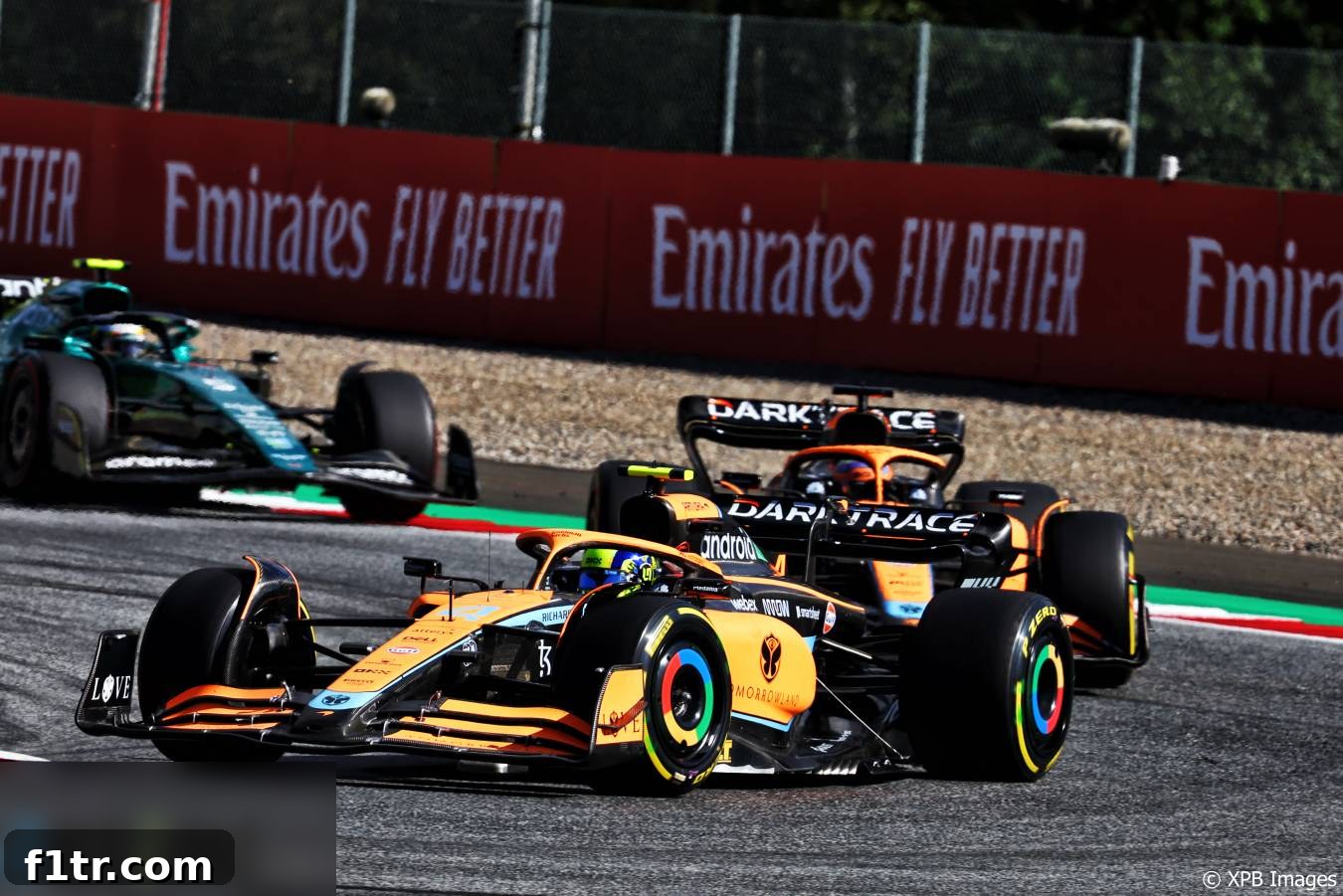
Lando Norris, the highly regarded McLaren driver, has openly shared his reservations about the Formula 1 sprint race format, articulating that the inherent lack of strategic variation tends to make these shorter contests “not the most exciting.” His comments come in the wake of the season’s second sprint event in Austria, where Norris reflected on the format’s impact on racing dynamics.
While acknowledging that sprint races have generally proven beneficial for McLaren, often seeing the team advance through the field, Norris elaborated on the fundamental issue. “In general they’ve just been good for us. We’ve always gone forward, I think, in every single one,” he noted. However, this success doesn’t equate to high excitement for him. “I wouldn’t say they’re the most exciting because they’re just like at a period where you can almost push flat-out the whole time and therefore there’s not as much tyre deg and things like that between teams for much to happen.” This ‘flat-out’ approach, where drivers can push their cars to the absolute limit from start to finish without significant concern for tire preservation or fuel saving, inherently removes a layer of strategic complexity that defines traditional Grand Prix racing. In a full-length race, tire management, pit stop timing, and differing compound strategies are often pivotal in determining the outcome, creating dynamic shifts in track position and thrilling overtakes.
Norris further explained that this unwavering, maximum-attack philosophy makes it incredibly challenging to execute tactical maneuvers against competitors. “When you push flat-out it’s harder to do something different to the cars ahead,” he articulated. This challenge is exacerbated when the performance differences between cars are minimal, as is often the case in Formula 1’s tightly packed midfield. “Especially when, in qualifying you’re split by a tenth. You’re not going to be able to do anything at all.” In such scenarios, pure pace differentials are too small to overcome without strategic plays, which the sprint format largely negates.
Consequently, overtakes in sprint races, according to Norris, often stem from circumstances other than direct, earned race craft. “But obviously the only people you could overtake were people who are out of position. So people who crashed or people who got disqualified in qualifying.” This implies that genuine, hard-fought overtakes based on nuanced strategic decisions or superior tire management are rare, with positions primarily gained due to rivals’ misfortunes or pre-race penalties. While sprint races were conceived to inject more action into a Grand Prix weekend and potentially offer a more fluid starting grid for Sunday, Norris’s observations highlight a potential trade-off between immediate, raw speed and the strategic depth that many purists cherish in Formula 1.
Concluding his thoughts with a balanced view, Norris offered a pragmatic summary: “Half the time I think will be exciting and good and then half the time not as exciting. But every now and then it’s all something different. Which I don’t mind.” This reflects an ongoing debate within the Formula 1 community. While some embrace the sprint format for its added competitive element and instantaneous action, others, like Norris, express a longing for the intricate strategic layers that have historically been a hallmark of the sport. As F1 continues to refine its calendar and race formats, feedback from drivers like Norris will undoubtedly play a crucial role in shaping the future evolution of sprint races.
Valtteri Bottas Awaits Crucial Alfa Romeo Upgrades at Hungarian Grand Prix
In the fiercely contested midfield of Formula 1, the rhythm of performance upgrades dictates a team’s fortunes. Valtteri Bottas, the experienced driver for Alfa Romeo, has indicated that the team’s next significant package of upgrades is anticipated to arrive no sooner than the Hungarian Grand Prix. This timeline emerges at a pivotal moment for Alfa Romeo, who, despite holding a respectable sixth position in the constructors’ championship with 51 points ahead of Haas, has recently experienced a downturn in form, failing to score points in the preceding two rounds in Britain and Austria. This barren spell underscores the urgent need for performance enhancements to reignite their momentum.
Bottas articulated the relentless competitive pressure from rivals, a constant feature of F1’s development arms race. “I think some teams clearly have made progress like, for example, Williams,” Bottas observed during an interview with RaceFans, noting Williams’s apparent improvement in recent outings. He also highlighted that Alpine and McLaren had seemed “a little bit faster than us,” a distinct contrast to their relative performance earlier in the season at Silverstone. This shifting landscape among the midfield contenders is a stark reminder that even maintaining position requires continuous, aggressive development; standing still inevitably means falling behind in Formula 1.
The Finnish driver’s remarks underscore the critical importance of these impending updates. “We need to keep progressing, otherwise we’re going to fall back,” Bottas emphasized, reflecting the precarious nature of championship standings. The expectation of new components debuting in Budapest suggests a calculated approach to development, likely indicating a more comprehensive aerodynamic or mechanical package rather than minor adjustments. The Hungarian Grand Prix, often held on a tight and technical circuit known for rewarding high-downforce setups, could provide an opportune stage for Alfa Romeo to introduce upgrades designed to enhance aerodynamic efficiency and overall car balance. For the Swiss-Italian outfit, these updates are not just about finding marginal gains; they are essential for halting their recent slide, regaining their competitive edge, and consolidating their valuable championship position as the season progresses into its crucial latter half.
When pressed on the possibility of accelerating the upgrade schedule, Bottas expressed a hopeful yet realistic outlook: “I don’t think so. I hope so, but I think earliest will be Budapest.” This illustrates the inherent complexities, extensive logistical planning, and rigorous validation processes involved in bringing new parts to an F1 car. Each component must undergo meticulous testing, both in simulations and physical prototypes, to ensure both reliability and performance before it can be deployed in the demanding environment of Grand Prix racing. For Alfa Romeo, a strong performance in Hungary, bolstered by these anticipated upgrades, could prove instrumental in shaping their championship narrative and securing vital points as they battle for midfield supremacy.
F1 Community Voices: Social Media Insights and Global Connections
Social media platforms continue to serve as dynamic arenas for Formula 1 teams, drivers, and fans, facilitating real-time connections, sharing behind-the-scenes insights, and engaging in vital discussions. Here’s a curated look at notable posts from Twitter, offering a glimpse into the diverse narratives weaving through the sport:
Today, we welcomed four teams from the @aramco @F1inSchoolsHQ World Finals for a tour of our @AstonMartinF1 factory in Silverstone. 💚
These aspiring young minds met with our engineers to hear about their journeys into #F1 and learn how they can do the same! pic.twitter.com/vNxHXWwNui
— Aston Martin Aramco F1 Team (@AstonMartinF1) July 14, 2022
Aston Martin F1 demonstrated a proactive commitment to nurturing future talent by hosting teams from the Aramco F1 in Schools World Finals at their state-of-the-art Silverstone factory. This initiative powerfully underscores the importance of STEM (Science, Technology, Engineering, and Mathematics) education, providing aspiring young engineers with invaluable direct exposure to the complex, high-tech environment of Formula 1. Such outreach programs are absolutely vital for inspiring the next generation of motorsport professionals, ensuring a robust pipeline of innovation, expertise, and diverse talent for the sport’s sustainable future.
Obviously this one is close to my heart. Really hoping we see change. These stories of harassment are not isolated issues for women, it’s what we deal with on a daily basis. #F1 #AustrianGP https://t.co/gw6XPNZhRx
— Claire Cottingham (@Cla_Cottingham) July 14, 2022
In a powerful and poignant message, motorsport journalist Claire Cottingham highlighted the deeply troubling issue of harassment faced by women, particularly in the context of the recent Austrian Grand Prix. Her tweet, unequivocally stating that these are “not isolated issues” but rather daily occurrences, resonated strongly across the F1 community. This post served as a stark and necessary reminder of the persistent challenges to inclusivity and safety within the F1 environment, sparking crucial conversations about fostering a more respectful, welcoming, and secure atmosphere for all fans, journalists, and professionals who engage with Formula 1 events.
What a day, beeing kind of fired in the morning by Flavio, rescued by Pat Symonds from those politics, to bring the car to P3 (annoying)… there would be MUCH more to say about that day(s)… a bit of it I dissclosed in this podcast for @F1: https://t.co/rnudfAYXvk https://t.co/pPCIR2yr4d
— alex wurz (@alex_wurz) July 14, 2022
Former F1 driver Alex Wurz shared a captivating retrospective, hinting at a truly dramatic day in his career involving high-stakes politics with Flavio Briatore and the pivotal intervention of Pat Symonds, ultimately culminating in a P3 finish despite the turmoil. This tweet offers a rare and intriguing glimpse into the often-turbulent, high-pressure world behind the glossy facade of Formula 1. It serves as a powerful reminder that the sport is as much about complex human dynamics, team politics, and personal resilience as it is about the raw speed and competition on track, highlighting the incredible stories that often remain untold.
Well…that’s too funny. Want to guess which two #IndyCar teams were on the same charter flight from Indy to Toronto…yep, AMSP and CGR.
The good thing here is the men and women who work on the cars are tight and friendly, so there’s no drama to be found among the crews.
— Marshall Pruett (@marshallpruett) July 14, 2022
Marshall Pruett’s amusing observation about rival IndyCar teams, Andretti Autosport (AMSP) and Chip Ganassi Racing (CGR), sharing a charter flight beautifully encapsulates the underlying camaraderie often found among racing crews. Despite the fierce on-track competition that drives these teams, the human element off-track frequently sees professionals from different outfits sharing mutual respect, friendly banter, and even genuine friendships. This anecdote provides a heartwarming counterpoint to the intense rivalries typically associated with professional motorsport, illustrating the shared passion that unites individuals across the paddock, regardless of their team colors.
The global motorsport community also actively engages on platforms like Instagram, sharing a myriad of visual updates, ranging from race weekend highlights and captivating factory tours to personal insights into drivers’ lives.
- Find more official F1 accounts to follow in the F1 Twitter Directory
Global Motorsport Headlines: F1’s Expansion, Driver Futures, and Media Spotlight
Beyond the immediate Grand Prix action and social media buzz, the broader motorsport world is alive with significant developments concerning Formula 1’s expanding global footprint, the speculative futures of rising talents, and increasing mainstream media attention. Here’s a curated selection of interesting links and their broader implications, showcasing the diverse facets of the sport’s growth and intrigue:
‘It’s always been his dream’: Piastri itches for F1 debut as Ricciardo digs in (The Age)
The perpetual “silly season” in Formula 1 is a hotbed of speculation, and the situation surrounding Oscar Piastri’s potential F1 debut is a compelling example of its intensity. The Age reported on Piastri’s deep-seated aspirations, recalling a prior instance where he was on standby for a race, only for the opportunity to narrowly slip away. This narrative vividly illustrates the cutthroat competition for coveted F1 seats and the arduous path junior drivers face, often waiting patiently in the wings for a break. Concurrently, established and popular drivers like Daniel Ricciardo are fighting fiercely to secure and retain their positions amidst intense pressure. This creates a high-stakes environment where raw talent, consistent performance, and significant commercial appeal all converge to determine career longevity at the pinnacle of motorsport. Piastri’s journey is being closely observed as he embodies the next wave of exceptionally gifted talents vying to break into Formula 1’s elite ranks.
Formula One ‘experience’ set to appear near Las Vegas Strip (Fox 5 Las Vegas)
Formula 1’s rapidly accelerating presence and commercial expansion in the United States are powerfully exemplified by the ambitious plans for a permanent “Formula One experience” situated strategically near the iconic Las Vegas Strip. Clark County Commission Chair Jim Gibson revealed that the expansive area designated for the pits during the much-anticipated race will ingeniously double as an immersive F1 attraction for the remaining eleven months of the year. This groundbreaking initiative signifies F1’s profound long-term commitment to the lucrative Las Vegas market and its strategic vision to deepen fan engagement far beyond the confines of a single race weekend. Such dedicated, permanent venues are absolutely vital for cultivating sustained interest in the sport, offering interactive and immersive experiences that bring fans closer to the action, the history, and the vibrant culture of Formula 1, thereby further solidifying its commercial footprint in key global markets.
Keanu Reeves to Host Formula One Docuseries For Disney Plus (Variety)
The ever-growing appeal of Formula 1 now extends far beyond traditional sports broadcasting, captivating mainstream celebrity interest and a broader global audience. Variety reported the exciting news that acclaimed Hollywood actor Keanu Reeves is set to host a compelling four-part docuseries for Disney Plus. The series will delve into the extraordinary, almost fairytale-like story of Ross Brawn and his audacious acquisition of the Honda team in 2009, which he then masterfully transformed into the championship-winning Brawn GP. The phenomenal success of Netflix’s “Drive to Survive” has unequivocally demonstrated the immense global appetite for behind-the-scenes F1 storytelling. A docuseries fronted by a universally recognized figure like Keanu Reeves will undoubtedly attract an even broader, diverse audience, further integrating F1 into popular culture and brilliantly highlighting the sport’s incredible narratives of triumph against overwhelming odds, epitomized by Brawn GP’s Cinderella story.
After a long pandemic hiatus, IndyCar finally returns to the streets of Toronto (National Post)
While Formula 1 undeniably commands a significant portion of global motorsport attention, other premier single-seater series, such as IndyCar, continue to flourish and captivate audiences, particularly across North America. The National Post celebrated IndyCar’s triumphant return to the vibrant streets of Toronto following a pandemic-induced hiatus. The article astutely highlights the fiercely competitive intensity characteristic of IndyCar racing, noting that while F1 remains a distinct entity, its burgeoning popularity can positively impact other motorsport series by drawing more eyeballs to the broader world of racing. This symbiotic relationship suggests that F1’s escalating global prominence helps to elevate the entire motorsport ecosystem, cultivating a larger, more diverse fan base that may then be inclined to explore and appreciate the close competition and unique thrills inherent in series like IndyCar.
Martin Hibbert: The Unseen Heroes Behind Aston Martin F1 (Aston Martin)
Aston Martin F1’s poignant feature on Martin Hibbert offers a powerful and necessary reminder of the extensive, and often unseen, collective human effort that underpins every single Formula 1 team. Hibbert’s insightful analogy, drawing a parallel between his dedicated support team for a challenging Mount Kilimanjaro climb and the vast network of engineers, strategists, and specialists working behind an F1 car, effectively illustrates that what the public typically sees – the drivers, the lightning-fast pit stops, the strategists on the pit wall – is merely the visible tip of a colossal iceberg. Behind every triumphant F1 car stand hundreds of committed individuals meticulously working on design, manufacturing, logistics, research, and analysis. This collective endeavor firmly establishes F1 as a pinnacle of both advanced engineering and profound human collaboration. This particular story serves to humanize the sport, offering valuable insights into the diverse and often overlooked career paths available within the captivating world of motorsport.
McLaren Unboxed | A Spielberg Film (McLaren via YouTube)
McLaren’s highly popular “Unboxed” video series on YouTube consistently provides fans with an engaging, immersive, and behind-the-scenes look at their race weekends. The “A Spielberg Film” episode, focusing on the Austrian Grand Prix, masterfully captures the unique essence of the event. It highlights the breathtaking picturesque mountain backdrop of the Red Bull Ring, the circuit’s reputation for offering exciting overtaking opportunities, and the vibrant, passionate army of fans who consistently flock to the event. These meticulously produced video recaps are crucial tools for building and strengthening brand loyalty, allowing fans to vicariously experience the team’s journey, emotions, and challenges throughout a race weekend, offering a far more personal and cinematic perspective than traditional race reports.
F1 Manager 2022 | Behind The Scenes #2 | People Power (F1 Manager via YouTube)
The upcoming “F1 Manager 2022” game released a fascinating “Behind The Scenes” video, aptly titled “People Power,” which meticulously details the intricate process involved in authentically capturing the likeness of all 20 Formula 1 drivers. Featuring exclusive insights from drivers like Alex Albon and Zhou Guanyu, this glimpse into the game development process reveals an extraordinary dedication to realism and immersion, attributes that are absolutely crucial for a successful simulation title. It effectively bridges the gap between the virtual world of F1 gaming and the real-world personalities, catering to a rapidly growing audience of gamers who actively seek a deeper, more authentic, and truly immersive experience of managing their own Formula 1 team, complete with meticulously rendered drivers and teams.
We always endeavour to credit original sources. If you have a tip for a link relating to single-seater motorsport to feature in the next RaceFans round-up please send it in via the contact form.
Fan Behavior Under Scrutiny: Addressing Disturbing Incidents at the Austrian Grand Prix
The recent Austrian Grand Prix was regrettably overshadowed and marred by multiple distressing reports of sexist harassment and alleged racist and homophobic abuse, incidents that immediately prompted widespread condemnation from Formula 1 management, its participating teams, and the drivers themselves. These disturbing occurrences have ignited a critical and necessary discussion about fan culture within the sport and the imperative need to maintain a respectful, inclusive, and safe environment at all race events. A particularly poignant and well-articulated perspective emerged from reader Stephen H, whose “Comment of the Day” powerfully expressed concerns about a potential “soccerisation” of F1’s traditionally distinct fan culture.
“Given that last season really encouraged a tribal element akin to football, this is sadly an inevitable consequence. One of the best things about being an F1 fan is that you don’t have to have such a loyally and just enjoy the spectacle as a complete neutral.”
“When you look at just how incredible the crowd was at Silverstone this year, especially when compared to the behaviour of England fans at last year’s Euro final, it was something I’d always explain as one of the reasons F1 is sometimes better than football.”
“Now we appear to be losing that distinction, which really saddens me.”
— Stephen H
Stephen H’s thoughtful comments vividly articulate a perceived and concerning shift in the F1 fanbase. Traditionally, Formula 1 enthusiasts have often been characterized by a more nuanced and appreciative engagement with the sport, frequently supporting individual drivers or teams without the aggressive, tribalistic fervor sometimes unfortunately associated with football fandom. The dramatic and highly contentious 2021 season, with its intense championship rivalry and nail-biting decider, undeniably attracted a new, passionate, and often younger demographic to the sport. However, in Stephen H’s insightful view, this influx has inadvertently fueled a more “tribal element” among some sections of the crowd.
This emerging tribalism, if allowed to proliferate unchecked, carries the unfortunate risk of manifesting in deeply negative behaviors such as harassment, discrimination, and abuse, thereby steadily eroding the inclusive and welcoming atmosphere that Formula 1 strives so earnestly to cultivate. The powerful comparison to football culture, particularly citing the starkly contrasting behavior of fans at Silverstone versus certain sections of England fans at last year’s Euro final, serves as a compelling and potent illustration. Silverstone’s crowd is often universally lauded for its passionate yet overwhelmingly respectful support, embodying the very spirit of fair competition and sportsmanship. The deeply regrettable incidents at the Austrian Grand Prix, however, represent a worrying and unacceptable trend that threatens to fundamentally undermine F1’s diligent efforts to be a truly welcoming and safe environment for all who attend.
Formula 1 has unequivocally stated its zero-tolerance policy towards such abhorrent behavior, emphatically emphasizing the paramount importance of respect, dignity, and safety for every individual attending a Grand Prix. The significant challenge now facing the sport is to actively and decisively address these issues, through comprehensive fan education initiatives, stringent enforcement of codes of conduct, and the swift implementation of robust measures that ensure such incidents become rare, isolated exceptions rather than a growing and deeply concerning trend. By doing so, F1 can diligently work towards preserving the unique, positive, and genuinely inclusive atmosphere that has long been a defining characteristic of the Formula 1 fan experience.
Further Highlights from the Motorsport World
Happy Birthday to Motorsport Enthusiasts
Wishing a very happy birthday to Jv and Ridzki! May your day be filled with joy, speed, and unforgettable motorsport moments.
On This Day in Motorsport History
- Exactly 50 years ago today, the legendary Emerson Fittipaldi secured a memorable and hard-fought victory at Brands Hatch. He triumphed in a thrilling contest against his championship rival, Jackie Stewart, marking a significant moment in the fiercely competitive 1972 Formula 1 season and adding another illustrious chapter to Fittipaldi’s already legendary career in motorsport.