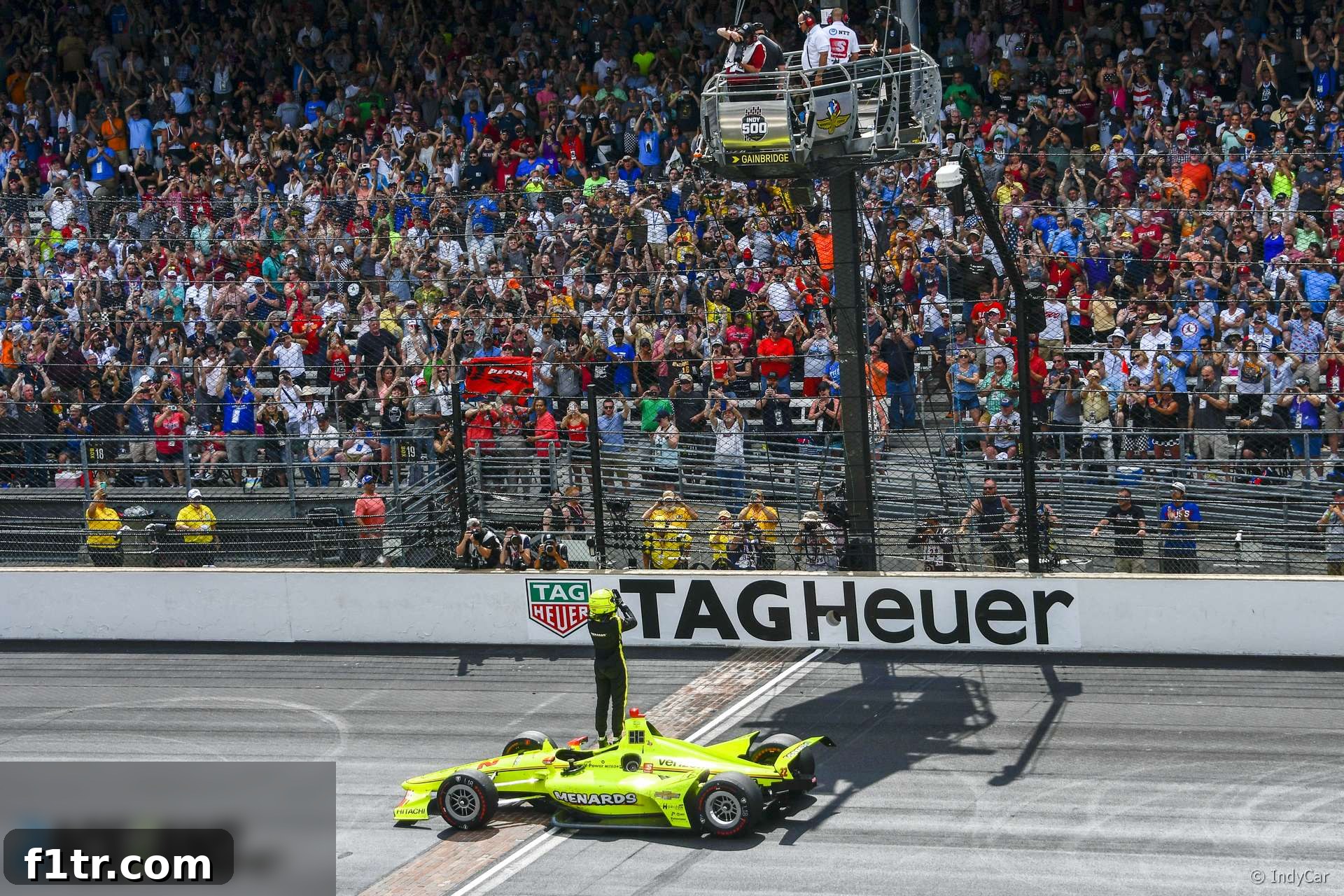
The venerable Indianapolis 500, a crown jewel in global motorsport, faces unprecedented uncertainty as IndyCar navigates the complex landscape of public health directives and the ongoing global health crisis. Despite the challenging circumstances, IndyCar has affirmed its unwavering intention to proceed with the 104th running of the Indianapolis 500 as originally scheduled, even as official guidance from health authorities introduces significant complications.
Advert | Become a Supporter & go ad-free
A major factor in this dynamic situation is the recent recommendation issued by America’s Centers for Disease Control and Prevention (CDC). The CDC advised against holding major public events involving more than 50 people for an eight-week period. This crucial advisory extends until May 10th, creating a direct conflict with the highly anticipated “Month of May” festivities. Specifically, the CDC’s recommended postponement period concludes just two days before practice sessions for the Indianapolis 500 are slated to commence, throwing the entire schedule into question.
In response to the CDC’s interim guidance, IndyCar released a statement acknowledging the gravity of the situation. “We are aware of the CDC’s interim guidance suggesting the postponement of events involving more than 50 people over the next eight weeks,” the championship stated. While fully cognizant of the health implications, IndyCar underscored its dual commitment: “Our priority is to do our part in protecting the public health while still conducting the 104th Indianapolis 500 presented by Gainbridge as scheduled on May 24th.” This declaration highlights the delicate balance the series must strike between ensuring the safety of participants and fans, and upholding the tradition and economic significance of its flagship event.
The current predicament follows a series of significant disruptions to the IndyCar calendar. Already, the championship has been forced to cancel or postpone its first four races of the 2020 season due to the evolving pandemic. These early-season setbacks have pushed the anticipated start of the IndyCar championship to later in the spring, with the Indianapolis Grand Prix on the road circuit at the iconic oval now slated to open the modified season. However, the timing of the GMR Grand Prix itself falls squarely within the restricted period advised by the CDC, further compounding the challenges faced by the series organizers.
IndyCar emphasized the fluidity of the situation and its ongoing efforts to adapt. “This continues to be a dynamic situation which we are monitoring constantly in coordination with federal, state, local and public health officials,” the statement elaborated. The series affirmed its proactive approach to an unpredictable future: “We are planning for all contingencies and will be prepared to run the GMR Grand Prix and Indy 500 as the COVID-19 situation permits.” This commitment to contingency planning underscores the extensive efforts behind the scenes to consider all possible scenarios, from running events without spectators to potential rescheduling options, all while prioritizing public health guidance.
The Indianapolis 500 is not merely a race; it is an institution, a cornerstone of American motorsport history, and a major economic driver for the city of Indianapolis and the state of Indiana. Known globally as “The Greatest Spectacle in Racing,” the event typically draws hundreds of thousands of fans, transforming the city into a vibrant hub of activity throughout May. The “Month of May” is a cherished tradition, featuring weeks of practice, qualifying, and pre-race festivities culminating in the highly anticipated main event on Memorial Day weekend. Disrupting this schedule has profound implications, affecting not only the teams, drivers, and sponsors but also countless local businesses and tourism sectors that thrive on the influx of visitors.
The GMR Grand Prix, intended to kick off the revised season at the Indianapolis Motor Speedway road course, serves as a crucial prelude to the Indy 500. Its scheduled date preceding the main event provides teams with valuable track time and helps build momentum for the larger spectacle. The prospect of this event also being impacted by the CDC’s recommendations places even greater pressure on IndyCar officials to make timely and responsible decisions. The entire racing world watches closely, understanding that the choices made here will set precedents for other major sporting events grappling with similar challenges.
Advert | Become a RaceFans supporter andgo ad-free
IndyCar ‘Month of May’ Schedule: Navigating the Uncertainty
The traditional “Month of May” schedule at the Indianapolis Motor Speedway is a meticulously planned sequence of events, each critical for the ultimate spectacle of the Indianapolis 500. This detailed timetable outlines the progression from initial practice sessions through qualifying and finally to Carb Day and the main race.
| Date | Activity |
|---|---|
| 8th May | Indianapolis Grand Prix practice and qualifying |
| 9th May | Indianapolis Grand Prix |
| 12th May | Indianapolis 500 practice |
| 13th May | Indianapolis 500 practice |
| 14th May | Indianapolis 500 practice |
| 15th May | Indianapolis 500 practice |
| 16th May | Indianapolis 500 practice |
| 17th May | Indianapolis 500 qualifying |
| 18th May | Indianapolis 500 practice |
| 22nd May | Indianapolis 500 carb day |
| 24th May | Indianapolis 500 |
As evident from the schedule, critical events such as the Indianapolis Grand Prix and the crucial early practice days for the Indianapolis 500 fall within the CDC’s suggested eight-week postponement window. This direct overlap presents a formidable logistical and public health challenge. Decisions regarding spectator presence, event format, and even potential rescheduling are under constant review, with all stakeholders striving to preserve the essence of the ‘Month of May’ while adhering to evolving safety guidelines.
The potential scenarios for the Indianapolis 500 range from running the race behind closed doors, a measure adopted by other major sporting bodies, to a full postponement to later in the year. Each option carries its own set of challenges, including logistical complexities, contractual obligations with broadcasters and sponsors, and the unique weather patterns that could impact a fall race. A complete cancellation, while a last resort, would be a devastating blow to the series, its fans, and the local economy. IndyCar’s commitment to “planning for all contingencies” reflects the severity of these considerations.
- View the current list of races cancelled or impacted due to the Coronavirus pandemic
Advert | Become a RaceFans supporter andgo ad-free
Further Insights into IndyCar
Stay updated with the latest news and analysis from the world of IndyCar racing. Explore more articles on drivers, team developments, and significant moments in the championship.
- IndyCar driver McLaughlin cleared of injury after crashing through barrier at Barber
- Schumacher says his IndyCar feels like ‘an F2 car, just with better tyres’
- IndyCar “way faster than Formula 1” in some corners, says Grosjean
- FIA to award more F1 superlicence points to IndyCar drivers from 2026
- Schumacher to race full-time in IndyCar with RLL in 2026
Browse all IndyCar articles