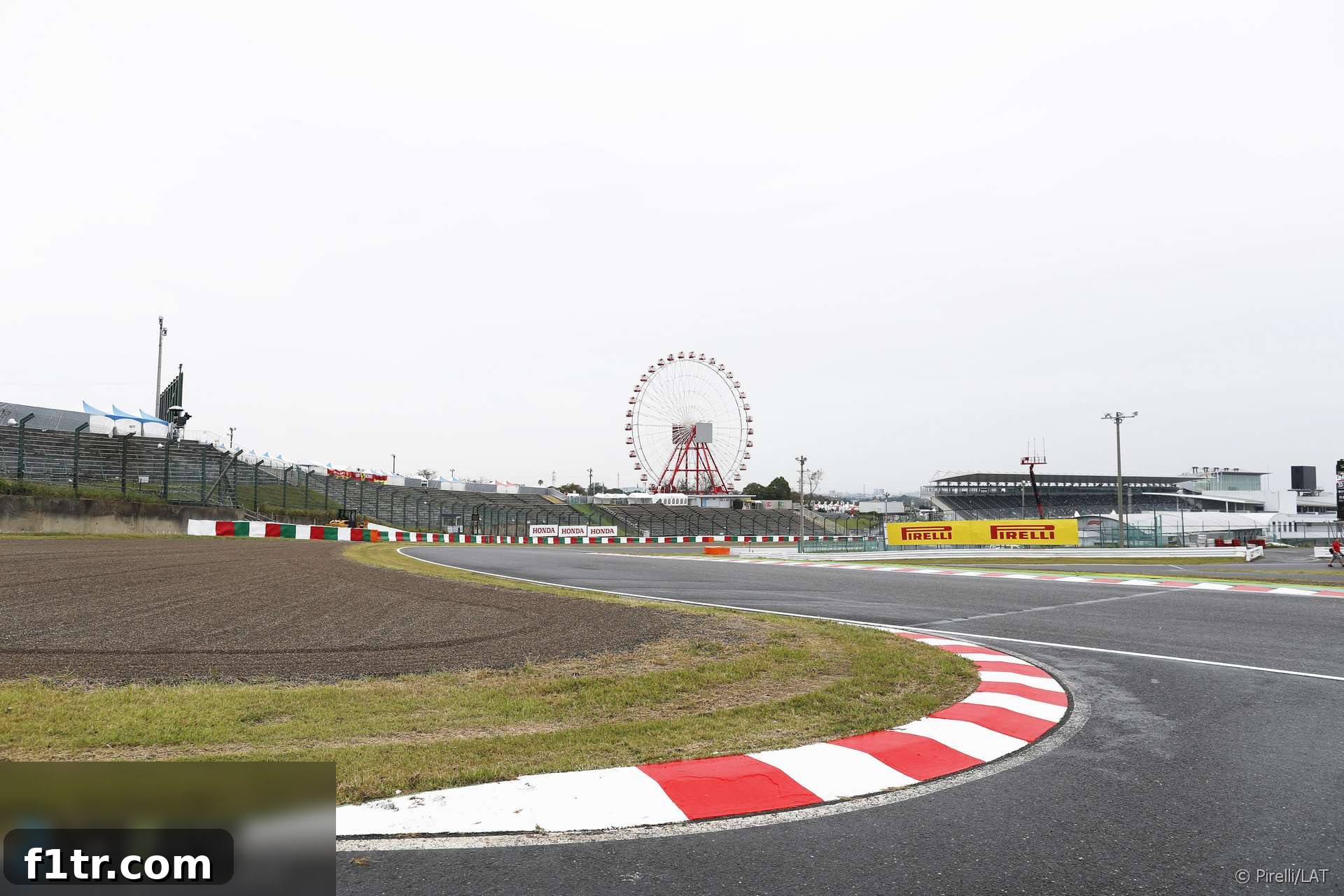
The iconic Suzuka Circuit, a revered jewel in the Formula 1 calendar, is gearing up to host the Japanese Grand Prix, but not without significant meteorological challenges shaping the initial days of the race weekend. As teams and drivers arrive in Japan, the looming presence of Typhoon Kong Rey promises to inject an unpredictable element into the practice and qualifying sessions, demanding adaptability and strategic foresight from every corner of the paddock. While the build-up to this highly anticipated event is set to be dominated by wet and changeable conditions, there’s a beacon of hope for race day, with forecasts pointing towards a dramatic shift to dry, sunny weather, setting the stage for a potentially thrilling and unhindered main event.
Advert | Become a Supporter & go ad-free
The intricate dance between man and machine at Suzuka is often influenced by its unique layout and passionate fanbase, but this year, the weather itself is poised to become a central character. The effects of Typhoon Kong Rey are expected to ripple across the region over the coming days, as the powerful storm system tracks through the Japanese Sea, positioned strategically between Japan and South Korea. This meteorological event is projected to exert its most significant influence on Saturday, posing a substantial threat of widespread showers throughout the day. This raises immediate concerns for the crucial qualifying session, where precision and consistent performance are paramount.
The weekend’s meteorological narrative begins on Friday, with the initial free practice session (FP1) facing a 40% chance of rain, according to the detailed forecasts from Meteo France. Air temperatures during this session are anticipated to reach up to 19°C. These conditions, while not excessively cold, could mean a cool, damp track surface, making it challenging for teams to generate optimal tire temperatures and grip from the outset. Drivers will be focused on understanding the circuit dynamics under these potentially greasy conditions, gathering vital data on car balance and braking points in the wet. Early dry running, if available, will be immensely valuable for baseline setup work, even if only for a brief period.
As the day progresses into the second free practice session (FP2), the atmospheric conditions are expected to warm slightly, with air temperatures potentially rising to around 22°C. However, this increase in temperature will regrettably be accompanied by a heightened threat of precipitation, with the probability of rain soaring to a significant 80%. This escalation means that teams will be acutely aware of the diminishing windows for dry running. Consequently, there will be immense pressure to maximize track time during any periods of relative dryness in the morning session, or indeed, to adapt rapidly to full wet conditions as they develop. The ability to switch quickly between dry and wet setups, and to gather meaningful data on both intermediate and full wet tires, will be critical for strategic planning for the remainder of the weekend. Teams often rely heavily on Friday’s data to fine-tune their cars for qualifying and the race, so a disrupted day presents a substantial challenge to their engineers and strategists.
Saturday is forecast to maintain an overcast sky, bringing with it the continued prospect of more showers. The intensity and duration of this rainfall will be the subject of close monitoring throughout the day, particularly impacting the critical qualifying session. While there is no immediate indication that the rain will be severe enough to necessitate a postponement of the qualifying session to Sunday – a scenario that has unfolded more than once in the rich history of the Japanese Grand Prix, demonstrating Suzuka’s notorious susceptibility to weather disruptions – the possibility always hovers. Teams will be preparing for a potentially chaotic qualifying, where driver skill in adverse conditions, astute tire choices, and flawless pit stop execution become even more decisive factors in determining grid positions. A wet qualifying can often shuffle the grid, creating unexpected opportunities for some and significant hurdles for others, adding an extra layer of excitement and unpredictability for fans.
The impact of heavy rain on qualifying sessions cannot be overstated. Reduced visibility due to spray, increased risk of aquaplaning, and a significantly smaller margin for error mean that drivers are constantly on the knife-edge. A single mistake could lead to a shunt, bringing out red flags and potentially ruining a driver’s session or even impacting their car for the following race. Historically, Suzuka has seen its share of dramatic wet qualifying sessions, forcing teams to make split-second decisions on tire compounds and car settings. The unique, flowing nature of the Suzuka circuit, with its high-speed corners like the Esses and 130R, becomes an even greater test of nerve and precision in wet conditions, distinguishing the truly exceptional drivers from the rest. The ability to find grip where others cannot, and to manage tire wear in treacherous conditions, often proves to be the difference between a pole position and a mid-field start.
However, a dramatic and highly anticipated change in conditions is expected to sweep over the circuit on Sunday, coinciding perfectly with race day. The heavy cloud cover that will have characterized Friday and Saturday is predicted to lift, giving way to an entirely different meteorological picture. The forecast for the main event points towards warm, sunny, and crucially, dry conditions. This drastic transformation means that teams are likely to have had very little, if any, experience of running their cars in these specific dry and warm conditions during the preceding 48 hours of practice and qualifying. This lack of relevant data introduces a significant strategic variable. Engineers will have to rely heavily on simulator work, historical data, and their innate understanding of the Suzuka circuit to make final adjustments for optimal race performance, especially regarding tire management and aerodynamic balance.
This stark contrast between the wet build-up and a dry race day presents a unique challenge for setup and strategy. Teams might find themselves having to make educated guesses on optimal downforce levels, suspension settings, and tire degradation patterns for the race. The importance of the race engineers and strategists becomes paramount as they navigate this data void. Every calculation and every predictive model will be pushed to its limits. Furthermore, drivers, after spending two days mastering the nuances of a wet track, will need to swiftly adapt their driving style to the increased grip and higher speeds afforded by a dry surface. This adaptability can often be a distinguishing factor in a championship battle, where every tenth of a second counts and confident car control is key to extracting maximum performance over a full race distance.
Advert | Become a RaceFans supporter andgo ad-free
For spectators attending the Japanese Grand Prix, this weather pattern offers a mixed but ultimately exciting prospect. While Friday and Saturday might necessitate rain gear and patience, the reward of a potentially sun-drenched race day, free from the disruptions of heavy rain, is a significant draw. The passionate Japanese fans, known for their unwavering support and vibrant atmosphere, will undoubtedly bring their enthusiasm regardless of the conditions, but a dry race promises pure, unadulterated racing action on one of the world’s most beloved circuits. The opportunity to witness the cars at full speed, pushed to their absolute limits without the hindrance of adverse weather, is what every Formula 1 enthusiast hopes for on race day.
Understanding how different weather conditions impact Formula 1 cars is key to appreciating the strategic depth of the sport. In wet conditions, aerodynamics are significantly altered; the car’s ability to generate downforce is hampered by the interaction with water, and grip levels plummet. This makes braking distances longer, cornering speeds lower, and overall control far more challenging. Wet weather tires, with their deep grooves, are designed to displace large volumes of water, preventing aquaplaning, but they also reduce the total contact patch with the road, thus reducing ultimate grip compared to their dry counterparts. Conversely, dry conditions allow teams to run lower downforce settings, optimize car balance for maximum cornering speeds, and extract the full performance from slick tires, which offer maximum grip. The ability of F1 engineers to predict and adapt to these changes is a testament to their expertise and the sophisticated technology at their disposal, crucial for success in the dynamic environment of Grand Prix racing.
The 2018 Japanese Grand Prix promises to be a true test of adaptability and skill, both for the world-class drivers and the strategists behind the pit wall. From navigating the potential challenges posed by Typhoon Kong Rey during practice and qualifying to making the critical adjustments for a dry and potentially fast race on Sunday, every decision will be amplified by the shifting meteorological landscape. Fans around the globe are encouraged to keep a close watch on the evolving track conditions during each session. For the most up-to-the-minute updates, be sure to keep an eye on RaceFans Live, providing real-time commentary and insights, and follow the RaceFans Twitter account for instant alerts and news. This year’s Japanese Grand Prix at Suzuka is shaping up to be a compelling spectacle where the weather could very well be the ultimate arbiter of fate, adding another legendary chapter to this iconic circuit’s history.
2018 Japanese Grand Prix
- 2018 Japanese Grand Prix team radio highlights
- 2018 Japanese Grand Prix Star Performers
- Mercedes take first back-to-back one-twos since 2016
- Top ten pictures from the 2018 Japanese Grand Prix
- Hamilton on cusp of fifth title as Vettel throws in the towel
Browse all 2018 Japanese Grand Prix articles