Rob Smedley Urges Ferrari: Elevate Communication, End “We’ll Get Back to You” Approach in F1
Former Ferrari race engineer Rob Smedley has issued a stark warning to his old team: fundamental improvements are needed in how they communicate with their drivers. Smedley, a highly respected figure in the Formula 1 paddock known for his candid assessments, believes the prevalent practice of telling drivers “we’ll get back to you” is detrimental to performance and erodes crucial trust.
Become a Supporter & go ad-free
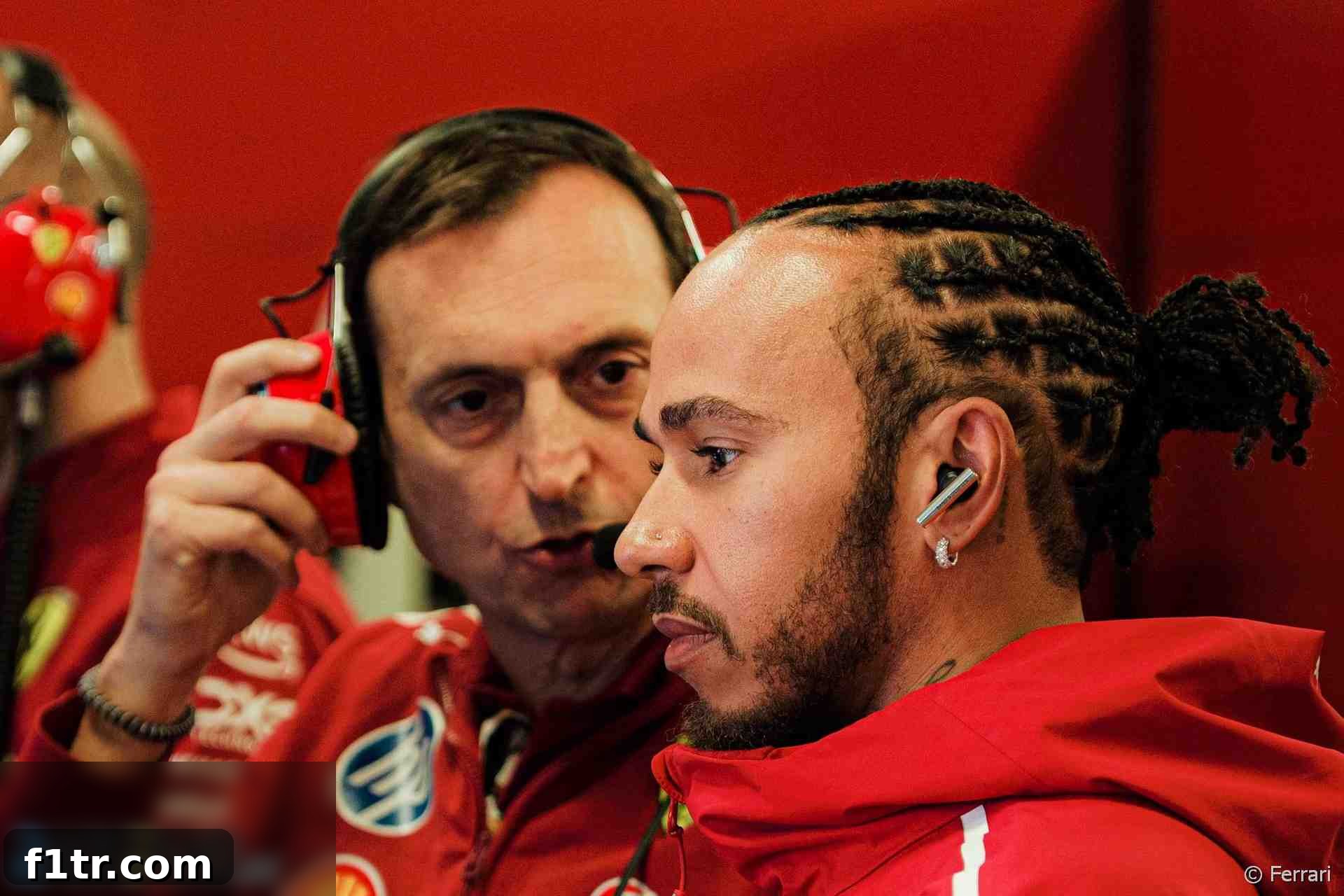
His critique stems from observations of last year’s Formula 1 season, where he noted several “pained” exchanges between Lewis Hamilton and his former race engineer, Ricardo Adami. Adami has since been replaced for the upcoming season, a move that perhaps underscores the issues Smedley highlighted. According to Smedley, the relationship between Hamilton and Adami was “not quite fully formed,” leading to an unhealthy dynamic that could compromise performance at the highest level of motorsport.
The Critical Importance of Immediate, Confident Communication
Smedley’s insights reveal a profound understanding of the psychological demands placed on Formula 1 drivers. In a sport where fractions of a second can mean the difference between victory and defeat, clear, decisive communication from the pit wall is not merely a convenience but an absolute necessity. Drivers are operating at peak human performance, navigating complex machinery at speeds exceeding 200 mph, often with dozens of strategic variables at play simultaneously. In this hyper-intensive environment, any hesitation or uncertainty from their race engineer can be deeply unsettling.
The tensions Smedley observed became particularly evident during last year’s Miami Grand Prix. During a critical phase of the race, Hamilton famously told his race engineer to “have a tea break” while they were deliberating over a potential car swap. This comment, seemingly innocuous, was a clear signal of the driver’s mounting frustration and a breakdown in effective communication. “This is a very clear presentation that his frustrations are boiling over,” Smedley explained to High Performance, emphasizing that such public displays of exasperation point to deeper, systemic issues.
Why “We’ll Get Back to You” is a Performance Killer
Smedley elaborated on the core problem with the “we’ll get back to you” response. “It’s the job of the race engineer,” he asserted, “when the driver asks a question, you need to know enough about the car and have some level of expertise in all areas and be across your job enough that when the driver asks a question – they’re in the car on their own, they are driving the car at 200mph – when they ask you a question, answer it quickly.”
The phrase “we’ll get back to you” sends a problematic message. “It really pains me when I hear ‘we’ll get back to you’ and all the rest of it. Mate, it’s not a call centre. The guy’s trying to perform at ten-tenths of their performance. Answer him, give him confidence, let them know that you know what you’re doing. Otherwise it’s like: ‘I’ll get back to you, I need to go and ask an adult’.” This analogy powerfully conveys the lack of confidence such a response projects. It suggests indecisiveness, a lack of preparedness, or even an absence of the required knowledge at a critical moment.
In a high-stakes environment like Formula 1, these “tiny things that erode confidence and trust” have significant ripple effects. When a driver’s faith in their engineer wavers, the entire relationship starts to become “more tetchy and more difficult.” This can manifest in poorer decision-making, increased stress for the driver, and ultimately, a dip in on-track performance. The psychological burden of uncertainty can distract a driver from the intricate task of pushing their car to its absolute limit, costing valuable tenths of a second per lap or, worse, leading to strategic errors.
The Gold Standard: Max Verstappen and Gianpiero Lambiase
To illustrate what an effective driver-engineer relationship looks like, Smedley pointed to Max Verstappen and Gianpiero Lambiase. Their dynamic, often characterized by frank and sometimes fiery exchanges, is in Smedley’s view, the benchmark in modern Formula 1.
Become a RaceFans supporter andgo ad-free
“That is the one relationship that I see which is kind of like an old-fashioned relationship,” Smedley noted. He attributes part of their success to their longevity, having worked together for nearly a decade. This extended period has allowed them to forge a deep understanding and an almost telepathic connection, built on years of shared experiences, triumphs, and challenges. Their rapport isn’t about politeness or subservience; it’s about raw, honest communication aimed solely at extracting maximum performance.
“If the perception is that they don’t get on, I think the way that they can be that frank and honest with each other tells you exactly the opposite. They get on really, really well.” Smedley’s observation highlights a crucial point: sometimes, seemingly confrontational communication is a sign of profound trust. When a driver and engineer can be brutally honest with each other without fear of damaging the relationship, it signifies an underlying strength and mutual respect. This level of candor allows them to address issues directly, make swift decisions, and constantly push each other to improve.
Verstappen’s success is undeniably a team effort, and Smedley recognizes the integral role Lambiase has played. “And I think that Max knows that GP has been a big part of his success. Of course, he’s never going to get the accolades that Max does,” Smedley said. This acknowledges the often-unsung heroes behind the scenes – the engineers whose strategic acumen, technical knowledge, and psychological support are vital components of a championship-winning campaign.
Beyond Subservience: Engineers Must Take Charge
Smedley’s critique extends beyond Ferrari, encompassing a broader observation about modern race engineering. “When I watch Formula 1 races and I listen to some of the engineers and their drivers talking together, the engineer can be almost too subservient,” he added. He advocates for a more assertive, proactive approach from engineers. “Get on the front foot, tell them what you want. I don’t hear the whole conversation, so I’m listening to this as a fan from the outside. But it’s like: tell them what you need.”
This proactive stance is not about micromanaging but about providing decisive guidance. A race engineer’s role is multifaceted: they are the driver’s primary link to the strategy team, the mechanics, and the wealth of data coming from the car. They must interpret this information, filter out noise, and present clear, actionable instructions to a driver who has limited bandwidth. An engineer who waits to be asked, or who defers constantly, fails to fulfill this critical aspect of their role. They need to anticipate needs, provide solutions, and, at times, gently but firmly direct the driver, always with the ultimate goal of optimizing performance.
The Ferrari Challenge: Rebuilding Communication for Future Success
Ferrari, with its rich history and passionate fanbase, faces immense pressure to succeed. Smedley’s comments offer a clear roadmap for improvement, particularly concerning their internal communication protocols. Rebuilding trust and confidence between drivers and their engineers will be paramount if the Scuderia is to challenge for championships consistently. This involves more than just personnel changes; it requires a cultural shift towards transparency, decisiveness, and unwavering support.
Implementing Smedley’s advice would involve comprehensive training for race engineers, focusing on rapid decision-making, clear articulation, and developing a deep understanding of their drivers’ psychological needs. Pre-race and in-session briefings should emphasize proactive communication strategies, ensuring engineers are always a step ahead, ready to provide immediate and confident answers. Furthermore, fostering a team environment where engineers feel empowered to be assertive and direct, rather than subservient, will be crucial.
The ultimate goal is to create a symbiotic relationship where the driver and engineer function as a single unit, their thoughts and intentions perfectly aligned. This synergy, exemplified by Verstappen and Lambiase, allows for seamless execution of strategy, adaptive decision-making under pressure, and ultimately, maximized performance on the track. For Ferrari, embracing this philosophy could be the key to unlocking their championship potential once more, transforming frustrated “tea break” requests into confident, race-winning dialogue.
Formula 1
- F1 returning to India soon after 2027 sounds like wishful thinking
- Verstappen loathes F1’s new generation of cars – but what do his rivals reckon?
- The ‘throwback weekend’ is back in fashion. But it’s a flawed concept – especially for F1
- Is Formula 1’s double race cancellation a blessing in disguise?
- Todt admits Schumacher crashed on purpose – but did it really cost him two titles?
Browse all Formula 1 articles