The global motorsport community held its breath as Formula 1 officially unveiled the initial eight races for its heavily anticipated 2020 season. This announcement, coming amidst the unprecedented challenges of the COVID-19 pandemic, immediately shifted focus to the remainder of the calendar. F1 managing director Ross Brawn expressed confidence in delivering a truncated championship comprising “15 to 18 races,” sparking widespread speculation across media outlets regarding the seven to nine additional rounds needed to meet this ambitious target.
However, such speculation, while understandable, remains highly premature and susceptible to significant inaccuracies. The process of finalizing the 2020 Formula 1 racing calendar is riddled with a multitude of variables and profound unknowns. Numerous target countries continue to grapple with stringent lockdown measures, while others maintain outright bans on large-scale public gatherings and mass events, fundamentally altering the feasibility of hosting Grand Prix weekends as traditionally conceived.
For Liberty Media, Formula 1’s commercial rights holder, the ultimate prize would be securing up to nine high-revenue races in regions where freedom of movement is unhindered and spectators can attend. Yet, the current global landscape offers no such luxury. This reality forces Liberty Media to recalibrate its strategy, prioritizing venues that are prepared to financially compensate F1 for setting up shop in their respective countries, irrespective of whether these events can welcome a crowd or must proceed behind closed doors.
In this challenging environment, four specific venues immediately emerge as strong contenders for inclusion in the revised F1 2020 calendar: Abu Dhabi, Bahrain, China, and Russia. These are often colloquially referred to as ‘propaganda races’ due to their strategic importance and significant financial contributions, often backed by state interests, rather than being solely dependent on ticket sales or traditional commercial models. Adding these four to the eight already confirmed rounds would bring the season total to 12 races. This leaves a crucial gap of three to five races required to fulfill Ross Brawn’s target of a 15-18 race championship. A key strategy under consideration, particularly for these financially robust venues, is the concept of hosting ‘back-to-back’ races, effectively staging two Grand Prix weekends consecutively at the same circuit. This approach significantly reduces logistical complexities and costs associated with international travel and setup in a pandemic-restricted world.
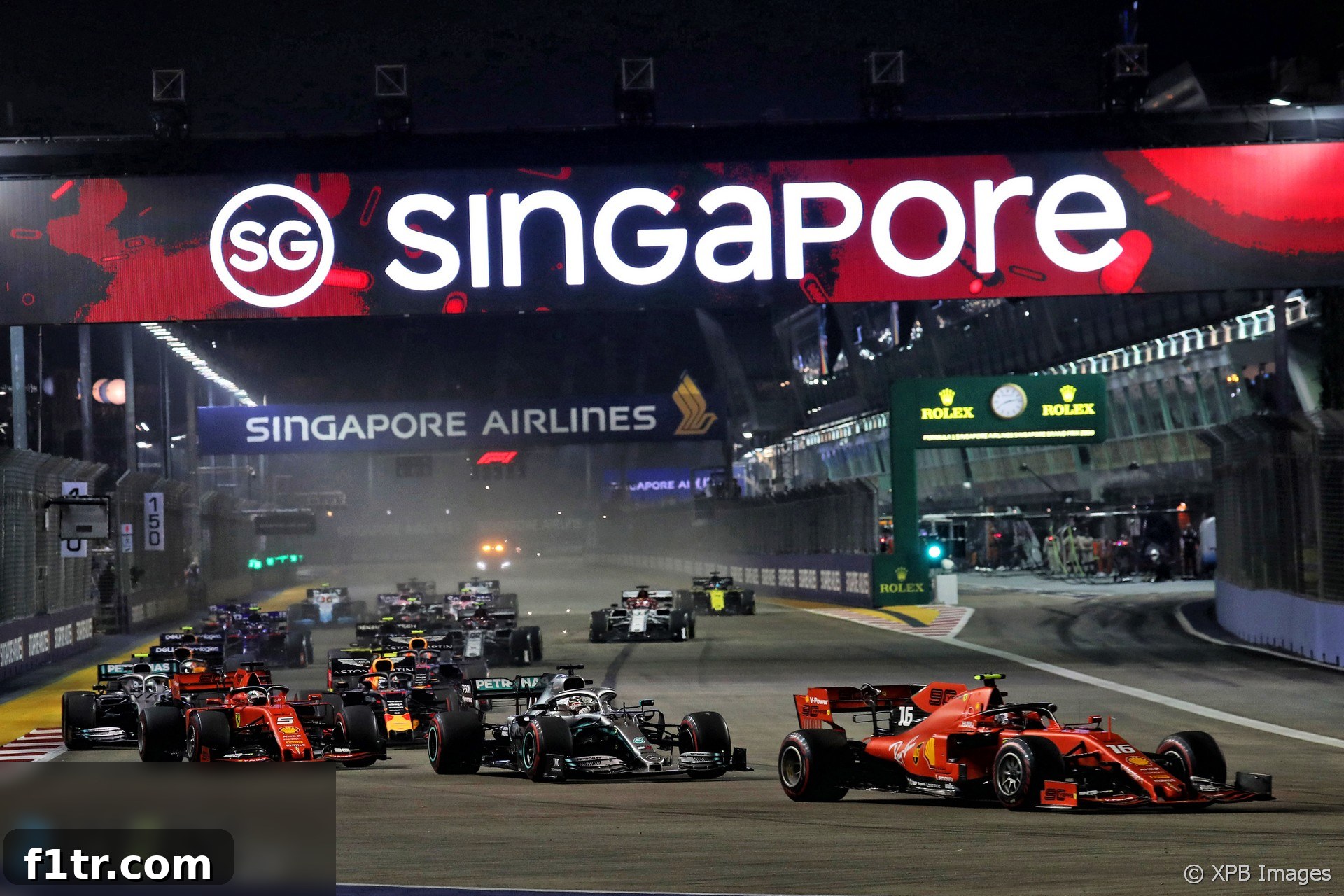
While the prospect of hosting a Formula 1 Grand Prix is highly coveted, certain street circuits, despite their allure, present insurmountable hurdles in the current climate. Singapore, Baku, and Vietnam, all renowned for their spectacular city circuits, would undoubtedly welcome the opportunity to host a race. However, the substantial disruptions and immense costs involved in constructing and dismantling these temporary urban tracks render ‘closed events’ – races without spectators – financially unviable. Furthermore, a proposed October date for Hanoi’s inaugural race would place it perilously close to the scheduled start of the 2021 season. As one source familiar with the matter advised RaceFans, “Building and dismantling a circuit twice in six months saps whatever local goodwill still remains in a city that has not yet staged a grand prix.” Consequently, the definitive cancellation of these three rounds from the 2020 Formula 1 season is widely anticipated and expected to be announced imminently.
The situation in South America, particularly Brazil, also presents significant obstacles. The likelihood of Interlagos remaining on the 2020 F1 calendar appears slim, and not solely due to the alarming surge in COVID-19 infection rates that the Brazilian government initially attempted to downplay. A more fundamental issue lies in the financial relationship between F1 and the Interlagos promoter. For two consecutive years, due to a specific contractual anomaly, the promoter had not paid any fees to Formula 1. In this climate, with Liberty Media needing every venue to contribute financially, there is very little commercial impetus or goodwill owed to the Interlagos organizers to host a race under less-than-ideal circumstances.
Given Liberty Media’s American roots, the North American races in the United States and Mexico are natural targets for inclusion. However, their viability is clouded by immense uncertainty. It remains unclear whether their circuits will be permitted to open for business, or if international borders will be sufficiently open to allow F1 personnel and equipment to travel by the time a final decision is required. The Circuit of the Americas (COTA) in Austin, Texas, for example, has faced considerable financial pressure recently. Its business model relies heavily on attracting a vast number of out-of-state and international visitors, a requirement that ‘closed’ events cannot fulfill. Meanwhile, Mexican officials recently reaffirmed their aspiration to host their race on its original date. Crucially, they added a caveat: “In the event that due to force majeure the event in Mexico City must be held without an audience or is cancelled, it will be communicated through official channels.” This statement underscores the precarious nature of these events. If both venues successfully host races, the total race tally could reach 14; if not, it would drop back to 12, highlighting the fragility of the entire calendar construction.
Recognizing these challenges, Liberty Media has reportedly developed a robust set of contingency plans to address various eventualities. As reported earlier, the Ferrari-owned Mugello circuit in Italy is on standby to host a race a week after the traditional Monza Grand Prix. This potential event would not only serve as a crucial calendar filler but also offer a symbolic celebration of Scuderia Ferrari’s 1,000th world championship race appearance. However, this promising prospect faces a potential clash with Sochi, which is reportedly keen on hosting a double-header event in Russia. Given Russia’s status as a major financial contributor to F1, and the logistical difficulties of staging races in two distant locations within a short timeframe, if Sochi prevails with its double-header ambition, the second Italian round at Mugello could well be sidelined. Regardless of which option materializes, Liberty Media essentially holds a ‘banker’ extra round, ensuring flexibility in a highly unpredictable season.
Further bolstering the potential pool of venues, there is considerable discussion about Jerez in Spain and Portimao in Portugal stepping in to make up any shortfalls in the desired race count. Both circuits have reportedly expressed their preparedness to host double-headers as late as the end of October. Jerez notably hosted such an arrangement in 1997, featuring the infamous clash between Michael Schumacher and Jacques Villeneuve that decided the championship. The hope lingers that by late autumn, national regulations might even permit a limited number of spectators to attend these events, offering a much-needed boost to local economies and the F1 experience. Additionally, historic European tracks like Imola and Hockenheim are also said to be in the running. However, their viability for rounds beyond the end of September is diminished by the expected autumnal chilliness and shorter daylight hours. It is crucial to view this sudden availability of multiple venues with a degree of caution. The more potential locations are discussed and ‘bandied about’ by the media, the stronger Liberty Media’s negotiating position becomes as it seeks out paying hosts, rather than having to subsidize or provide incentives for venues to stage races.
Liberty Media’s paramount challenge is to construct a viable, profitable, and secure Formula 1 calendar in the face of persistent and widespread global uncertainty. The complexities involved extend far beyond mere venue selection, encompassing intricate health and safety protocols, international travel restrictions, logistical nightmares for teams, and the need to fulfill lucrative broadcast and sponsorship contracts. These unprecedented circumstances place immense financial pressure on Formula 1 as an entity and on its constituent teams, many of whom rely heavily on the championship’s revenues. Therefore, it is still too early to confidently speculate about the exact contours of F1’s path after the initial eight races. An official, comprehensive calendar for the latter part of the 2020 season is not expected until the end of the month, shortly before this heavily disrupted championship is set to finally commence. The unique challenges of this season will undoubtedly leave an indelible mark on the sport’s history, highlighting its resilience and adaptability in adversity.
2020 F1 season
- Grosjean to make F1 test return tomorrow for first time since Bahrain horror crash
- Pictures: Wrecked chassis from Grosjean’s Bahrain fireball crash to go on display
- Bottas vs Rosberg: Hamilton’s Mercedes team mates compared after 78 races each
- F1 revenues fell by $877 million in Covid-struck 2020 season
- Hamilton and Mercedes finally announce new deal for 2021 season
Browse all 2020 F1 season articles