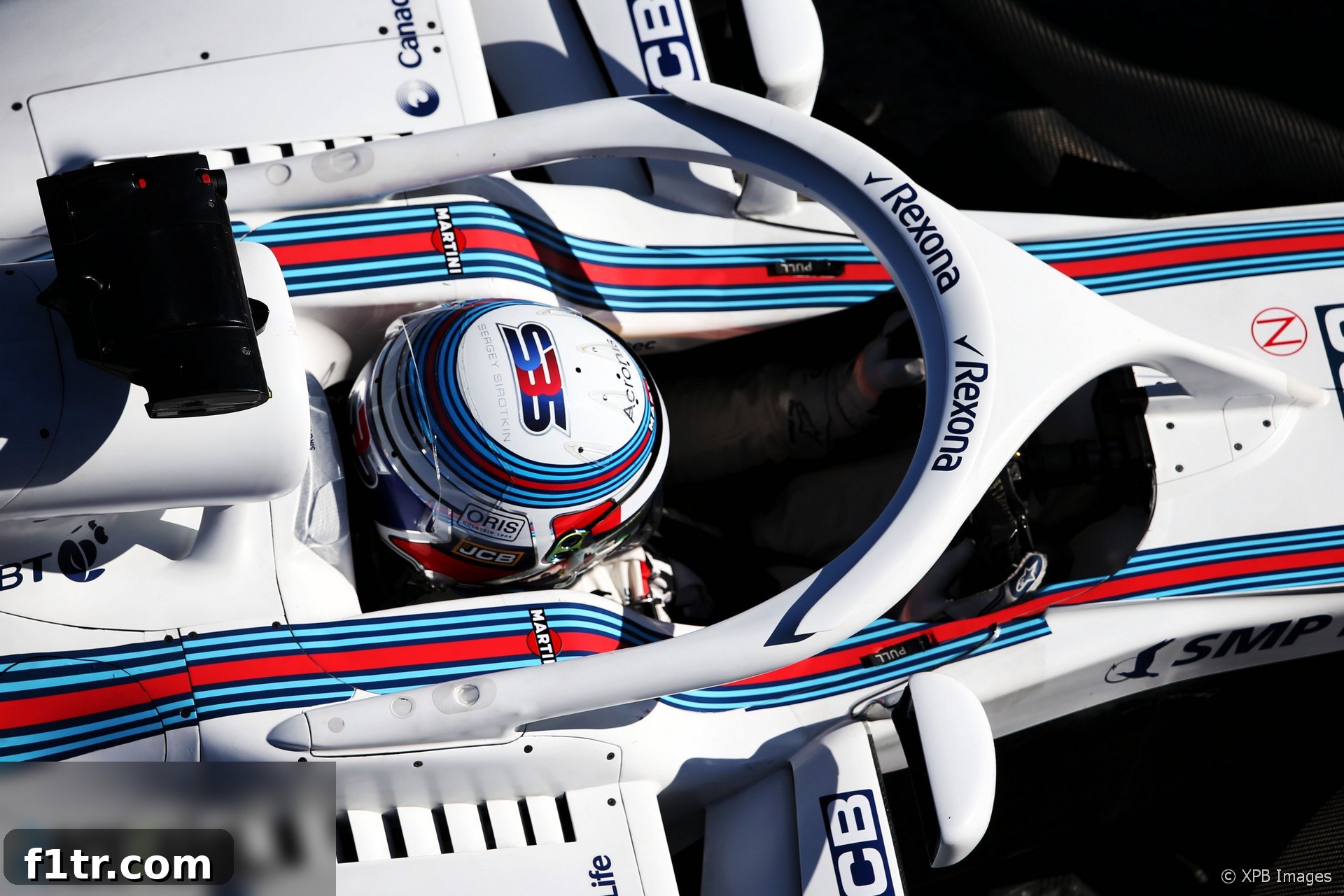
Sergey Sirotkin’s Rookie Ordeal: Battling Agony and a “Not Race-able” Car at the Spanish Grand Prix
In the high-octane world of Formula 1, drivers are expected to push the limits of speed and endurance, facing immense physical and mental challenges. Yet, for Williams rookie Sergey Sirotkin, the 2018 Spanish Grand Prix presented an almost unimaginable hurdle: relentless, “massive” pain stemming from a persistent seat problem. His candid revelation post-race painted a vivid picture of a driver not just struggling with a demanding circuit and an underperforming car, but battling his own equipment to simply stay in the race, describing the experience as “the toughest race I ever did by far – I wouldn’t even call it a race.”
Advert | Become a Supporter & go ad-free
The Unseen Struggle: A Fundamental Flaw in Driver Comfort
From the outset of the 2018 season, Sergey Sirotkin had been wrestling with an issue that, to an outsider, might seem trivial for a professional racing driver: seat comfort. In Formula 1, a driver’s seat is far more than just a place to sit; it’s a meticulously crafted, custom-molded shell designed to provide unparalleled support, absorb the punishing G-forces, and create a seamless, intuitive connection between the driver and the car. Any discrepancy in this crucial interface can have profound consequences on control, precision, and ultimately, performance and safety. For Sirotkin, this fundamental ergonomic challenge became a defining—and debilitating—aspect of his rookie campaign.
Sirotkin explained the pervasive nature of the problem, stating, “We had it since the beginning of the year and we never really [had] the opportunity to properly look and improve it. But today it was… we did a couple of changes and I’m not sure they were [right].” This admission highlights a deeper systemic challenge within the struggling Williams outfit. With myriad performance issues plaguing their FW41 challenger, fundamental driver comfort, a cornerstone of optimal performance, had seemingly been relegated to a lower priority. The attempts to rectify the problem ahead of the Spanish Grand Prix proved counterproductive, exacerbating the agony rather than alleviating it, turning what should have been a minor adjustment into a major detriment.
“Massive Pain”: When Driving Becomes Torture
The severity of Sirotkin’s predicament became acutely clear in his post-race remarks. He articulated the pain as “really massive, I was really struggling just staying in the car.” It wasn’t merely a mild discomfort; it was an incapacitating agony that threatened to compromise his ability to perform at the elite level of Formula 1. He further elaborated that the issue wasn’t the seat’s overall position but rather “some bits which helps you not to move around in the car which we are struggling [with] a lot all year.” These “bits” are critical components designed to secure the driver firmly within the cockpit, preventing unwanted movement under the extreme G-forces experienced during braking, cornering, and acceleration. When these elements fail or cause irritation, the driver’s body can shift, leading to bruising, abrasions, and intense localized pain, directly impacting their ability to steer, brake, and accelerate with the required finesse.
For a sport demanding surgical precision, lightning-fast reactions, and unwavering focus, such physical distress is a monumental hindrance. Every micro-movement, every steering input, every brake application becomes an arduous task when the driver is constantly battling discomfort. Sirotkin’s harrowing experience reached its nadir during the race, where he confessed, “We reached the worst point of that [in the race] and for sure the way it was it’s just dangerous and not race-able at all.” This chilling statement underscores the potential safety implications of his struggle, raising serious questions about a driver’s ability to maintain optimal control and react effectively when in such debilitating pain, especially at speeds exceeding 300 km/h.
A Race of Adversity at Circuit de Barcelona-Catalunya
The Circuit de Barcelona-Catalunya, known for its challenging mix of high-speed corners, technical sections, and long straights, is already a physically demanding track. Its layout, with significant lateral loads and heavy braking zones, routinely tests the stamina and physical conditioning of Formula 1 drivers. For Sirotkin, navigating its twists and turns while enduring severe pain transformed an already tough assignment into an extraordinary test of resolve. His race began with a promising launch, only to be quickly overshadowed by external circumstances beyond his immediate control.
Caught in the Chaos: Turn Three Incident
Sirotkin recounted a decent start but then finding himself “caught in turn three with those spins and the crash ahead.” The opening lap of any Grand Prix is notoriously frenetic, a ballet of aggressive positioning and desperate overtaking attempts, often leading to multi-car incidents. In the chaos of smoke and debris from the turn three collision, Sirotkin’s visibility was severely compromised. He vividly described the terrifying moment: “I was just in a position where I completely couldn’t see where I am going. I saw that I [was] just about to hit the car ahead, it was so smoky that I just didn’t see anything, I needed to completely stop to avoid the crash.” This forced evasion cost him significant track position and precious seconds, leaving him “the last car by a mile” and effectively ending any realistic hopes for a competitive drive or a points finish so early in the race.
A Costly Error and a Strategic Gamble
The adversity continued when, following a Virtual Safety Car (VSC) period, Sirotkin made a rare mistake. “And then obviously I made a mistake on the restart after the [Virtual] Safety Car and spun the car,” he admitted. While Formula 1 drivers are expected to maintain peak performance and focus under immense pressure, the cumulative effect of constant physical agony, combined with the earlier setback and the mental strain of a difficult race, could easily contribute to such an error. With his race already compromised and points seemingly out of reach, the team opted for a strategic pit stop. Sirotkin explained the rationale: “We just decided that from where we’d been anyway it’s not that we could do much so we decided why don’t we pit for the extra set of tyres just in case [something happened].” This decision, while unusual for a car running at the back, likely served a dual purpose: to gain valuable data on different tire compounds for future races and potentially to be in a better strategic position should further incidents trigger another safety car or red flag, offering a slim chance of recovery.
The Broader Context: Williams’ 2018 Struggles
Sergey Sirotkin’s personal battle with seat comfort was symptomatic of a wider malaise within the Williams Racing team during the 2018 season. The FW41 proved to be a profoundly challenging car, consistently lacking pace and balance compared to its rivals. Fundamental design flaws meant the team was often fighting an uphill battle, making it difficult to address more nuanced issues like driver comfort with the urgency they deserved. In such a high-pressure environment, where every tenth of a second counts and resources are finite, teams often prioritize raw performance improvements over refinements that, while critical, might seem secondary to simply making the car faster. This unfortunate prioritization meant Sirotkin endured his rookie season not only in an uncompetitive car but also one that actively inflicted physical pain, adding an extraordinary layer of difficulty to his Formula 1 debut.
The psychological impact on a rookie driver in these circumstances cannot be overstated. Entering Formula 1 is a dream come true for most, but to face such foundational problems, coupled with a difficult car and relentless physical pain, tests the limits of resilience and passion to their absolute maximum. Sirotkin’s ability to even finish the race, albeit in 14th place, speaks volumes about his determination, mental fortitude, and unwavering commitment, transforming what he experienced from a mere Grand Prix into a grueling, personal test of will against his own car and body. It highlighted the sheer grit required to compete at the pinnacle of motorsport, even when all odds are stacked against you.
Advert | Become a RaceFans supporter andgo ad-free
The Critical Importance of Ergonomics in F1
This incident serves as a stark reminder of the paramount importance of ergonomics and driver fit in Formula 1. Each driver undergoes a meticulous seat-fitting process, where liquid foam is poured around them in their cockpit to create a perfectly contoured seat. This bespoke design ensures optimal support, distributes pressure evenly across the driver’s body, and allows them to feel every nuance of the car’s behavior, which is crucial for maximizing performance. When this fundamental aspect is compromised, as it clearly was for Sirotkin, it can severely impact a driver’s ability to control the car at its limit, leading to errors, reduced performance, and potential safety concerns, making it a critical area that cannot be overlooked.
The fact that such a basic, yet critical, issue persisted for Sirotkin “since the beginning of the year” and worsened despite attempted fixes, is concerning for a top-tier racing team. It underscores the challenges faced by teams, especially those under pressure and struggling with broader performance issues, in identifying and resolving deeply embedded problems that can affect driver well-being and performance. For a sport where technological advancements are often celebrated and meticulously optimized, the human element—the driver’s comfort, health, and seamless connection to the machine—remains undeniably foundational to success and indeed, to the very essence of competitive racing.
2018 F1 season
- F1 feared “death knell” for Drive to Survive after Ferrari and Mercedes snub
- McLaren staff told us we were “totally crazy” to take Honda engines in 2018 – Tost
- ‘It doesn’t matter if we start last’: How Red Bull’s junior team aided Honda’s leap forward
- Honda’s jet division helped F1 engineers solve power unit problem
- McLaren Racing losses rise after Honda split
Browse all 2018 F1 season articles