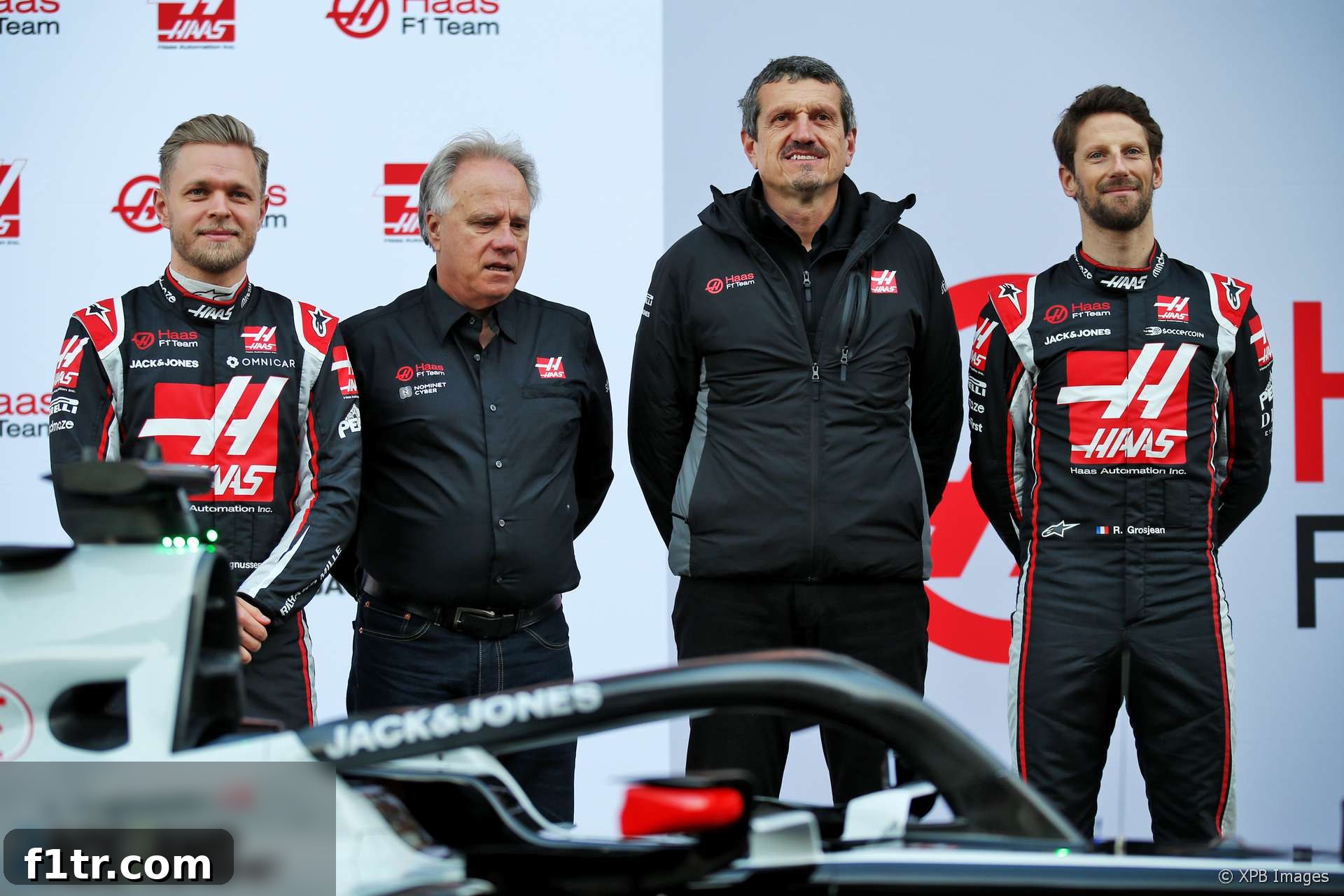
Haas F1’s Future Secured: Gene Haas Retains Full Ownership Amidst Speculation
Amidst a swirling vortex of rumors and speculation concerning the financial stability and ownership structure of various Formula 1 teams, Guenther Steiner, the esteemed Team Principal of Haas F1, has issued a definitive statement. Contrary to persistent reports suggesting a potential sale or acquisition, Steiner has confirmed that Gene Haas remains the sole and absolute owner of the Haas Formula 1 team, holding a 100% stake in the outfit.
The future of the American-owned team has been a significant talking point within the motorsport community, particularly after a challenging 2019 season. That year saw Haas F1 plummet to a disappointing ninth place in the constructors’ championship, marking their worst performance since joining the grid. This downturn, coupled with previous remarks from Gene Haas himself regarding his long-term commitment to the sport, fueled the narrative of an uncertain future.
However, during a recent media conference, Steiner unequivocally stated, “Gene Haas is still the hundred percent owner of Haas.” He elaborated on the nature of Haas’s ownership, emphasizing, “He never had a partner, he maybe doesn’t want a partner, he maybe doesn’t need a partner.” Steiner’s comments, made in direct response to inquiries from motorsport journalists, sought to quell the widespread speculation once and for all.
Steiner also clarified the official channel for any potential future announcements, asserting that any significant changes would be communicated directly by the team. “When the time is right that he wants to do it, we will communicate it. And [when] I say ‘we’ that is Haas F1 and not everybody having an opinion who owns Haas and who is buying Haas and who is acquiring shares in Haas,” he affirmed, highlighting the team’s desire to control its own narrative.
F1 Team Ownership in Flux: Haas Contrasts with Williams and McLaren
The current climate in Formula 1 sees several teams openly exploring new financial models and potential investment. Last month, the venerable Williams team announced its strategic decision to seek a potential investor, signaling a willingness to adapt to the evolving economic demands of the sport. Similarly, McLaren is understood to be actively looking for someone to buy a minority stake in its F1 team, a move aimed at bolstering its financial position and facilitating further growth.
Steiner acknowledged these developments, offering praise for Williams’ approach to managing such sensitive discussions. “If somebody wants to buy a team out there, I think Williams did a very good job in how they manage it,” he remarked. “They put it on the market that we are interested in something, speak with this and this people, and I think that is how it should be done and not big speculations with no foundation.” This perspective underscores Steiner’s frustration with the unfounded rumors that have plagued Haas F1.
He further elaborated on the prevalence of such unfounded stories concerning Haas’s future in F1. “I think it’s now the third time that Gene has ‘sold the team [or] partly sold the team’,” Steiner mused, highlighting the repetitive nature of these rumors. “I think these are all speculations. I think somebody is putting some rumors out there. I mean, we were ‘sold to Saudi Arabia’ a year ago and the deal was ‘done’ and nobody ever spoke with Saudi Arabia. So I see this a little bit as a lot of trying to make a storm in a teacup for no good reason.” His comments paint a picture of a team weary of constant, unsubstantiated conjecture.
The Transformative Power of the F1 Budget Cap
A significant development poised to reshape the financial landscape of Formula 1 is the recent decision to implement a reduced budget cap starting from the 2021 season. This regulation is widely seen as a pivotal step towards creating a more equitable and sustainable environment for all teams on the grid. Steiner firmly believes that this new financial framework will make the sport considerably more appealing to an independent constructor like Haas.
“I think it’s good, the budget cap, for the sport in general,” Steiner declared. He emphasized its potential to level the playing field, even if not perfectly equalizing every team’s resources. “Even if it is not completely equal with everybody, we know that the team will still be under the budget cap, but it’s a very good step. Now the difference will be not 150 million to the big teams, but maybe 20, which is a very good step.” This drastic reduction in the financial disparity between the sport’s behemoths and its smaller, privately-owned teams presents an unprecedented opportunity for outfits like Haas to compete on more even terms.
The budget cap is designed to curtail the astronomical spending of the top-tier teams, forcing them to operate more efficiently and innovate within stricter financial constraints. For teams like Haas, which have historically operated with a more modest budget, this change is nothing short of revolutionary. It offers a genuine pathway to improved competitiveness without requiring an exponential increase in investment, thereby making the entire F1 enterprise a more attractive and manageable proposition for owners like Gene Haas.
Steiner’s Ambitious Goal: Achieving Financial Break-Even for Haas F1
With the advent of the new financial regulations, Guenther Steiner harbors a realistic and ambitious goal for Haas F1: to achieve financial break-even. This objective is crucial for ensuring the long-term viability and attractiveness of the team to its owner, Gene Haas. Steiner sees the budget cap as a critical enabler for this target, allowing the team to operate sustainably without incurring significant losses.
“Maybe there is a chance to do that for the future,” Steiner said regarding the prospect of breaking even. He acknowledged the diligent effort required, stating, “I think you need to do a good job to do that for the future that you break even.” This highlights that while the new rules create opportunities, success still hinges on shrewd management, efficient operations, and strong on-track performance.
Beyond the budget cap, the impending changes to Formula 1’s commercial agreement also play a vital role in this financial strategy. Steiner noted that “the distribution of the prize fund will be a lot more equal in the new commercial agreement.” This rebalancing of prize money, which has historically favored the established, larger teams, is set to provide a much-needed boost to independent outfits. For Haas, a more equitable share of the sport’s revenue means a stronger financial foundation, directly supporting the goal of self-sufficiency.
While acknowledging that “Some people, I think, can for sure make money on it, the big teams if they can keep the sponsorship they have got,” Steiner emphasized that for Haas, the immediate aim is stability. “So there is a chance to do that and that is for sure the aim of us. That needs to be my aim to make it break even for Mr Haas.” This commitment underscores the pragmatic approach being taken to secure the team’s future, prioritizing financial health as a cornerstone for on-track success.
The Concorde Agreement and Haas’s Long-Term Commitment to F1
Formula 1 is currently in the intricate process of preparing a new Concorde Agreement, a foundational document that dictates the terms under which teams commit to compete in the championship. This crucial agreement, set to come into effect from 2021, is the bedrock of F1’s stability and future direction. Guenther Steiner firmly believes that if Haas F1 can successfully achieve its financial goal of breaking even, Gene Haas will commit to signing the new Concorde Agreement, securing the team’s place in the sport for years to come.
“If I make that happen, for sure he would sign the Concorde Agreement,” Steiner confidently stated, directly linking financial stability to long-term commitment. However, he also provided a realistic timeline for this decision, noting, “But first of all, we haven’t yet seen the Concorde Agreement or the commercial agreement. We roughly know what it looks like, but that should come in the next weeks or months. I don’t know exactly when, but obviously FOM had to wait to get all the new budget [cap] cuts through and that’s why it took a little bit of a step back, but it will be coming.” This indicates that while the intent is clear, the official signing awaits the finalization of the document’s specifics.
Steiner reiterated the absolute authority of Gene Haas in this decision-making process. “Once we’ve got it then Mr Haas can decide what he wants to do. But in the moment, his intention is to stay within the sport. Before it is signed I cannot say this is what is going to happen because the team, just to remind everybody, it’s owned 100 percent by him and not anybody else so he can make the decisions and go from there.” This reinforces the personal investment and ultimate control that Gene Haas wields over the team’s destiny in Formula 1.
Despite the inherent uncertainties and the global challenges posed by events such as the Coronavirus pandemic, Steiner conveyed a strong sense of optimism for Haas F1’s future. “But I am very positive about it, where we are now. We are getting through this difficult period with the Coronavirus pretty good in the moment. We are doing the right things, we live within our means and what we have got and therefore, I think Haas is here to stay.” This forward-looking statement provides reassurance that the team is navigating current difficulties effectively and is well-positioned for a sustained presence in Formula 1, underpinned by the unwavering commitment of its sole owner, Gene Haas.
2020 F1 Season & Beyond
- Grosjean to make F1 test return tomorrow for first time since Bahrain horror crash
- Pictures: Wrecked chassis from Grosjean’s Bahrain fireball crash to go on display
- Bottas vs Rosberg: Hamilton’s Mercedes team mates compared after 78 races each
- F1 revenues fell by $877 million in Covid-struck 2020 season
- Hamilton and Mercedes finally announce new deal for 2021 season
Browse all 2020 F1 season articles