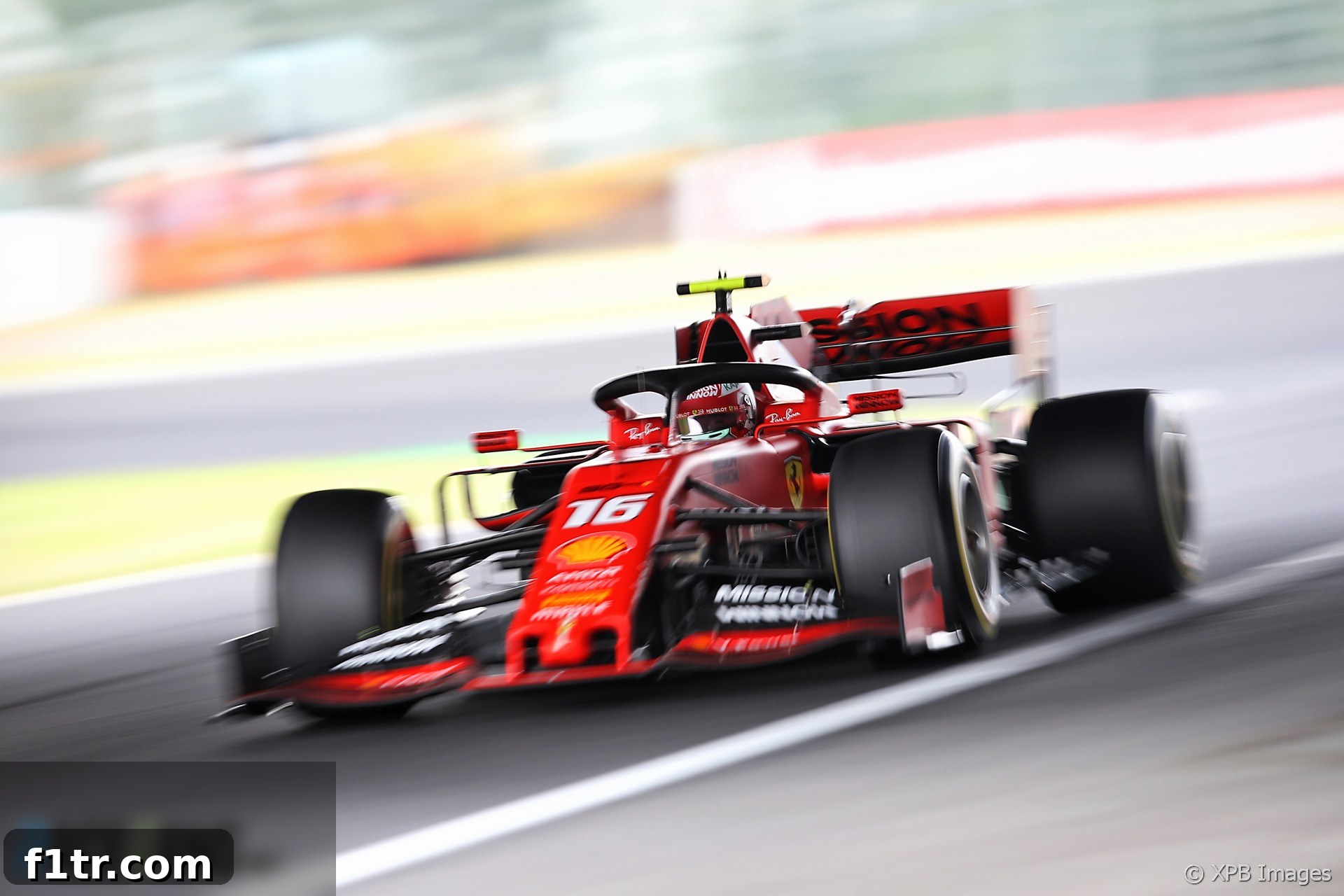
Leclerc Stunned by Mercedes’ Dominance at Suzuka Practice as Ferrari Grapples with Unexpected Pace Deficit
Suzuka, Japan – Charles Leclerc expressed significant surprise and concern following Friday’s practice sessions for the Japanese Grand Prix, as Mercedes comfortably outpaced Ferrari, leaving the Scuderia questioning their setup and performance heading into a crucial weekend. The Monegasque driver, usually a picture of confidence, admitted that Ferrari found themselves in an unexpected battle, struggling to match the Silver Arrows’ blistering pace around the iconic Suzuka International Racing Course.
Advert | Become a Supporter & go ad-free
Both Friday sessions saw Mercedes drivers lock out the top two positions, a stark contrast to Ferrari’s recent dominance on speed-sensitive circuits. Valtteri Bottas emerged as the pace-setter, consistently demonstrating superior performance, while Leclerc, the quicker of the two Ferrari drivers in Free Practice 2, found himself over three-tenths of a second adrift of Bottas’s fastest time. This performance gap sent ripples of apprehension through the Ferrari garage, particularly after a strong run of form that had seen them claim multiple victories and pole positions in the preceding races.
Speaking to the media after the second practice session, Charles Leclerc acknowledged that Ferrari hadn’t managed to complete their full intended run plan for the day, but insisted they had made the most of their track time. “We made the most out of our day, which was the most important,” Leclerc stated, reflecting on the team’s efforts to gather data despite the challenges. However, his subsequent remarks painted a clear picture of concern regarding their overall competitiveness. “But it seems we are lacking pace this weekend, which is a bit of a surprise because, at the end, we were very strong in the last four races.”
Ferrari had arrived in Japan with high hopes, especially after demonstrating impressive gains in engine performance and aerodynamic efficiency throughout the season. The expectation was for them to be highly competitive, even at a high-downforce track like Suzuka. “We expected to be quite good here, but it’s just not the case,” Leclerc confessed, his tone revealing a blend of frustration and determination. “But we will be working to prepare at its best for qualifying on Sunday.” The unusual schedule for the Japanese Grand Prix, with qualifying moved to Sunday morning due to an impending typhoon, adds another layer of complexity to the teams’ preparations, demanding quick adaptation and precise adjustments overnight.
Ferrari’s Unexpected Struggles and Driver Feedback
Leclerc further elaborated on the feeling from within the cockpit, indicating that the car’s balance wasn’t the primary issue. “The car’s balance is not that bad, actually, so we are just lacking speed,” he explained, suggesting the problem might be more fundamental, possibly related to overall downforce levels or tyre management over a full lap. This assessment highlights a deeper challenge than mere setup tweaks, pointing towards a potential mismatch between their car’s characteristics and the demanding layout of Suzuka.
Adding a touch of personal accountability, Leclerc also admitted to areas for improvement in his own driving. “There’s a little bit in driving too, I’m not driving very well,” he conceded. This self-critical approach is characteristic of top drivers, always seeking to extract every last millisecond from themselves and their machinery. However, despite this introspection, he remained realistic about the task ahead. “But I still expect it to be hard to catch Mercedes in front.” His comments underscored the significant gap Mercedes appeared to have established, making any recovery a formidable challenge for Ferrari.
Vettel’s Broader Concerns and the Red Bull Threat
Leclerc’s teammate, Sebastian Vettel, echoed similar sentiments of concern, not only about Mercedes’ speed but also raising an alarm about the resurgent threat from Red Bull Racing. Vettel, a four-time world champion and a Suzuka specialist, offered a more cautious outlook on Ferrari’s potential. “There is a bit more in the car, but you need to be honest, and Mercedes look very quick every time they went out,” Vettel stated, acknowledging the obvious superiority of their rivals. His observations suggested a consistent, unflustered performance from Mercedes, leaving little doubt about their current advantage.
Moreover, Vettel’s radar also picked up on the strong performance of Red Bull, hinting at a potential three-way fight at the front, albeit with Ferrari currently on the back foot. “Plus, it looked a bit more comfortable for Red Bull as well here, so it will be tight, and I expect them both to be very strong on Sunday morning as well.” Red Bull’s chassis has historically performed well at high-downforce tracks like Suzuka, and with Max Verstappen at the helm, they are always a force to be reckoned with. Vettel’s remarks suggest that Ferrari might not only be battling Mercedes for supremacy but also fending off a potent challenge from Red Bull for podium positions, making their path to victory significantly more complicated.
Advert | Become a RaceFans supporter andgo ad-free
The Suzuka Challenge: A Test of Downforce and Precision
The Suzuka International Racing Course is legendary for its unique figure-of-eight layout and its incredibly demanding sequence of high-speed corners. From the exhilarating “Esses” to the iconic 130R and the final chicane, the circuit places immense emphasis on aerodynamic efficiency, chassis balance, and driver precision. A car that performs well here typically boasts high levels of downforce, excellent mechanical grip, and a stable platform through fast changes of direction.
Ferrari’s recent successes had largely come on circuits that favored straight-line speed and traction out of slow corners, where their powerful engine could be fully exploited. Suzuka, however, with its sweeping bends and sustained lateral G-forces, often exposes any weaknesses in a car’s aerodynamic package or its ability to generate consistent downforce throughout a lap. Mercedes, with their generally well-balanced and aerodynamically sophisticated W10, appeared to thrive in these conditions, finding the sweet spot between outright speed and cornering performance. Red Bull, known for their strong chassis and aggressive downforce philosophy, also looked inherently comfortable, further complicating Ferrari’s weekend. The practice sessions clearly indicated that the unique characteristics of Suzuka were playing directly into the strengths of Mercedes, and potentially Red Bull, more so than Ferrari’s SF90.
Looking Ahead: Strategy and Optimism for Qualifying and Race
With qualifying now scheduled for Sunday morning, teams face an compressed schedule, leaving less time for comprehensive analysis and extensive setup changes. Ferrari will be working tirelessly overnight and into Saturday, poring over telemetry data to understand where they are losing time. They will need to identify if the deficit is due to a fundamental lack of downforce, an issue with tyre warm-up or degradation, or if there are specific corner sequences where their rivals hold a decisive advantage.
The target for Ferrari will be to bridge the gap to Mercedes, or at the very least, ensure they can challenge Red Bull effectively. Leclerc’s and Vettel’s comments underscore the urgency for significant improvements. While qualifying pace is crucial at Suzuka, the race often sees strategic battles and the potential for unexpected outcomes, especially with unpredictable weather conditions sometimes adding to the drama. The ability to manage tyres effectively over a long stint and execute flawless pit stops will be paramount.
Despite the initial setback, Ferrari remains a formidable team, capable of rapid recovery and tactical prowess. The challenge presented by Mercedes and Red Bull in practice merely sets the stage for what promises to be an enthralling weekend of racing at Suzuka. For Charles Leclerc, overcoming this unexpected deficit will not only test his driving skills but also his ability to work closely with his engineers to unlock the SF90’s full potential, transforming his surprise into a determined push for performance when it matters most.
2019 F1 season
- Crying in the Melbourne car park at 2019 grand prix was my career low – Ocon
- McLaren Racing reports reduced £71 million loss in 2019
- Kvyat: Hockenheim podium last year was “my biggest achievement” so far
- How the FIA’s new encrypted fuel flow meter targets Ferrari’s suspected ‘aliasing’ trick
- “He smashed my office door”: 23 must-see moments from ‘Drive to Survive’ season two
Browse all 2019 F1 season articles