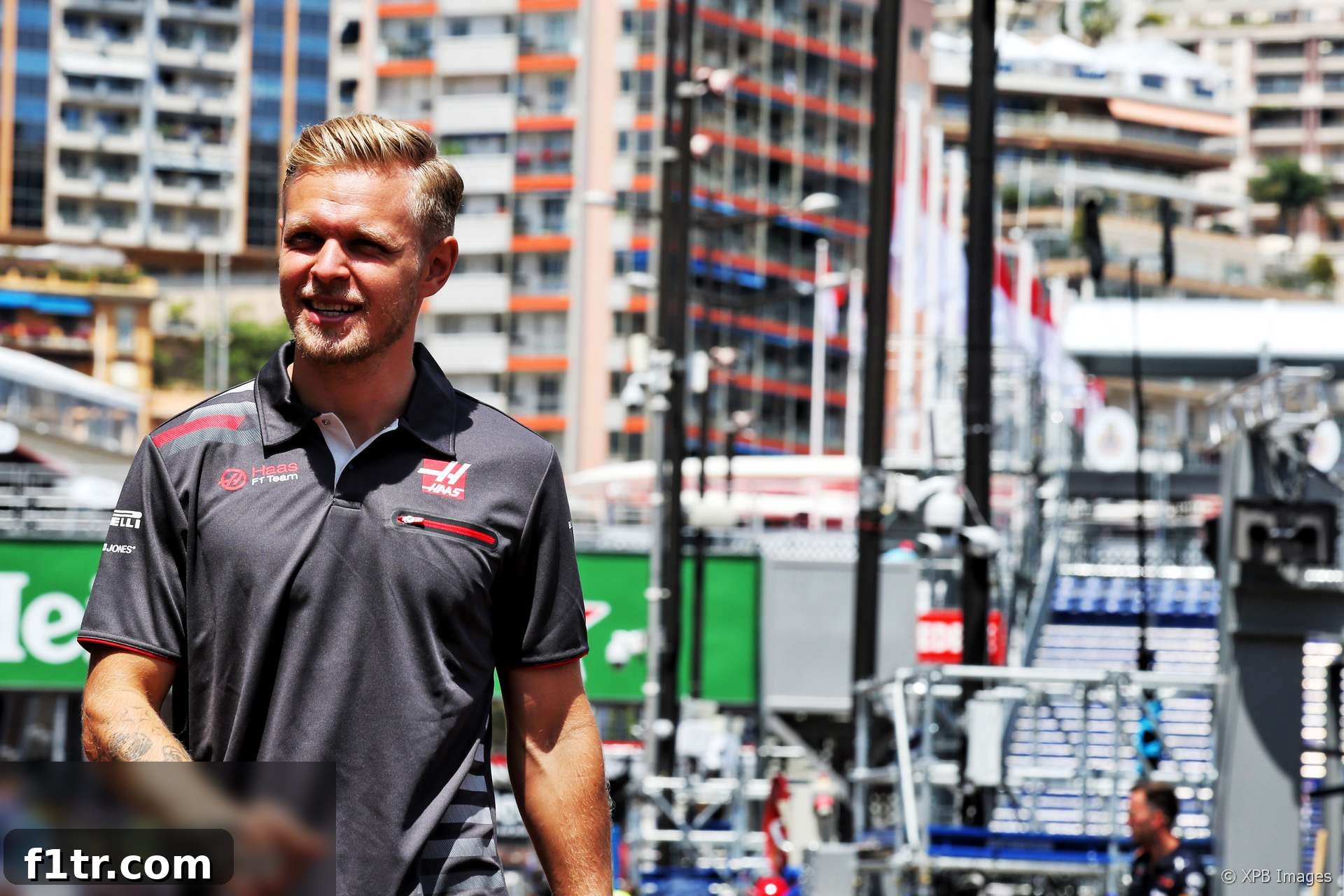
The exhilarating rush of Formula 1 brings with it a fascinating dichotomy: the dominant front-runners vying for championship glory and the fiercely competitive midfield teams battling for every precious point. For Kevin Magnussen and the Haas F1 Team, the 2018 Spanish Grand Prix offered a rare and profoundly satisfying taste of dominance within that midfield tier. Yet, as the circus prepares to descend upon the iconic streets of Monaco, Magnussen himself offers a measured perspective, suggesting that a repeat of their Barcelona triumph is improbable.
“We should certainly be in the mix, no doubt about that,” Magnussen stated, reflecting on the upcoming Monaco Grand Prix. “But I genuinely don’t anticipate it being as dominant as our performance in Barcelona was.” His candid assessment highlights the stark differences between the high-speed, flowing nature of the Circuit de Barcelona-Catalunya and the tight, twisty, low-speed challenge of Monaco.
Haas’s Unforgettable Display at the Spanish Grand Prix
The Spanish Grand Prix had been a standout moment for Haas, particularly for Magnussen. He finished an impressive sixth, a substantial half-minute clear of his nearest midfield rival, a feat that spoke volumes about the car’s inherent pace and the team’s strategic execution. For a team like Haas, battling against more established constructors with significantly larger budgets, such a result was not merely a good performance; it was a statement. It underscored their potential and their ambition to solidify their position as genuine contenders in the midfield battle.
Magnussen’s experience in Spain was so profound that it transported him back to the formative years of his racing career. “I 100% felt like I was leading the race because I literally couldn’t see anyone in front of me,” he recounted, a wide smile likely accompanying the memory. “It was reminiscent of the good old days in F3 and World Series championships when you’d be leading, pulling away, with no one in sight, neither ahead nor in the mirrors. Just driving completely by yourself, finding that perfect rhythm, and consistently logging those quick laps.” This sentiment perfectly encapsulates the rare feeling of absolute control and unchallengeable pace that is seldom afforded to drivers outside the top three teams in modern F1.
The VF-18’s Strengths and a Conservative Strategy
The Haas VF-18’s impressive pace in Barcelona was no accident; it was a testament to its design philosophy and the circuit’s characteristics. “Our car is particularly strong when it comes to high-speed and medium-speed corners,” Magnussen explained. “To be fair, it’s not bad in low-speed corners either, but I believe the significant advantage we held in Barcelona was predominantly rooted in our performance through the medium and high-speed sections.” The flowing turns of Barcelona allowed the VF-18 to truly stretch its legs, showcasing its aerodynamic efficiency and chassis balance.
Beyond raw speed, the Haas team demonstrated strategic maturity and a focus on securing maximum points. Despite their commanding lead over the midfield, they opted for a highly conservative approach to ensure Magnussen reached the chequered flag without incident. “I was certainly nervous about potential issues – the car breaking down, a puncture, or any of those annoying little things that can unexpectedly happen in a race,” Magnussen revealed. “We actually made the decision to pit even before it was strictly necessary, primarily to eliminate any risk of a tyre failure or other unforeseen problems. Our priority was simply to manage the situation from a safety perspective, to bring the car home safely, especially since we had no concerns whatsoever regarding our pace or any genuine threat from behind.” This cautious yet intelligent strategy allowed them to convert their impressive speed into a concrete, well-deserved points haul, a critical outcome for any midfield team.
The weekend was, by all accounts, a resounding success for the entire Haas operation. “It was an exceptionally good weekend, and one that the entire team can be incredibly proud of,” Magnussen added. “During that particular weekend, we were unequivocally dominating the midfield.”
Monaco: A Unique Labyrinth of Challenges
The transition from the wide-open spaces of Barcelona to the claustrophobic confines of Monaco represents one of the most drastic shifts on the Formula 1 calendar. The Circuit de Monaco, renowned for its tight corners, unforgiving barriers, and minimal overtaking opportunities, places a premium on entirely different car characteristics and driver attributes. While the Haas VF-18 thrived in Barcelona’s high-speed bends, Monaco’s relentless sequence of low-speed turns, chicanes, and hairpins will undoubtedly test the car’s setup in a fundamentally different way.
In Monaco, aerodynamic efficiency in high-speed corners takes a back seat to mechanical grip, precise steering, and excellent traction out of slow turns. The ability to absorb bumps, navigate kerbs aggressively, and maintain optimal tyre temperatures in stop-start conditions becomes paramount. A slight misjudgment can end a race in the blink of an eye, making driver confidence and absolute precision more critical than perhaps any other circuit. Qualifying often dictates the outcome, with track position being an almost unassailable advantage. These factors suggest that Haas’s Barcelona-esque “dominance” within the midfield would be an extraordinary achievement, requiring a perfect storm of setup, driver performance, and a touch of luck.
The Relentless Midfield Scramble
Magnussen’s observation about the “championship splitting into two” perfectly encapsulates the contemporary reality of Formula 1. There are the top echelons – typically Mercedes, Ferrari, and Red Bull – who contest for race wins and the world championships, and then there is the vibrant, cut-throat midfield. In 2018, this midfield was a veritable cauldron of talent and ambition, featuring teams like Renault, Force India, McLaren, Sauber, and Toro Rosso, all fiercely competing for every point and every position.
For Haas, a relatively young team in F1, winning the midfield battle carries immense significance. “It’s quite amusing how the championship has genuinely bifurcated into these two distinct segments – one focused on the midfield runners and the other on the top contenders,” Magnussen noted. “And within our sphere, we truly feel like we are winning races when we successfully outperform our direct rivals in the midfield.” These victories, while not translating into overall race wins, are vital for team morale, driver confidence, and, crucially, for the constructor’s championship standings. Every point earned means a higher finishing position in the constructor’s table, which in turn brings greater prize money – a lifeline for independent teams operating on leaner budgets.
Haas F1: An Ambitious Contender in a High-Stakes Environment
The Haas F1 Team, under the guidance of Gene Haas and Günther Steiner, carved a unique path into Formula 1. Their lean operational model, heavily reliant on partnerships with Ferrari for power units and other non-listed parts, allowed them to enter the sport with a competitive package much faster than traditional new entrants. Their rapid ascent in the sport, punctuated by impressive results like Magnussen’s Spanish Grand Prix performance, has validated their approach and cemented their reputation as a serious contender within the midfield.
Kevin Magnussen, with his aggressive driving style and wealth of experience, has been a pivotal figure in Haas’s journey. His ability to extract maximum performance from the car, coupled with his resilient race craft, makes him an invaluable asset. His pragmatic outlook on Monaco, while tempering expectations, also underscores his understanding of the sport’s complexities and the specific demands each circuit places on car and driver. It’s a sign of a mature competitor who celebrates success but remains grounded in the reality of the next challenge.
Adapting to the Principality’s Embrace
As the Formula 1 paddock transitions from the sun-drenched, fast corners of Barcelona to the glamourous, tight confines of Monte Carlo, the focus shifts for the Haas F1 Team. While a repeat of their Spanish Grand Prix midfield dominance might be unlikely, the objective remains clear: to extract every ounce of performance from the VF-18, adapt to Monaco’s unique demands, and continue to battle fiercely against their midfield rivals. The true measure of a strong team lies not just in its ability to dominate when conditions suit, but also in its capacity to perform consistently and secure valuable points when faced with less favourable circumstances. Monaco will be the ultimate test of Haas’s adaptability, ingenuity, and the sheer driving talent of Kevin Magnussen as they navigate the legendary street circuit.