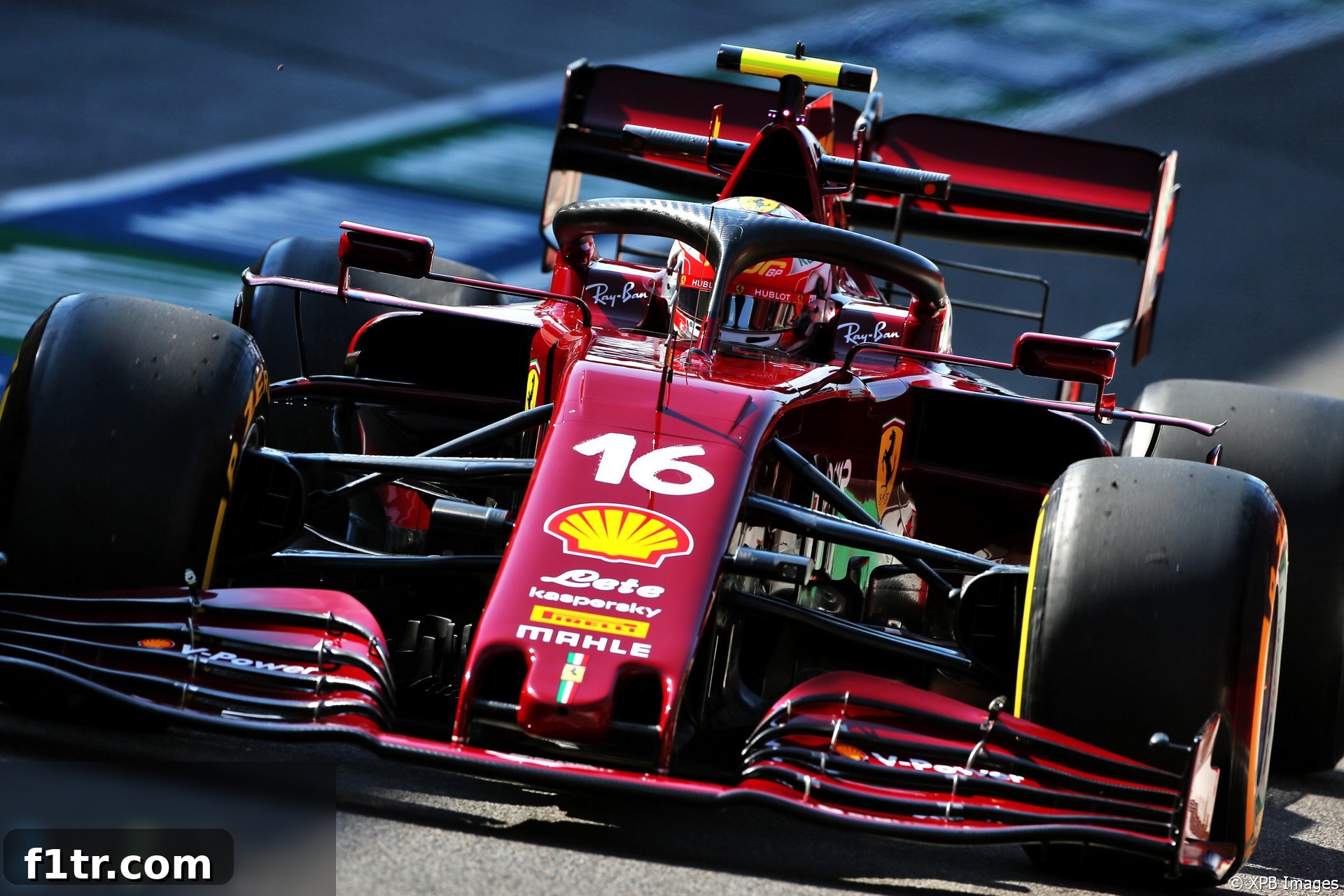
Charles Leclerc Credits Filming Day for Ferrari’s Promising Mugello Start
Mugello, Italy – In a surprising turn of events for the Scuderia, Charles Leclerc has attributed Ferrari’s unexpectedly strong start at the inaugural Tuscan Grand Prix to a prior filming day conducted at the circuit. The Monegasque driver, who secured an impressive third position in the first free practice session, believes this exclusive pre-event track time offered a crucial advantage to the team, which has largely struggled through the 2020 Formula 1 season.
The Mugello Circuit, owned by Ferrari, made its debut on the F1 calendar as the host of Ferrari’s 1000th Grand Prix – a significant milestone for the sport’s longest-serving team. While other teams and drivers arrived with no prior experience on the challenging track in a contemporary F1 car, Ferrari had the unique opportunity to familiarise themselves with its intricacies earlier in the summer. This strategic move, initially perceived as a marketing exercise, now appears to have yielded tangible performance benefits when it mattered most.
The Strategic Advantage of a Pre-Season Filming Day
Ferrari undertook a comprehensive filming day at Mugello back in June, featuring both Charles Leclerc and his teammate, Sebastian Vettel. During this session, the drivers piloted a 2018-specification Ferrari SF71H, adhering to strict F1 regulations that limit filming days to 100 kilometers and specific Pirelli demonstration tyres. While not allowing for full-speed development or race simulation, these sessions are invaluable for acclimatizing drivers to a new circuit layout, understanding corner characteristics, and getting a feel for the track’s unique demands. For a circuit making its Formula 1 debut, such reconnaissance can be a game-changer.
Leclerc candidly explained the impact, stating, “We have done a filming day which helped us also to get in the rhythm of the track [while] for all the other drivers it was a new track. Maybe that helped us a bit.” This pre-existing knowledge allowed Ferrari to hit the ground running, optimizing car setup and driver lines from the very first laps of FP1, whereas competitors had to spend precious track time learning the circuit from scratch. In a sport where fractions of a second count, any marginal gain, especially on an unfamiliar venue, can translate into a noticeable performance edge.
A Glimmer of Hope in Free Practice 1
The benefits of Ferrari’s preparation were immediately evident in Friday’s first free practice session. Charles Leclerc delivered a stellar performance, clocking the third-fastest time, placing him squarely behind the dominant Mercedes duo of Valtteri Bottas and Lewis Hamilton. This showing was a significant departure from Ferrari’s recent struggles, which have seen them battling in the midfield, often outside the top five. For a team celebrating its 1000th Grand Prix at its home circuit, this initial pace provided a much-needed morale boost and a rare moment of competitiveness in what has been a trying season.
Leclerc himself admitted the performance was somewhat unexpected. “It was positive,” he remarked at the close of the first day, adding, “On the other hand, when it’s going positive we need to understand why.” He confessed, “To be honest, it was a bit of a surprise for everyone. I have my personal opinion.” This ‘personal opinion’ undoubtedly links back to the crucial filming day. His strong P3 finish in FP1 underscored the potential of a well-prepared driver and team, offering fans a rare glimpse of Ferrari challenging closer to the front, even if only in practice.
The Reality Check of Free Practice 2
As the day progressed and all teams gained more track time, the pecking order began to stabilize, bringing Ferrari back to a more familiar, albeit disappointing, position. In the second free practice session, Leclerc’s performance saw a drop, with him finishing 10th fastest. This placed him behind several midfield rivals, including Kimi Raikkonen’s Alfa Romeo, indicating that the initial advantage might have started to dissipate as others caught up to speed with the circuit. FP2 typically sees teams focus more on race simulation runs and longer stints, offering a more representative picture of weekend pace compared to the initial exploratory laps of FP1.
Leclerc acknowledged this shift, stating, “In second practice it was more where we expected to be.” This candid assessment suggests that while the filming day provided an early boost, the fundamental performance limitations of the SF1000 chassis and power unit remain. However, he maintained a degree of optimism, noting, “But I believe that it’s all very close and I think that we can do a positive step for tomorrow.” The tightly packed midfield means that even small improvements in qualifying could yield significant gains in grid position, a crucial factor on a circuit where overtaking is expected to be challenging.
Mugello’s Unique Physical Demands and Thrills
Beyond the raw pace, the Mugello Circuit presents a unique physical challenge for the drivers, as Leclerc quickly discovered. The undulating track, characterized by its high-speed sweeping corners and significant G-forces, takes a heavy toll on the drivers’ bodies, particularly their necks. “Already in second practice for the long runs that we’ve done, for the neck, you start to feel it,” Leclerc revealed. This indicates that the 59-lap Tuscan Grand Prix will be a severe test of endurance and physical conditioning for every competitor.
The circuit’s design also leaves little margin for error. With high average speeds and minimal run-off areas in many sections, precision is paramount. “The speeds are high, there’s not much run-off area, so no room for errors,” Leclerc emphasized. This unforgiving nature, however, is precisely what appeals to the drivers. The thrill of pushing a Formula 1 car to its limits on such a demanding and old-school circuit is a rewarding experience. “But I guess that’s what we like as drivers,” he concluded, highlighting the gladiatorial aspect that often comes with new, challenging additions to the F1 calendar.
Looking Ahead: Qualification and Race Prospects
With Friday’s practice sessions concluded, Ferrari now turns its attention to Saturday’s crucial qualifying session. Despite the drop in performance during FP2, Charles Leclerc’s belief in making a “positive step for tomorrow” resonates with the team’s ongoing efforts to extract maximum performance from their package. Securing a strong grid position will be vital at Mugello, given the anticipated difficulty in overtaking. A top-six or even a top-eight start would provide Ferrari with a much better platform to fight for significant points in their landmark 1000th Grand Prix celebration.
The weekend at Mugello offers Ferrari a chance to salvage some pride in a difficult season. While the ultimate pace might not be enough to challenge Mercedes, the early glimmer of speed and the strategic advantage gained from their filming day demonstrate the team’s determination. As the drivers prepare for the intense physical and mental challenge of qualification and the race, all eyes will be on Ferrari to see if they can translate their initial promise into a memorable performance at their home Grand Prix. The unique characteristics of Mugello, combined with the pressure of a milestone event, set the stage for an unpredictable and thrilling Tuscan Grand Prix.
Browse all 2020 Tuscan Grand Prix articles and updates