Formula 1, a sport synonymous with cutting-edge technology and relentless innovation, faces a perennial challenge: balancing thrilling competition with stringent cost controls. A focal point of this ongoing debate revolves around the allocation of pre-season testing days. In recent years, the sport has progressively trimmed its testing schedule, a move designed to curb expenditure and level the playing field. However, this cost-saving measure has drawn criticism from various corners, most notably from figures like Claire Williams, the former deputy team principal of Williams Racing, who firmly believes the current six-day pre-season testing window is simply inadequate.
The Diminishing Window: Why Six Days Isn’t Enough for F1 Teams
The decision to reduce pre-season running at iconic venues like the Circuit de Catalunya from eight days to a mere six has been met with mixed reactions across the Formula 1 paddock. While some of the sport’s wealthier teams, perhaps less impacted by minor technical setbacks, have even hinted at the possibility of further reductions, Williams’ perspective offers a vital counter-argument. She articulates a growing concern that the current allocation provides “too little” time for teams to effectively prepare for the demanding Formula 1 season ahead.
The intricate nature of modern F1 machinery necessitates extensive validation. Teams aren’t just driving laps; they are meticulously checking reliability across hundreds of components, correlating vast amounts of simulation data with real-world performance, optimizing complex aerodynamic packages, and fine-tuning engine-chassis integration. Drivers, too, require crucial mileage to re-acclimatize to the immense speed, understand new car characteristics, and provide invaluable feedback to engineers. Six days, often spread across a single, condensed session, typically means each race driver gets a mere three days in the cockpit – a remarkably short period to master a multi-million-dollar, high-performance vehicle designed to operate at its absolute limit.
Claire Williams, despite representing a team often constrained by budget, expressed her team’s preference for more testing. She stated, “I understand it from a cost control perspective, but I think when you only have six days of pre-season testing to do everything that you need to do going into the first few races of the year, it’s not enough.” She further elaborated, “Regardless of any issue that we might have or may have faced this year or last year, we would be in favour of having more days of pre-season testing. Not a lot, but maybe two or three more days would be very helpful.” This sentiment highlights a crucial point: while cost efficiency is paramount, there’s a threshold beyond which cuts begin to compromise the quality of preparation and, ultimately, the competitive integrity of the sport.
Mitigating Factors and Magnified Risks: Lessons from Williams Racing
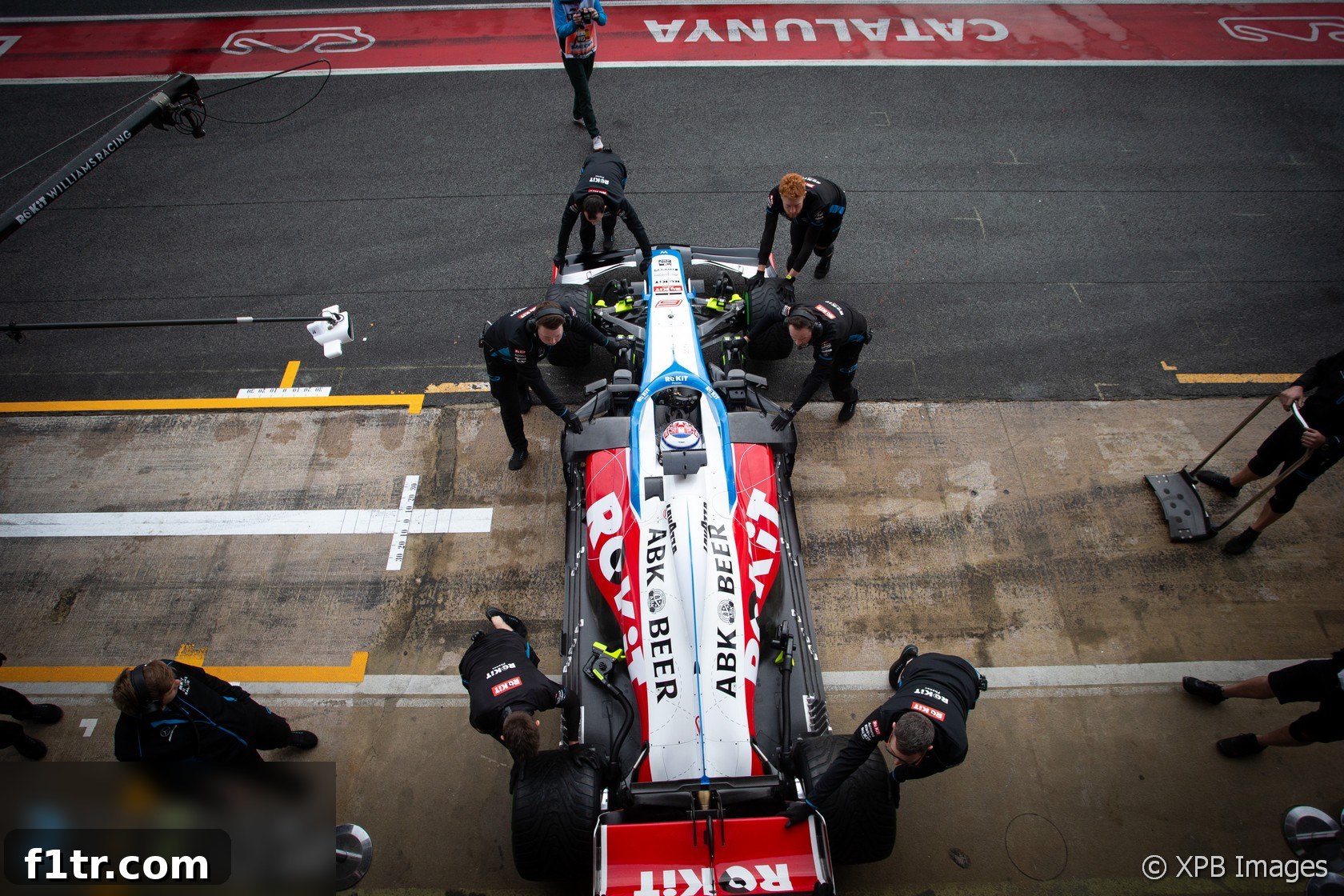
Williams Racing, in particular, experienced firsthand the challenges posed by the limited testing schedule. During their pre-season running, the team encountered various problems, including two instances that necessitated time-consuming power unit changes. Such technical hitches, though a normal part of developmental motorsport, become disproportionately impactful when track time is so scarce. Every hour lost in the garage translates directly to lost opportunities for data collection, component validation, and driver familiarization – all critical elements for a successful start to the season.
Williams underscored this vulnerability, explaining, “You’re always going to get some mitigating factors that take you off the circuit, whether it’s your own car issues or engine issues. Or even weather. We had snow here two or three years ago.” This observation is critical. Unexpected issues, be they mechanical failures, complex electronic glitches, or adverse weather conditions like snow – which, surprisingly, has affected testing at the Circuit de Catalunya in the past – can further decimate an already tight schedule. For teams like Williams, operating with fewer resources, every lost moment on track represents a greater competitive handicap, making it harder to catch up before the first Grand Prix lights go out.
The compressed schedule also puts immense pressure on development teams. New parts introduced for testing have less time to be rigorously evaluated, and any design flaws discovered late in the process leave minimal room for rectification before the season commences. This can lead to a ‘rolling start’ scenario where teams are still understanding their package in the initial races, potentially impacting championship battles and overall performance throughout the year. The initial races become an extended test session, a scenario undesirable for both teams and fans.
The Unseen Impact: Stifling Young Talent Development in Formula 1
Beyond immediate car performance, the reduction in testing days casts a long shadow over the future of Formula 1: the development of its next generation of talent. Claire Williams passionately argued that the current restrictions severely limit opportunities for junior drivers to gain invaluable F1 mileage, a critical step in their career progression.
Historically, both pre-season and dedicated in-season tests were crucial proving grounds for aspiring Formula 1 drivers. These sessions offered a rare chance for young talents, fresh from feeder series like Formula 2 or Formula 3, to experience the raw power, advanced aerodynamics, and sheer complexity of an F1 car. This exposure is not merely about driving fast; it’s about understanding sophisticated telemetry systems, working closely with a team of high-level engineers, managing cutting-edge tire technology under extreme loads, and physically adapting to the intense G-forces that only an F1 car can generate. Without this practical, on-track experience, the leap from junior categories to the pinnacle of motorsport becomes even more daunting and less accessible.
Williams highlighted this dilemma: “There’s an issue that we’re probably all facing at the moment in that not having enough days for testing means that there’s very limited opportunity to run young drivers. And I think that’s a limiting factor for the sport.” She continued, “Certainly for a team like ours that enjoys nurturing young talent, we have very little opportunity to actually put young talent in the race car. So if you can’t put them in the race car, how can you evaluate them?”
The current landscape means that only a handful of non-race drivers, such as Robert Kubica in a specific test role, might get significant track time. Promising young talents like Williams’ reserve driver Jack Aitken, for instance, had no opportunity to drive during pre-season testing. This creates a bottleneck in the talent pipeline, making it exceptionally difficult for fresh talent to break into Formula 1. Teams rely on data and on-track evaluation to accurately gauge a driver’s potential, and if those opportunities are absent, the talent pool risks drying up. This, according to Williams, “feels like a bit of an issue that we probably need to address,” as it directly impacts the long-term health, diversity, and competitive future of Formula 1.
The Critical Need for In-Season Testing, Especially with New Regulations
The discussion extends beyond pre-season preparations to the critical role of in-season testing, which has also been significantly curtailed or even eliminated in recent years. In a sport where development is constant and relentless, the ability to test new components and concepts during the season is invaluable. When a team isn’t performing as expected, or when a major upgrade is planned, in-season testing offers a vital avenue to diagnose issues, experiment with solutions, and validate updates away from the intense pressures and time constraints of a Grand Prix weekend.
Claire Williams emphasized this point, stating, “Not having any in-season testing makes it difficult from a development perspective when you’re not doing as well as you’d like on the race track. Having a couple of extra days, regardless of the cost of that, would be important to evaluate test items.” This is particularly pertinent for smaller teams that might struggle to keep pace with the exponential development rates of top manufacturers through simulation alone. For these teams, tangible track time can be a lifeline to find performance and climb the grid.
The urgency for more comprehensive testing becomes even more pronounced when considering significant rule changes, such as those implemented for the 2021 F1 season (and subsequent regulatory shifts). New technical regulations represent a blank slate, offering both immense opportunities and substantial risks. Getting the initial design philosophy or aerodynamic concept wrong can have catastrophic consequences for an entire season. Without adequate in-season testing, teams that misinterpret the regulations or encounter unexpected performance issues with their new cars are essentially “locked into a scenario that you don’t want to be locked into for 22 races,” as Williams starkly put it. This effectively condemns a team to a full season of underperformance, with limited avenues for real-world validation of fixes, stifling their ability to recover.
While advanced simulation tools, computational fluid dynamics (CFD), and wind tunnel testing are powerful and indispensable, they cannot entirely replicate the complexities and infinite variables of a real car operating on track under various conditions. Minor discrepancies between simulated and actual performance can accumulate into significant competitive deficits. In-season testing allows teams to bridge this crucial gap, ensuring that theoretical improvements and design modifications translate effectively into tangible speed and reliability on race day.
Striking the Right Balance: The Future of F1 Testing and Development
The debate surrounding Formula 1 testing encapsulates the broader philosophical struggle within the sport: how to maintain its status as the pinnacle of motorsport innovation and engineering while simultaneously ensuring financial sustainability and competitive balance among all ten teams. Claire Williams’ passionate advocacy for more testing days, both pre-season and in-season, resonates with many who believe that the pendulum has swung too far towards cost-cutting at the expense of fundamental development, technical parity, and, crucially, talent nurturing.
A slight, carefully considered increase in testing, perhaps by a few additional days, could offer immense benefits to the entire F1 ecosystem. It would provide teams with crucial time to iron out reliability issues before the season commences, preventing embarrassing non-finishes and enhancing the quality and predictability of racing. It would open doors for more young drivers to gain invaluable experience, revitalizing the talent pool and securing the sport’s long-term future with fresh faces and exciting prospects. And crucially, it would empower all teams, especially those navigating complex new regulations, to effectively develop and optimize their cars, ensuring that competitive performance is driven by genuine innovation and engineering prowess rather than by an inability to rectify initial design missteps due to lack of track time.
Ultimately, the health and vibrancy of Formula 1 hinges on its ability to evolve thoughtfully, taking into account both financial realities and the core principles that define the sport: technological advancement, driver skill, and the relentless pursuit of performance. Claire Williams’ clear call for more testing is a salient reminder that sometimes, investing a little more time on track can yield significant dividends, fostering greater competition, nurturing future stars, and enriching the spectacle for fans worldwide. It’s a balance Formula 1 must continually reassess to ensure its continued success.
Related Formula 1 Articles
- Grosjean to make F1 test return tomorrow for first time since Bahrain horror crash
- Pictures: Wrecked chassis from Grosjean’s Bahrain fireball crash to go on display
- Bottas vs Rosberg: Hamilton’s Mercedes team mates compared after 78 races each
- F1 revenues fell by $877 million in Covid-struck 2020 season
- Hamilton and Mercedes finally announce new deal for 2021 season