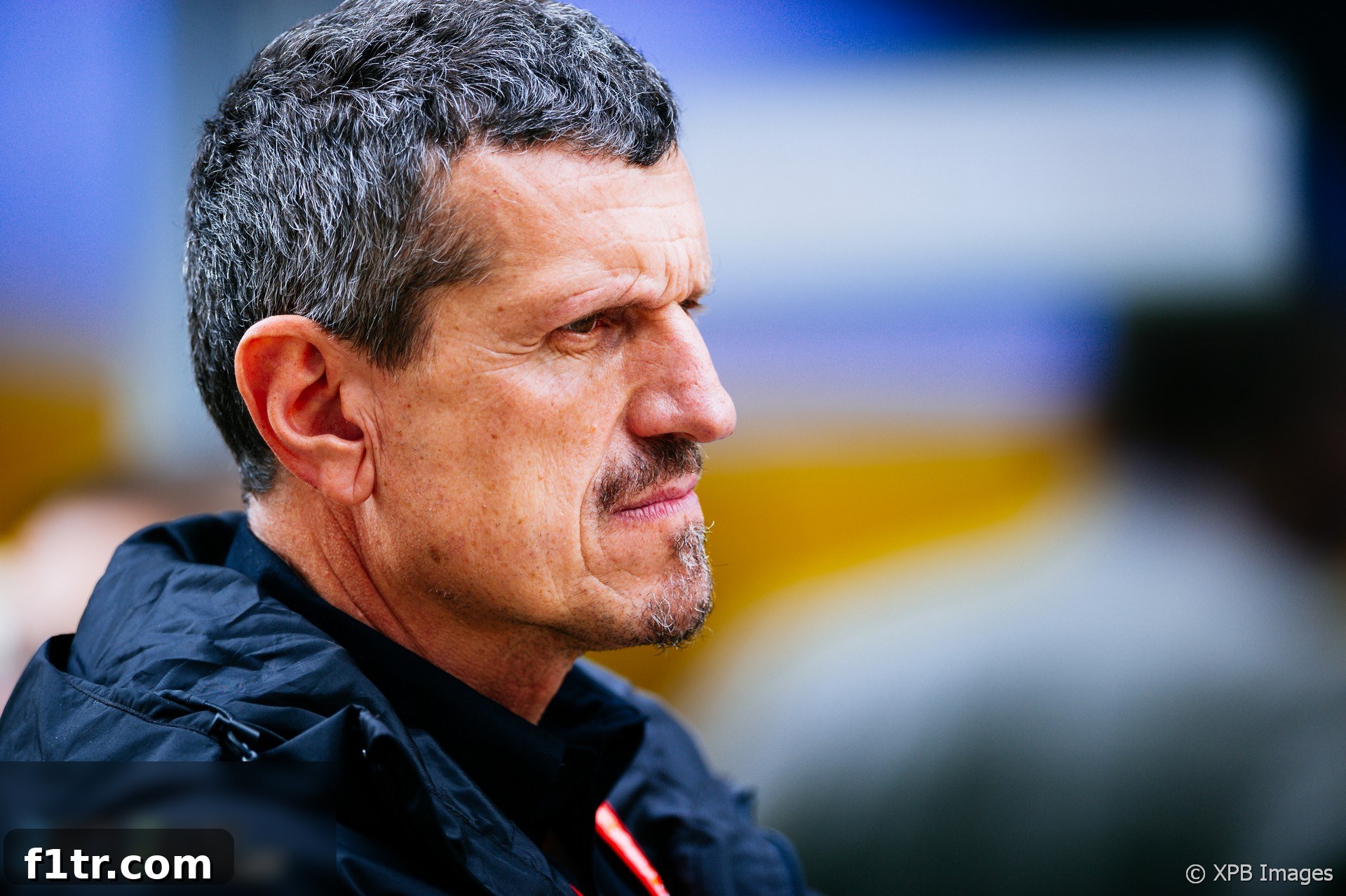
Formula 1 is a sport constantly seeking to innovate, both on and off the track, to captivate its global audience. A central figure in these ongoing discussions is Haas F1 Team Principal Guenther Steiner, who recently advocated for a bold approach to championship formats. Steiner proposed that F1 should embrace experimentation with qualifying races in the upcoming season, reflecting a philosophy of continuous learning and adaptation within the pinnacle of motorsport.
Guenther Steiner’s Vision: Embracing Experimentation in F1 Qualifying
Guenther Steiner, known for his candid insights and pragmatic approach, believes that Formula 1 should not shy away from exploring new ideas, even if past attempts haven’t always yielded the desired results. His stance stems from the sport’s history of trial and error, pointing to the unsuccessful ‘elimination qualifying’ format experiment from three years prior as a valuable lesson rather than a deterrent.
“It was decided not to do it [elimination qualifying] and therefore forgotten about it. It didn’t do any damage to Formula 1. Therefore I say [by] trying, at least you learn.”
“Sometimes you just get the reality [of] what people are doing when they try it. You can do simulations and everything but we try it.”
“I’m not saying we have to do this, I support if they want to do it, if you don’t want to do it I will not go there and say ‘please do it’. It is one of these things, sometimes you have to be supportive of ideas and just try to do them.”
“But my thing would be do not insist that it was good even if it wasn’t. That I’m against. If it is good, that’s good. Let’s try it but I’m not going in there saying we need to do this.”
“Personally I don’t feel a need for it but if FOM wants to test and we are a part of this thing it’s not about us it’s about the sport. They are the experts in promoter, it’s their show, so we need to try to help to make the show better in my opinion.”
Steiner’s comments highlight a crucial aspect of modern Formula 1: the balance between tradition and innovation. While the core of Grand Prix racing remains sacred, the surrounding elements, such as qualifying formats, are constantly scrutinized for ways to enhance the spectacle and attract a broader audience. The Haas team principal’s perspective is that even if a new format doesn’t work, the mere act of trying provides invaluable data and understanding that theoretical simulations cannot replicate. This hands-on approach to development could be key to discovering genuinely impactful changes for the sport.
The Case for Qualifying Races: Potential Benefits and Fan Engagement
The concept of qualifying races, or “sprint races,” has been a recurring theme in F1 discussions for years. Proponents argue that such events could inject a fresh dynamic into Grand Prix weekends. Instead of traditional timed laps, a short race on Saturday could determine the starting grid for Sunday’s main event, offering more on-track action, increased excitement, and potentially more unpredictable outcomes.
A qualifying race could bring several compelling benefits:
- Enhanced Spectacle: Two races instead of one qualifying session means more competitive laps and direct wheel-to-wheel action for fans.
- Increased Stakes: Every session becomes more critical, as positions gained or lost in a sprint race directly impact the prime Grand Prix starting spot.
- New Narratives: Different strategies and driver skill sets might be highlighted in a shorter, more intense format, potentially allowing midfield teams a better chance to shine or create unique storylines.
- Fan Experience: A fuller Saturday program could boost attendance and viewership, offering a more complete entertainment package across the race weekend.
- Driver Skill Demonstration: Pure racing ability, rather than just raw pace in a single lap, would be tested to determine grid positions.
These potential advantages underscore the motivation behind suggestions like Steiner’s. Formula 1 is a global entertainment product, and maintaining its appeal requires continuous exploration of formats that can deliver consistent excitement and engagement.
Navigating the Challenges: Concerns and Criticisms
Despite the potential upsides, the introduction of qualifying races is not without its critics and challenges. As highlighted by Steiner’s cautious optimism, any new format must be carefully evaluated to avoid unintended negative consequences. Concerns often revolve around several key areas:
- Cost and Damage: An additional race increases the risk of accidents, leading to higher repair costs for teams already operating under tight budget caps. This could disproportionately affect smaller teams.
- Dilution of Grand Prix Value: Some purists worry that adding another race could diminish the prestige and significance of the main Sunday Grand Prix, making it feel less like the ultimate event of the weekend.
- Driver Fatigue and Workload: More racing means a more demanding schedule for drivers and teams, which could impact their performance or well-being over a long season.
- Championship Integrity: Questions arise about how points would be awarded (if at all) in qualifying races, and how this might impact the overall drivers’ and constructors’ championships. The risk of diluting the championship narrative is a significant concern.
- Unnecessary Complexity: As noted by F1 Stat Blog’s “Craig’s Column” (mentioned in our links section), some fans and pundits view new qualifying ‘solutions’ as “band-aids” for problems that don’t necessarily exist or are better addressed through other means, such as technical regulations that promote closer racing.
Steiner’s emphasis on not “insisting that it was good even if it wasn’t” directly addresses this last point. The sport must be willing to admit when an experiment fails and move on, rather than clinging to an unpopular or ineffective format. This flexibility and a willingness to learn from mistakes are crucial for F1’s long-term health and credibility.
Ultimately, the debate around qualifying races reflects Formula 1’s eternal quest to strike the right balance between preserving its rich heritage and evolving to meet the demands of a modern, dynamic sporting landscape. The candid perspectives from team principals like Guenther Steiner provide valuable insights into this ongoing strategic discussion, reminding us that progress often requires a willingness to venture into the unknown.
Quotes: Dieter Rencken
Advert | Become a RaceFans supporter andgo ad-free
Social Media Highlights
Social media platforms offer a vibrant snapshot of the motorsport world, featuring everything from official announcements to behind-the-scenes glimpses and fan reactions. Here’s a look at some notable recent posts:
RaceFans shared an interesting snippet from the world of Australian F3, highlighting driver John Magro’s incredible dominance in the championship. Magro had won all 12 rounds of the season so far, closing in on a new series record and potentially a clean sweep of all 18 events. The post included a visual of his 11th win in Sydney.
How’s this for domination: @Australian_F3 racer John Magro has won all 12 rounds in this year’s championship so far. If he wins the next one he’ll set a new record for the series and could go on to sweep all 18 events.
Here he is taking his 11th win last weekend in Sydney.#F3 pic.twitter.com/zqagK0mn4V
— RaceFans (@racefansdotnet) October 3, 2019
- Find more official F1 accounts to follow in the F1 Twitter Directory
Insightful Motorsport Links
Delve deeper into the world of motor racing with these interesting articles and highlights from across the globe:
Vettel fährt Pirelli-Reifentest (Auto Motor und Sport – German)
This article from Auto Motor und Sport, a leading German motorsport publication, reports on Sebastian Vettel’s recent tire testing with Pirelli. Such tests are crucial for the development of future F1 tire compounds, providing invaluable data that influences race strategies and car performance. Driver feedback during these sessions is paramount in shaping the characteristics of the tires that will be used in upcoming seasons.
Tilke suggests Assen as better Dutch Grand Prix venue (Auto Motor und Sport – German)
Hermann Tilke, whose renowned company has designed and upgraded numerous F1 circuits worldwide, has weighed in on the debate surrounding the Dutch Grand Prix venue. Tilke believes that Assen, a legendary circuit, would be a superior location for the event compared to Zandvoort. His argument centers on Assen’s greater capacity to accommodate spectators, which is a significant factor for F1’s commercial success. This contrasts with Zandvoort, currently being developed by rival firm Dromo, and highlights the logistical and economic considerations involved in hosting a Formula 1 race.
An angry Rosenqvist delivered one of season’s best drives (IndyCar)
This IndyCar article praises Felix Rosenqvist’s exceptional performance, which was reportedly fueled by frustration. The quote, “If I didn’t get angry I think there was something wrong with me. We all go 100 percent into this with full hearts and when something like that happens,” perfectly encapsulates the raw emotion and competitive drive inherent in top-tier motorsport. It underscores how moments of anger or disappointment can sometimes be channeled into incredibly strong and memorable displays of skill on the track, making for thrilling races in the fiercely competitive IndyCar series.
Calado: ‘I Need to Get the Experience’ (E-racing365)
James Calado discusses his career path and ambitions within motorsport, particularly his move towards Formula E. His statement, “Being at Ferrari is a very good place to be in sports cars, and still is a good place, but I see Formula E as one of the highest level championships you can be in and as a driver you want to be part of that,” illustrates the growing prestige and appeal of electric racing. It highlights Formula E’s emergence as a significant championship attracting top talent, offering new challenges and opportunities for drivers seeking to compete at the pinnacle of motorsport innovation.
Craig’s column: Oh no, not another qualifying ‘solution’ (F1 Stat Blog)
In this critical column, Craig from F1 Stat Blog expresses strong reservations about new qualifying formats, specifically Saturday races. He argues, “These Saturday races are not the solution to fixing qualifying. It is certainly not the solution to fixing the racing. This is a band-aid, a band-aid slapped onto something that doesn’t even require one, just as became apparent very quickly with the last time qualifying was unnecessarily screwed around with back in 2016 with that bizarre elimination format.” This perspective directly contrasts with Guenther Steiner’s call for experimentation, representing a significant segment of the F1 fanbase and punditry who prefer stability and believe that the core racing issues lie elsewhere, not in the qualifying structure.
Sandown highlights (S5000 via YouTube)
Experience the excitement of Australian motorsport with these extended highlights from the S5000 series at Sandown. S5000 is a premier open-wheel championship featuring powerful V8-engined cars, known for its thrilling and competitive racing. The Sandown circuit, with its unique layout, often produces dramatic on-track battles, making these highlights a must-watch for fans of high-performance racing outside of Formula 1.
We always endeavour to credit original sources. If you have a tip for a link to feature in the next RaceFans round-up please send it in via the contact form.
Advert | Become a RaceFans supporter andgo ad-free
Comment of the Day: The Williams-Kubica Situation
The retirement of Robert Kubica from last weekend’s race sparked considerable discussion, particularly with Williams sponsor Orlen calling for an explanation. This situation often involves intricate negotiations and underlying team dynamics, as illustrated by today’s featured comment.
I think we should rather see this in the scope of (almost certainly) ongoing negotiations on terminating the sponsorship in line with Kubica leaving the team and how much money they still have to pay or not.
In Williams’s case running far behind achieving nothing AND having a slight worry about breaks (or even about whether the wheel is fitted sufficiently?- depending on the exact cause of Russell’s accident) is a good reason to stop the car. Especially when we know the team is tight on parts.
@Bascb
This comment delves into the commercial realities of Formula 1, suggesting that Orlen’s request might be linked to sponsor-driver contract terminations rather than purely performance concerns. For a team like Williams, facing significant performance challenges and parts shortages, strategic retirements to preserve components or prevent further damage become a practical consideration. The delicate interplay between sporting performance, financial commitments, and team resources is a constant, complex factor in F1, especially for teams battling at the back of the grid.
Happy Birthday to Our Motorsport Community Members!
A big shout-out and happy birthday wishes go out to Iceshiel, Strferrari4Ever, Elaine Aka Mclarensgirl1, and Kaiie! We hope you all have a fantastic day celebrating.
If you’d like a birthday shout-out in our future round-ups, please let us know your birth date via the contact form or by adding your details to our dedicated list here. We love celebrating with our readers!
On This Day in F1 History
- 10 Years Ago Today: Sebastian Vettel’s Suzuka Victory Ignites Title Race
A decade ago today, on October 4, 2009, Sebastian Vettel delivered a stunning performance at the iconic Suzuka circuit, securing a crucial victory that kept his championship aspirations alive. Driving for Red Bull Racing, Vettel’s win was a significant moment in the thrilling 2009 season, where he was locked in a fierce title battle against the formidable Brawn GP drivers, Jenson Button and Rubens Barrichello. His strategic and dominant drive showcased the emerging talent that would soon lead him to multiple world championships, adding another memorable chapter to Formula 1’s rich history.