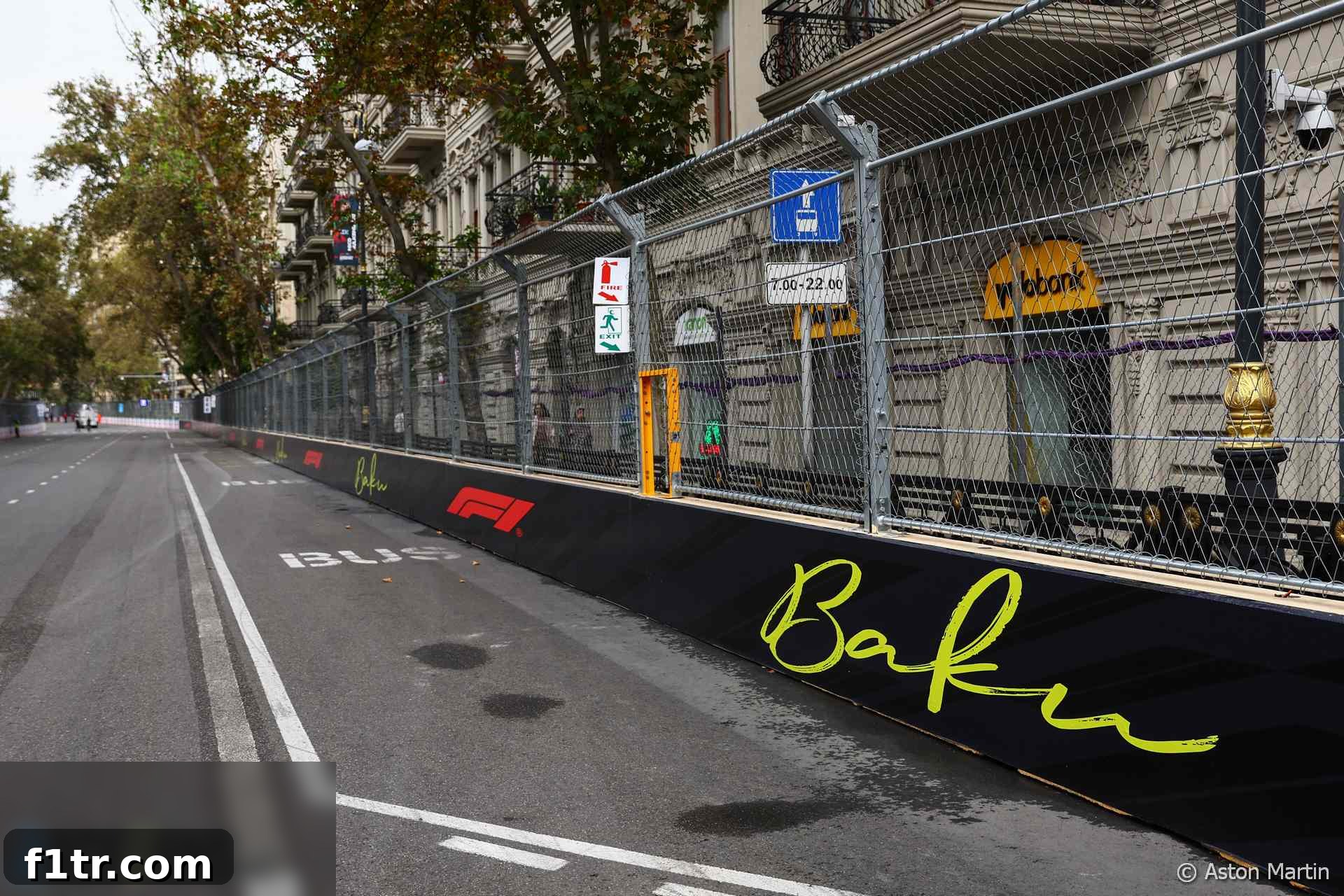
This session has concluded, and no further updates will be posted here.
That brings an end to our comprehensive coverage of what proved to be an exceptionally dramatic and incident-filled qualifying session for the 2025 Azerbaijan Grand Prix. From multiple red flags to strategic tire gambles and heart-stopping final laps, the Baku City Circuit delivered a spectacle that has set the stage for an intriguing race. For the full starting order, you can view the grid here, and a detailed account of all the action is available in our race report.
2025 Azerbaijan Grand Prix Qualifying: A Rollercoaster Ride in Baku
The qualifying session for the 2025 Azerbaijan Grand Prix unfolded into an extraordinary display of skill, strategy, and sheer unpredictability, ultimately seeing Max Verstappen snatch a hard-fought pole position. The Baku City Circuit, renowned for its unforgiving nature and unique blend of high-speed straights and incredibly tight corners, lived up to its reputation, challenging even the most seasoned drivers. With six red flag interruptions, fluctuating track conditions, and daring tire choices, the session was a true test of nerve and adaptability for every team and driver.
Setting the Scene: Baku City Circuit’s Demands
The Baku City Circuit is a formidable street track, stretching over six kilometers and featuring the longest flat-out section on the Formula 1 calendar, juxtaposed with the incredibly narrow, winding turns of the old city walls. This combination demands a delicate balance in car setup, requiring both top-end speed and exceptional downforce. Tyre management is also crucial, especially with Pirelli bringing its softest compounds – C4, C5, and the C6 – to Baku. While the softer tyres offer maximum grip for a single flying lap, their durability and tendency to overheat can make them tricky to manage over a longer run, prompting some teams to consider alternative strategies even in qualifying. The dry track conditions were initially met with significant wind, adding another layer of complexity for drivers seeking maximum performance. There was also a brief sprinkling of rain during the earlier Formula 2 sprint race, keeping teams on edge about potential changes in grip levels, though the track remained dry for the start of Q1.
Pre-Qualifying Buzz and Steward Investigations
Even before the green light signaled the start of Q1, there was already plenty of pre-session drama. Nico Hulkenberg found himself summoned by the stewards for allegedly overtaking under yellow flag conditions during an earlier practice session, an investigation that could carry significant penalties. Adding to the list of potential infractions, Franco Colapinto was also noted for a possible yellow flag infringement in final practice, though the stewards ultimately decided no investigation was needed in his case, offering him a reprieve. Meanwhile, Lando Norris had set the quickest time of the weekend in final practice, suggesting McLaren’s strong form. However, Ferrari had been dominant in second practice the previous day, hinting that they might have held back some pace, setting up a tantalizing battle for pole. The prospect of breaking the circuit’s fastest lap record, currently held by Charles Leclerc with a 1’40.203 from 2023, added an extra layer of anticipation to the session.
Q1: Early Drama and Tire Gambles
As Q1 commenced, drivers wasted no time heading out onto the circuit, with Alexander Albon leading the charge. Most initially opted for the softest compound tyres, aiming to maximize grip on their first runs. However, the capricious nature of Baku quickly became evident.
First Red Flag: Albon’s Misfortune
The session was barely underway when the first red flag was deployed. Alexander Albon, pushing hard through the challenging opening sector, unfortunately made contact with the barrier on the inside of Turn 1. His immediate radio message, a remorseful “I’m sorry,” underscored the frustration of an early mistake. This incident brought a halt to proceedings, disrupting flying laps for several drivers, including Norris and Verstappen, who were in the crucial final sector when the flags came out. Charles Leclerc, however, had managed to complete a lap just before the stoppage, going top with a 1’41.982, a time immediately faster than his best from final practice and a mere six-tenths off his pace from Friday.
Yellow Flag Incidents and Track Limit Deletions
When the session restarted, the pressure was palpable. Liam Lawson impressed early, setting a 1’42.448 to momentarily go top. However, Baku’s challenges continued to surface. Nico Hulkenberg experienced significant understeer at Turn 15, grazing the barrier but managing to keep his car moving, a testament to his quick reflexes. Further complicating matters, Andrea Kimi Antonelli found himself under investigation for a potential yellow flag infringement, explaining over his radio, “I didn’t see it,” a comment the stewards might scrutinize. Antonelli then went off track during a subsequent lap, failing to set a time, only to have a completed lap time deleted later for a track limits infringement, plunging him to the bottom of the leaderboard and into the drop zone. This incident saw Esteban Ocon temporarily move out of elimination contention. The stewards later clarified a rule change regarding physical assistance, noting that if Hulkenberg required repairs, he would still be allowed to continue as long as he didn’t receive outside help to rejoin the track, a revision prompted by Carlos Sainz Jnr’s crash in Shanghai last year.
Second Red Flag: Hulkenberg Hits the Barrier
Just as the session seemed to find a rhythm, another red flag disrupted the action. Nico Hulkenberg, unfortunately, hit the barrier at Turn 4, bringing his session to an abrupt halt and sending him into the drop zone. This incident occurred shortly after Oscar Piastri had crossed the line to go second, narrowly avoiding the stoppage’s impact on his flying lap. The delay meant that drivers like Ocon, Bearman, and Sainz, who were still on soft tyres, had their final runs interrupted, forcing them to re-evaluate their strategies.
Third Red Flag and Alpine’s Double Elimination
The drama in Q1 reached its peak with a third red flag. Pierre Gasly went off, causing another stoppage. This timing proved disastrous for Alpine, as Colapinto, who had spun earlier and possibly crashed after passing his teammate’s car, could no longer set a competitive time. With both Gasly and Colapinto out, Alpine faced a double elimination in Q1, a disappointing start to their weekend. The stewards might take a dim view of Colapinto’s actions, potentially leading to further penalties. Amidst the chaos, Isack Hadjar pulled a remarkable lap out of the bag at the very last moment, sneaking into fourth place. Russell then topped the timesheets with a 1’41.646, with Antonelli taking sixth, six-tenths slower, as several drivers switched to medium tyres for their final attempts, highlighting the strategic variation throughout the challenging Q1 session.
Q1 Eliminations
When the dust settled on a frantic Q1, the following drivers were eliminated from qualifying: Franco Colapinto, Nico Hulkenberg, Esteban Ocon, Pierre Gasly, and Alexander Albon.
Q2: Intensifying Battle and Unexpected Exits
Following a necessary delay to repair the TecPro barrier at Turn 4 after Hulkenberg’s incident, Q2 finally commenced. Expectations were high, but the Baku circuit had more surprises in store.
Early Red Flag: Bearman’s Technical Woes
Just seconds into Q2, before any driver could even set a lap time, a red flag was waved again. This time, it was Oliver Bearman who brought proceedings to a halt, stopping on track with an apparent technical problem. The immediate stoppage, mirroring the start of Q1, prolonged the delays and further compressed the already tight schedule. The session was announced to resume at 4:58 pm local time, meaning the first laps in Q2 would be set well after Q3 was originally slated to finish, underscoring the severity of the continuous disruptions.
Strategic Tire Choices and Tight Margins
When Q2 finally got underway, Ferrari were the first to send their cars out, but Leclerc immediately went off at Turn 1, compromising his own lap and that of his teammate behind him. The battle for Q3 was fierce, with tire strategies again playing a pivotal role. Sainz set an impressive pace with a 1’41.675 on medium tyres, only to be beaten by Norris on softs, who shaved off two-tenths of a second. Piastri, also on softs, slotted into second, just behind Norris but ahead of Sainz. The Mercedes pair, using softs, managed to split the McLarens, with Russell getting within 0.059 seconds of Norris, showcasing the competitive edge provided by the softer compound. With five minutes remaining, the drop zone included Lance Stroll, Gabriel Bortoleto, Fernando Alonso, Charles Leclerc (who went off at Turn 3 on his last lap), and Oliver Bearman.
The Fight for Q3: Hamilton’s Struggles
Lewis Hamilton, using softs, improved his time to go eighth, though he remained almost one-and-a-half seconds off the leading pace. Despite his improvement, he stayed P10 with just two minutes to go and seemed destined for elimination, especially with his own teammate performing strongly. Norris benefited from a timely slipstream from Verstappen as he started his final lap, a subtle advantage in the quest for precious milliseconds. In the dying moments, Tsunoda snatched 10th place, securing his spot in Q3, while Verstappen went quickest with his final effort. Hamilton pitted without enough time to start another lap, confirming his elimination.
Q2 Eliminations
The intense Q2 session concluded with the elimination of some high-profile names: Fernando Alonso, Lewis Hamilton, Gabriel Bortoleto, Lance Stroll, and Oliver Bearman.
Q3: The Pole Position Showdown Amidst Chaos
With only ten drivers remaining, Q3 promised a thrilling battle for pole position. However, Baku was not done delivering drama.
Mediums vs. Softs: A Risky Gamble
Q3 began with a fascinating strategic split. Only the Racing Bulls drivers opted for soft tyres, a bold move that suggested confidence in their car’s setup or a desperate gamble for extra pace. All other contenders chose medium tyres, aiming for a more consistent performance over their flying laps. However, the track conditions were rapidly deteriorating. Verstappen’s radio message, “Mate it’s definitely too slippery. Now Russell went straight, it’s raining,” underscored the treacherous grip levels. Lawson, on softs, managed a 1’42.560, but Sainz, on mediums, went almost a full second quicker, demonstrating the challenges of making the softs work in the worsening conditions.
Fourth Red Flag: Leclerc’s Costly Error
The session was then brought to a grinding halt for the fourth time by a red flag. Leclerc, pushing hard through Turn 15, lost control and crashed. This devastating error not only ruined his chances for pole but also ended his hopes of securing a fifth consecutive pole position. The incident highlighted the razor-thin margins and the severe consequences of even minor mistakes on the Baku circuit. Ferrari’s hopes now rested solely on Sainz.
Fifth Red Flag: Piastri’s Crash Halts Proceedings
The qualifying session, now well past its scheduled finish, resumed with just over seven minutes remaining. However, the respite was short-lived. Barely three minutes and 41 seconds later, another red flag appeared. Piastri had crashed, making it the fifth red flag of the session. Verstappen, who was on a flying lap, was unable to finish his run. The continuous stoppages created immense pressure, forcing drivers to adapt quickly to ever-changing track conditions and fragmented session timings. Antonelli, who had been noted for failing to pit immediately under previous red flags, was cleared by the stewards, who acknowledged his attempt to enter the pit lane but deemed his closing speed too high for a safe entry.
Final Moments: Verstappen’s Masterclass
The session was eventually restarted for what would surely be the final time. Sainz and Antonelli bravely opted for medium tyres, while the rest of the field stuck with softs. The tension was palpable as drivers embarked on their last attempts. Norris, pushing to the absolute limit, kissed the barrier at Turn 15 but managed to keep going, showing incredible car control. Verstappen, meanwhile, was blazing through Sector 1, setting the fastest time there. Sainz also showed strong pace in the first sector, going faster than Norris. Ultimately, despite a valiant effort, Norris could only manage second place. Russell then slotted into second as well, but the final word belonged to Max Verstappen. Delivering a masterful lap in the most challenging conditions, Verstappen snatched pole position from Sainz, a testament to his composure and skill amidst a truly chaotic session.
The Final Grid and Post-Qualifying Analysis
Max Verstappen’s pole position marks a significant achievement in what was one of the most unpredictable qualifying sessions in recent memory. The six red flags, multiple investigations, and strategic gambles created an electrifying spectacle, leaving fans eagerly anticipating Sunday’s race. The grid is now set, promising an exciting and potentially dramatic 2025 Azerbaijan Grand Prix. Drivers will need to bring their A-game, especially considering the lingering question marks over tire degradation and the ever-present threat of incidents on this challenging street circuit.
2025 Azerbaijan Grand Prix
- Sainz praises “hardest working” engineer who wept after his Baku podium
- McLaren had best car for “95% of races” but Red Bull have caught up – Norris
- Norris couldn’t close a 69-point gap in 14 rounds. Verstappen has to do it in seven
- “That’s not what we discussed”: Ocon’s complaint about Haas’s team orders in Baku
- Verstappen has led more laps than Norris in 2025: Azerbaijan GP stats
Browse all 2025 Azerbaijan Grand Prix articles