Max Verstappen’s Spa Qualifying: The Nuance of Energy Management and Red Bull’s Surprising Progress
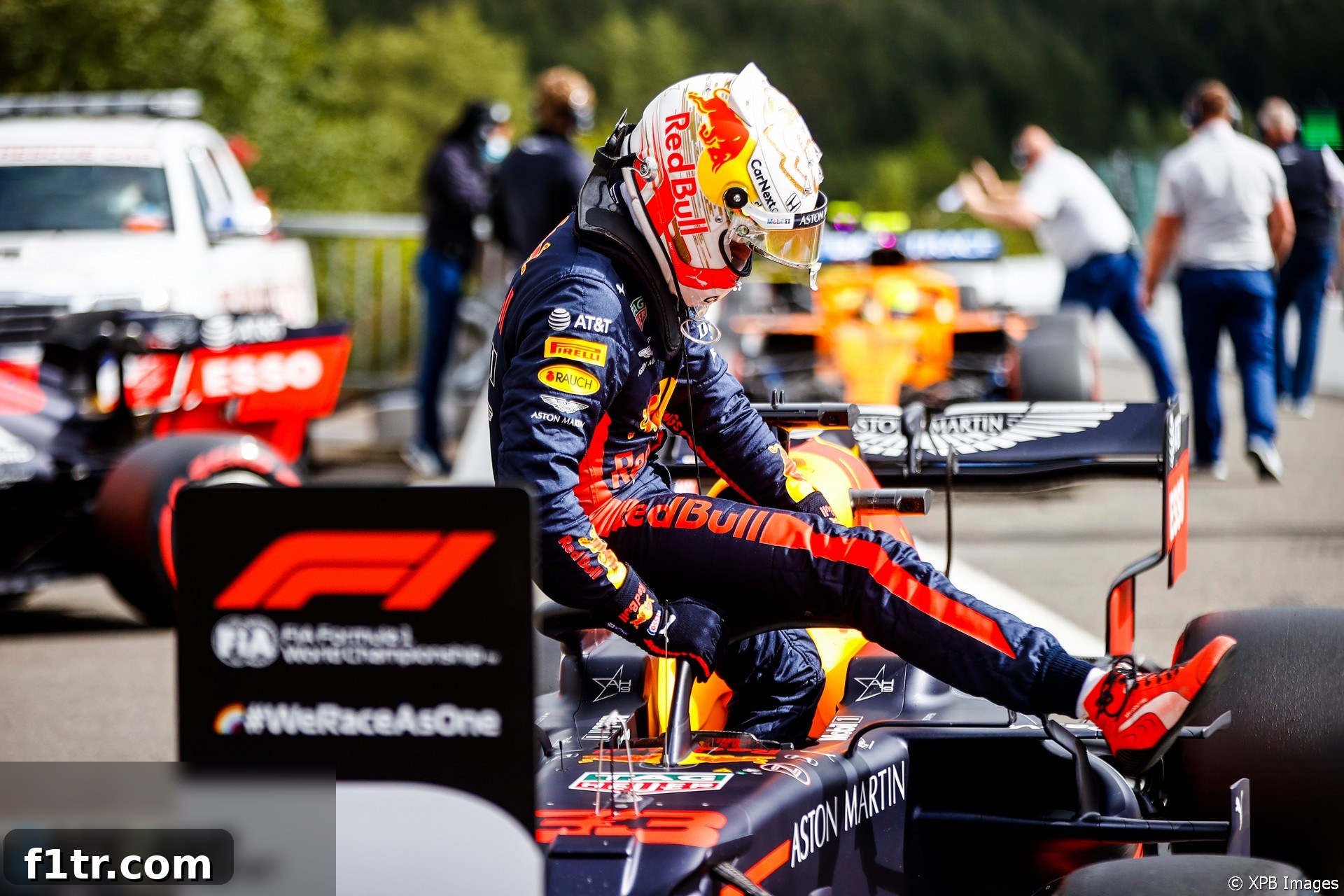
In the high-stakes environment of Formula 1 qualifying, every millisecond counts, and every decision, from car setup to energy management, is meticulously analyzed. At the demanding Circuit de Spa-Francorchamps for the 2020 Belgian Grand Prix, Max Verstappen, the formidable Red Bull Racing driver, found himself in a familiar position: battling at the sharp end of the grid. Following his final Q3 lap, a radio message revealed his car had “ran out of energy a bit too early.” This perceived deficit at the very end of his qualifying run sparked immediate speculation, especially as he narrowly missed out on a front-row start, finishing just 15 thousandths of a second behind Mercedes’ Valtteri Bottas.
Despite the razor-thin margin and the audible complaint, Verstappen confidently asserted that this late-lap energy depletion did not, in fact, cost him second place on the grid. His perspective sheds light on the complex strategies involved in modern F1 power unit management, particularly the intricate balance of the Energy Recovery System (ERS) throughout a qualifying lap. This isn’t merely about having power at the finish line; it’s about optimizing its deployment across the entire circuit to achieve the fastest possible lap time.
The Art of F1 Energy Management: More Than Just the Finish Line
Modern Formula 1 power units are marvels of engineering, incorporating sophisticated hybrid systems that harvest energy from both the turbocharger (MGU-H) and braking (MGU-K). This recovered energy can then be redeployed to boost acceleration, providing a crucial power advantage. However, the amount of energy that can be deployed per lap is finite and strictly regulated. Therefore, managing this energy – when to deploy it, how much to deploy, and where – becomes a critical strategic component, especially in a flat-out qualifying scenario.
Verstappen’s explanation highlights this nuance perfectly. “No, automatically throughout qualifying I think you stay a bit longer on open throttle,” he explained. “Of course, you try to manage the energy throughout the lap but I think probably it was the fastest way around the lap.” This statement implies that his team’s engineers and his own driving style prioritize an overall optimized lap time rather than simply ensuring a full battery at the final corner. If the energy was depleted by the end of the lap, it meant it had been strategically utilized earlier and more effectively where it could yield a greater time benefit – perhaps out of a slower corner, or down a longer straight.
The sensation of the engine not accelerating normally out of the final corner due to depleted energy can be jarring for a driver. “It’s just always when you get out of the last corner and then you feel the engine is not accelerating as normal because you run out of that energy, you probably used it up somewhere else,” Verstappen elaborated. “There’s always that feeling, but probably when I go back and look at the data it’s still the fastest way. It’s just a bit of an odd feeling sometimes.” This starkly illustrates the difference between subjective driver feel and objective performance data. What feels “odd” or even detrimental in the heat of the moment might, according to sophisticated telemetry, be the most efficient and rapid way to navigate the circuit.
Red Bull’s Unexpected Pace at Spa: A Significant Step Forward
Beyond the technicalities of energy management, Verstappen’s qualifying performance at Spa signified a substantial stride for Red Bull Racing. The Spa-Francorchamps circuit, with its long straights and fast, sweeping corners like Eau Rouge and Raidillon, is traditionally considered a “power circuit” where the Mercedes-AMG team, with their dominant power unit, has often held a significant advantage. Red Bull, while strong in aerodynamic efficiency, has frequently struggled to match Mercedes on such layouts.
However, the 2020 Belgian Grand Prix weekend presented a different picture. “It’s been a positive weekend, I didn’t really have a lot to complain,” Verstappen commented, expressing genuine satisfaction. “If I’m not mistaken I think this is the closest we’ve been to Mercedes in qualifying on the track where we didn’t expect it to be like this. So I’m very happy with that.” This closeness to the reigning champions, particularly on a circuit not historically favorable to Red Bull, indicates a significant step forward in their car’s development, both in terms of chassis dynamics and potentially power unit optimization with Honda.
This improved competitiveness offers a glimmer of hope for a more challenging championship fight. For Red Bull, consistently reducing the gap to Mercedes, especially on diverse track types, is crucial for their long-term aspirations of securing the constructor’s and driver’s championships. Verstappen’s ability to extract maximum performance from the car, even when facing a perceived power deficit, underscores his talent and the team’s commitment to continuous improvement.
Strategic Towing: The High-Stakes Gamble of Qualifying
Qualifying at Spa also involves another critical strategic element: the pursuit of a “tow.” With the circuit featuring long flat-out sections like the Kemmel Straight after Eau Rouge, slipstreaming behind another car can provide a crucial aerodynamic advantage, boosting top speed and reducing lap times. However, achieving a perfect tow is a high-risk, high-reward endeavor.
“It was all about, for us, trying to get a little bit of a tow to add a bit of top speed,” Verstappen explained. “You’re trying not to be affected in the middle sector, but of course everybody is trying to get that tow, so getting to the last chicane to prepare the lap sometimes was not ideal getting into turn one.” The challenge lies in balancing the benefit of the tow on the straights with the potential detriment to the car’s performance in the twisty middle sector. Drivers must ensure they don’t compromise their cornering speed or the integrity of their own flying lap by getting too close to another car, or by being in a suboptimal position as they start their timed run.
The frantic jockeying for position as cars prepare for their final Q3 runs often leads to compromised preparation laps or even traffic issues, as multiple drivers and teams attempt to orchestrate the perfect slipstream. Verstappen acknowledged these challenges but ultimately expressed contentment with his final attempt: “But I think in Q3 it was fine, I could do my lap like I wanted it and very pleased to be here again.” This sentiment reflects a driver confident in his ability to execute under pressure, even when the qualifying session becomes a game of strategic chess involving other competitors.
Looking Ahead: The Race Day Potential
Starting from third on the grid, just behind the dominant Mercedes duo, put Max Verstappen in an excellent position for the Belgian Grand Prix. While qualifying pace is one thing, race pace and strategy are another. Red Bull’s improved performance at Spa suggested that they might finally have the tools to challenge Mercedes more consistently. The intricate dance of tire degradation, fuel management, and pit stop strategy would determine whether this qualifying promise could translate into a race victory or at least a strong podium finish.
Verstappen’s composure and analytical approach to his qualifying performance, particularly regarding the energy management issue, underscore his maturity and deep understanding of modern Formula 1 machinery. His ability to discern between subjective feelings and objective data is a hallmark of an elite driver. Red Bull’s strong showing at Spa, a track that traditionally exposed their weaknesses, signaled a significant positive shift, bolstering their confidence and setting the stage for what promised to be an exciting and closely contested race weekend.
The journey to the top of Formula 1 is paved with continuous innovation, strategic brilliance, and the relentless pursuit of perfection. Max Verstappen’s qualifying at the 2020 Belgian Grand Prix provided a microcosm of these challenges, demonstrating that even a fraction of a second can hide layers of technical complexity and strategic depth.
Advert | Become a RaceFans supporter andgo ad-free
Related Content & Further Reading
- 2020 Belgian Grand Prix Star Performers
- Ricciardo believes Renault’s Spa set-up breakthrough will work on other tracks
- ‘He should have let me pass’: How Raikkonen saw Giovinazzis crash
- Sub-54 second laps will produce a “big mess” in qualifying on Bahrain Outer circuit
- McLaren expect Ferrari will “strike back” after Monza
Browse all 2020 Belgian Grand Prix articles