Unseen Adversary: How Fierce Wind Gusts Challenged Verstappen and Sainz at the Spanish Grand Prix
The Spanish Grand Prix at the Circuit de Barcelona-Catalunya is often a crucible for Formula 1 teams, testing both car and driver through its demanding corners and technical sections. However, during the intense 2022 race, an unexpected and formidable opponent emerged for two of the grid’s biggest stars: strong, unpredictable gusts of wind. Both Max Verstappen and Carlos Sainz Jr. found themselves grappling with this invisible force, attributing costly off-track excursions at the notorious Turn 4 to its disruptive influence.
These incidents not only added an element of drama to an already thrilling race but also highlighted the razor-thin margins at which modern F1 cars operate, where even a slight atmospheric disturbance can have significant consequences. For Verstappen, who was already facing mechanical challenges, and Sainz, eager to impress on home turf, these moments were particularly frustrating and illustrative of the unpredictable nature of top-tier motorsport.
Advert | Become a Supporter & go ad-free
The Treacherous Turn 4: A Hotspot for Incidents
Turn 4, a medium-speed right-hander that leads into the flowing section of the Circuit de Barcelona-Catalunya, proved to be a particularly challenging spot during the Spanish Grand Prix. It’s a corner where drivers carry significant speed, relying heavily on aerodynamic grip and precise balance. Any disruption, especially from crosswinds, can throw a car off its delicate equilibrium, pushing it beyond the limits of adhesion. On this particular race day, the wind was not merely a gentle breeze but a series of “massive gusts,” as described by Red Bull Racing’s Team Principal Christian Horner, creating an unpredictable and hazardous environment for the drivers.
The incident at Turn 4 wasn’t just a momentary lapse in concentration for the drivers; it was a testament to the immense forces at play. An F1 car’s aerodynamics are meticulously designed to generate downforce, effectively gluing it to the track. However, sudden changes in air pressure and direction caused by strong wind gusts can momentarily strip away this downforce or create unpredictable turbulence, leading to sudden losses of grip that are incredibly difficult for even the most experienced drivers to counteract.
Carlos Sainz Jr.’s Early Race Drama
Carlos Sainz Jr., driving his Ferrari SF-23, was the first high-profile victim of Turn 4’s challenging conditions. On lap seven of the race, the Spanish driver slid dramatically into the gravel trap. While he managed to keep his car running and rejoin the circuit, the incident cost him crucial track position, dropping him to 11th place from a strong starting position. For a driver competing in his home Grand Prix, this early setback was undoubtedly a blow to his aspirations.
After the race, Sainz offered his perspective on the incident, echoing the sentiments that would later be shared by his rival. “The car has been quite on the knife edge there in the corner for me, all weekend,” the Ferrari driver explained. He further elaborated, pinpointing a combination of factors: “The combination of the dirty air of the car in front of us, a very big gust of wind, made me lose control of the rear and go into a spin.” This comment underscores the multi-faceted challenges drivers face, where aerodynamic instability from following another car can be compounded by environmental factors, creating an almost impossible scenario for control.
Max Verstappen’s Near-Identical Error and Radio Frustration
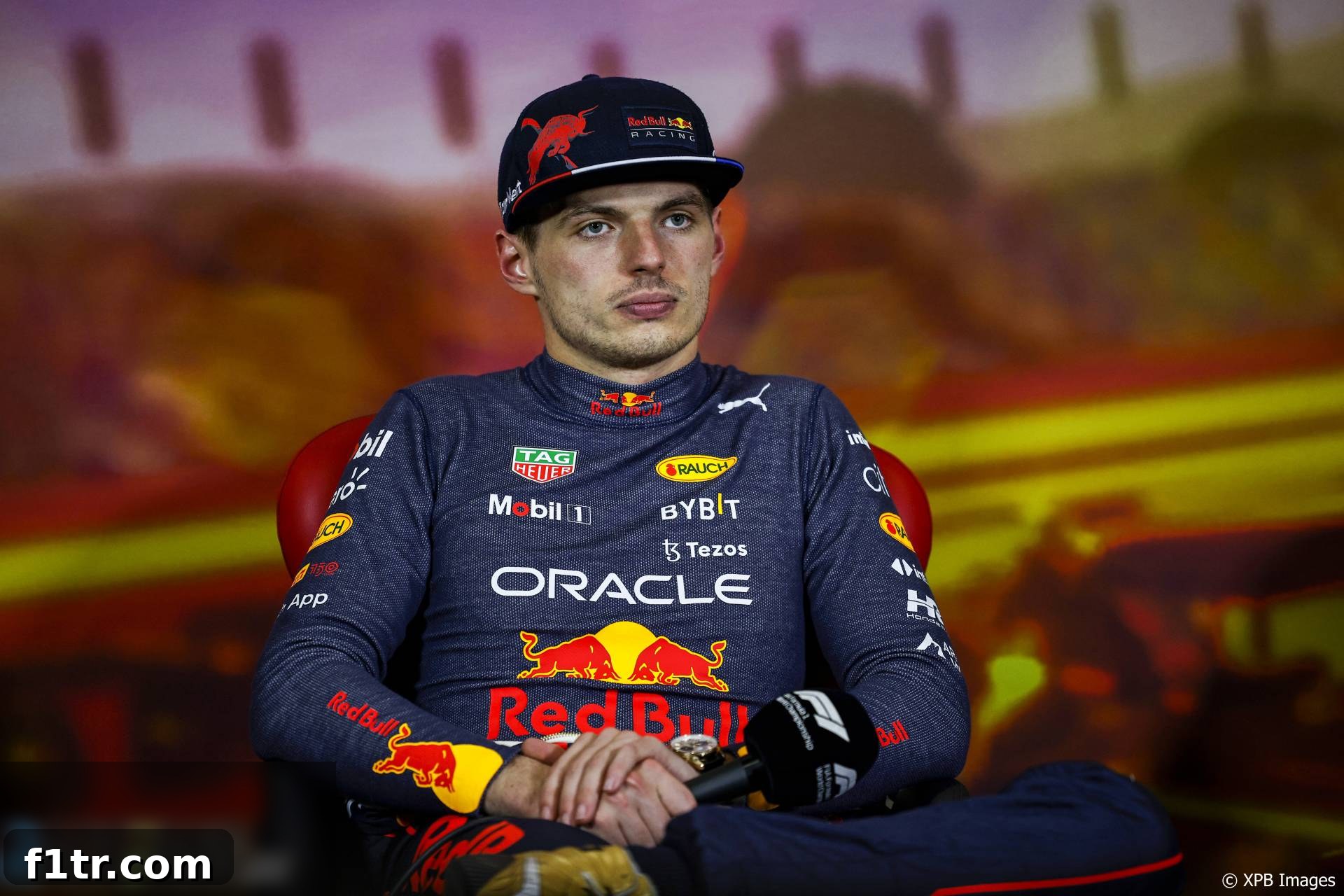
Just a few laps later, a strikingly similar incident unfolded at the very same corner, this time involving the reigning world champion, Max Verstappen. The Red Bull driver, already battling a DRS issue that hampered his top speed, found himself sliding wide into the gravel at Turn 4. On team radio, a frustrated Verstappen was quick to attribute his error directly to the wind, echoing the concerns of his Ferrari counterpart. This repetition of the incident, involving two of the sport’s most skilled drivers, underscored the genuine challenge posed by the meteorological conditions.
Verstappen’s post-race comments shed further light on the unexpected nature of the problem. “The first 30 laps were very frustrating for me after I went off in Turn 4 first of all,” he recounted. “It really caught me by surprise because I didn’t feel like I was actually braking later or throwing more speed into the corner. But it was very gusty out there today. One lap it felt all stable and then the next lap suddenly you could have more oversteer in places. So probably that caught me out, by surprise.” His words paint a picture of an unpredictable environment where track conditions and car balance could shift dramatically from one lap to the next, making it incredibly difficult for drivers to find a consistent rhythm and trust their machinery.
Red Bull team principal Christian Horner corroborated Verstappen’s assessment, emphasizing the severity of the wind. He described it as a “massive gust of wind” which “literally just drifted him wide into the gravel.” Such comments from team management not only validate the drivers’ experiences but also highlight how external factors, often overlooked by spectators, can play a pivotal role in the outcome of a Grand Prix.
The Unseen Adversary: Wind Gusts and F1 Aerodynamics
The impact of wind on modern Formula 1 cars cannot be overstated. These machines are engineering marvels, meticulously designed to manipulate airflow to generate immense downforce. This downforce, which effectively pushes the car into the track, is crucial for grip through corners and stability at high speeds. However, this sophisticated aerodynamic design also makes them highly sensitive to turbulent air, whether it’s the “dirty air” from a car ahead or, as seen in Barcelona, natural wind gusts.
Strong crosswinds or sudden head/tail winds can dramatically alter the airflow over the wings, floor, and diffusers of an F1 car. A sudden gust can momentarily reduce downforce, leading to a loss of grip, or create an unexpected imbalance, causing snap oversteer or understeer. For drivers operating at the absolute limit, where fractions of a second and millimeters of precision matter, such unpredictable forces can be devastating. They rely on consistent aerodynamic performance to confidently push their cars, and when that consistency is compromised by the environment, incidents become almost inevitable. The Barcelona track, with its high-speed sections and open nature, can be particularly susceptible to wind variations, adding another layer of complexity to an already demanding circuit.
Beyond the Top Teams: Jüri Vips’s F2 Incident
The challenges posed by Turn 4 and the gusty conditions weren’t exclusive to Formula 1. Earlier in the weekend, during the Formula 2 sprint race, Red Bull junior driver Jüri Vips experienced a similar spin into the gravel at the very same corner. While his incident might seem comparable on the surface, Vips’s self-assessment offered a slightly different perspective. On the radio, he blamed himself for being “too aggressive,” suggesting that while conditions were tough, his approach might have exacerbated the situation.
This comparison highlights the nuances of driver skill and experience. While Verstappen and Sainz, seasoned F1 veterans, pointed directly to external factors, a younger driver like Vips might be quicker to internalize blame. It also underscores the constant learning curve in motorsport, where understanding the limits of both the car and the conditions is paramount. Regardless of the immediate cause, the repeated incidents at Turn 4 across different categories served as a stark reminder of how challenging the circuit and the conditions truly were that weekend.
Repercussions and Recovery: A Battle for Position
For both Verstappen and Sainz, their off-track excursions at Turn 4 represented more than just a momentary scare; they had tangible impacts on their races. Sainz’s early spin disrupted his rhythm and forced him into an immediate recovery drive from outside the points. Verstappen, already contending with his DRS issues, saw his track position compromised, adding another layer of complexity to his strategic battle. However, in true championship fashion, both drivers showcased remarkable resilience.
Verstappen, despite the setbacks, managed to claw his way back through the field, leveraging his car’s inherent pace and Red Bull’s strategic prowess. His ability to overcome adversity and eventually secure a strong result (ultimately winning the race) was a testament to his mental fortitude and aggressive driving style. Sainz, too, mounted a strong comeback, demonstrating why he is considered one of the most consistent performers on the grid. These incidents serve as a powerful narrative, illustrating that even when faced with unexpected challenges, the best drivers find a way to minimize damage and fight for every possible position.
Lessons Learned: Adapting to Unpredictable Conditions
Incidents like those witnessed at Turn 4 during the Spanish Grand Prix provide valuable learning opportunities for both teams and drivers. Engineers will meticulously analyze telemetry data, cross-referencing it with weather information to better understand how wind gusts impacted the car’s aerodynamic performance and balance. This data can inform future car setups, allowing teams to anticipate and mitigate the effects of similar conditions. Drivers, too, gain crucial experience, learning to adapt their driving style and approach to corners when faced with highly unpredictable environmental factors.
The fine-tuning of car setup for varying wind conditions, often a trade-off between outright speed and stability, becomes a critical strategic decision. Teams might opt for slightly more conservative aerodynamic settings if strong winds are forecast, prioritizing consistent handling over peak downforce. These decisions, made on the fly or based on pre-race simulations, can often be the difference between a podium finish and a retirement.
The Spanish Grand Prix Context: A Season of High Stakes
The 2022 Formula 1 season was characterized by an intense championship battle, initially between Ferrari and Red Bull, and later becoming a fierce rivalry between Charles Leclerc and Max Verstappen. The Spanish Grand Prix was a crucial juncture in this season, with every point vital. The unexpected challenges posed by the wind at Turn 4 not only impacted individual driver performances but also added an unforeseen variable to the broader championship narrative. While Verstappen ultimately triumphed, his struggles early in the race underscored the fragility of dominance and the constant battle against unforeseen elements in F1.
The race itself was a microcosm of the season’s competitiveness, where even minor errors or external factors could swing momentum. The Barcelona circuit, often seen as a benchmark for car performance due to its diverse range of corners, delivered a race that was anything but straightforward, providing drama and talking points long after the checkered flag.
Conclusion: The Enduring Challenge of Nature in Formula 1
The 2022 Spanish Grand Prix served as a powerful reminder that even with the pinnacle of automotive engineering and the most talented drivers, nature remains an unpredictable and potent force in motorsport. The strong wind gusts at Turn 4, which caught out both Max Verstappen and Carlos Sainz Jr., highlighted the delicate balance between maximum performance and ultimate control. These incidents were not mere driving errors but reactions to an unseen adversary, demonstrating the critical influence of environmental factors on race outcomes.
Ultimately, both drivers recovered with remarkable composure and skill, turning potentially disastrous moments into opportunities for impressive comeback drives. Their experiences at Turn 4 will undoubtedly be etched into the data logs and driver debriefs, contributing to the ongoing quest for absolute mastery over both machine and environment in the relentless world of Formula 1. The Spanish Grand Prix of 2022 will be remembered not just for its winner, but for the fierce, invisible battle against the elements that defined a critical part of the race.
2022 Spanish Grand Prix: Further Reading
- Q&A: Kubica ‘shocked’ by ‘completely different’ Alfa Romeo in Spain
- How heat and traffic trouble left F1 fans fuming after the Spanish Grand Prix
- Mercedes not yet certain their porpoising problem has “disappeared”
- Sticking to budget cap “pretty much impossible” due to rising costs – McLaren
- Ricciardo hoping to find an explanation for Spanish GP pace deficit to Norris
Browse all 2022 Spanish Grand Prix articles