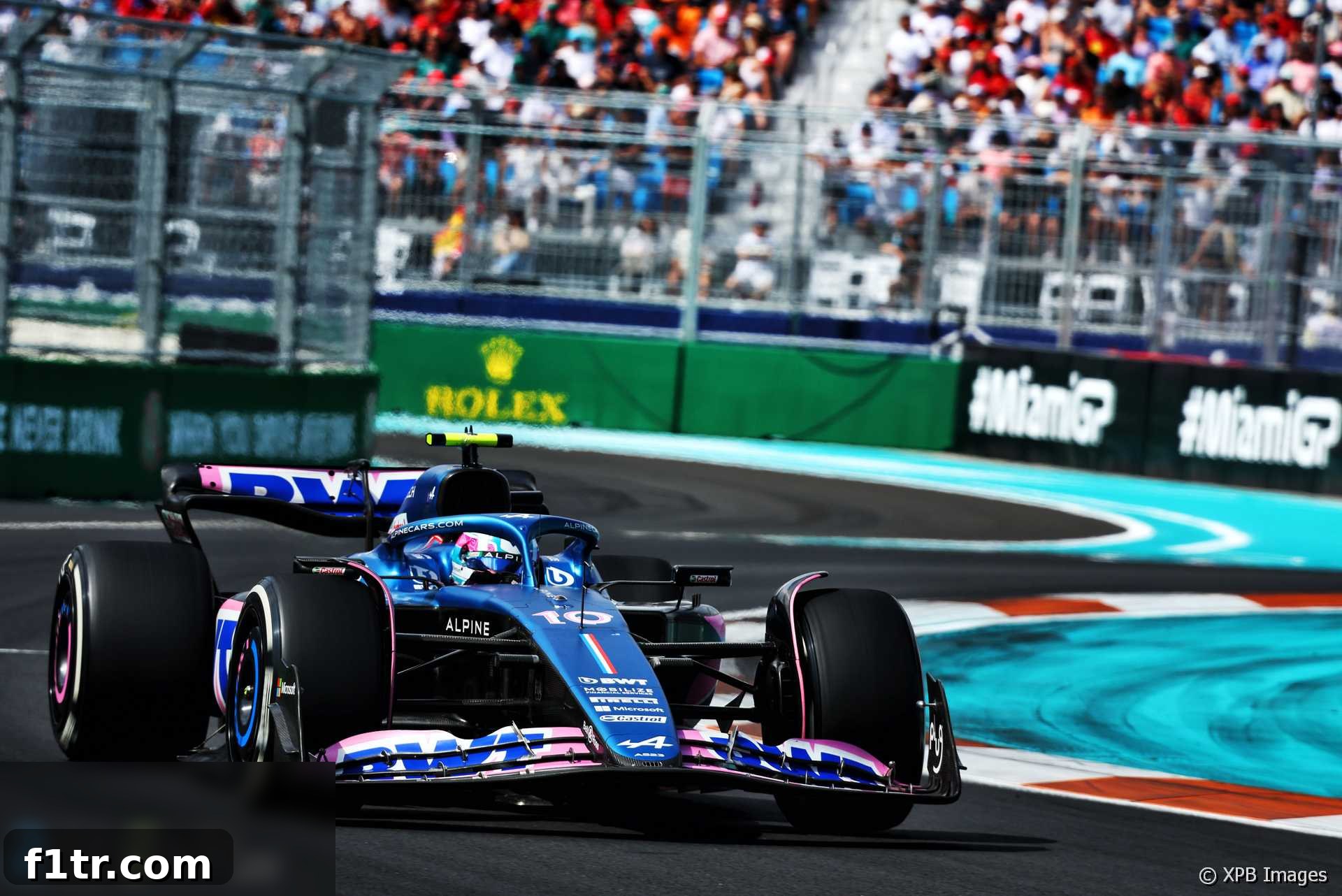
The exhilarating world of Formula 1 often delivers narratives rich in ambition, challenge, and the relentless pursuit of performance. The recent Miami Grand Prix provided just such a story for Pierre Gasly and the BWT Alpine F1 Team. While Gasly achieved his best finish of the season yet, crossing the line in eighth position, his post-race reflections were tinged with a palpable sense of disappointment, stemming from a race where he had battled significantly higher up the order for extended periods. This mixed emotional landscape, balancing personal frustration with tangible team progress, encapsulates the essence of a fiercely competitive F1 season, offering valuable insights into the dynamic nature of top-tier motorsport.
Heading into the Miami weekend, there was a quiet optimism within the Alpine camp, bolstered by recent developments and a clearer understanding of their upgraded package. Gasly himself had delivered a standout performance in qualifying, expertly navigating the challenging Miami International Autodrome to secure an impressive fifth place on the grid. This marked his strongest starting position since joining the Enstone-based squad, a testament to both his innate speed and the evolving potential of the A523 chassis. This prime grid slot positioned him strategically to capitalize on any early race opportunities and stake a strong claim for significant championship points, raising expectations for a promising Sunday afternoon in Florida.
When the lights went out for the Miami Grand Prix, Gasly demonstrated his renowned race craft with a superb start, swiftly navigating the opening corners to climb to fourth place. He found himself in the prestigious company of seasoned front-runners, tucked in behind the Aston Martin of Fernando Alonso and the Ferrari of Carlos Sainz Jnr. For a significant portion of the initial stint, Gasly maintained this strong pace, diligently attempting to keep pace with the lead pack. “I had a great start, managed to pass for P4, and tried to keep up the pace with Sainz and Alonso in front of me,” Gasly recounted, highlighting the intense early race battle for track position. However, as the race wore on and tire degradation began to play its part, the inherent pace deficit of the Alpine became increasingly apparent when compared to some of its direct rivals, signaling a need for further development.
As the Grand Prix unfolded, the dynamic nature of Formula 1 racing saw Gasly eventually fall back slightly, conceding positions to the relentless charge of Max Verstappen, who was carving his way through the field after a tricky qualifying, and the Mercedes of George Russell. This brought Gasly into sixth place, a position he still held comfortably. Following his mandatory pit stop for fresh tyres – a critical strategic inflection point in any F1 race – Gasly showed strong resolve and effectively managed to regain his track position, settling back into a competitive rhythm. The Alpine team’s well-executed strategy and Gasly’s precise driving kept them firmly in contention for valuable points, underscoring the team’s improved operational efficiency and strategic prowess.
However, the closing stages of the Miami Grand Prix proved to be a challenging crucible for Gasly, revealing a critical strategic limitation. With just five laps remaining, the looming threat of the Ferrari of Charles Leclerc and the Mercedes of Lewis Hamilton materialized into decisive overtakes. Gasly, battling a critical fuel-saving mandate – a direct consequence of the race running without any Safety Car or Virtual Safety Car periods – found himself unable to defend against the charging pair, ultimately relinquishing two positions and crossing the finish line in a still respectable, yet personally frustrating, eighth place. This late-race scenario starkly illustrated the fine margins that define success and disappointment at the pinnacle of motorsport.
Gasly elaborated on the predicament he faced during those tense final laps: “In the second stint, I was running in P6 then with 15 laps to go, I needed to do a lot of fuel-saving, which was a little annoying when you know that you have a Ferrari and Mercedes behind catching and closing on you.” The necessity for fuel conservation is a standard element of F1 strategy, but its impact is amplified on circuits that are new, unpredictable, or where the race runs uninterrupted by safety cars. Miami’s fresh track surface, offering varying levels of grip and impacting tyre wear in unforeseen ways, coupled with the absence of a Safety Car or Virtual Safety Car period, meant teams had less opportunity to accurately manage their fuel loads without sacrificing outright pace. This forced Gasly into a compromised position, having to lift-and-coast extensively, which inevitably opened the door for his hard-charging competitors to close the gap and execute overtakes.
“I wanted to give everything we could, but at the same time we needed to save the fuel, and we saw Charles just catching us slowly lap by lap,” Gasly continued, vocalizing the internal struggle between aggression and preservation. “And unfortunately with four laps to go he managed to pass.” This perfectly encapsulates the double-edged sword of F1: the unyielding drive to push the limits versus the imperative to adhere to strict technical regulations and strategic parameters. While the coveted P6 result was just out of reach, Gasly found solace in the broader perspective of Alpine’s performance trajectory and the progress the team had visibly made over the weekend.
Reflecting on the outcome, Gasly articulated a mixed bag of emotions, weighing personal disappointment against tangible team achievements. “On one side I’m a bit gutted to not get that P6, on the other if we fight one Ferrari and one Mercedes so close to the chequered flag it really shows we made a big step forward this weekend.” This perspective is crucial for understanding Alpine’s current standing in the Constructors’ Championship and their ambitious goals for the future. The ability to contend with two of Formula 1’s most iconic and traditionally dominant teams, even if only for part of the race and with a strategic caveat, signals genuine progress for the French outfit. Achieving a double points finish with both Gasly and Esteban Ocon securing championship points further solidified the positive sentiment and provided a much-needed boost for the team. “So we’ve got to look at the positives. Double points finish for the team and hopefully we can build up from there and close the gap with the four teams ahead of us,” he added, clearly outlining Alpine’s unwavering objective to challenge the established front-runners and elevate their position within the highly competitive F1 grid.
Despite acknowledging Miami as “our best weekend of the year” in terms of raw pace and competitive showing for himself, Gasly remained candid about the team’s struggles and missed opportunities earlier in the 2023 Formula 1 season. “I think we’re all disappointed with the start in the first four races,” he admitted, pointing to a series of events where the team hadn’t fully capitalized on its potential or had been hampered by technical challenges and on-track incidents. The opening rounds of a new F1 campaign are always critical for setting the tone and building momentum, and Alpine’s initial outings had not fully delivered on the team’s high expectations. This made the Miami result, a strong double points haul and a clear demonstration of improved pace, even more significant as a potential turning point in their season.
The team’s noticeable performance uptick in Miami can be directly attributed to a significant upgrade package, particularly a new floor design, which was initially introduced at the previous race in Azerbaijan. The development of a new floor is a monumental undertaking in modern Formula 1, given its critical role in generating aerodynamic downforce and overall car performance. It’s often the single most impactful aerodynamic component. However, the unique sprint race format of the Baku weekend, combined with unfortunate and severe technical setbacks—including a hydraulics failure and a subsequent fiery incident on Gasly’s car—severely limited Alpine’s ability to thoroughly test and understand the true potential of these crucial new components in a competitive environment. This meant that the Miami Grand Prix effectively served as the first genuine opportunity for the team to assess the upgrade under more conventional race conditions, providing invaluable data for future development.
Gasly himself acknowledged the stark contrast between the two weekends: “Qualified fifth and finishing eighth, I think it was a more traditional weekend.” This ‘traditional’ format, with ample practice sessions, allowed engineers and drivers to gather crucial data, experiment with setups, and truly begin to optimize the car’s performance around the new floor. The insights gained in Miami will be instrumental in unlocking the full performance envelope of the A523 for the remainder of the season, guiding future design choices. “But now we’ve got to understand what’s happened in Baku, why we lacked so much performance. This weekend was a lot better. We’ve got to figure out this package and try to get some consistency over the next few weekends,” Gasly emphasized, highlighting the ongoing analytical work and the critical need for consistent, reliable performance from the upgraded package across diverse circuit characteristics.
The Miami Grand Prix, therefore, represents a pivotal moment for Alpine. It delivered not only valuable championship points but also crucial validation for their development direction and strategic decisions. The challenge now lies in translating this promising one-off performance into a sustained upward trajectory. Achieving consistency across various circuits and conditions will be paramount to Alpine’s aspirations of solidifying their position as a top midfield contender and genuinely challenging the ‘big four’ teams of Red Bull, Ferrari, Mercedes, and Aston Martin. The data gathered from Miami, particularly concerning the new floor and its interaction with different tire compounds and fuel loads, will be meticulously analyzed to refine the car further, addressing any remaining performance gaps and extracting every ounce of potential.
For Pierre Gasly, the race was a microcosm of his season so far: flashes of brilliance, moments of intense competition, and a persistent drive to extract the maximum from his machinery. While the P8 finish might not have been the P6 he yearned for, the experience of battling directly with top-tier drivers like Charles Leclerc and Lewis Hamilton, even with strategic limitations, provides undeniable evidence of Alpine’s progress. It offers a strong foundation upon which the team can build, refine their strategies, and continue to push the boundaries of performance. The path ahead for the BWT Alpine F1 Team is clear: leverage the insights from Miami, ensure reliability and operational excellence, and strive for the consistency that will allow them to regularly contend for top positions and secure their rightful place among Formula 1’s elite teams.
Bringing the F1 news from the source
RaceFans strives to bring its readers news directly from the key players in Formula 1. We are able to do this thanks in part to the generous backing of our RaceFans Supporters.
By contributing £1 per month or £12 per year (or the equivalent in other currencies) you can help cover the costs involved in producing original journalism: Travelling, writing, creating, hosting, contacting and developing.
We have been proudly supported by our readers for over 10 years. If you enjoy our independent coverage, please consider becoming a RaceFans Supporter today. As a bonus, all our Supporters can also browse the site ad-free. Sign up or find out more via the links below:
- Become a RaceFans Supporter
- RaceFans Supporter FAQ
2023 Miami Grand Prix Analysis and Related Articles
- Verstappen picks Miami Grand Prix as his best drive of 2023 so far
- Albon “maximised most races this year” despite single point scored to date
- A sign the upgrades worked? Ferrari see an upside to Leclerc’s Miami crashes
- Red Bull ‘surprised other teams under-delivered’ with their 2023 cars
- F1’s driver intros are right for US market but wouldn’t work at Silverstone – Horner
Browse all 2023 Miami Grand Prix articles