Welcome to RaceFans’ comprehensive Tuesday round-up, your essential guide to the latest discussions, developments, and historical moments shaping the world of Formula 1 and wider motorsport. Today, we dive deep into a contentious topic that has sparked significant debate among fans and pundits alike: the FIA Superlicence points system. We also explore F1’s burgeoning appeal to a new generation, significant partnerships, and revisit some memorable events from motorsport’s past.
The Superlicence Debate: Does F1 Still Need the Points System?
Our recent poll ignited a spirited discussion, asking whether Formula 1 truly needs the Superlicence points system, introduced by the FIA a decade ago. The initial sentiment among our readers appears to lean strongly towards ‘no’, with many questioning its efficacy and relevance in today’s motorsport landscape. This system, designed ostensibly to ensure drivers entering F1 have met a certain threshold of experience and success in junior categories, has become a focal point of frustration for many.
The core argument against the Superlicence points system, as eloquently articulated by RaceFans reader @Ideals, centers on the fundamental mechanics of driver selection in Formula 1. Teams, according to this perspective, operate on a dual mandate: securing the absolute best talent capable of delivering top results, or bringing in drivers with substantial financial backing to support the team’s budget. Historically, only a handful of teams have relied heavily on ‘pay drivers,’ and this trend is reportedly diminishing, with only one such team remaining this year and poised to cease this practice next season. If teams are already discerning, driven either by pure performance or financial necessity, what real purpose does an artificial barrier serve?
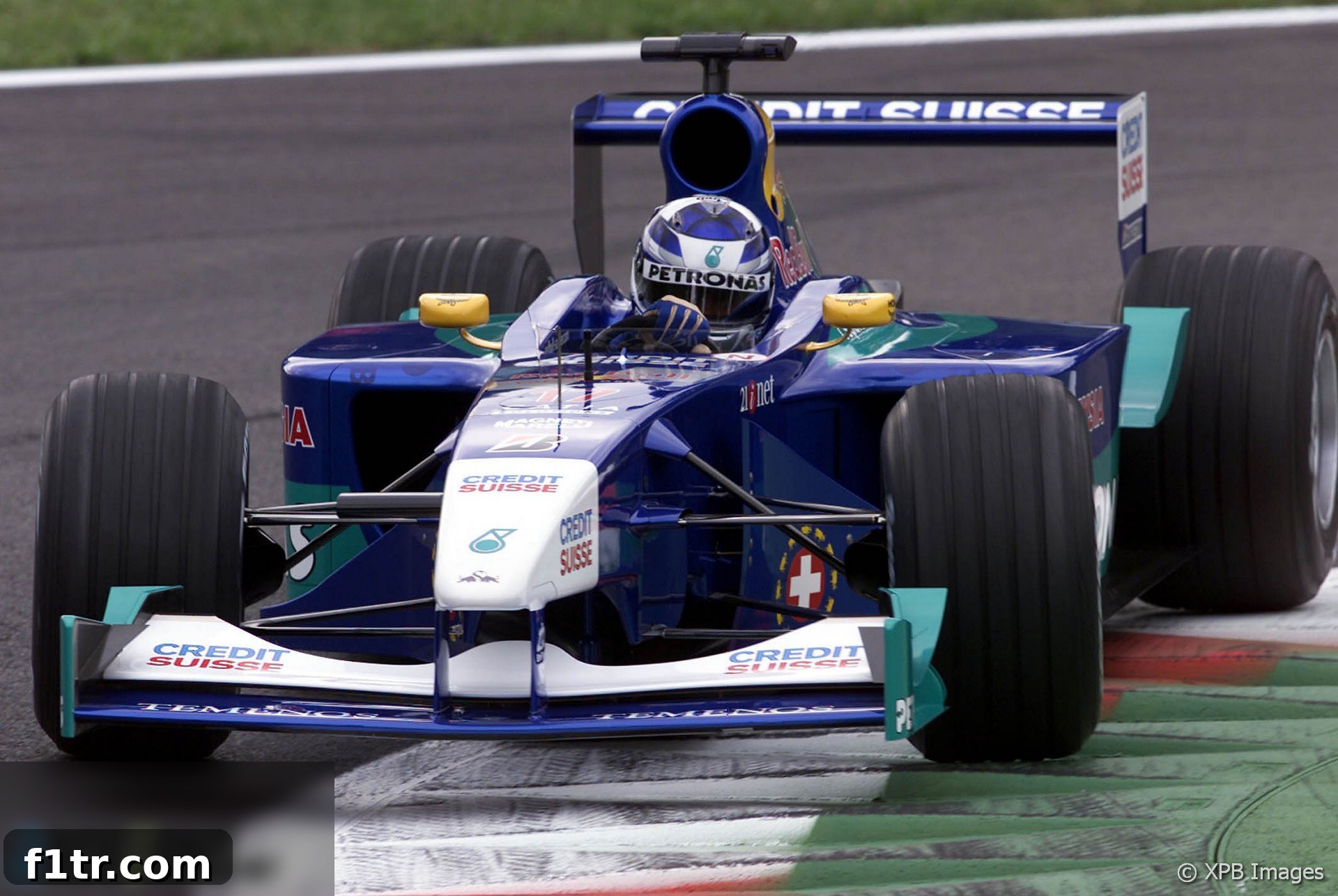
Critics often point to a golden era when exceptional talents transitioned to F1 with minimal open-wheel junior racing experience. Luminaries such as Jenson Button, Kimi Räikkönen, and Max Verstappen – all world champions – made their F1 debuts after just one or two seasons in feeder series. Their rapid ascent was not due to a ‘stunt hiring’ but a clear recognition of their prodigious skill. The idea that these natural talents needed ‘more time to cook’ before being deemed F1-ready, as the current points system might imply, seems absurd in hindsight. Their careers stand as testament to the fact that raw talent and readiness can manifest early, bypassing lengthy credentialing processes.
A significant concern highlighted is the alleged abuse of the system by Formula One Management (FOM) itself. The system is perceived by some as a tool to disproportionately promote FOM’s own junior series, potentially at the expense of other legitimate pathways into F1. This creates an uneven playing field, where drivers from certain series are inherently advantaged in accumulating the necessary points. Furthermore, the argument that the Superlicence system prevents ‘pay drivers’ from entering F1 is widely refuted. Wealthy individuals or their sponsors, as exemplified by cases like Lawrence Stroll, can simply invest in top-tier seats within these promoted junior series. They can strategically influence team structures, ensuring their chosen drivers gain crucial experience and points, often with team orders dictating on-track dynamics to facilitate their path. This demonstrates that financial leverage, rather than being curtailed, merely shifts its application to earlier stages of a driver’s career, rendering the Superlicence ineffective in its stated aim.
Perhaps the most glaring inequity of the current system is its impact on drivers from non-European open-wheel series, particularly IndyCar. Race-winning IndyCar drivers, individuals who have proven their mettle in highly competitive, physically demanding racing, frequently face immense hurdles. The junior path to IndyCar does not traditionally yield the same number of Superlicence points as its European counterparts, despite recent adjustments. This structural bias means that even if an F1 team identifies a genuinely talented IndyCar driver and is willing to invest in them, that driver can be arbitrarily excluded. The absurdity is clear: an F1 team’s professional assessment of a driver’s potential is overridden by a mathematical spreadsheet, deeming a proven race winner as “not fast enough” simply because they haven’t navigated FOM’s specific junior series. This transforms the Superlicence into a rigid, arithmetic-based barrier rather than a nuanced judge of true merit or performance.
The overarching sentiment among many fans is that if an F1 team, with its vast resources and expertise, is confident enough to offer a driver a seat, then the FIA should trust that judgment. The Superlicence points system, in its current iteration, is increasingly viewed as an anachronism that hinders genuine talent discovery and artificially restricts the talent pool, rather than safeguarding the integrity or quality of the F1 grid. It prompts a fundamental question: should a system designed for oversight inadvertently become an obstacle to ambition and demonstrated capability?
What are your thoughts on the Superlicence points system? Do you believe it serves a crucial purpose, or has it become an outdated and counterproductive barrier to entry for deserving talent? Join the debate on social media or send us your comments via our contact form.
Social Media, Key Links, and Motorsport Buzz
Beyond the track, Formula 1 continues to expand its cultural footprint, attracting unprecedented attention and new demographics. This evolving appeal is significantly reshaping its commercial landscape and brand partnerships.
F1’s growing young audience attracts array of consumer brand sponsors (Financial Times)
The Financial Times highlights a crucial shift in Formula 1’s appeal: it’s no longer solely about the pure sport. F1 has successfully cultivated an entire culture around racing, encompassing fashion, celebrity influence, and music. This broader cultural engagement has made the sport incredibly attractive to a diverse array of consumer brands, eager to tap into its expanding, younger demographic. The success of initiatives like ‘Drive to Survive’ has introduced F1 to a global audience previously disengaged from motorsport, transforming drivers into global icons and races into lifestyle events. This paradigm shift means sponsorship deals now extend far beyond traditional automotive or technical partners, drawing in fashion houses, luxury goods, and entertainment brands, all keen to associate with F1’s glamorous, high-octane image and its new, digitally native fan base.
We are back (TAG Heuer)
In a significant announcement, luxury watchmaker TAG Heuer confirms its return as the official timekeeper of Formula 1 starting in 2025. This marks an exciting new chapter for a brand with a deep and storied legacy in motorsport. TAG Heuer’s history with F1 is rich, having been synonymous with iconic teams and legendary drivers for decades, with partnerships dating back to the golden era of the sport. Their precision timekeeping instruments have been crucial to F1’s pursuit of speed and accuracy, and their watches have adorned the wrists of champions. This renewed collaboration underscores the enduring appeal of Formula 1 to premium brands and signals a strong commitment from both parties to uphold a tradition of excellence and innovation. For fans, it’s a nostalgic yet forward-looking partnership, intertwining the heritage of motorsport with contemporary luxury.
George Lucas wearing a Stormtrooper shirt on vacation pic.twitter.com/UWyJAdo01C
— Star Wars Holocron (@sw_holocron) January 4, 2025
Social media continues to be a vibrant platform for motorsport enthusiasts to connect, share, and discover unexpected content. It offers a glimpse into the lighter side of figures connected to popular culture, sometimes even featuring unexpected crossovers, like the amusing sighting of George Lucas sporting a Stormtrooper shirt. These candid moments remind us that even the most iconic figures have their passions outside their professional domains, adding a touch of relatability and fun to our daily feeds. Such posts contribute to the broader tapestry of online interaction and fan engagement, showing how diverse interests can intersect and entertain. It’s these small, often viral moments that keep the digital conversation dynamic and engaging for a global audience, extending far beyond the immediate action on the racetrack.
RaceFans always endeavours to credit original sources. Want to share a relevant motorsport link with us or highlight an interesting social media post? Send it in via the contact form – we love hearing from our community and discovering new content.
Advert | Become a RaceFans supporter andgo ad-free
- For more official F1 accounts to follow and a comprehensive guide to motorsport figures and teams on social media, explore the extensive RaceFans F1 social media directory. It’s your one-stop resource for staying connected with the pulse of Formula 1.
Happy Birthday to Our Fellow RaceFans!
We extend our warmest wishes and a very happy birthday today to three members of the RaceFans community: RagingInferno, akshay.it, and mole! We hope you all have a fantastic day celebrating, perhaps with a touch of motorsport excitement. Thank you for being a part of our passionate community!
On This Day in Motorsport History: Key Moments and Milestones
Motorsport history is rich with pivotal moments, and today marks several significant anniversaries that have left an indelible mark on the sport. From the birth of a legend to crucial career decisions and global events impacting racing schedules, these dates remind us of the dynamic nature of Formula 1.
- Born today in 1985: Seven-time Formula 1 world champion Sir Lewis Hamilton. This day marks the birth of one of the most successful and influential figures in the history of Formula 1. Lewis Hamilton, renowned for his unparalleled talent, record-breaking achievements, and significant advocacy for diversity and environmental issues, has transcended the sport to become a global icon. His journey from humble beginnings to equalling Michael Schumacher’s seven world titles and holding numerous other F1 records is an inspiring saga of dedication, skill, and relentless pursuit of excellence. His impact extends far beyond his racing prowess, making him a true ambassador for change and an inspiration for millions worldwide.
- Five years ago today, in 2020, Formula 1 confirmed it was closely monitoring serious bushfires in Australia. These devastating fires posed a significant threat to the season-opening Grand Prix scheduled for March in Melbourne. The initial concerns were centered around air quality and logistics due to the widespread environmental crisis. While the bushfires were a severe natural disaster, the Australian Grand Prix was ultimately called off, not due to the fires, but because of the rapidly escalating global COVID-19 pandemic. This unprecedented cancellation on the eve of the race, as teams and personnel were already on site, marked the beginning of a profoundly disrupted F1 season and underscored the fragility of global sporting events in the face of unforeseen crises. It was a moment of immense uncertainty that reshaped the entire sporting calendar for that year.
- Also five years ago today, in 2020, Max Verstappen signed a new, three-year deal to race for Red Bull Racing. This contract extension was a pivotal moment in Verstappen’s career and Red Bull’s long-term strategy. It solidified his commitment to the team that had brought him into Formula 1 and with whom he had already achieved significant success, including multiple race wins. The deal signaled Red Bull’s belief in Verstappen as their future championship contender and provided him with the stability to challenge for the title. This decision laid the groundwork for his eventual championship successes, confirming a formidable partnership that would go on to dominate the sport in subsequent years. It was a declaration of intent from both driver and team, setting the stage for one of F1’s most compelling modern eras.
Advert | Become a RaceFans supporter andgo ad-free