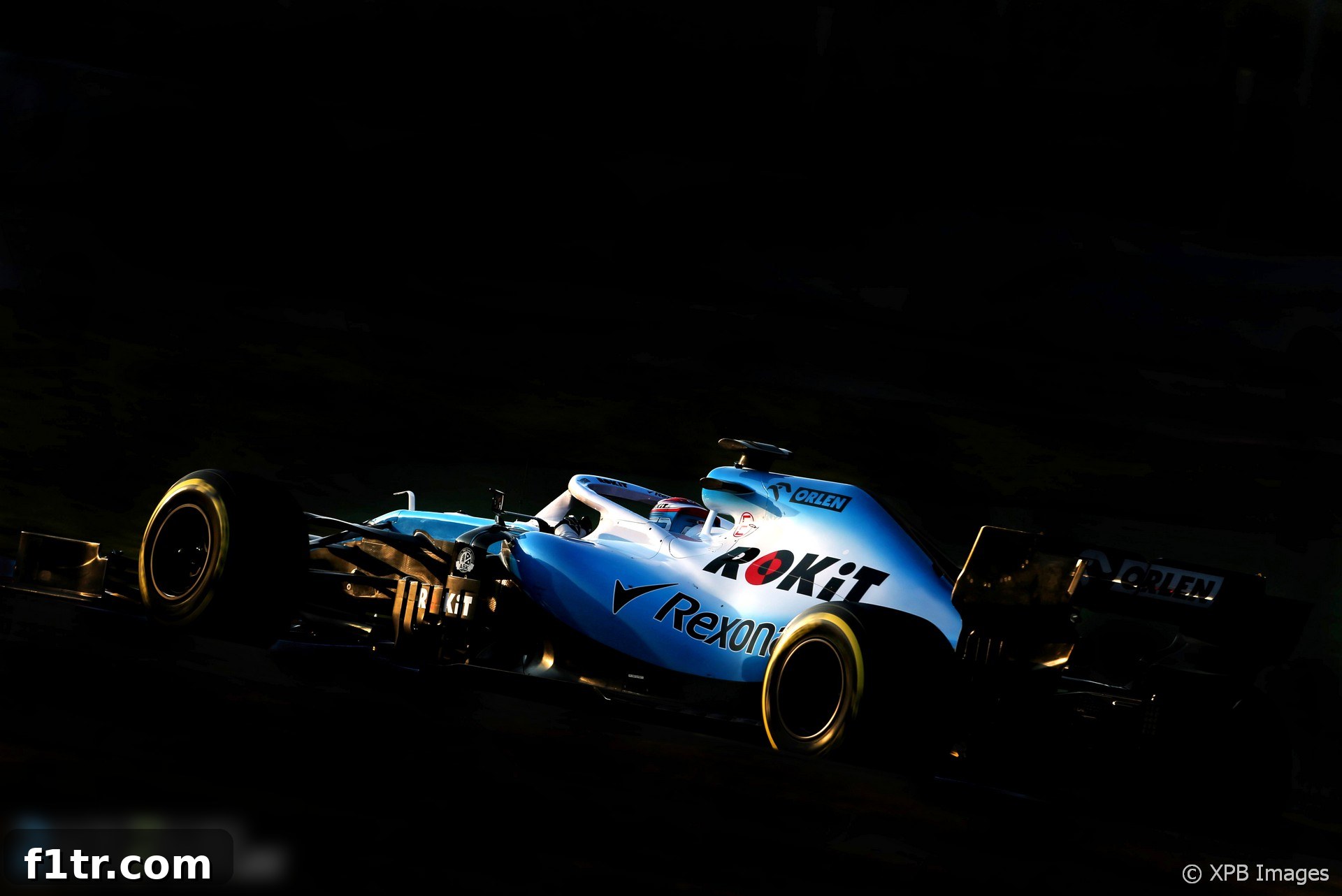
Williams F1’s Deepening Crisis: A Troubled Start to the 2019 Season
The dawn of the 2019 Formula 1 season presented a stark and disheartening reality for one of the sport’s most storied teams. The Williams FW42 finally made its inaugural laps not at the scheduled start of testing, nor even during a planned filming day, but a staggering two and a half days into official pre-season proceedings. This delayed debut underscored a worrying trend, signaling an even more turbulent start to their 2019 F1 campaign than the already challenging 2018 season.
The highly anticipated — or perhaps, dreaded — first outing of the FW42 was met with a press conference led by deputy team principal Claire Williams. Her demeanor, unfortunately, offered little in the way of reassurance or concrete explanations. To many members of the media, who had largely exercised restraint in their critiques of the once-dominant team’s escalating problems, her brief address felt dismissive, almost an attempt to downplay the severity of the situation.
Understanding the Unexplained Delay: A Crisis of Transparency?
A notable absence of detail marked the team’s initial public comments. No specific reasons were provided, no clear explanations were offered for the significant delay; indeed, beyond a brief apology, remarkably little was said about the exceedingly sad state of affairs. Throughout the 15-minute briefing, a prevailing impression lingered: that this was merely a temporary setback, not a deep-seated crisis, and that all would magically come good when it truly mattered – on race weekends where championship points are awarded.
When pressed on how Williams, a team historically a fixture in the championship’s top five, had plummeted to finishing last and then arrived late for the subsequent season’s start — a decline occurring conspicuously over three straight years, coinciding with Paddy Lowe’s tenure as technical director — Claire Williams’ response leaned heavily towards protectionism rather than instilling confidence. Her words reflected a reluctance to delve into the underlying issues, preferring instead to shield internal matters from public scrutiny.
“There are a lot of elements to that,” she explained. “But I don’t think that it’s appropriate for me to, as I always say, air our dirty laundry in public. I don’t think it’s right to do that. It’s not right to do that to the people that are working so hard at Grove. We’ve just put it wrong and we need to fix that and hopefully you’ll see a much more successful Williams in the coming years.”
Beyond Apologies: The Reality of Williams’ Operational Shortcomings
This statement, while seemingly protective of her team, carried a distinct whiff of denial. The reality, as perceived by many observers, suggested Williams was indeed in crisis. The admission by Claire Williams that an “inquest” was still underway strongly hinted at severe deficiencies within the team’s internal control systems and operational urgency. These shortcomings could manifest across multiple crucial areas: within the design, technical, or engineering departments, at the heart of in-house manufacturing operations, or even during the complex processes of outside procurement.
It is entirely plausible that the delay was a culmination of failures across all three areas. Such a scenario points towards a systemic management problem, given that the full car design process typically spans six months. Disturbingly, reports indicated that both performance and manufacturing targets for the FW42 were already being missed as early as November of the previous year. This early warning sign, if accurate, suggests a profound breakdown in planning and execution.
Further compounding the issue, the delay was not attributed to a single component but rather to a staggering list of up to 20 critical items. These weren’t exclusively in-house parts, implying that the crucial engineering ‘release’ process – the point at which detailed drawings are finalized and dispatched for manufacturing – was significantly behind schedule. Such widespread issues paint a picture of an organization struggling with coordination and timely delivery at fundamental levels.
Morale, Blame, and the Burden on Employees
While the mantra “teams win together and lose together” holds a certain truth, Claire Williams’ strategy of not apportioning blame had an unintended, damaging consequence. By shielding those directly responsible, she inadvertently implicated every department and indeed every employee, regardless of their individual culpability. This approach, though perhaps well-intentioned to maintain unity, can destroy overall morale by placing unfair burdens of guilt on innocent individuals, precisely when decisive leadership should be boosting spirits and clarifying responsibilities.
Evidence from social media messages posted by staff members painted a grim picture, indicating that morale was already seriously waning. This decline occurred ahead of what was arguably the most vital season in the team’s recent history, a testament to the palpable internal struggles and uncertainty gripping the Grove-based outfit.
There were, undoubtedly, mitigating circumstances. The new front and rear wing aerodynamic regulations were finalized later than usual, only being firmed up in November, while the start of the season had advanced by a week. This confluence of factors squeezed the 2019 car-build schedules from both ends, creating immense pressure for all teams.
However, this explanation rings hollow when compared to the efforts of competitors. Racing Point, for example, had plunged into administration before being dramatically rescued at a crucial juncture during the design process. Yet, despite these monumental challenges, they managed to deliver a competitive car on time. Williams, by contrast, possessed superior resources: greater manpower, extensive in-house facilities, a larger budget, and their own wind tunnel. Given these advantages, they should have been more than capable of managing the tighter schedule. Yet, even after being air-freighted overnight, the FW42 arrived in Barcelona incomplete, with critical parts still due to arrive for subsequent testing sessions.
A Pattern of Decline: The Consequences of Inaction
None of this would be as gravely serious had Williams enjoyed a strong 2018 season. However, the team’s performance record shows a stark decline, slipping from fifth place in 2017 to a dismal tenth, largely due to a recalcitrant and uncompetitive car. If that was considered bad, failing to even appear until well past the midway point of the first test is arguably worse. It strongly suggests that the entire team did not take its 2018 travails seriously enough, or at least failed to implement the necessary corrective measures with sufficient urgency. An alarming pattern of underperformance and organizational inertia is emerging, and attempts to hide the root cause do no one any favors, least of all the dedicated employees.
Williams owes it to its millions of loyal fans to be transparent, to fully come clean about the issues, and then to take decisive corrective action, no matter how painful or publicly scrutinized these steps may be. If it means Claire Williams needs to make the difficult decision to step aside, or if technical director Paddy Lowe or unnamed operations managers need to be replaced, then so be it. Continuing to hide behind a corporate veil only serves to erode the credibility and goodwill that the team, despite its recent struggles, still possesses.
Leadership on the Line: The Case of Paddy Lowe
The cancellation of Paddy Lowe’s media session, ostensibly to allow him to focus his energies on ensuring “the car is in the best possible shape,” suggested a concerning shirking of responsibility at the top of the technical hierarchy. While his primary priority is indeed the car’s on-track performance, cancelling an already postponed media session sends a clear message: a reluctance to publicly face the music. It fuels the impression that he is unwilling to ‘man up’ and address the critical situation directly.
Last year, significant questions were raised about Lowe’s leadership abilities, and this latest saga has provided his critics – both within and outside Williams – with further ammunition. Without a clear and compelling exoneration, the cloud of doubt surrounding his technical leadership will only intensify. For a once-dominant F1 team, a return to respectability is far more paramount than the preservation of family links or the shielding of executives who have demonstrably fallen short at the helm of a publicly-traded company.
The Long Road to Recovery: Accountability for Survival
Williams has been caught in a gradual decline for five consecutive years, a trajectory painfully illustrated by its championship standings since 2014: 3rd, 3rd, 5th, 5th, and finally, 10th. This consistent downward spiral is unsustainable for a team with such a rich legacy and history in Formula 1. Admitting culpability – wherever that may ultimately lie – then fully accepting responsibility and taking robust corrective action for what is clearly a totally unacceptable situation are not merely the first steps towards what is likely to be a long and arduous recuperation period. They are, in fact, absolutely crucial to the team’s very survival in the cutthroat world of Formula 1.
To paraphrase former US President Harry S Truman: “The buck needs to stop somewhere.” Based on the evidence presented throughout this troubled week, at Williams, the buck appears to be aimlessly bouncing around between denial and delay, oscillating between the top floor management and the drawing office. Until decisive leadership emerges to firmly grasp that buck and initiate real change, Williams F1 risks spiraling further into irrelevance, endangering a legacy built over decades of motorsport glory.
2019 F1 season
- Crying in the Melbourne car park at 2019 grand prix was my career low – Ocon
- McLaren Racing reports reduced £71 million loss in 2019
- Kvyat: Hockenheim podium last year was “my biggest achievement” so far
- How the FIA’s new encrypted fuel flow meter targets Ferrari’s suspected ‘aliasing’ trick
- “He smashed my office door”: 23 must-see moments from ‘Drive to Survive’ season two
Browse all 2019 F1 season articles