British Grand Prix: Six Key Talking Points for Silverstone F1 Race
The roar of Formula 1 engines returns to the historic Silverstone circuit this weekend for the British Grand Prix, and all eyes are on Mercedes after their uncharacteristic performance ‘blip’ at the Austrian Grand Prix. Will the Silver Arrows reclaim their dominant form on Lewis Hamilton’s home turf, or will the momentum shift continue?
As the pinnacle of motorsport descends upon Northamptonshire, anticipation is reaching fever pitch. From title contenders looking to assert their authority to promising young talents eager to shine, the British Grand Prix always delivers drama. Here, we delve into the six crucial talking points that are set to define this weekend’s highly anticipated race at Silverstone, exploring the narratives that could shape the championship fight and beyond.
The Return of the Silverwash? Mercedes’ Quest for Redemption
Mercedes’ formidable winning streak, which had seen them clinch every race of the 2019 season up until that point, abruptly concluded in Austria. This unexpected downturn was attributed to a rare confluence of challenging circumstances. The high-altitude setting of the Red Bull Ring, combined with unusually scorching track temperatures, severely compromised the W10’s intricate cooling systems. This forced Mercedes to run their cars in a detuned state, preventing them from extracting maximum performance.
Simultaneously, their rivals seized the opportunity. Ferrari demonstrated a significant, timely step forward with the performance of their SF90, showing improved pace and tyre management. Not to be outdone, Red Bull, especially with Max Verstappen at the wheel, proved to be exceptionally competitive on home ground, capitalising on Ferrari’s aggressive early pit strategy to put pressure on the leading Mercedes cars. It was a perfect storm that saw the Silver Arrows dethroned, marking a pivotal moment in the season.
However, the narrative is expected to shift dramatically at Silverstone. The iconic British circuit, situated at a much lower altitude than the Spielberg track and typically experiencing cooler, denser air, offers an environment far more conducive to the W10’s optimal operating conditions. Barring any unforeseen geological events that might transform the Northamptonshire landscape into a mountain range overnight, Mercedes can confidently expect their cooling issues to be a thing of the past.
The question on everyone’s mind is whether this means a return to the familiar sight of numbers 44 and 77 dominating the top two steps of the podium. Mercedes Team Principal Toto Wolff, a master of tempering expectations, rarely makes overly confident predictions. Yet, he spoke of Silverstone being “much better” for them – a subtle but powerful signal that the team is confident of regaining its formidable pace. This bodes well for Mercedes fans and suggests that the Austrian Grand Prix was indeed an anomalous ‘blip’ rather than a fundamental shift in the pecking order. With their cooling problems likely resolved, the W10’s inherent strengths, particularly its aerodynamic efficiency and downforce generation, are expected to shine on Silverstone’s high-speed corners, making them strong contenders for a commanding performance.
Charles Leclerc’s Persistent Pursuit of a Maiden Victory
Since his truly heartbreaking near-miss at the Bahrain Grand Prix three months prior, where a power unit issue cruelly snatched victory from his grasp in the closing laps, the motorsport world has been consistently asking: when, not if, Charles Leclerc will become a Formula 1 race winner. That conviction was only further solidified in Austria, a race where the young Monegasque driver demonstrated exceptional pace and controlled leadership for much of the grand prix.
His potential victory in Austria, however, was ultimately denied by a combination of factors. Some analysts suggest that a slightly firmer defence against Max Verstappen’s aggressive move in the closing stages might have preserved his lead. Furthermore, Ferrari’s strategic decision not to put their drivers on the more durable medium compound tyres in Q2, a choice the team continues to defend, potentially left them vulnerable in the race’s crucial final stint. These incidents, while frustrating, only serve to highlight Leclerc’s growing maturity and formidable talent.
Leclerc himself has spoken of a significant breakthrough in his qualifying performances over recent races. His impressive string of qualifying performances has seen him consistently outpace his four-time world champion teammate, Sebastian Vettel, in the last two Saturday sessions. While Vettel faced technical difficulties last weekend, Leclerc’s raw speed and adaptability have been undeniable. This consistent qualifying edge positions him as the best-placed of the two Ferrari drivers to capitalise fully on any potential issues or rare off-days for the dominant Mercedes team – as happened at Silverstone last year.
Silverstone, with its demanding corners and high-speed sections, often produces thrilling races and occasional surprises. It’s a track where driver skill and car balance are paramount. Leclerc’s recent form, combined with Ferrari’s improved car performance, could make him a formidable force. His hunger for that elusive first F1 victory is palpable, and a win at such a prestigious circuit would not only be a personal milestone but also a significant statement of intent in his burgeoning career. The stage is set for Leclerc to potentially write a new chapter in his story, and Silverstone could be the perfect backdrop for his maiden triumph.
Britain’s New Generation of Home Heroes Ready to Shine
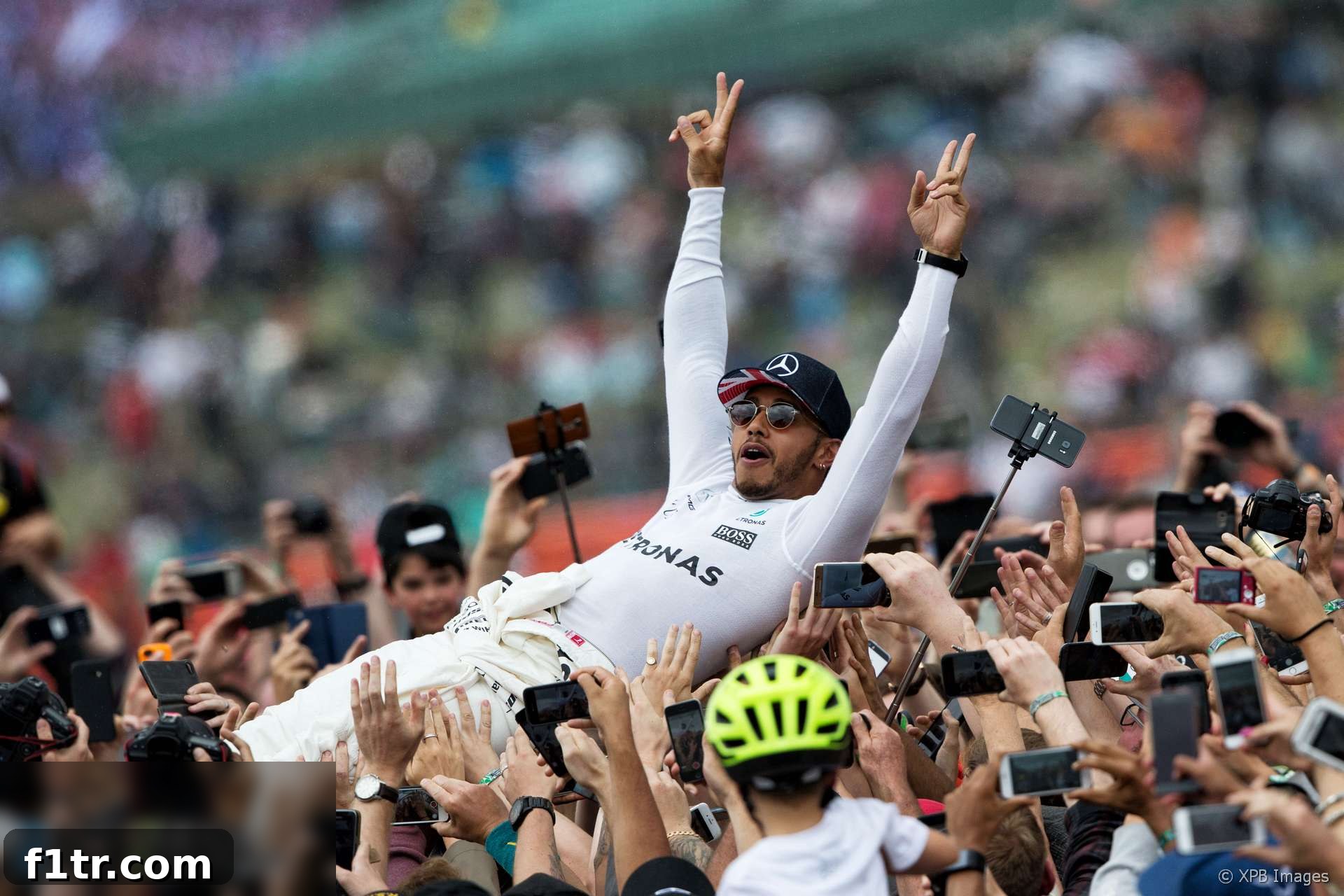
The Silverstone faithful have historically been spoiled for choice when it comes to cheering on local talent. For a period, Lewis Hamilton stood as their sole representative on the Formula 1 grid, yet his remarkable run of victories at his home Grand Prix between 2014 and 2017 ensured the crowd’s passionate support never wavered, culminating in joyous celebrations.
While Hamilton will undoubtedly enter his home race once again as the overwhelming favourite, he is now joined by a promising trio of young British drivers, all arriving at Silverstone with compelling reasons to be proud of their seasons so far. This resurgence of British talent adds an extra layer of excitement and national pride to an already iconic event.
Lando Norris, in his rookie season with McLaren, has quickly established himself as a regular fixture in Q3, consistently demonstrating impressive one-lap pace. He has also bagged a series of strong points finishes, contributing significantly to McLaren’s resurgence, which now looks increasingly like the cream of the midfield pack. His mature and engaging personality, combined with his undeniable speed, has justly been rewarded with a contract extension for a second season, solidifying his future with the Woking-based team and marking him as a rising star.
George Russell, despite being saddled with the notoriously uncompetitive Williams FW42, has quietly but effectively showcased his exceptional talent. He has consistently outperformed his much more experienced teammate, Robert Kubica, demonstrating a clean pair of heels in both qualifying and race trim. His ability to bring the struggling Williams home ahead of a Haas in the last race, a car from a significantly better-funded team, highlights his remarkable driving prowess and potential. Russell’s meticulous approach and consistent extraction of maximum performance from a challenging car have earned him widespread praise within the paddock, affirming his reputation as a future star deserving of better machinery.
Finally, London-born Thai racer Alexander Albon has made an encouraging and impressive start to his Formula 1 career with Toro Rosso. Having never driven an F1 car prior to the beginning of the 2019 season, his adaptation has been remarkably swift. Albon has already scored his maiden F1 points, demonstrating his natural ability and racing instinct. His consistent performances have not only justified his place in the competitive Red Bull junior programme but also marked him as a driver to watch, seamlessly transitioning into the demanding world of Grand Prix racing.
These three young talents represent a bright future for British motorsport, carrying the torch passed down by generations of F1 legends. Their presence at Silverstone adds an additional layer of national pride and anticipation, as fans eagerly watch their home heroes battle it out on one of the sport’s most hallowed circuits.
Another Poignant and Challenging Homecoming for Williams
For a team steeped in such a rich and storied history as Williams Racing, the British Grand Prix at Silverstone often carries an extra layer of emotion, but in recent years, it has been a source of significant struggle. Last year, the team suffered the ignominy of seeing both its drivers spin off during qualifying, a direct consequence of fundamental problems with a newly introduced rear wing design. At the time, this felt like an undeniable nadir for the Grove-based outfit, a low point from which recovery seemed daunting.
However, the cruel reality of the 2019 season has proven that what seemed like rock bottom was merely a prelude to deeper challenges. The FW42 has been consistently, and undeniably, the slowest car on the grid throughout the season, a stark and painful truth for a team that once dominated the sport. The performance deficit is not just marginal; it is significant, leaving both George Russell and Robert Kubica fighting a battle that is fundamentally unwinnable in terms of points and competitive positioning.
This weekend’s race holds a particularly poignant significance, marking 40 years since the team’s inaugural Formula 1 victory. That triumph was followed by numerous championships and Grand Prix wins, cementing Williams’s place as one of the sport’s all-time greats. Yet, their last victory came a sobering seven seasons ago, and from their current challenging position, it is genuinely difficult to predict when, or indeed if, they might ever return to the top step of the podium. The struggle extends beyond the track, impacting sponsorship, team morale, and the very perception of a once-great racing institution.
Against this backdrop of continuous struggle, Sir Frank Williams, the venerable founder of the team he built from scratch five decades ago, is expected to make a return to the track. His presence will undoubtedly cast a poignant shadow over the weekend, a powerful reminder of the team’s glorious past contrasting sharply with its arduous present. His visit will be a deeply emotional affair, not just for him and the team members, but for fans worldwide who respect his unparalleled dedication to Formula 1. The British Grand Prix, a venue where Williams has celebrated some of its most memorable triumphs, now serves as a stark reminder of their profound challenges, hoping against hope for any glimmer of a positive future.
Silverstone’s Enduring Saga: The Latest Track Surface Transformation
The iconic Silverstone Circuit, renowned for its thrilling high-speed layout, has faced an ongoing battle with its track surface, a saga that has captivated and at times frustrated the motorsport community. The new asphalt laid before last year’s British Grand Prix was met with significant backlash, particularly from the drivers. Lewis Hamilton, a vocal critic, lamented that it was “the worst job ever,” comparing its bumpiness unfavourably to the antiquated Nurburgring Nordschleife. While the bumpy nature didn’t entirely detract from an exciting Formula 1 race, the true extent of the problems became terrifyingly clear when Moto GP arrived for their highly anticipated event.
That weekend was plagued by exceptionally wet conditions, and the newly laid surface proved to have critical drainage issues. The lack of proper water runoff led to treacherous hydroplaning and unsafe racing conditions, ultimately forcing the unprecedented cancellation of the entire Moto GP race. This catastrophic outcome was not only a logistical nightmare but also a significant blow to Silverstone’s reputation and financial standing. The severity of the situation necessitated immediate action, and the circuit owners were compelled to undertake another costly, full-scale resurfacing operation to rectify the grave drainage and surface imperfections.
Following this substantial investment and extensive work, the track owners are now understood to be very pleased with the results of the latest resurfacing efforts. They are confident that the new asphalt addresses the previous issues, offering a smoother, safer, and more consistent racing surface for all categories of motorsport, including Formula 1. However, after sinking such a considerable amount of money into yet another expensive coat of asphalt, the circuit management will undoubtedly be sensitive to any potential criticism from the discerning Formula 1 drivers. Their feedback will be crucial, as their opinions carry significant weight regarding safety and performance.
Drivers will be keenly assessing grip levels, tyre degradation, and crucially, the absence of bumps and effective water dispersion should wet weather arrive. The hope is that this latest iteration of the Silverstone track surface will provide the optimal conditions for fast, fair, and exhilarating racing, finally putting an end to the resurfacing controversies that have marred recent events. A smooth, well-drained surface is paramount for the high-downforce F1 cars, allowing them to push to their absolute limits and deliver the spectacle fans have come to expect at the British Grand Prix.
The Future of the British Grand Prix: Navigating Uncertainty and Opportunity
It has almost become an annual tradition: the British Grand Prix arrives, inevitably accompanied by a swirl of doubtful speculation regarding the race’s long-term future on the Formula 1 calendar, often coupled with unrealistic rumours of a glamorous yet improbable street race through the heart of London. This cycle of uncertainty, while frustrating for fans and organisers alike, highlights the precarious nature of securing a place in an increasingly competitive global sporting landscape.
However, recent signals concerning Silverstone’s prospects for returning on the 2020 F1 calendar have been notably more positive. This renewed optimism stems partly from the circuit owners’ significant and ongoing commitment to the venue, evident in their decision to undertake another costly resurfacing project, as well as their ambitious plans to construct a new, state-of-the-art hotel directly opposite the pits. These substantial investments are a clear demonstration of confidence and a strong desire to secure Silverstone’s future as a premier motorsport destination.
While nothing official has been announced regarding a contract extension, the positive noises suggest that negotiations with Formula 1’s commercial rights holder, Liberty Media, are progressing favourably. Many within the sport are hopeful for an announcement during the Grand Prix weekend itself, which would be met with widespread relief and celebration among the passionate British F1 fanbase. The British Grand Prix is not just another race; it is a foundational event in the sport’s history, deeply ingrained in its heritage.
Beyond the immediate contractual discussions, there remains a wider and more critical question concerning the sport’s overall popularity and accessibility in Britain. While British talent in Formula 1 is currently enjoying a magnificent resurgence, thanks to the promising performances of drivers like Norris, Russell, and Albon, there are genuine concerns about how easily the next generation of local talent and fans will discover and engage with the sport. The primary issue revolves around the almost complete shift of live F1 coverage behind Sky’s paywall, limiting access for a broad audience.
This pay-TV move is a problem not exclusive to the UK; other traditional Formula 1 territories are also grappling with declining free-to-air viewership and its long-term consequences. Lewis Hamilton himself expressed significant concerns about this trend earlier in the year when asked by RaceFans, highlighting the potential for a “terrible drop” in UK TV audience figures. This commercial decision, while financially beneficial in the short term, poses a strategic challenge for the sport’s future, potentially alienating a new generation of fans and hindering the organic growth of grassroots motorsport interest in a country with such a rich F1 legacy. Ensuring accessibility and maintaining a strong free-to-air presence is vital for the enduring health and appeal of Formula 1 in its spiritual home.
Are you going to the British Grand Prix?
If you’re heading to Great Britain for this weekend’s race, we want to hear from you:
- Forum: Going to the British Grand Prix at Silverstone
Who do you think will be the team to beat in the British Grand Prix? Have your say below.
And don’t forget to enter your predictions for this weekend’s race. You can edit your predictions until the start of qualifying:
- RaceFans F1 Predictions Championship
2019 British Grand Prix Related Articles
- 2019 British Grand Prix Star Performers
- Top ten pictures from the 2019 British Grand Prix
- Hamilton and Formula 1 at their best in Silverstone spectacular
- Hamilton passes Mansell and Clark as top Briton at home
- Paddock Diary: British Grand Prix day four
Browse all 2019 British Grand Prix articles