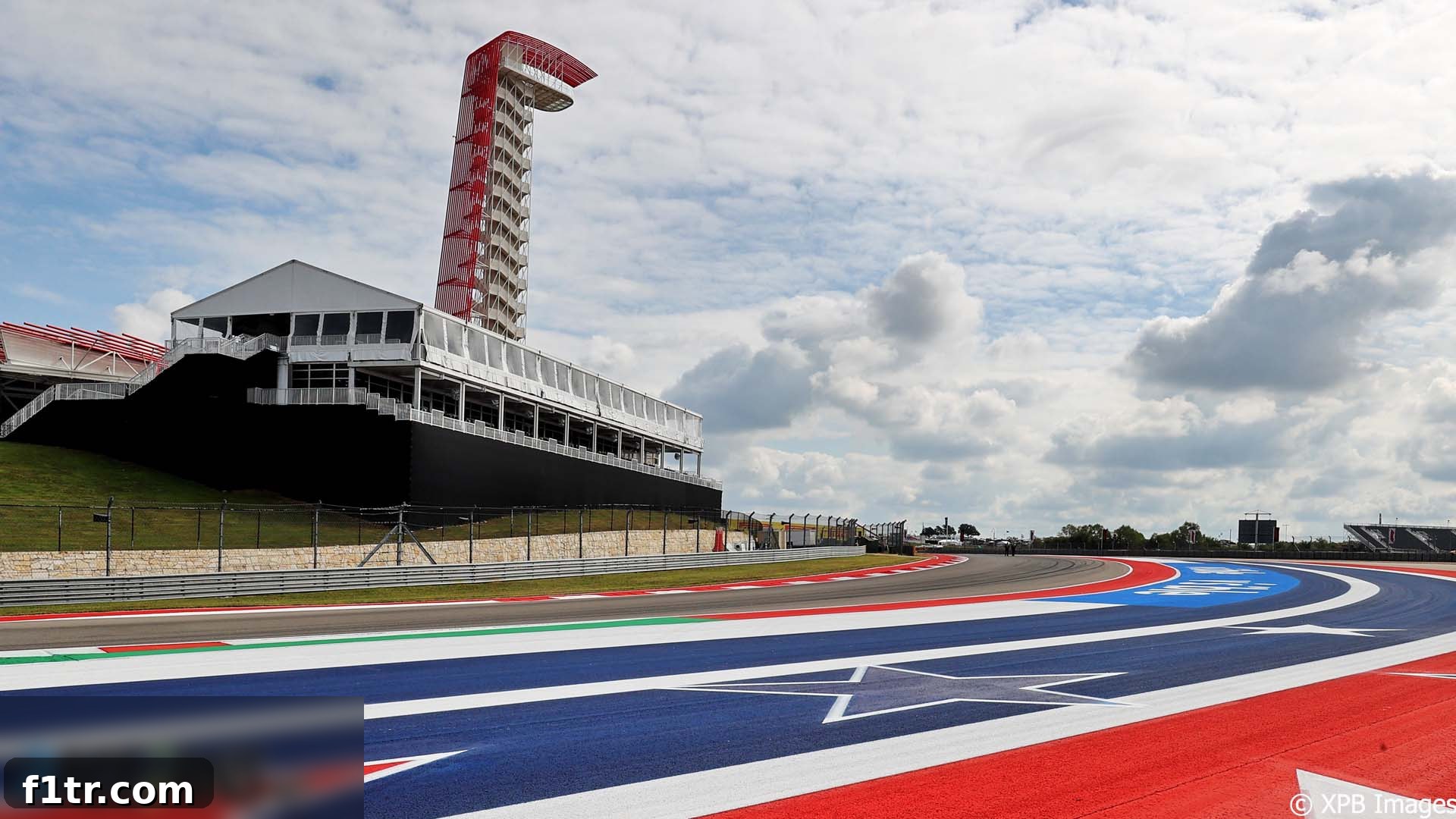
The highly anticipated return of Formula 1 to the Circuit of the Americas (COTA) in Austin, Texas, is sparking significant discussion among drivers and teams, with many bracing themselves for a formidable challenge presented by the circuit’s notoriously bumpy surface. This marks the first F1 race at COTA since 2019, and memories of the previous visit, characterized by car damage and driver frustration, are fresh in everyone’s minds.
The Bumpy Challenge Returns: COTA Prepares for Formula 1 Showdown
As the Formula 1 circus rolls into Austin, the undulations of the Circuit of the Americas track surface are emerging as a dominant talking point. The 2021 United States Grand Prix promises to be a true test of engineering, driver skill, and adaptability, largely due to the challenging bumps that have plagued the track in recent years. Drivers are anticipating a weekend where navigating these imperfections will be as crucial as outright speed, potentially dictating the outcome of one of the season’s most exciting races.
A Historical Precedent: The 2019 United States Grand Prix
The last Formula 1 visit to COTA in 2019 left a lasting impression, particularly concerning the track’s uneven surface. That year, the bumps were directly linked to significant problems on several cars, highlighting the severe impact they can have on F1 machinery. Notably, Sebastian Vettel was forced to retire from the race due to a suspension problem, a clear indicator of the forces exerted on the cars. Even more dramatically, Max Verstappen’s Red Bull faced critical issues; his car required emergency repairs on the grid after Red Bull technicians discovered a crack in his rear wing. These incidents underscore the structural stresses and potential safety concerns posed by an exceptionally bumpy track. Such high-speed component failures not only compromise a team’s race but also raise questions about driver safety, making the track condition a top priority for all participants.
Coping with the Undulations: F1 vs. MotoGP Perspectives
The challenges at COTA are not exclusive to Formula 1. Earlier in the year, MotoGP riders, racing on the same circuit, voiced strong criticisms regarding the track surface. Their experience, characterized by loss of traction and significant discomfort, served as a stark reminder of the track’s condition. However, Antonio Giovinazzi, like many in the F1 paddock, holds a more optimistic view regarding Formula 1 cars’ ability to handle the surface. He acknowledges the uncertainty but believes the four-wheeled F1 machines offer greater stability compared to two-wheeled motorcycles.
“I think nobody knows for sure,” Giovinazzi explained, reflecting on the unpredictability of the situation. “We’ve had some tracks with more bumps, but here, especially with what we saw in 2019, was really, really difficult. We’ll see this year.” He continued, drawing a comparison to the motorcycle racing world: “I follow the Moto GP and they were complaining quite a lot. For us it will be better.” Giovinazzi also acknowledged the circuit owners’ efforts to mitigate the issue: “[The circuit owners] did also some adjustments, so I hope it can be okay.” These adjustments included grinding down the track surface in several specific locations to alleviate the worst of the bumps, targeting turns two to three, four, six, ten, and fourteen. While these efforts are appreciated, the underlying geological subsidence that causes the bumps remains a long-term challenge for the circuit, meaning the issue is likely to persist to some degree.
Driver Expectations: Navigating the Unpredictable Surface
Despite the track’s maintenance efforts, many drivers remain cautious. George Russell, for instance, anticipates the bumps will remain a significant concern throughout the race weekend. “They are probably going to be the key thing this year, as they were in 2019 and how that subsidence has been over the last couple of years,” Russell remarked, emphasizing the consistent nature of the problem. He views the bumps as a critical factor that could define performance: “It’s going to make or break the weekend, I think. It’s going to be really tricky and all the cars or the drivers and whoever adapts best, it will probably come out on top.” Russell’s assessment highlights the premium placed on driver skill and the ability to find a balance between pushing the limits and preserving the car.
Conversely, some drivers, like Pierre Gasly, embrace the bumps as an additional dimension to the challenge of Formula 1. The AlphaTauri driver sees it as another variable that demands mastery. “It just makes another challenge for us in terms of setting up the car,” Gasly stated. He elaborated on the strategic aspect: “We know when it’s a smooth track what kind of set-up works because it’s pretty much all the tracks. On this kind of track maybe you need to have a compromise approach compared to usual, so it probably makes it more interesting.” This perspective underscores the engineering ingenuity required to optimize car performance on an imperfect surface, where conventional setups might not yield the best results.
The Engineering Conundrum: Car Setup and Performance
The presence of significant bumps at COTA introduces a complex engineering challenge for Formula 1 teams. Car setup, a finely tuned art, becomes even more critical and intricate. Teams must find a delicate balance between aerodynamic performance, which typically benefits from a stiff, low-riding car, and mechanical grip and driver comfort, which often require a softer suspension to absorb impacts. A car that is too stiff risks bouncing excessively, compromising tire contact with the asphalt, reducing grip, and making the car unpredictable. It can also lead to structural failures, as seen in 2019.
Engineers will be working tirelessly to adjust suspension settings, ride height, and even aerodynamic components to cope with the undulating track. The goal is to ensure the car can absorb the impacts without losing too much performance or risking damage. This often means making compromises that might not be necessary on smoother circuits. The choice of tires will also be affected; while Pirelli provides robust compounds, the repeated impact from bumps can accelerate wear and potentially lead to blistering or graining. Therefore, strategy concerning tire compounds and pit stops will be intricately linked to the car’s ability to manage the bumpy surface, adding another layer of complexity to the race weekend.
COTA’s Unique Character: Embracing the Motorsport Spirit
Esteban Ocon is another driver prepared to tackle the unique demands of COTA. He encapsulates the sentiment that such challenging tracks contribute to the essence of motorsport. “I think we all watched the Moto GP race and saw how the guys who are struggling with the bumps. Obviously we have four wheels so it should be a bit more stable than them. But it is very bumpy,” Ocon acknowledged, recognizing the severity of the issue while maintaining confidence in F1 machinery.
He continued, appreciating the efforts made by the circuit owners and the character that the bumps impart: “The track has aged quite a lot since we got here, but there’s been a lot of work going on. It’s good to see and we like tracks with character.” Ocon’s concluding remark perfectly sums up the professional driver’s mindset: “So that brings character to it. We’re not here to have an easy life and role on your road car, we are here to do some sport.” This embodies the spirit of Formula 1 – a sport that thrives on pushing boundaries and overcoming formidable obstacles, where challenging circuits like COTA truly separate the best from the rest. The bumps, rather than being solely a detriment, become an integral part of the spectacle and the test.
Safety and the Spectacle: Balancing Risk and Reward
While the bumps undeniably add a layer of excitement and unpredictability to the United States Grand Prix, the safety implications cannot be overlooked. The 2019 incidents serve as a stark reminder of the potential for component failures at high speeds. Formula 1, while a thrilling spectacle, maintains a paramount focus on driver safety. Teams will be meticulously inspecting their cars throughout the weekend, especially after practice sessions, to identify any signs of stress or potential failure points. The fine line between a challenging track and an unsafe one is continuously monitored by the FIA and race organizers. However, for the fans, this element of uncertainty only amplifies the drama. The sight of cars visibly struggling with the terrain, drivers wrestling their machines through the demanding sections, and teams strategizing around these unique conditions promises a captivating weekend of Formula 1 action at one of its most distinctive venues.
Advert | Become a RaceFans supporter andgo ad-free
More on the 2021 United States Grand Prix
As the excitement builds for the 2021 United States Grand Prix, here are some related articles and insights exploring various aspects of the event, from team performance to track limits and the growing popularity of F1 in the US:
- Mercedes encouraged despite ‘toughest race for a long time’ in Austin
- For the sake of the title fight, F1 must get a grip on its track limits problem
- Pit stop problems costing Ferrari “quite a lot of points” – Sainz
- Sold-out crowd of 380,000 at COTA shows F1 can add third US race – Brawn
- While the pressure’s off I can “push myself” more – Russell
Browse all 2021 United States Grand Prix articles