Turkish Grand Prix: Key Insights and Driver Reactions from Friday Practice
The highly anticipated Turkish Grand Prix weekend kicked off with Friday practice sessions delivering a mix of intriguing performances, strategic puzzles, and a glimpse into the pecking order. While some teams showcased promising pace, drivers remained cautious, understanding that Friday’s results often paint an incomplete picture of the weekend’s true potential. From Charles Leclerc’s guarded optimism to Fernando Alonso’s contented return and Daniel Ricciardo’s tyre observations, the initial day provided plenty of talking points.
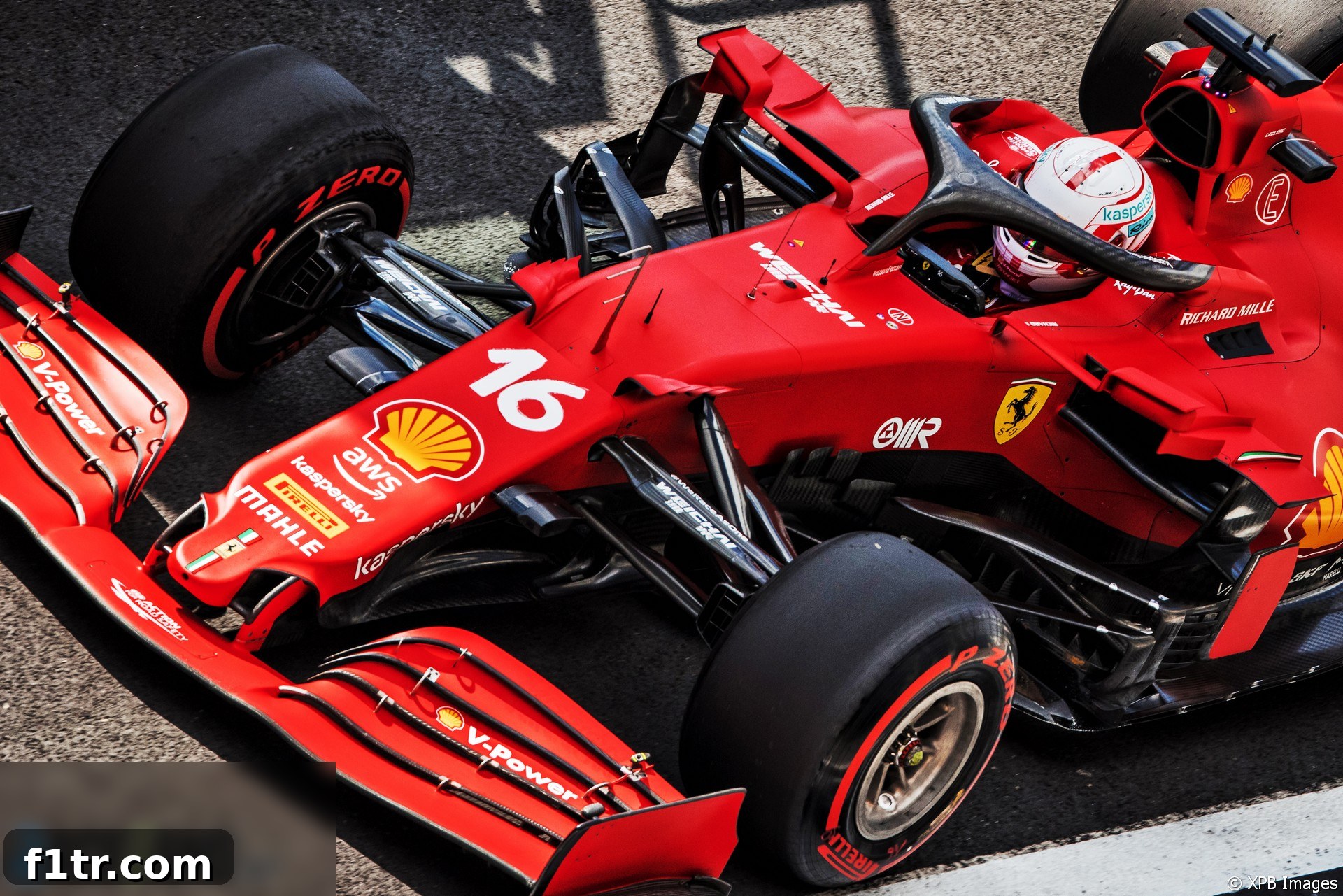
Ferrari’s Early Promise: Leclerc Downplays Pace Amidst Strong Performance
Advert | Become a Supporter & go ad-free
Charles Leclerc emerged as a standout performer during Friday’s practice sessions at Istanbul Park, clocking the second-fastest time overall. His impressive lap, dipping below 1 minute 24 seconds, placed him alongside Lewis Hamilton as the only two drivers to achieve this feat, immediately sparking speculation about Ferrari’s potential for the weekend. Despite the strong showing, Leclerc maintained a remarkably pragmatic and cautious stance, emphasizing that the early pace should not lead to overconfidence.
“It’s been looking good, so everything looks positive for now,” Leclerc remarked, acknowledging the team’s solid start. However, he quickly added, “But again, it’s only Friday.” This common refrain among Formula 1 drivers underscores the preliminary nature of practice sessions, where teams often run varied fuel loads, engine modes, and setup configurations that do not necessarily reflect their true qualifying or race pace. Leclerc’s focus remained squarely on the meticulous work ahead. “So for now I want to keep my head down, keep working as hard as we can to try and fine-tune the car to have a perfect quality tomorrow.” This dedication highlights the iterative process of car development and setup optimization crucial for success in Formula 1.
One notable aspect of Leclerc’s performance was his reported comfort with the car’s balance, a sentiment not shared by many of his competitors who struggled to find an optimal setup during the afternoon session. Istanbul Park is known for its challenging high-speed corners, particularly Turn 8, which can severely test a car’s aerodynamic stability and driver confidence. “I feel quite happy with that whenever the rear is moving like that, I am quite at ease with it and I like to play with the rear of the car to rotate the car, and it seems to work pretty good for now,” Leclerc explained. This ability to extract performance even when the car is on the edge is a hallmark of elite drivers, suggesting a strong synergy between Leclerc’s driving style and the Ferrari SF21’s characteristics on the day.
While acknowledging the car’s inherent competitiveness, Leclerc indicated that significant changes might not be necessary for outright pace. “I mean, we are very competitive, so I wouldn’t change that much on that side.” However, he identified an area for improvement specifically for the longer runs. “But I think on the race run, we still have a bit of work to do.” This distinction between qualifying pace and race pace is critical; a car that is quick over a single lap may struggle with tyre degradation or fuel efficiency over a full race distance. Ferrari will undoubtedly dedicate their evening to analyzing telemetry and strategizing for Sunday’s Grand Prix, aiming to close this gap.
Leclerc further tempered expectations by suggesting that top teams, likely referring to Mercedes and Red Bull, might not have fully unleashed their potential. “We shouldn’t get carried away because I feel like the top teams have more to show,” he added. This perspective is a seasoned one, recognizing that leading teams often hold back performance on Friday, only revealing their true speed in qualifying and the race. For Ferrari, a team steadily building towards championship contention, a cautious yet optimistic approach appears to be the order of the day as they aim to maximize their opportunities at the Turkish Grand Prix.
Alonso’s Decade-Long Return to Istanbul Park: A Nostalgic and Grippy Experience
Fernando Alonso, the two-time world champion, made his return to the Istanbul Park circuit after a decade-long absence, and his initial impressions were overwhelmingly positive. The notoriously slippery track surface that characterized the 2020 Turkish Grand Prix, prior to Alonso’s Formula 1 comeback, was a distant memory thanks to significant resurfacing and pressure-washing efforts. These measures, undertaken to improve grip levels and enhance the racing experience, clearly paid dividends.
“I think it was as I remember in the past,” Alonso stated, expressing his contentment with the track conditions. The circuit, with its unique layout and challenging corners, once again felt familiar to the Spaniard, allowing him to quickly get into a rhythm with his Alpine A521. This contrasts sharply with the feedback from drivers in 2020, who likened the surface to “ice” due to its low-grip nature. Alonso’s relief was palpable: “So I’m happy that I was not here last year because apparently it was very different and the lap time is very different as well. But today was a much more normal feeling.”
The transformation of the track surface is a testament to the circuit organizers’ efforts to rectify the issues that plagued the previous event. Improved grip allows drivers to push harder, explore the limits of their machinery, and provides a more predictable and enjoyable driving experience. For a veteran like Alonso, whose driving style thrives on precise car feedback, a “normal” feeling track is crucial for maximizing performance. His positive feedback bodes well not only for his own performance but also for the overall quality of racing expected over the weekend, promising a more traditional and competitive Turkish Grand Prix.
Ricciardo’s Tyre Conundrum: Minimal Compound Differences and McLaren’s Outlook
Daniel Ricciardo, the McLaren driver, voiced a degree of surprise regarding the performance characteristics of the Pirelli tyres brought to Istanbul Park for the Grand Prix weekend. Specifically, he noted an unexpected lack of significant pace difference between the various tyre compounds, particularly the softer options, which are typically expected to yield much quicker lap times.
“The tyres, they’ve brought different compounds here this year, a step softer, and there wasn’t a whole lot of difference between the three we felt, at least today,” Ricciardo commented. This observation is crucial for race strategy, as a clear hierarchy in tyre performance usually dictates how teams approach qualifying and the race. If the softer compounds do not offer a substantial advantage in outright speed, teams might be inclined to lean towards more durable compounds for longer stints, potentially simplifying strategy or introducing new variables.
Ricciardo elaborated on his initial thoughts: “So that was maybe a bit of a surprise, I thought the soft would have been miles quicker, I don’t think that was the case. What that means for tomorrow, I’m not sure. So we’ll do our homework tonight.” The lack of a clear performance delta could stem from various factors, including the track surface itself, ambient temperatures, or how each compound interacts with the specific characteristics of the Istanbul Park layout. For McLaren, understanding these nuances will be vital in optimizing their car setup and developing a robust race strategy. The engineering team will undoubtedly delve deep into the data to unravel this puzzle and predict tyre behavior for qualifying and Sunday’s main event.
Despite setting only the 14th quickest time in practice, Ricciardo remained remarkably unconcerned about his position on the timing sheets. His relaxed demeanor reflects a confidence in McLaren’s ability to extract performance when it truly counts. “I didn’t put the lap together but I’m actually pretty relaxed,” said Ricciardo. This suggests that his practice runs might have focused more on gathering data or evaluating specific setup changes rather than chasing outright lap times. “I think where we know where we are, I think we’re definitely… I wouldn’t say we’re there but we’re thereabouts. A bit of fine-tuning tonight.” This optimism indicates that McLaren believes they have a strong baseline and that with targeted adjustments overnight, they can climb up the order. The competitive nature of the midfield often means that even minor improvements can yield significant gains, and Ricciardo is clearly focused on achieving that for qualifying and the race.
Advert | Become a RaceFans supporter andgo ad-free
Social Media Reactions & Notable Incidents
Formula 1 weekends are not just about the on-track action; social media provides a vibrant platform for real-time reactions, driver insights, and team updates. Friday’s practice sessions at Istanbul Park generated several notable posts and discussions, reflecting both the usual competitive drama and some specific incidents.
No concerns for @AlpineF1Team after @OconEsteban got stuck on the pole position spot while trying to perform a practice start after practice today, says executive director Marcin Budkowski.#F1 #TurkishGP pic.twitter.com/jZX7G2g6RG
— RaceFans (@racefansdotnet) October 8, 2021
One such incident involved Esteban Ocon of Alpine, who experienced a minor hiccup during a practice start after the official sessions concluded. The Alpine F1 Team executive director, Marcin Budkowski, quickly allayed any concerns, confirming that the team was not worried about Ocon getting momentarily stuck on the pole position spot. Practice starts are a crucial part of a team’s preparation, allowing drivers to simulate race conditions and ensure optimal clutch engagement and power delivery. Minor issues like this are often part of the testing process and rarely indicative of deeper problems.
Practically stopping on track towards the end of a lap in order to get a gap for a clean lap is utterly ridiculous, not to mention dangerous. What is next? Placing a towel in the morning for a reserved space?
— Mathias Brunner (@Mathiasbrunner6) October 8, 2021
Another point of contention, frequently debated among fans and pundits, arose from Mathias Brunner’s tweet criticizing drivers for slowing down significantly on track to create a gap for a clean flying lap. This practice, while common in modern F1 qualifying and practice sessions, has safety implications and often leads to congestion and frustration. Brunner’s strong remarks highlight the ongoing discussion about balancing competitive advantage with safety and sportsmanship. Stewards often monitor such behavior closely, and penalties can be issued if a driver is deemed to be driving unnecessarily slowly or impeding others. The challenge for the FIA is to find a solution that maintains the integrity of competition while ensuring driver safety and fair play.
For more insights and to stay connected with the F1 community, explore the official F1 accounts listed in the F1 Twitter Directory.
Formula 1 and Motorsport: Beyond the Track News
Beyond the immediate action of the Turkish Grand Prix, the world of motorsport continues to evolve with significant developments impacting the future of Formula 1 and junior categories. Here’s a round-up of other pertinent news and interesting links:
Domenicali says F1 is talking to Turkey about long-term deal (Times of India)
Stefano Domenicali, CEO of Formula 1, revealed that discussions are underway for a long-term deal to keep the Turkish Grand Prix on the F1 calendar. This news is a positive sign for fans of the challenging Istanbul Park circuit, which has seen its presence on the calendar fluctuate. Domenicali emphasized that it’s “a matter of having the right mix” and “aligning strategic goals,” indicating that any long-term agreement would need to serve both F1’s global expansion ambitions and Turkey’s logistical and commercial interests. Such negotiations are critical as F1 looks to solidify its calendar with a mix of historic and new venues, ensuring financial viability and an exciting global footprint.
Euroformula Open prepares for technical upgrade of its car and tyres, to be introduced in 2023 (Euroformula Open)
In the realm of junior motorsport, the Euroformula Open championship is set to undergo a significant technical upgrade in 2023. This will include an updated chassis and body kit for the lightweight Dallara 320, along with new 17-inch tyres supplied by Michelin. These technical evolutions are vital for junior categories, ensuring they remain relevant and provide a challenging platform for aspiring Formula 1 drivers. Modernizing the cars and tyre specifications helps bridge the gap to higher series, preparing young talents for the complex machinery they will encounter on their path to the pinnacle of motorsport. This commitment to development underscores the importance of feeder series in nurturing future F1 stars.
He’s already F2 and F3’s youngest ever winner but Pourchaire is only just getting started (Formula 2)
Théo Pourchaire continues to impress in the Formula 2 championship, having already established himself as the youngest ever winner in both F2 and F3. Despite a fractured wrist sustained earlier in the season, speculation about his future move into F1 remains strong. Frédéric Vasseur, the Alfa Romeo team principal, has notably refused to rule out a promotion for Pourchaire, hailing him as “one of the best” talents for the future. This kind of endorsement from an F1 team boss is a significant indicator of Pourchaire’s potential. His trajectory highlights the competitive nature of the F1 talent pipeline, where young drivers must consistently deliver exceptional performances to capture the attention of top-tier teams and secure a coveted spot in Formula 1.
We always endeavour to credit original sources. If you have a tip for a link relating to single-seater motorsport to feature in the next RaceFans round-up please send it in via the contact form.
Advert | Become a RaceFans supporter andgo ad-free
Community Voice: The Realities of F1’s Grueling Calendar
The relentless expansion of the Formula 1 calendar has been a topic of intense debate, particularly concerning the welfare of the dedicated team personnel who make each race weekend possible. A thought-provoking comment from Craig Johnston offered a stark reality check, challenging the often-rosy perspectives presented by team principals on the viability of a 23-race schedule for 2022.
Let me give you the real information. There are no days off between races at home between events unless a single event. How do you think we can travel from country to country say a back to back or triple header and fly home in between?
The managers and bosses arrive at a track on a Thursday they then leave Sunday night on the private jets. The team workers on the other hand arrive at a track to set up from Mon/Tues then on a Sunday-post race spend an extra eight hours packing the equipment to be flown to the next event. The staff then fly on the Monday to the next country to do it all over again.
When would staff get time off, for example, between Brazil to Mexico to Qatar? Each flight is between 10-14 hours, not to mention time zones to then start again. A lot of the comments on this are made by people without knowledge of the inner workings.
For those saying get another job, how about when you have worked 15 years in the industry and these new schedules are becoming the norm. The staff were told they would never do a triple header again but was required the first year of Covid, now its the norm.
The families and children at home don’t get to see their parents due to them needing to do as told by the bosses. Rotation of staff can only include a small number of personnel and that doesn’t work for all teams. We are pawns in a game of money-making for an elite few.
Craig Johnston
Johnston’s powerful account sheds light on the immense personal toll of the current F1 calendar. He vividly contrasts the experiences of team management, who often enjoy a more flexible travel schedule, with the grueling reality faced by the operational crew. These dedicated individuals arrive at circuits early in the week for setup and often stay late on Sunday to pack up, embarking on long, often intercontinental flights immediately after. The concept of “days off” between back-to-back or triple-header events becomes almost mythical, with travel and preparation consuming any potential downtime. This continuous cycle, exacerbated by significant time zone changes, leaves little to no room for personal life or quality time with family.
The comment also critically addresses the dismissive attitude of “get another job,” highlighting the significant career investment many crew members have made in an industry they love, only to see working conditions deteriorate. Johnston points out the broken promises regarding triple-headers, initially introduced out of necessity during the COVID-19 pandemic but now becoming a regular feature. He argues that staff rotation, while a partial solution, is not feasible for all personnel or teams, leaving many feeling like “pawns in a game of money-making for an elite few.” This perspective is crucial for understanding the human cost behind the glamorous facade of Formula 1 and calls for a more sustainable and humane approach to scheduling, ensuring the well-being of every individual contributing to the sport’s success.
Happy Birthday!
We extend our warmest birthday wishes to Toby and Jean! May your day be filled with joy and celebration.
If you’d like a birthday shout-out in our future round-ups, please let us know when yours is via the contact form or by adding your name to our list here.
On This Day in Motorsport History: The 1981 Indianapolis 500 Controversy
- Today, 40 years ago, a significant chapter in motorsport history was finally closed as Bobby Unser was officially declared the winner of the 1981 Indianapolis 500. This highly contentious decision came an astonishing 138 days after the race was run in May, following a protracted dispute that captivated the racing world.
The controversy began immediately after the checkered flag, when Unser, who had crossed the finish line first, was handed a one-lap penalty for illegally passing cars under a caution period. This penalty initially elevated Mario Andretti to what would have been his second Indianapolis 500 victory, igniting celebrations and widespread media coverage of his apparent triumph. However, Unser’s team swiftly launched an appeal, arguing the penalty was unjust and based on a misinterpretation of the rules.
The subsequent legal and administrative battle stretched for months, with hearings, deliberations, and mounting anticipation. The racing community was deeply divided, with strong opinions on both sides regarding the validity of the penalty and the interpretation of the rules governing caution periods. The lengthy delay in confirming the official winner underscored the complexity of motorsport regulations and the profound impact such decisions have on drivers’ careers and historical records. Ultimately, after extensive review, the initial one-lap penalty against Unser was overturned, reinstating him as the rightful victor of the 1981 race. This reversal marked a dramatic conclusion to one of the most memorable and drawn-out controversies in the history of the Indianapolis 500, solidifying Unser’s place in the record books and serving as a testament to the unpredictable nature of top-tier motorsport.