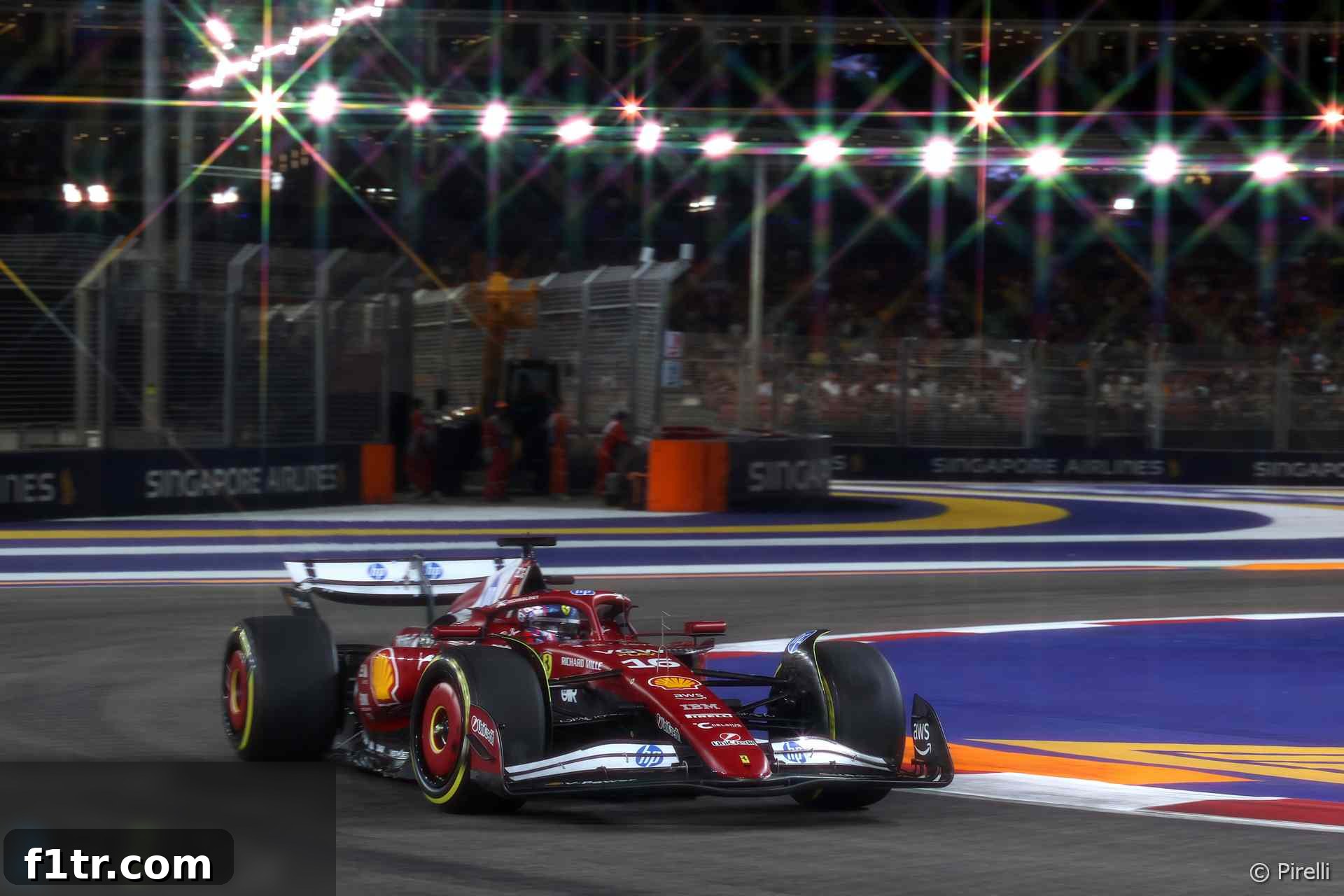
Ferrari Slapped with €10,000 Fine After Pit Lane Collision Between Leclerc and Norris
In a recent development that underscores the relentless scrutiny on safety within Formula 1, Ferrari has been dealt a significant €10,000 fine. The penalty was issued by the race stewards following an unfortunate pit lane collision between their driver, Charles Leclerc, and McLaren’s Lando Norris during the intense second practice session of a Grand Prix weekend. This incident, occurring in one of the sport’s most critical and high-risk areas, has brought the focus back to the stringent safety protocols governing team operations in the pit lane.
The Incident: A Moment of Misjudgment in the Fast Lane
The collision unfolded in the fast lane of the pits, mere moments after race control announced the resumption of the session following a red flag interruption. Such moments are often fraught with heightened activity as teams scramble to get their drivers back on track to maximize valuable practice time. McLaren had just released Lando Norris from his garage, sending him into the fast lane, a designated area where cars are permitted to move at speed within the pit complex. However, Ferrari, whose pit box is strategically positioned closer to the pit exit, simultaneously waved Charles Leclerc out of his garage. This simultaneous release, compounded by a critical oversight, resulted in Leclerc’s car making direct contact with Norris’s McLaren.
The immediate aftermath saw Leclerc, despite the contact, able to continue his run. For Norris and McLaren, however, the situation was more disruptive. His car had to be swiftly pulled back into the garage for immediate repairs. The primary damage sustained was to the front wing of Norris’s McLaren, a component vital for aerodynamic performance and safety. The McLaren mechanics worked efficiently under pressure, eventually managing to repair the damage and send Norris back out onto the track, albeit with valuable track time lost – a significant setback in any practice session.
Stewards’ Verdict: Beyond a Standard Unsafe Release
The race stewards meticulously reviewed the incident, delving into the precise sequence of events and the actions of the personnel involved. Their findings indicated that this was not merely a routine case of an unsafe car release, but an incident warranting a “more severe penalty” compared to similar precedents. The critical factor identified was a clear lapse in judgment by the Ferrari team member responsible for instructing Leclerc’s release.
According to the stewards’ official report, “After a red flag period, several cars exited their garages. Car 16 [Leclerc] was initially instructed by a team member to leave his pit box. At that moment however, it was overlooked that car four [Norris] was already passing in the fast lane, approaching the Ferrari pit box and directly into the path of Leclerc. The team member, who was responsible for the safe conduct of releasing car 16, misjudged the situation and gave unclear instructions to Leclerc, who could not see Norris’s car. As a result, both cars collided in the fast lane.” This detailed account highlights the direct human error that led to the incident, placing the onus firmly on the team’s operational procedures.
The stewards emphasized that the Ferrari team member failed to realize Norris’s car was drawing alongside, directly in the path of Leclerc, as they signaled their driver to exit. This oversight, occurring in a high-traffic area during a critical phase of practice, was deemed unacceptable. The pit lane is a confined space where precision, vigilance, and clear communication are paramount, and any momentary lapse can have significant consequences, as evidenced by this collision.
FIA Regulations and the Imperative of Pit Lane Safety
The FIA (Fédération Internationale de l’Automobile) maintains comprehensive guidelines for racing and penalty points, explicitly addressing incidents like unsafe car releases. These regulations are meticulously crafted to ensure the highest standards of safety across all aspects of Formula 1. The FIA penalty guidelines clearly state that teams found responsible for an ‘unsafe release’ during practice sessions should normally be subject to a financial penalty.
However, in this particular instance, the stewards felt the circumstances warranted a stiffer sanction. They noted, “Having noted precedents for this type of breach, the stewards are of the view that this breach warrants a more severe penalty than previously applied hence the penalty above is imposed.” This decision reflects the stewards’ determination to uphold the integrity of safety protocols and send a clear message that shortcuts or lapses in judgment in the pit lane will not be tolerated, especially when they lead to actual collisions and damage.
Pit lane safety is a cornerstone of Formula 1 regulations. The intricate ballet of cars entering and exiting, mechanics working at lightning speed, and strategic decisions being made in split seconds means that every single person, from the driver to the pit crew, must operate with flawless precision and an unwavering focus on safety. Incidents like the one involving Leclerc and Norris serve as stark reminders of the inherent dangers and the necessity for rigorous adherence to protocols, even during practice sessions which, while less pressurized than a race, are equally critical for car development and driver preparation.
Implications for Teams, Drivers, and Future Safety Measures
The €10,000 fine, while a financial sting, also carries a significant reputational cost for Ferrari. Such incidents prompt internal reviews of team procedures, communication systems, and training protocols for pit crew members responsible for car release. In a sport where margins are incredibly fine, any procedural error can have far-reaching consequences, not just in terms of penalties but also in undermining team confidence and efficiency.
For the drivers, Charles Leclerc and Lando Norris, the incident was certainly unsettling. Leclerc, having been waved out, was reliant on his team’s judgment and, as the stewards noted, “could not see Norris’s car.” This places drivers in a vulnerable position, underscoring their absolute dependence on clear, accurate instructions from their pit wall. Norris, on the other hand, experienced a disrupted practice session, losing crucial track time that could have been used for setup adjustments, tire evaluations, or race simulation runs. In a highly competitive field, even a few lost minutes can significantly impact a driver’s weekend performance, potentially affecting qualifying and race strategy.
Beyond the immediate consequences, this incident contributes to the ongoing evolution of safety measures in Formula 1. The FIA and teams are constantly striving to minimize risks, especially in dynamic environments like the pit lane. Every collision, near-miss, or procedural error is meticulously analyzed to identify areas for improvement, whether through technological aids, stricter regulations, or enhanced training for personnel. The stewards’ decision to impose a “more severe” penalty sets a precedent, reinforcing the message that vigilance and faultless execution are non-negotiable standards in the pursuit of absolute safety in motorsport.
Conclusion: A Reminder of Precision and Vigilance in F1
The €10,000 fine levied against Ferrari for the pit lane collision between Charles Leclerc and Lando Norris is more than just a monetary penalty; it is a powerful reminder of the meticulous precision and unwavering vigilance required at every level of Formula 1. From the drivers pushing the limits on track to the pit crew orchestrating rapid tire changes and car releases, every action carries immense weight and potential consequences. This incident serves as a crucial lesson for all teams: while speed and performance are paramount, they must never come at the expense of safety. The commitment to maintaining a secure racing environment, particularly in the high-pressure confines of the pit lane, remains an enduring cornerstone of Formula 1.