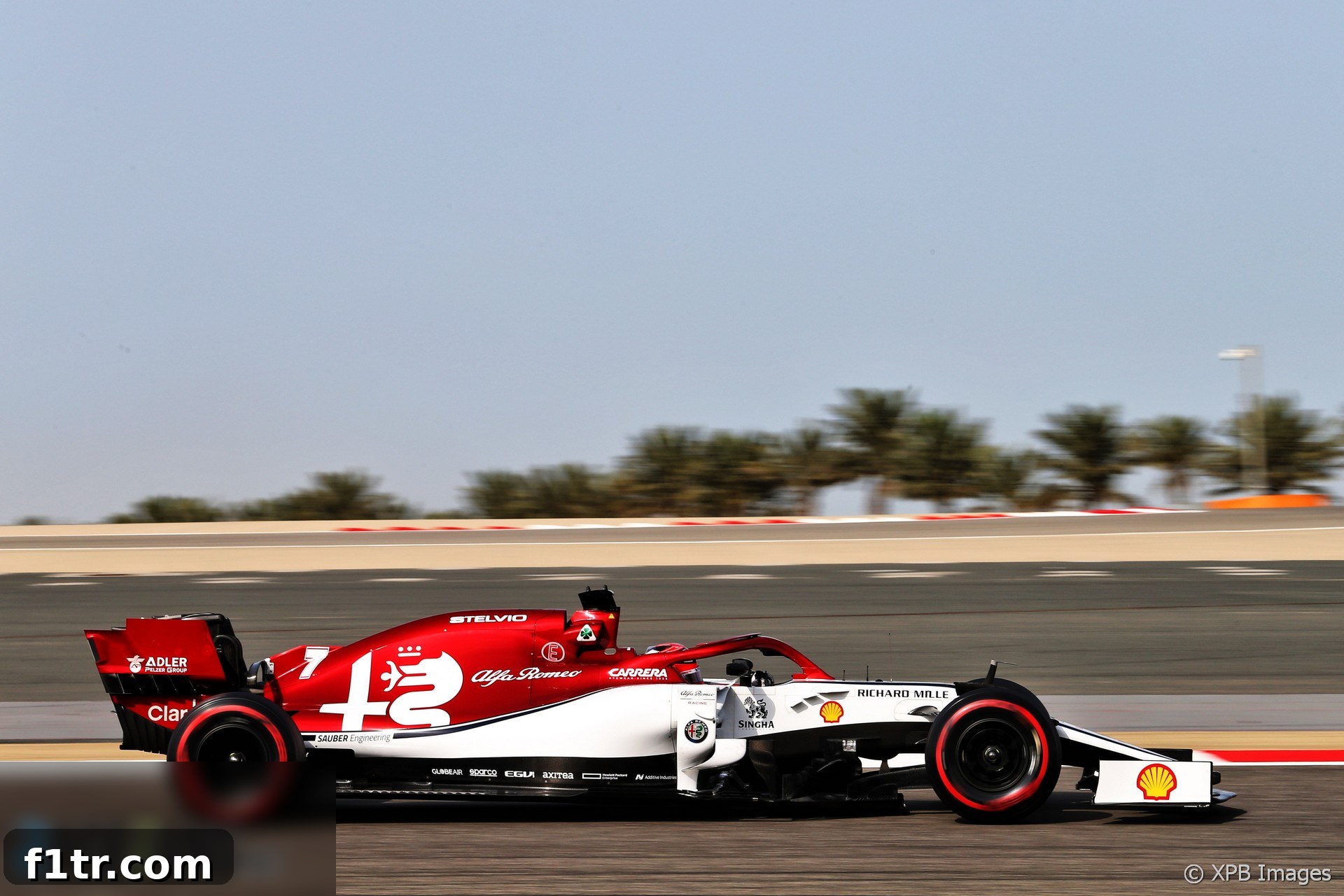
In the high-octane world of Formula 1, where technological advancements often redefine the sport, drivers are uniquely positioned to offer insights into the subtle yet significant shifts in machinery. Few possess a perspective as seasoned and unvarnished as Kimi Raikkonen, the enigmatic “Iceman” whose career has spanned multiple eras of Formula 1 engine regulations. Recently, Raikkonen shared a compelling observation, stating that the current V6 hybrid turbo power units, despite their intricate design, now feel remarkably similar to drive compared to the previous generation of V8 naturally aspirated cars.
This statement from a driver of Raikkonen’s caliber carries significant weight. Having competed extensively with both engine types, his assessment offers a rare glimpse into the cockpit experience that belies the massive technical chasm between the two power unit philosophies. While the roar of the V8s and the complex hum of the V6 hybrids represent distinct auditory and engineering masterpieces, Raikkonen’s focus remains squarely on the driving sensation itself – a testament to the continuous evolution and refinement within Formula 1.
The Iceman’s Enduring Perspective on Formula 1 Evolution
Kimi Raikkonen, a veteran of over 300 Grand Prix starts and a World Champion, is renowned for his straightforward approach to racing and his unparalleled ability to extract performance from any car. His tenure in Formula 1 has seen a multitude of rule changes, chassis evolutions, and, most notably, a fundamental shift in engine philosophy. His career began in an era dominated by V10 engines, transitioned through the V8 era, and most recently navigated the complexities of the V6 hybrid turbos. This extensive experience makes him an authoritative voice on the nuances of driving different generations of F1 machinery.
Raikkonen’s calm demeanor and direct communication style mean that his observations are often devoid of hyperbole. When he speaks about the “driving aspect,” he refers to the direct sensory feedback, the throttle response, the power delivery characteristics, and the overall handling balance that a driver experiences. His recent comments highlight how much the modern V6 units have matured, reaching a point where their on-track behavior, from a driver’s perspective, mirrors the predictable and well-understood traits of their V8 predecessors.
From Roaring V8s to Complex Hybrids: A Pivotal Shift
The V8 engine era, which ran from 2006 to 2013, is often remembered fondly by fans for its high-revving, naturally aspirated engines that produced a distinctive, piercing shriek. These 2.4-liter units were limited to 18,000 RPM (later reduced to 15,000 RPM) and delivered power in a relatively linear fashion. While Kinetic Energy Recovery Systems (KERS) were introduced in 2009, adding a layer of energy management, the fundamental power delivery remained largely mechanical and predictable for drivers.
Drivers appreciated the V8s for their immediate throttle response and the purity of their power delivery. The engines were loud, visceral, and provided a direct connection between the driver’s foot and the car’s acceleration. Teams had years to refine these power units, optimizing every aspect of their performance and integration into the chassis. This extended period of stability in engine regulations allowed for a deep understanding and mastery of the technology, resulting in highly refined and reliable powerplants by the end of their tenure in 2013.
The Challenging Debut of V6 Hybrid Turbos in 2014
The introduction of the V6 hybrid turbo regulations in 2014 marked a seismic shift in Formula 1. These new 1.6-liter turbocharged V6 engines, combined with sophisticated energy recovery systems (ERS) comprising the Motor Generator Unit-Heat (MGU-H) and Motor Generator Unit-Kinetic (MGU-K), were a radical departure. The aim was to make Formula 1 more relevant to road car technology, promote fuel efficiency, and encourage innovation in sustainable high-performance powertrains.
Raikkonen, who had just returned to Ferrari in 2014 after a two-year stint away from the sport, found himself at the forefront of this new era. He vividly recalls the initial difficulties: “I think it was a big difference when we swapped to these regulations from 2013 to ’14 because everything was new and obviously then everything works differently. Plus also they are very complicated cars now.” The initial V6 hybrid units were plagued by issues relating to complex power unit integration, turbo lag, and intricate energy management strategies. Driveability was a significant concern for all teams, as engineers grappled with harmonizing the internal combustion engine (ICE) with the MGU-H and MGU-K to deliver smooth, consistent power.
Ferrari, in particular, faced considerable struggles during this transitional period. Raikkonen frankly admits, “I think, at least in Ferrari, [at that time] we were far from where we finished last year. They were pretty poor in many areas, they were for sure far away [from] where it should have been.” Issues with energy recovery, torque delivery, and turbo response meant that the cars were not only difficult to drive at the limit but also inconsistent in their behavior. This stark contrast to the highly refined V8s, which had benefited from years of development, made the 2014 season a steep learning curve for many, especially those like Raikkonen who had a fresh memory of the older power units.
The challenges weren’t just about raw power; they were about the seamless integration of all components. “So for sure things didn’t work very well on some of the engine side and pick-ups and stuff like that. It made it pretty poor compared [to] what we had in ’13 because those rules had been for ages so you are a hundred percent in the right areas and everything,” Raikkonen explained. The initial driveability was “completely different,” demanding new driving techniques and a high degree of patience from the drivers as teams worked tirelessly to iron out the creases.
Mastering the Complexity: Modern V6 Hybrids and Seamless Driveability
Fast forward several years, and Raikkonen’s perspective has dramatically shifted. The continuous development cycles, vast investments in research and development, and the relentless pursuit of perfection by engine manufacturers have transformed the V6 hybrid turbos into highly sophisticated and incredibly efficient power units. What began as a complex and sometimes temperamental system has evolved into a marvel of engineering, delivering immense power with remarkable efficiency and, crucially, enhanced driveability.
“Today when we go, at least what I remember, it’s no different, everything works very nicely. Most of the time at least. On that side the driving itself is no different anymore,” Raikkonen states, highlighting the significant progress. This improvement is a testament to the ingenuity of the engineers who have managed to mitigate issues like turbo lag, optimize energy deployment, and create a highly responsive power delivery system. The integration of the various components – the ICE, turbocharger, MGU-H, and MGU-K – is now incredibly sophisticated, allowing for smooth power curves and precise control that was unimaginable in 2014.
The ability to deliver power smoothly and predictably is paramount for Formula 1 drivers, enabling them to confidently push the limits of grip and extract maximum performance from the car. The modern V6 hybrids, with their advanced electronics and software, allow engineers to fine-tune power delivery characteristics to suit different tracks, conditions, and driver preferences. This level of refinement means that the driver’s focus can remain on braking points, cornering speeds, and race craft, rather than battling the intricacies of the engine’s power delivery.
Beyond the Sound: What Defines the Modern F1 Driving Experience
One aspect that continues to divide opinion is the sound of the V6 hybrid turbos. While the V8s offered a high-pitched scream that resonated with traditional Formula 1 fans, the V6 hybrids produce a lower, more subdued tone, albeit one that still signifies immense power. Raikkonen acknowledges this difference: “OK, the sound is different,” he concedes, a point often debated among enthusiasts and purists of the sport.
However, for the drivers inside the cockpit, the driving experience transcends mere auditory cues. It’s about the feel, the feedback, and the ability to control the car with precision. Raikkonen emphasizes this distinction: “but the driving itself, we do the same things, it’s not like you do something completely different.” This statement underscores that despite the underlying technological complexity, the fundamental tasks of a Formula 1 driver – throttle modulation, braking, steering, and anticipating the car’s behavior – remain unchanged. The art of driving at the absolute limit is constant, regardless of the engine’s specific configuration.
The evolution of the V6 hybrid power units has been a journey of overcoming initial skepticism and technical hurdles to achieve a level of performance and driveability that now commands respect. For drivers like Kimi Raikkonen, who can draw on a rich tapestry of experiences, the current state of these engines represents a triumph of engineering, allowing them to focus on the pure act of racing, much as they did in the seemingly simpler V8 era.
Kimi Raikkonen’s Legacy and the Future of F1 Power Units
Kimi Raikkonen’s candid assessment not only offers a valuable historical perspective but also provides insight into the current state of Formula 1 power unit technology. His observations affirm that while the external characteristics and underlying mechanics of F1 engines have drastically changed, the core sensation of driving a top-tier racing machine has converged back towards a familiar and refined experience for those behind the wheel. The initial complexities of the hybrid era have been largely tamed, enabling drivers to extract maximum performance with confidence.
As Formula 1 looks towards future engine regulations, potentially involving even greater electrification and sustainable fuels, Raikkonen’s journey through the V10, V8, and V6 hybrid eras serves as a powerful reminder of the sport’s incredible adaptability and its unwavering commitment to innovation. What matters most to a driver is not just the power, but how that power can be harnessed and delivered effectively to the tarmac. Kimi’s current perspective indicates that on this front, the modern F1 power unit has indeed come full circle, offering a driving experience that, from the cockpit, is as seamless and engaging as ever.
2019 F1 season
- Crying in the Melbourne car park at 2019 grand prix was my career low – Ocon
- McLaren Racing reports reduced £71 million loss in 2019
- Kvyat: Hockenheim podium last year was “my biggest achievement” so far
- How the FIA’s new encrypted fuel flow meter targets Ferrari’s new encrypted fuel flow meter targets Ferrari’s suspected ‘aliasing’ trick
- “He smashed my office door”: 23 must-see moments from ‘Drive to Survive’ season two
Browse all 2019 F1 season articles
Kimi Raikkonen