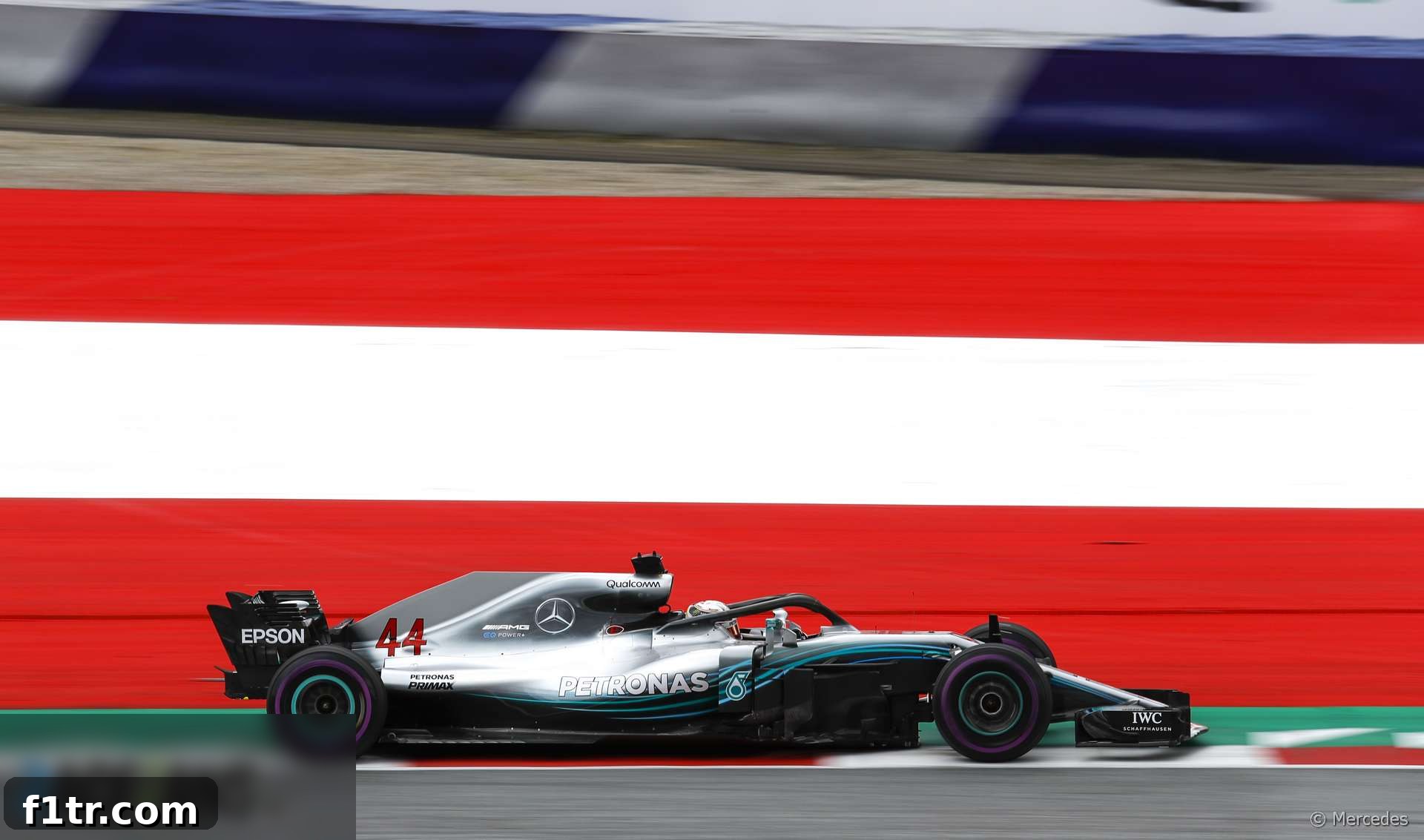
Mercedes F1’s Strategic Imperative: Capitalizing on Favorable Tracks and The Relentless Development Race
Mercedes-AMG Petronas F1 Team Principal Toto Wolff has underscored the critical importance for the team to consistently maximize its points tally, particularly at circuits that inherently complement the characteristics of their W09 challenger. This strategic focus comes sharply into view following a recent performance at the Circuit Gilles Villeneuve in Montreal, where the team, despite high expectations, unexpectedly found itself outmaneuvered by fierce rivals Ferrari.
Wolff openly acknowledged the Montreal Grand Prix as a significant setback, a stark reminder that even at venues historically strong for Mercedes, victory is never guaranteed without relentless performance and strategic precision. “You need to score points on the tracks where your car and drivers work well,” Wolff stated, highlighting the fundamental principle guiding their championship pursuit. “That’s why Montreal was a bit of a blow for us because we were expecting to build a cushion of points and weren’t able to do that.” This candid admission reflects the intense pressure and tight margins defining the top tier of Formula 1 racing, where every point is meticulously fought for and every strategic misstep can have profound championship implications.
Advert | Become a Supporter & go ad-free
The Relentless Development Race: A Key to Sustained Dominance
The modern era of Formula 1 is defined by an unceasing development race, where every team strives to introduce timely and effective upgrades to their cars throughout the season. Mercedes, acutely aware of this competitive landscape, is no stranger to this relentless pursuit of performance. Wolff emphasized how crucial it is to bring continuous innovation to the track, noting, “The development race is going to continue and you need to bring performance possibly to every race, if you can.” This philosophy underscores the dynamic nature of F1, where static performance quickly leads to being overtaken by ambitious competitors.
The experience at Montreal served as a harsh lesson. Wolff reflected on past successes, recalling, “Certainly you can see that Montreal was also ‘our track’ in the past and we weren’t able to win the race there because we lacked performance.” This moment of introspection reveals the unforgiving reality that historical strength does not guarantee future success. Their rivals, particularly Ferrari, had introduced significant engine upgrades, creating a deficit of “one or two tenths” – a margin that proved decisive in a sport where milliseconds separate triumph from disappointment. These marginal gains or losses are the essence of F1’s competitive ballet.
Strategic Upgrades and Renewed Optimism
In response to the competitive pressure, Mercedes proactively implemented its own set of critical upgrades. Following Montreal, the team rolled out significant engine enhancements and crucial chassis improvements at subsequent races, specifically mentioning the events at Le Castellet (Paul Ricard) and the upcoming Grand Prix. “And obviously in Le Castellet [Paul Ricard] and now, we’ve brought the engine upgrade, we’ve brought the chassis upgrade, and that has given us a little buffer again,” Wolff confirmed. This strategic deployment of enhancements aims not only to regain any lost ground but also to establish a fresh competitive advantage, providing the team with a much-needed performance “buffer” in a championship battle that promises to be exceptionally close.
The effectiveness of these upgrades is paramount for Mercedes’ championship aspirations. They are designed to extract greater performance from the W09, ensuring that the car remains at the vanguard of the grid. Each component, from aerodynamic tweaks to power unit optimizations, is meticulously engineered to contribute to overall lap time reduction and enhanced race pace. The team’s ability to bring these advancements to fruition consistently is a testament to their engineering prowess and their unwavering commitment to securing both the Drivers’ and Constructors’ titles.
Championship Picture: A Tightly Contested Battle
As the F1 season progresses, the championship standings paint a picture of intense rivalry and fluctuating fortunes. Lewis Hamilton, Mercedes’ leading driver, entered the current race weekend holding a valuable 14-point advantage over his closest competitor, Sebastian Vettel of Ferrari. While this lead provides a psychological edge, it is by no means insurmountable, particularly given the unpredictability and high stakes of Formula 1. Every race weekend presents an opportunity for either driver to seize momentum, making consistent performance and strategic race management absolutely vital for Hamilton to extend his lead and for Vettel to close the gap.
In the Constructors’ Championship, Mercedes also maintained a lead, standing 23 points ahead of Ferrari. This duel between two of F1’s most iconic teams underscores the importance of both drivers contributing to the team’s overall points tally. The Constructors’ title is not just about prestige; it also reflects the overall strength, reliability, and strategic depth of the entire team, from the engineers in the factory to the strategists on the pit wall. A strong performance from both cars is always the target for Mercedes, ensuring they consolidate their position at the top of the team standings.
Valtteri Bottas’s Unyielding Pursuit of Victory and the Element of Karma
Beyond the immediate championship battle for Lewis Hamilton, the spotlight also falls on Valtteri Bottas, the other half of the Mercedes driving duo. Despite starting today’s race from a coveted pole position, Bottas has, perhaps surprisingly, yet to secure his inaugural victory of the year. His season has been marked by a series of unfortunate events and near-misses, denying him the top step of the podium on multiple occasions where success seemed within reach. This narrative adds an intriguing layer to the Mercedes story, highlighting the personal battles fought within the broader team objectives.
Wolff spoke with empathy about Bottas’s challenging run, detailing several instances where victory eluded the Finnish driver through no fault of his own. “He had so much bad luck in Baku, he should have won the race. In China he could have won the race. And Le Castellet was a victim in lap one,” Wolff recounted. These incidents include the dramatic tire puncture in Baku while leading comfortably, the strategic nuances in China that saw him narrowly miss out, and the first-lap incident at Paul Ricard that severely compromised his race. Each of these moments represented a significant loss of potential points, points that, as Wolff noted, “He would have been very close to the lead of the championship.”
In a reflection of hope and philosophical outlook, Toto Wolff expressed a belief in the concept of “karma” when discussing Bottas’s fortunes. “I believe in karma and I think it’s going to go back towards Valtteri, the bad luck he has will eventually translate into good luck,” Wolff mused. This sentiment suggests an expectation that Bottas’s persistent effort and resilience will eventually be rewarded with the success he so keenly seeks. While the exact timing remains uncertain (“Whether it’s going to happen tomorrow or any time soon I don’t know but I’m sure it’s going to happen”), the underlying message is one of unwavering support and confidence in Bottas’s ability to turn his luck around and claim the victories he has proven capable of achieving.
The Importance of a Two-Car Strategy
For Mercedes, Bottas’s return to winning ways is not merely a matter of personal achievement but a vital component of their overall championship strategy. A strong two-car performance is fundamental to accumulating maximum points in the Constructors’ Championship and applying consistent pressure on Ferrari. Should Bottas start converting his pole positions and strong qualifying performances into race wins, it would significantly bolster Mercedes’ position, demonstrating the formidable strength and depth of their driver lineup and technical package. His successes would also relieve some pressure from Hamilton, allowing for a more diversified strategic approach in races.
The team has historically enjoyed great success at the Red Bull Ring, having won all four Austrian Grands Prix since the event returned to the calendar. However, Wolff was quick to caution against complacency, stating that such past achievements cannot be taken for granted. The competitive landscape of F1 demands continuous innovation and peak performance at every single race. The ongoing development of the W09, coupled with meticulous race preparation and execution, remains the key to maintaining their winning streak and navigating the remainder of the challenging F1 season.
Advert | Become a RaceFans supporter andgo ad-free
2018 F1 season
- F1 feared “death knell” for Drive to Survive after Ferrari and Mercedes snub
- McLaren staff told us we were “totally crazy” to take Honda engines in 2018 – Tost
- ‘It doesn’t matter if we start last’: How Red Bull’s junior team aided Honda’s leap forward
- Honda’s jet division helped F1 engineers solve power unit problem
- McLaren Racing losses rise after Honda split
Browse all 2018 F1 season articles