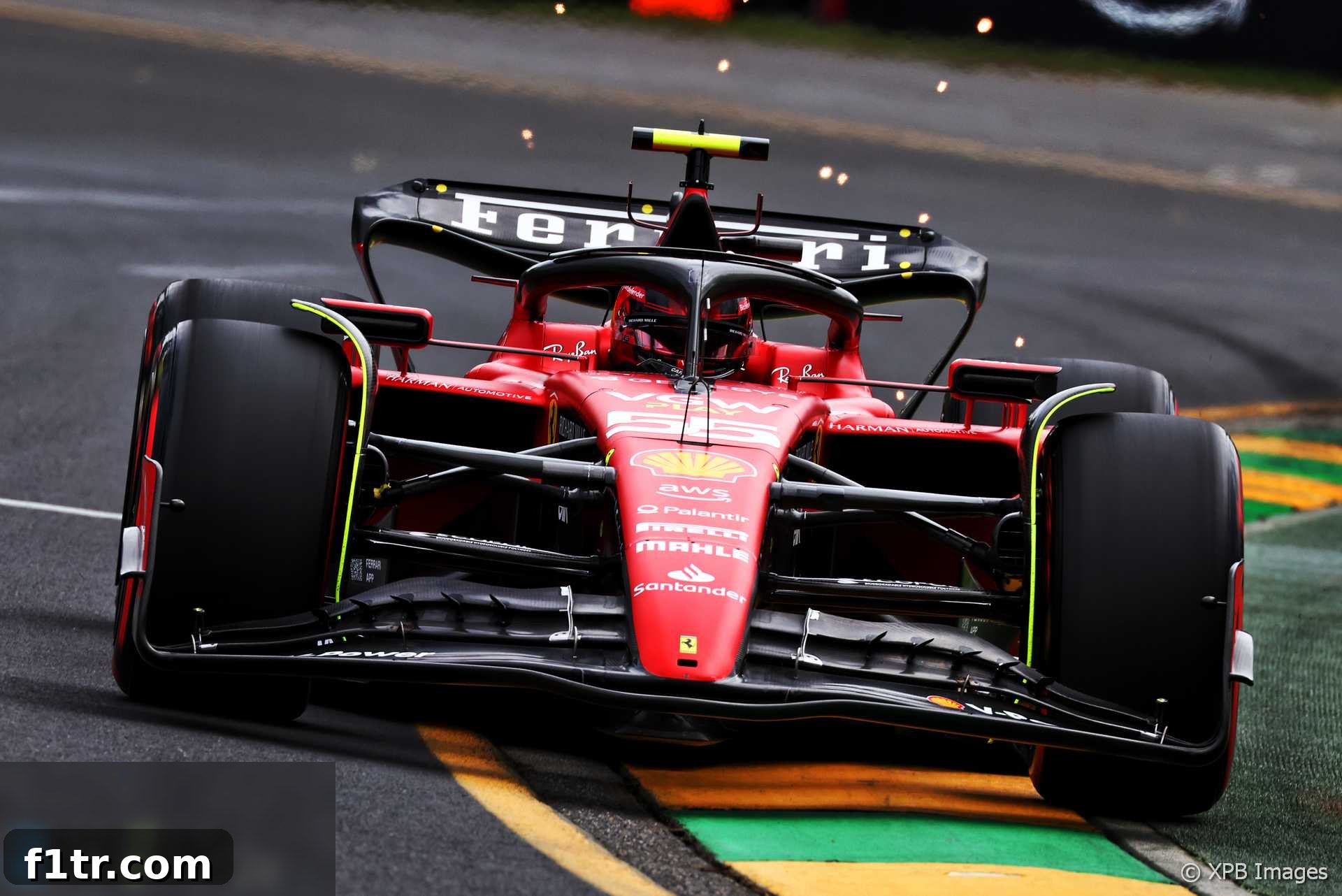
Ferrari Accelerates SF-23 Updates in Ambitious Push to Reclaim F1 Form
The iconic Scuderia Ferrari, a name synonymous with Formula 1 glory, finds itself navigating a challenging start to the 2023 season. Following a disappointing initial trio of races, the Maranello-based team is diligently working to introduce crucial upgrades for its SF-23 challenger ahead of schedule. This proactive strategy underscores Ferrari’s determination to bridge the performance gap to rivals and restore its position at the sharp end of the grid.
Having finished as runners-up to the dominant Red Bull Racing last year, expectations were high for Ferrari to mount another strong championship challenge. However, the reality of the early season has seen the team languishing in a distant fourth place in the constructors’ standings, almost 100 points adrift of the reigning champions. This stark contrast to their 2022 performance has necessitated an urgent response, and the team is pulling out all stops to accelerate its development timeline.
Strategic Direction: Evolving, Not Overhauling, the SF-23
Advert | Become a Supporter & go ad-free
While some rivals, notably Mercedes-AMG Petronas F1 Team, have indicated a significant overhaul of their W14 challenger after also struggling to match Red Bull’s pace, Ferrari’s team principal Frederic Vasseur has affirmed a different philosophy. Vasseur is resolute that Ferrari will persist with its original development direction for the SF-23, rather than embarking on a radical “B car” project. This approach is a strategic decision rooted in the complexities of modern Formula 1 regulations.
“It’s not a ‘B car’,” Vasseur clarified to media outlets, including RaceFans, emphasizing the team’s commitment. “We won’t come with something completely different. We will continue to update this one and try to update massively.” This statement reflects a pragmatic understanding of the current regulatory environment, particularly the stringent budget cap and aerodynamic testing restrictions. Developing an entirely new car mid-season is not only incredibly expensive but also severely hampered by limitations on wind tunnel time and computational fluid dynamics (CFD) simulations. Instead, Ferrari aims to extract the full potential from its existing package through a continuous flow of significant, yet targeted, updates.
The decision to evolve the SF-23 rather than rebuild it from scratch is a calculated gamble. It suggests confidence within the team that the fundamental architecture of their 2023 car has inherent potential waiting to be unlocked. The goal is to refine the SF-23’s aerodynamics, improve mechanical grip, and enhance its overall balance and consistency – areas where the car has notably struggled compared to its predecessor and its Red Bull counterpart. By focusing resources on targeted improvements, Ferrari hopes to achieve a more rapid and effective performance uplift without incurring the massive financial and developmental overhead of a completely new chassis.
Navigating the F1 Calendar: Update Schedule and Track Demands
The rollout of these critical updates is meticulously planned around the diverse characteristics of the upcoming Formula 1 circuits. The specific demands of each track dictate the type of aerodynamic packages teams can effectively introduce and evaluate. For instance, the high-speed layout of the Baku City Circuit, home to the Azerbaijan Grand Prix, typically necessitates a very low-downforce setup to maximize straight-line speed. This specialized requirement means that major, broadly applicable aerodynamic updates might not be optimally tested or beneficial in Baku.
Adding another layer of complexity, the Azerbaijan Grand Prix is scheduled as a sprint event. Sprint weekends offer considerably less practice time for teams – just a single practice session before qualifying for the sprint race. This compressed schedule limits the opportunity for teams to conduct extensive testing and gather sufficient data on brand-new components, making it a challenging venue for debuting significant car revisions. Consequently, Ferrari is strategically planning to introduce its major updates at subsequent races where track characteristics and weekend formats are more conducive to evaluating new performance parts.
Frederic Vasseur elaborated on this strategic timing: “We have a flow of updates. Some will come not at Baku, because at Baku we have the aero package for the level of downforce, [and] with the sprint races it’s not the easiest one.” He confirmed that the initial significant updates are slated for the rounds following Azerbaijan. “But from Miami, Imola, not Monaco but Barcelona, each race we will have an update on the car. We are sticking to the plan.” This phased approach allows Ferrari to tailor updates for specific circuit types, maximizing their impact and allowing for proper evaluation.
The unique demands of the Monaco Grand Prix, with its ultra-tight corners and high-downforce requirements, also necessitate a very specific car package. This means that while minor tweaks might be introduced, Monaco is generally not the ideal venue for launching comprehensive aerodynamic overhauls. Instead, Ferrari is eyeing events like the Miami Grand Prix and particularly the Emilia Romagna Grand Prix at Imola, where they intend to introduce updates originally earmarked for the Spanish Grand Prix in Barcelona. This accelerated timeline demonstrates the team’s urgency and dedication to bringing performance gains as quickly as possible.
Vasseur also highlighted the positive impact of recent adjustments: “We made some adjustment in terms of balance and the behaviour and it was much better in Melbourne and we’ll continue on this direction.” This suggests that the team is gaining a clearer understanding of the SF-23’s characteristics and how to optimize its setup. Building on these smaller, incremental improvements will be crucial as the larger aerodynamic packages arrive.
The Impact of F1’s Regulatory Landscape on Car Development
The modern era of Formula 1 is defined by strict financial and technical regulations designed to promote closer competition and sustainability. These rules, particularly the budget cap and aerodynamic testing restrictions (ATR), profoundly influence how teams develop their cars and respond to performance challenges. Vasseur openly acknowledged these constraints, explaining why radical car design changes mid-season are increasingly difficult and often counterproductive.
“With the restriction in the wind tunnel if you have to start from scratch, I don’t want to say that it makes no sense, but it is very difficult,” he explained. The ATR limits the number of wind tunnel runs and CFD hours a team can utilize over a given period. These limitations are inversely proportional to a team’s championship position – meaning successful teams get less testing time, while less successful teams get more, a system designed to help level the playing field. For Ferrari, currently fourth in the standings, this means they do have slightly more allocated time than Red Bull or even Mercedes, but still nowhere near enough to undertake a complete redesign efficiently.
The budget cap further compounds this challenge. Implemented to control escalating costs and ensure the financial viability of all ten teams, the cap places a ceiling on how much teams can spend on development, manufacturing, and operations. Launching an entirely new car concept (“B car”) would consume a significant portion of a team’s annual budget, potentially compromising development for the current and even subsequent seasons. This forces teams like Ferrari to be incredibly efficient and strategic with their spending, prioritizing high-impact updates that align with their existing car philosophy.
These regulatory realities underpin Ferrari’s strategy of continuous evolution. Instead of radical overhauls, the focus is on a structured, iterative approach to car development. Vasseur’s commitment to “speeding up” the planned update process means dedicating all available resources – engineering talent, design capacity, and manufacturing capabilities – to bring scheduled improvements to the track earlier. “We will speed up. We will put all the resources to speed up the process and the updates that were planned for Barcelona will come in Imola and we will have one or two races the update in advance. But you can’t change massively something in the course of the season.” This proactive acceleration, while challenging, is Ferrari’s best pathway to regain competitiveness under the current F1 framework.
Advert | Become a RaceFans supporter andgo ad-free
The Road Ahead: Ferrari’s Hopes for the 2023 F1 Season
The upcoming races will be crucial for Ferrari. The success of these accelerated updates will not only determine their short-term performance but also shape the narrative around their leadership and development capabilities. Fans and pundits alike will be watching closely to see if the SF-23 can transform into a consistent podium contender, capable of challenging Red Bull and fending off a resurgent Mercedes.
While a championship challenge might seem distant given Red Bull’s current form, significant performance gains could reignite Ferrari’s season, securing valuable points and boosting morale. The ultimate goal is to demonstrate progress, understand the car’s true potential, and lay a solid foundation for the 2024 season. Ferrari’s journey in 2023 is a testament to the relentless pursuit of performance in Formula 1, a high-stakes arena where strategic foresight, technical prowess, and unwavering determination are paramount.
2023 F1 season insights:
- FIA president cleared of alleged interference in two 2023 races
- First week viewing figures for new Drive to Survive season fall again
- Max who? Drive to Survive season six prefers its favourite faces
- RaceFans’ complete 2023 season review
- The F1 drivers who pulled off the 10 biggest charges through the field in 2023
Browse all 2023 F1 season articles