F1’s ‘B-Team’ Dilemma: Cyril Abiteboul Challenges the Rise of Component Sharing and its Impact on Competition
The competitive landscape of Formula 1 is constantly evolving, but few issues spark as much debate and contention as the rise of ‘B-teams’. This increasingly prominent model, where smaller teams leverage technical alliances and shared components with larger, established outfits, has become a focal point of discussion among team principals and fans alike. Renault’s managing director, Cyril Abiteboul, has been particularly vocal on the subject, expressing significant concerns that the current trend, exemplified by the surprising early-season performance of Toro Rosso, threatens the very essence of fair competition and the future accessibility of the sport for truly independent manufacturers.
Toro Rosso’s Performance: A Catalyst for Concern
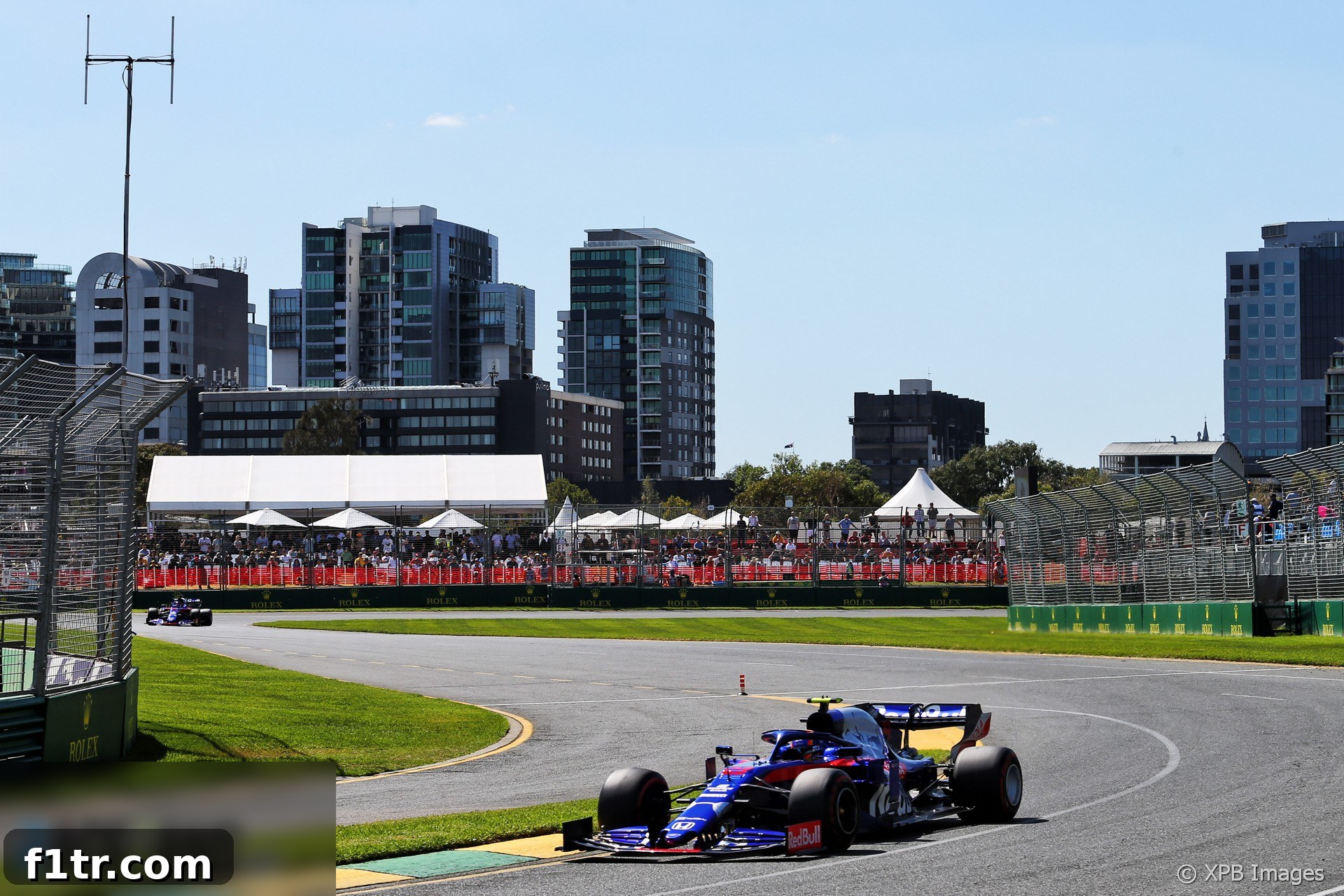
The alarm bells for Abiteboul rang loudly during the initial sessions of the 2019 Australian Grand Prix. Despite Renault’s substantial investment and aspirations, their quickest car found itself almost two-tenths of a second slower than the quickest Toro Rosso in first practice. This gap was not merely a matter of track conditions or driver skill; it highlighted a deeper structural issue that Abiteboul believes provides an unfair advantage. The performance disparity was particularly striking given Toro Rosso’s recent history, having navigated a period without a dedicated technical director, James Key, who departed the team the previous year.
Abiteboul openly questioned how Toro Rosso could achieve such a leap in performance under these circumstances. The answer, he posited, lies in the intricate relationship between Toro Rosso and its senior counterpart, Red Bull Racing. Both teams operate under the Red Bull umbrella, and critically, share a significant number of components and technical expertise from Red Bull Technology. Toro Rosso benefits directly from this arrangement, utilizing a blend of current and previous year’s specification Red Bull parts, including the power unit which they share. While such synergies are not entirely new to Formula 1, the extent and impact of this collaboration have now reached a critical threshold, prompting widespread concerns about the competitive balance and the definition of a true constructor in the sport.
Abiteboul’s Unambiguous Stance: A “Problem” for F1’s Future
Speaking to Sky Sports, Cyril Abiteboul unequivocally labelled the proliferation of ‘B-team’ arrangements as “a problem” for Formula 1. He underscored his point by reiterating Toro Rosso’s strong showing, suggesting they might even be the benchmark for Renault at the start of the season. His candid assessment laid bare the frustrations felt by teams striving for independent success and innovation within the championship.
“Just look at Toro Rosso, who in my opinion are likely to be the team to beat as far as we’re concerned for the start of the season given where we are,” Abiteboul stated. He then added a particularly poignant observation: “Toro Rosso had no technical director for most of last season. It’s very clear what went on. So we don’t even need a technical director to produce what is a very competitive car. For us that’s a problem.” This comment cuts to the heart of the matter, implying that the extensive sharing of intellectual property and physical components effectively bypasses the need for a fully independent, innovative technical department within the ‘B-team’ itself. Such a scenario, Abiteboul argued, fundamentally undermines the principle of Formula 1 as a constructors’ championship, where each team is expected to design and build its own car and intellectual property should originate primarily from within that team.
The ‘Haas Precedent’ and its Broadening Impact on the F1 Grid
The discussion around ‘B-teams’ cannot be had without acknowledging the significant and lasting impact of Haas F1 Team’s entry into the sport. Abiteboul explicitly referenced this, noting, “There was a before and after Haas that has created a precedent.” When Haas joined Formula 1 in 2016, they adopted a unique business model, purchasing as many non-listed parts as legally permissible from Ferrari, including engines, gearboxes, and a range of technical components. This strategic approach allowed them to hit the ground running with a competitive package relatively quickly and with a much smaller initial investment compared to traditional independent constructors who design and manufacture nearly everything in-house.
While the Haas model demonstrated a viable pathway for new entrants in terms of cost efficiency, it simultaneously raised profound questions about the spirit of the regulations and the long-term competitive health of the sport. For established independent constructors like Renault, McLaren, and Williams – teams that pride themselves on designing and manufacturing virtually every part of their car – this model presents a formidable challenge. They invest astronomical sums in research, development, and sophisticated infrastructure to innovate, only to find themselves potentially outpaced by teams that can cherry-pick proven, high-performance components from a top-tier outfit. This creates an uneven playing field, where the traditional definition of a ‘constructor’ becomes increasingly blurred, leading to concerns about the authenticity of competition.
Threat to Sporting Integrity and the Deterrence of New Manufacturers
The core of Abiteboul’s argument extends beyond immediate competitive concerns; it touches upon the long-term health and appeal of Formula 1 itself. He warned that if the sport fails to adequately restrict the opportunities for extensive component sharing and ‘B-teams’ under its new 2021 regulations, it risks deterring any new manufacturer teams from entering the prestigious championship. The logic is compelling: why would a major automotive manufacturer commit hundreds of millions, if not billions, of dollars to develop a full-fledged F1 program, including bespoke engines and chassis, if they cannot realistically expect to compete for wins without forming a subordinate alliance, which goes against the ethos of a true constructor?
“How does a manufacturer that’s currently not in Formula 1 that wants to join Formula 1, how is it they will seriously contemplate reaching Formula 1 if it’s not possible to win without a B-team?” Abiteboul mused. This rhetorical question highlights a critical dilemma for the sport’s governing bodies, the FIA and Liberty Media. Formula 1 thrives on innovation, technical prowess, and the allure of cutting-edge automotive engineering. If the path to success becomes increasingly reliant on piggybacking off existing major players, it fundamentally changes the value proposition for independent entries, stifles genuine innovation, and could lead to a less diverse and ultimately less exciting grid.
The Plight of Independent F1 Teams
The challenge is equally pressing for existing independent teams. For a team like Williams, with its rich heritage and engineering ethos, or McLaren, undergoing a significant rebuilding phase, or indeed Renault, striving to reclaim championship glory, the ‘B-team’ model represents a significant and potentially insurmountable hurdle. They are forced to compete against not just the top teams, but also their technically allied junior partners, who benefit from a symbiotic relationship that provides access to superior technology and expertise without the full burden of development costs. This puts immense pressure on their financial resources, development timelines, and ultimately, their ability to climb the championship standings and maintain their independence.
The Strategic Imperative for F1’s 2021 Regulations and Beyond
Abiteboul acknowledged that for the 2019 and 2020 seasons, the current ‘B-team’ arrangements were already in place and effectively unchangeable. However, he emphasized that the upcoming 2021 season presented a crucial opportunity for a paradigm shift. The introduction of comprehensive new regulations, including a budget cap and revised technical rules, was explicitly designed to create a more level playing field and encourage greater competition throughout the grid.
“For me that’s a strategic question we have to consider for the discussion for 2021. For ’19 and ’20 that’s gone now, we are gone with that type of set-up. But for 2021 I hope everyone realises how serious a question it is,” he urged. This call to action resonates with many stakeholders who believe Formula 1 needs to safeguard its integrity as a pure constructors’ championship. The debate extends to what exactly defines a ‘listed part’ – components that teams must design themselves – and how strictly these regulations should be enforced. Increasing the number of listed parts would compel teams to develop more of their own intellectual property and engineering solutions, thereby significantly reducing the scope for extensive component sharing and fostering genuine competition in design.
The fundamental question facing Formula 1’s management (Liberty Media) and the FIA is how to balance the critical objective of cost control, which partially drives the ‘B-team’ model, with the paramount desire to maintain a truly competitive, innovative, and fair environment. A tighter restriction on component sharing could lead to higher research and development costs for smaller teams, potentially pushing them out of the sport if not managed carefully alongside the budget cap. Conversely, allowing the current trend to continue unchecked risks alienating established independent constructors and discouraging promising new entries, ultimately diminishing the diversity and excitement of the F1 grid.
Conclusion: A Critical Juncture for Formula 1’s Identity
Cyril Abiteboul’s impassioned plea underscores a pivotal moment for Formula 1. The unexpected success and evolving performance of teams like Toro Rosso, while commendable for their on-track results, have reignited a crucial debate about the fairness and sustainability of the ‘B-team’ model. The perceived advantages gained through extensive technical partnerships, particularly the sharing of critical components and design philosophies, present a significant challenge to the traditional notion of independent constructors and the very spirit of competition.
As Formula 1 looks towards its future, guided by ambitious new regulations and a vision for a more competitive and financially stable sport, the dilemma of ‘B-teams’ remains at the forefront. The sport’s governing bodies must carefully navigate the fine line between allowing cost-saving collaborations – which can be vital for smaller teams – and preserving the integrity of competition and incentivizing genuine engineering innovation. A robust, transparent, and clearly enforced regulatory framework is essential to ensure that Formula 1 remains the undisputed pinnacle of motorsport engineering, a true test of a team’s independent capabilities, and continues to attract both established powerhouses and ambitious new entrants on a genuinely level playing field. Failure to address this strategic question with adequate foresight could irrevocably alter the landscape of grand prix racing, potentially diminishing its appeal and exclusivity as the ultimate constructor’s challenge.