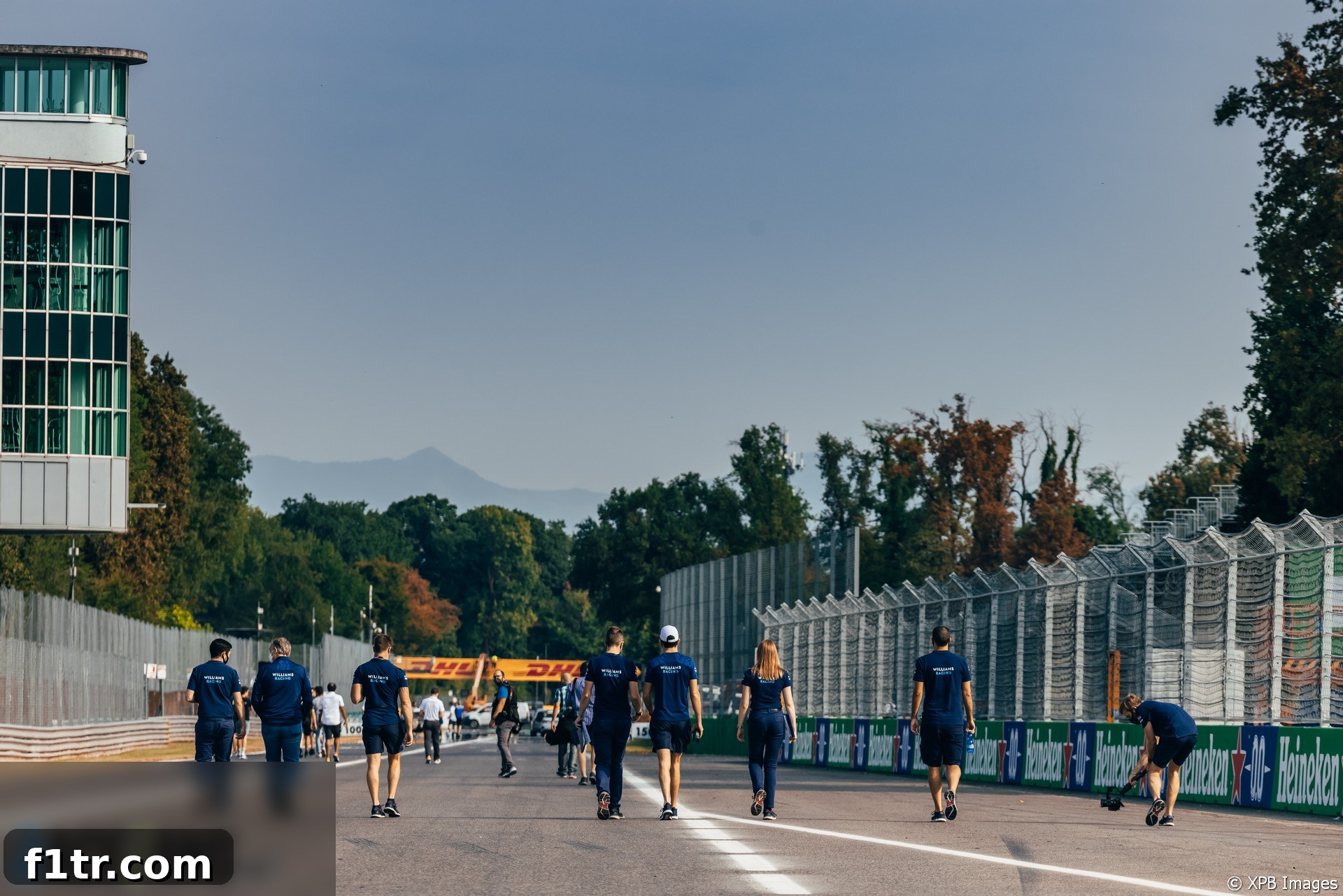
Formula 1 enthusiasts and teams alike are eagerly anticipating a refreshing change of pace as the paddock arrives at the iconic Autodromo Nazionale Monza for the Italian Grand Prix. This weekend promises to be the first all-dry track action since May’s Miami Grand Prix, bringing with it a unique set of challenges and opportunities that have been largely absent from the sport’s recent calendar.
Advert | Become a Supporter & go ad-free
The Temple of Speed: Autodromo Nazionale Monza Awaits
Known affectionately as the “Temple of Speed,” Monza stands as a historical cornerstone of Formula 1, renowned for its incredibly high-speed straights and demanding chicanes. It’s a circuit where raw power, aerodynamic efficiency, and courageous driving are paramount. The circuit’s unique characteristics necessitate a low-downforce setup, making every millimeter of aerodynamic drag reduction crucial for achieving competitive lap times. Teams strip away downforce-generating elements, often running ultra-thin rear wings, to maximize speed on straights that seem to stretch into infinity, such as the famous Curva Grande and the straight leading into Parabolica – now officially known as Curva Alboreto.
This legendary track, nestled within the Royal Park of Monza, has been a staple of the F1 calendar since the championship’s inception in 1950, holding a special place in the hearts of Tifosi, Ferrari’s passionate fanbase. Its blend of history, breathtaking speed, and the fervent atmosphere created by the Italian fans makes it one of the most anticipated races of the season.
A Welcome Return to Dry Racing After a Wet Streak
The journey to Monza follows an unusual stretch of races dominated by unpredictable weather. Each of the last eight rounds has seen at least one session impacted by wet track conditions, requiring drivers and teams to constantly adapt to changing grip levels and complex tire strategies. This consistent battle against the elements has added an extra layer of complexity to recent Grand Prix weekends, testing the mettle of even the most experienced competitors.
Furthermore, the scheduled first Italian event of the season, the Emilia-Romagna Grand Prix at Imola, was tragically cancelled due to severe flooding in the region. This stark reminder of nature’s power underscores just how significant an all-dry weekend at Monza will be, allowing for pure, unadulterated racing where car performance and driver skill can truly shine without the variable of a damp or soaked track surface.
Friday: Setting the Pace Under Sunny Skies
The opening day of practice at Monza promises to be not only dry but also quite warm, setting the tone for the final European round of the season. Drivers will hit the track for two crucial practice sessions, designed to fine-tune their low-downforce setups and understand the nuances of tire behavior under the specific conditions.
Free Practice 1 & 2: Temperatures and Tire Management
During the afternoon practice sessions on Friday, air temperatures are expected to reach around 24°C for Free Practice 1 and climb slightly to 26°C for Free Practice 2. These moderate-to-warm temperatures are ideal for Formula 1 cars, allowing Pirelli tires to reach their optimal operating windows efficiently. However, sustained warm conditions also mean teams must carefully monitor tire degradation, especially on a high-energy circuit like Monza where cars are constantly under heavy load through fast corners and braking zones.
For the supporting Formula 2 and Formula 3 championships, early morning sessions may see cooler temperatures, potentially as low as 15°C. This difference can impact the setup approach for the junior categories, but their track activity will also help to ‘rubber in’ the circuit, laying down fresh grip for the F1 cars later in the day.
Navigating the Winds of Monza: Aerodynamics and Slipstreaming
While rain is not expected, Friday will introduce a noticeable north-blowing wind, potentially reaching speeds of up to 15 kilometers per hour. This seemingly minor detail can have a significant impact on car performance and driver strategy.
- Pit Straight (Start/Finish): Drivers will experience a tailwind down the main pit straight. A tailwind provides a small boost in straight-line speed but can make braking into the first chicane (Variante del Rettifilo) more challenging, as the wind reduces the effective aerodynamic drag.
- Back Straight (Serraglio Straight): Conversely, drivers will face a headwind on the long back straight leading into the Ascari chicane. A headwind increases aerodynamic drag, slightly reducing top speed, but can aid stability under braking and through fast corners.
- Slipstream Effect: The wind direction will also influence the effectiveness of slipstreaming, a critical overtaking tool at Monza. The tailwind on the pit straight will make the slipstream effect weaker on the approach to Turn 1 (Rettifilo), as the leading car already benefits from reduced drag. However, the headwind on the back straight will make the slipstream stronger when approaching Curva Parabolica (Curva Alboreto), potentially creating prime overtaking opportunities. Teams will be analyzing these effects closely to strategize for qualifying and the race.
Saturday: The Crucial Battle for Pole Position
Saturday’s forecast mirrors Friday’s, with consistent temperatures and wind conditions expected to prevail. This stability will be welcomed by teams as they fine-tune their setups for the ultimate single-lap performance in qualifying.
Qualifying Heat: Optimal Performance at 27°C
The highly anticipated Formula 1 qualifying session is projected to take place in air temperatures reaching 27°C or higher. These conditions are ideal for drivers to extract maximum performance from their cars and tires. Tire warm-up will be crucial, and teams will aim to get their soft compound tires into their optimal operating window for that one flying lap. The warmer track temperatures generally lead to higher grip levels, allowing drivers to push closer to the absolute limits of the circuit.
The F3 sprint race, held earlier in the day, might encounter cooler conditions around 16°C, but by the time the rest of the day’s track action, including F2 and F1 qualifying, commences, temperatures will have risen significantly.
Strategic Tows and Aerodynamic Balance
The consistent wind direction will continue to play a role in qualifying. The ‘Monza tow’ – where drivers deliberately follow another car at a short distance to gain a slipstream advantage on the long straights – will be a hot topic. Teams often coordinate qualifying runs to give one or both drivers a tow, maximizing top speed. The specific wind conditions will influence how teams plan these tows, particularly on the pit straight and the back straight, to optimize entry speed into key braking zones and achieve the fastest possible lap time.
Sunday: Grand Prix Day – The Ultimate Test
Sunday is poised to be the hottest day of the weekend, setting the stage for a physically demanding and strategically intense Italian Grand Prix. Spectators can look forward to a thrilling conclusion to the European season under gloriously sunny skies.
Race Day Heatwave: 29°C and Tire Degradation
By the time the Grand Prix begins at 3:00 PM local time, air temperatures are expected to soar to 29°C. This significant heat will be a primary factor influencing race strategy. High track temperatures accelerate tire degradation, making tire management a critical skill for drivers. Teams will be carefully considering their compound choices – Hard, Medium, and Soft – and pit stop timings to navigate the challenge of potential blistering or excessive wear. Engine cooling will also be under scrutiny, as teams push their power units to the limit in the warm conditions. Drivers will face a demanding physical challenge, with cockpit temperatures potentially reaching uncomfortable levels over the course of the race.
Minimal Rain Threat, Shifting Winds
While there’s a slight chance of rain, it remains below 20%, suggesting a high probability of a completely dry race. However, the wind direction is expected to shift more towards a north-easterly flow. This change means drivers will likely experience a headwind between the second Lesmo corner and the Ascari chicane. A headwind in this sector can offer a specific advantage: while it may slightly scrub off top speed, it also provides increased aerodynamic stability under braking and through the fast esses of Ascari, potentially aiding drivers in setting up overtakes into this technical section of the track.
Advert | Become a RaceFans supporter andgo ad-free
Strategic Dimensions of a Dry Monza Race
A consistently dry and warm weekend at Monza profoundly impacts every aspect of a Formula 1 Grand Prix, from car setup to race strategy, demanding precision and adaptability from every team member.
Tire Compound Strategy: The Pirelli Challenge
With high temperatures and no rain in sight, Pirelli’s hardest compounds are likely to feature prominently in race strategies. Teams will analyze practice data meticulously to understand degradation rates for the Hard, Medium, and Soft tires. The abrasive nature of Monza, combined with high speeds and heavy braking, places significant stress on the tires. This could lead to a preference for a one-stop strategy using the harder compounds, or potentially a two-stop if degradation is higher than anticipated, especially for cars struggling with tire management. Balancing outright pace with tire longevity will be the key to success.
Optimizing Car Setup: The Low-Downforce Art
Monza is unique in its demand for an ultra-low-downforce aerodynamic package. Teams will prioritize straight-line speed above all else, often accepting a compromise on cornering grip. The dry conditions mean engineers can push the envelope further with these aggressive setups without the fear of sudden grip loss due to moisture. The challenge lies in finding the perfect balance between minimal drag for the long straights and sufficient stability through high-speed corners like the Lesmos and Parabolica. The data gathered during practice, especially regarding top speeds and stability in crosswinds, will be crucial for fine-tuning this delicate balance.
The Purity of Racing: Driver Skill Unleashed
After a string of wet races that often introduce an element of unpredictability and luck, a dry Monza Grand Prix allows driver skill to be the ultimate differentiator. With consistent grip levels, drivers can push their cars to the absolute limit, extracting every ounce of performance. Overtaking at Monza, often facilitated by slipstreams into the chicanes, requires immense bravery, precise braking, and calculated moves. The dry conditions amplify these aspects, promising a purer form of racing where the best drivers in the fastest cars truly battle it out on merit.
Stay Updated with Live Race Coverage
For the very latest updates on track conditions, minute-by-minute session reports, and all the breaking news from the Italian Grand Prix paddock, keep a close eye on RaceFans Live. Additionally, real-time insights and highlights will be shared on the official RaceFans Twitter account, ensuring you don’t miss a single moment of the action from the Temple of Speed.
Further Reading on the 2023 Italian Grand Prix
Delve deeper into the narratives and developments surrounding this thrilling race weekend with our collection of in-depth articles:
- Despite close battles at Monza, F1 drivers want more powerful DRS
- Monza “frustrating” for Alonso but Aston Martin expect better form in coming races
- F1 changed rules to stop Mercedes in 2021 but we won’t ‘cry foul’ now – Wolff
- McLaren will bring ‘follow-up to Austria upgrade’ before focusing on 2024 car
- Magnussen explains why his driving style rarely works with the Haas VF-23
Browse all 2023 Italian Grand Prix articles