Unlocking F1 Strategy: The Debate Over Free Tyre Choice and the Q3 Rule
The exhilarating world of Formula 1 is constantly seeking ways to enhance competition, diversify race strategies, and deliver a more unpredictable spectacle for fans worldwide. A central discussion point revolving around these objectives is the potential for teams to be granted total freedom in their tyre selections, a move that Pirelli suggests could be feasible if the existing Q3 tyre rule were to be abolished. This proposed shift represents a significant departure from current regulations, promising to reshape how teams approach qualifying and race day strategies.
Currently, Formula 1 teams operate under a system where the sport’s official tyre supplier, Pirelli, nominates three specific tyre compounds for each Grand Prix weekend. These compounds are typically designated as Hard, Medium, and Soft, though their actual performance characteristics vary significantly from track to track. From this nominated trio, teams must make their choices for qualifying and the race, a structure designed to ensure a baseline level of strategic variation while maintaining a degree of control over performance parameters and safety.
However, this system has frequently drawn criticism for potentially limiting strategic diversity. Among those advocating for a more open approach is Force India team principal Otmar Szafnauer, who has been a vocal proponent of liberalizing tyre nominations to foster greater creativity and divergence in race strategies. His arguments underscore a desire within the paddock for rules that empower teams to take bolder, more calculated risks, thereby enriching the racing product.
“We should have free tyre choice from any [compound],” Otmar Szafnauer stated emphatically at Suzuka, expressing his long-held belief. “I still think that’s a good idea, not this limited thing that we have now.” Szafnauer’s vision extends beyond merely selecting from Pirelli’s pre-chosen trio; he advocates for access to the full range of available compounds, allowing teams to mix and match as they see fit for their specific car, driver, and circuit characteristics. “If you want a variety of strategies, make a free tyre choice. Any two compounds you want as opposed to they give you a range of compounds you can pick from,” he elaborated, highlighting the core of his proposal.
The reasoning behind such a radical change is compelling. Szafnauer believes that by entrusting teams with full autonomy, the paddock would naturally arrive at a more diverse array of strategic decisions, rather than converging on optimal, often similar, approaches. “Why not leave it up to you? Then for sure you’ll get different [strategies],” he posited. This freedom would encourage teams to play to their strengths, whether that’s prioritizing a strong qualifying performance, even if it compromises race pace, or opting for a more conservative but durable strategy for the Grand Prix itself. “Some people will say ‘I really want to qualify high here I don’t care what happens in the race at least I have my Saturday night’. Especially if there’s a race where overtaking’s difficult,” he explained, illustrating the potential for varied risk appetites.
Szafnauer also suggested that the inherent performance disparities between teams, combined with expanded tyre options, would naturally lead to different strategic conclusions. “I doubt we will all come to the same conclusion because if you have disparity in performance and you have disparity in tyres other people might gamble in a different way,” he concluded. This perspective suggests that a more open tyre policy could level the playing field in strategic terms, allowing midfield teams to potentially outmaneuver stronger rivals through innovative tyre choices.
Pirelli motorsport director Mario Isola acknowledges the appeal of such an idea and confirms its technical feasibility, but with a crucial caveat. For total tyre freedom to genuinely work without unintended consequences, the requirement that drivers reaching Q3 must start the race on the tyres they used in Q2 would also have to be lifted. This “Q3 tyre rule” is a significant element of current F1 strategy, forcing teams to balance outright qualifying pace with race longevity, often leading to compromises.
Isola revealed that the concept of giving teams more freedom in their tyre choices is “not a new idea” and has been “discussed in the past.” The complexities arise when considering the potential impact on competitive balance. “Some teams came up with some simulation showing that if we give the freedom to the teams to choose any of the compounds it’s an additional advantage to the top teams,” Isola explained. This simulation suggests that top teams, with their superior resources, car performance, and often larger budgets for analysis and testing, might be better equipped to exploit a wider range of tyre options. They could optimize their choices more effectively, potentially extending their performance gap over the midfield and smaller teams.
The existing Q3 tyre rule, which mandates starting the race on Q2 tyres, creates a fascinating strategic dilemma. Midfield teams, in their relentless pursuit of a strong qualifying position, often have to push harder, making more aggressive tyre selections in Q2 to secure a spot in the final qualifying session. If they succeed, they are then bound to those potentially less durable or suboptimal race tyres. This forces a difficult trade-off: prioritize grid position or race strategy. With open tyre choice, but without altering the Q3 rule, this disadvantage for midfield teams could be exacerbated. “The midfield has to push more for qualifying with a more aggressive selection and then they have to start the race with those tyres selected for quali,” Isola elaborated, highlighting the core of the problem.
Therefore, Isola’s stance is clear: “I believe it is feasible, provided we also change some of the sporting regulations like not obliging to start on the tyres they qualified on in Q2 or something like that to make something that makes sense.” This emphasizes that any fundamental change to tyre selection must be part of a broader regulatory overhaul to ensure fairness and prevent unintended negative consequences, especially for teams operating with tighter budgets and fewer resources.
The implications of such a change would be profound. Imagine a scenario where a team, confident in its car’s ability to manage degradation, opts for the softest possible compound for qualifying, aiming for pole position, knowing they can then switch to a harder, more durable compound for the race start. Conversely, a team struggling for pace might choose a very hard compound for qualifying, sacrificing grid position for a longer first stint in the race, hoping to gain places through strategy. This level of strategic variance would undoubtedly add an exciting new layer of unpredictability to Grand Prix weekends, challenging engineers and drivers alike to think outside the box.
However, the shift also presents logistical challenges for Pirelli. While they are capable of manufacturing a wide range of compounds, the current system simplifies logistics by focusing on three nominated sets per race. Expanding this selection would require significant planning, transport, and management of a broader inventory. Nevertheless, Pirelli has consistently demonstrated its ability to adapt to F1’s evolving demands, and its commitment to improving the racing spectacle remains unwavering.
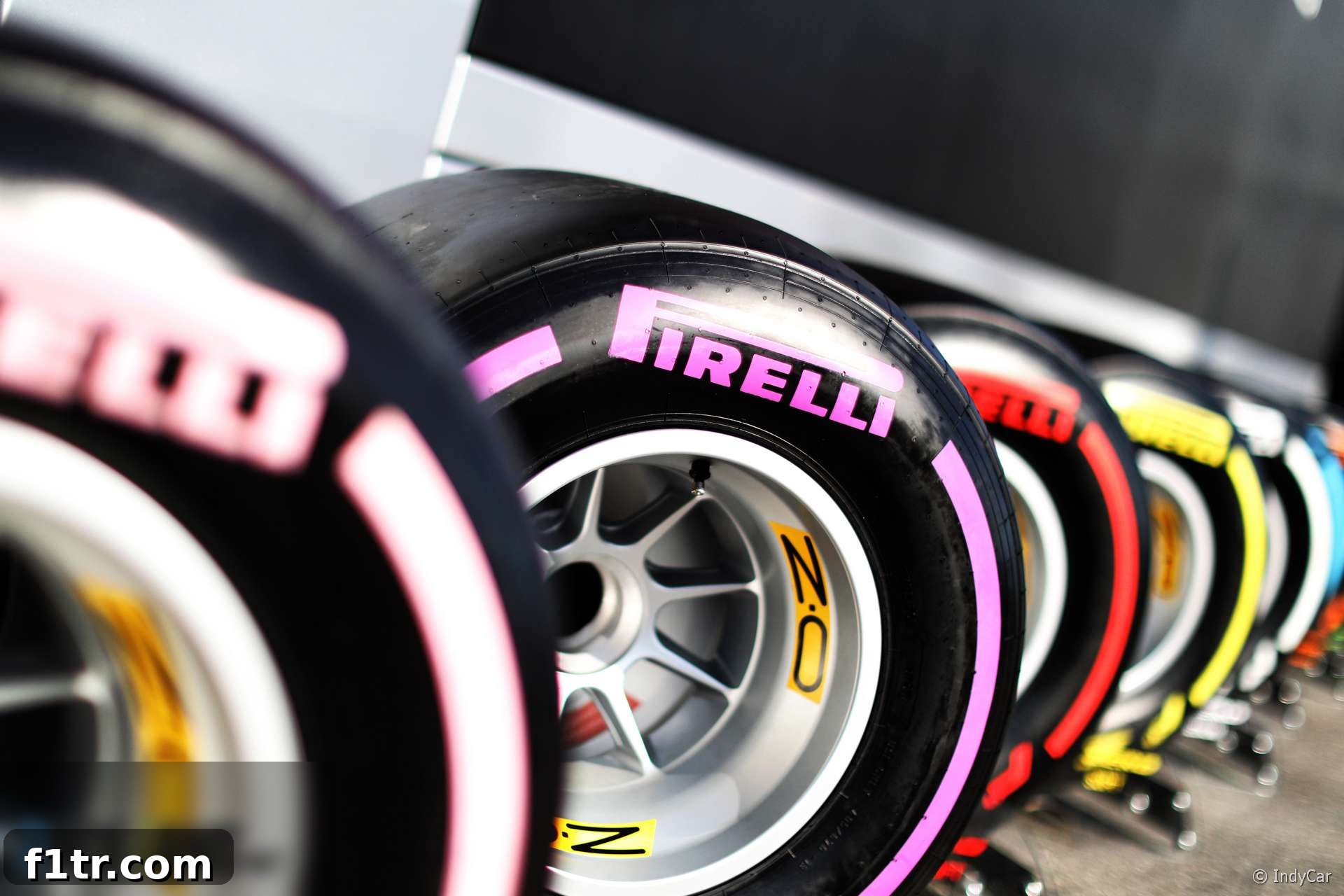
Looking ahead, Pirelli is already implementing changes to simplify understanding for fans and teams alike. Next year, the three nominated compounds will be referred to using a consistent nomenclature at each race: Hard, Medium, and Soft. This move aims to remove confusion previously caused by varying compound designations (e.g., ‘Supersoft’ at one race becoming ‘Soft’ at another track) and create a more intuitive system for following race strategies. “Hard, medium and soft is the terminology for next year,” Isola confirmed. The final details of this arrangement, including the specific visual identifiers, are still being refined. “We will make an official release, announcement with also the colours because we are still defining the colours. So when the colours are defined, we will release colours and name together,” he added.
In conclusion, the debate over free tyre choice in Formula 1 is a fascinating one, pitting the desire for strategic diversity and unpredictable racing against concerns about competitive balance and the logistical complexities of implementation. While Otmar Szafnauer and others champion the idea for its potential to revolutionize race strategy, Pirelli’s Mario Isola astutely points out the critical need to simultaneously address related sporting regulations, particularly the Q3 tyre rule. Should F1 decide to embark on this path, it would mark a significant evolution in its approach to racing, demanding even greater strategic acumen from teams and promising an even more thrilling experience for fans.
Related Articles from the 2018 F1 Season
- F1 feared “death knell” for Drive to Survive after Ferrari and Mercedes snub
- McLaren staff told us we were “totally crazy” to take Honda engines in 2018 – Tost
- ‘It doesn’t matter if we start last’: How Red Bull’s junior team aided Honda’s leap forward
- Honda’s jet division helped F1 engineers solve power unit problem
- McLaren Racing losses rise after Honda split
Browse all 2018 F1 season articles