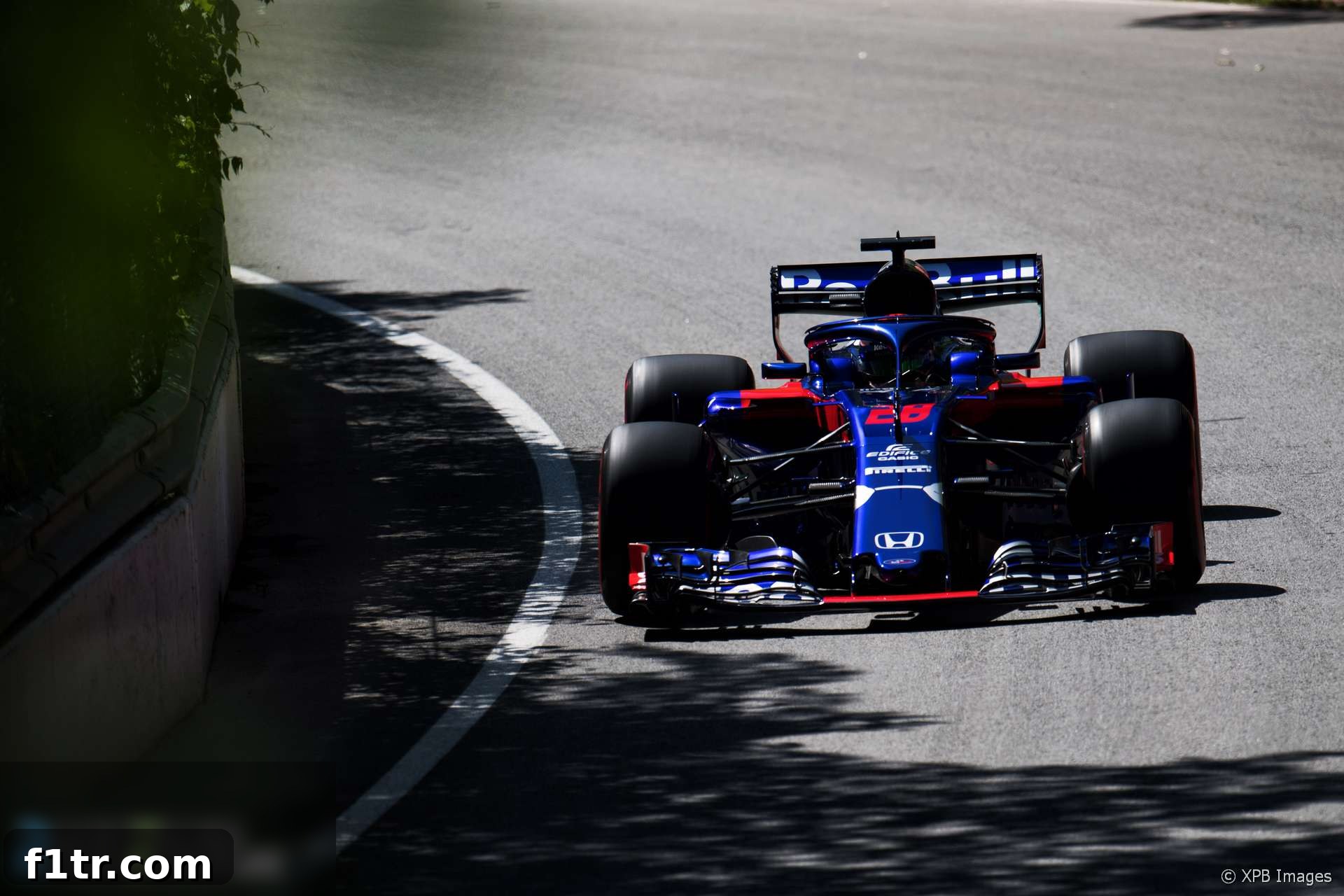
Honda’s Resurgence: Brendon Hartley Praises Significant Power Unit Progress at Canadian Grand Prix
The highly competitive world of Formula 1 constantly pushes the boundaries of engineering, with power unit development often dictating a team’s fortunes. In a crucial period for their F1 campaign, Honda received a significant boost following positive feedback from Toro Rosso driver Brendon Hartley during the Canadian Grand Prix weekend. Hartley articulated clear enthusiasm for the progress made with Honda’s updated power unit, which debuted on the challenging Circuit Gilles Villeneuve, marking a pivotal moment in their ongoing journey back to the pinnacle of motorsport performance.
Hartley’s comments came after the initial practice sessions at a track renowned for its demanding characteristics on engine performance. “I think [Friday] was really positive,” Hartley stated, underscoring the immediate impact of the new unit. He further elaborated on why the Canadian circuit was the perfect proving ground: “This is a big horsepower track, there’s very long straight lines, it’s about deployment as well. I think we have seen a good step.” This statement from a seasoned driver like Hartley carried considerable weight, signifying a tangible improvement that extended beyond mere theoretical gains.
Honda’s Challenging F1 Odyssey: From Struggles to Steady Progress
Honda’s return to Formula 1 as a power unit supplier in 2015 was met with high expectations, particularly given their storied history in the sport. However, their initial partnership with McLaren was plagued by persistent reliability issues and a significant performance deficit compared to their rivals. This period was characterized by frustration, engine penalties, and a seemingly insurmountable struggle to compete at the front.
The 2018 season marked a new chapter for Honda, as they transitioned to supplying power units exclusively to Scuderia Toro Rosso, Red Bull’s junior team. This partnership was viewed as a critical opportunity for Honda to regroup, learn, and demonstrate their capabilities in a less pressurized environment. Toro Rosso, in turn, benefited from a dedicated manufacturer partner, allowing for a closer, more integrated development process. Brendon Hartley, alongside his teammate Pierre Gasly, played a vital role in this new era, providing crucial feedback that would shape Honda’s power unit evolution, laying the groundwork for future success.
Circuit Gilles Villeneuve: The Ultimate Power Unit Test
The Circuit Gilles Villeneuve in Montreal is legendary for its unique blend of high-speed straights and tight chicanes, making it an ideal venue for evaluating power unit performance. Unlike high-downforce tracks such as Monaco, Canada demands maximum horsepower and efficient energy deployment. The long straights, including the infamous “Casino Straight” leading to the Wall of Champions, necessitate sustained periods of full throttle, pushing engines to their limits in terms of both raw power and reliability. Furthermore, the numerous heavy braking zones and subsequent acceleration phases highlight the importance of effective energy recovery and deployment systems.
Hartley’s observation that the track is “about deployment as well” directly addresses the sophisticated hybrid aspects of modern F1 power units. The ability to efficiently harvest energy during braking and deploy it strategically throughout the lap is just as crucial as the internal combustion engine’s raw output. Therefore, any “good step” seen at Montreal indicated improvements across the entire power unit package, including its intricate energy management systems, which was a very encouraging sign for Honda.
Brendon Hartley’s Expert Assessment: Beyond Raw Feeling
While Hartley’s initial reaction was positive, he also offered a nuanced perspective on the challenges of accurately assessing engine performance from the cockpit. He was the quicker of the two Toro Rosso drivers during Friday practice, finishing 1.6 seconds off the fastest time, indicating strong individual performance. However, he cautioned that a driver’s subjective “feel” can be misleading, especially when transitioning between vastly different circuit configurations.
“I would be lying if I told you I felt something drastically different from inside the car, because there is so much more to it, but it is a very positive step,” Hartley explained. This honesty reflects the complexity of modern F1 cars. He elaborated on the difficulty of comparison: “You go from Monaco, maximum downforce, [then] you come here with low downforce; you have already, I don’t know the number but I’m going to say 900 horsepower; when you’re talking about these numbers from inside the cockpit, the different in aero configuration feels [like] more so it’s very hard to comment.”
His point about the shift from a maximum downforce setup (like Monaco) to a low-downforce configuration (for Montreal’s straights) is critical. The car’s aerodynamic characteristics drastically alter the overall driving sensation. Even with a significant power boost, the change in aero balance can overshadow the engine’s contribution to the driver’s perception. For a driver, what truly matters in such a scenario is the engine’s “drive-ability” – how smoothly and predictably the power is delivered. On this front, Hartley was unequivocally positive: “But drive-ability was fantastic. It’s more you see it in the numbers and the lap time.”
Excellent drive-ability translates to confidence for the driver. It means the engine responds precisely to throttle inputs, offering consistent power delivery without sudden surges or lags. This allows a driver to better manage the car’s balance through corners and optimize traction, which ultimately manifests in improved lap times and consistency. For engineers, telemetry data provides the objective “numbers” that confirm subjective feelings, detailing power output, torque curves, and energy deployment efficiency.
The Collaborative Effort: Optimizing the Entire Package
Hartley’s feedback wasn’t solely focused on the power unit. He stressed the holistic nature of F1 performance, stating the team still needs to “get everything together and get the most out of, not only the engine, but the car, tyres, aerodynamics and mechanical.” This highlights a fundamental truth in Formula 1: no single component operates in isolation. The power unit, chassis, aerodynamics, suspension, and tires must all work in perfect harmony to extract maximum performance.
Toro Rosso’s role as Honda’s primary development partner in 2018 was crucial. This close collaboration meant that Honda’s engineers could work hand-in-hand with Toro Rosso’s chassis designers and strategists, ensuring the power unit was integrated seamlessly into the AT03 chassis. This level of communication and optimization was vital for converting raw engine power into tangible lap time improvements. Every adjustment, from engine mapping to suspension settings, contributes to the overall package’s efficiency and speed.
Reliability and Strategic Tuning: Learning from Past Challenges
Crucially, Hartley reported no technical problems with the new unit during its debut. “They were doing a lot of tuning in the background [but] no real issues,” he confirmed. This was a particularly encouraging sign for Honda, given their past struggles with reliability, which often led to grid penalties and early retirements. The absence of major reliability concerns meant Honda could focus their efforts on performance tuning rather than troubleshooting fundamental flaws.
The “tuning in the background” refers to the continuous calibration and refinement of the engine’s software maps. This process involves optimizing fuel delivery, ignition timing, turbocharger response, and energy recovery systems to extract maximum performance while maintaining reliability. It’s a delicate balance, and the fact that Honda could focus on such fine-tuning without facing critical hardware failures demonstrated a significant step forward in their engineering and quality control processes.
Implications for the Season and Honda’s Future in F1
The positive progress observed at the Canadian Grand Prix held significant implications for both Toro Rosso’s 2018 season and Honda’s long-term future in Formula 1. For Toro Rosso, a more competitive power unit meant improved chances of scoring points consistently, allowing them to battle further up the midfield. For Honda, it was a vital affirmation that their intensive development efforts were yielding tangible results.
This steady, albeit sometimes understated, progress with Toro Rosso ultimately played a pivotal role in convincing Red Bull Racing to switch to Honda power units from 2019. The reliability improvements, coupled with increasing performance, demonstrated Honda’s renewed commitment and capability. Hartley’s early positive feedback from Canada provided an important data point in this persuasive narrative, showcasing that Honda was indeed making the “good step” required to be competitive at the highest level of motorsport. It signaled a cautious optimism that would eventually blossom into championship-winning success in the years to come, proving that dedication to continuous improvement, even through difficult times, can lead to ultimate triumph.
2018 F1 season
- F1 feared “death knell” for Drive to Survive after Ferrari and Mercedes snub
- McLaren staff told us we were “totally crazy” to take Honda engines in 2018 – Tost
- ‘It doesn’t matter if we start last’: How Red Bull’s junior team aided Honda’s leap forward
- Honda’s jet division helped F1 engineers solve power unit problem
- McLaren Racing losses rise after Honda split
Browse all 2018 F1 season articles