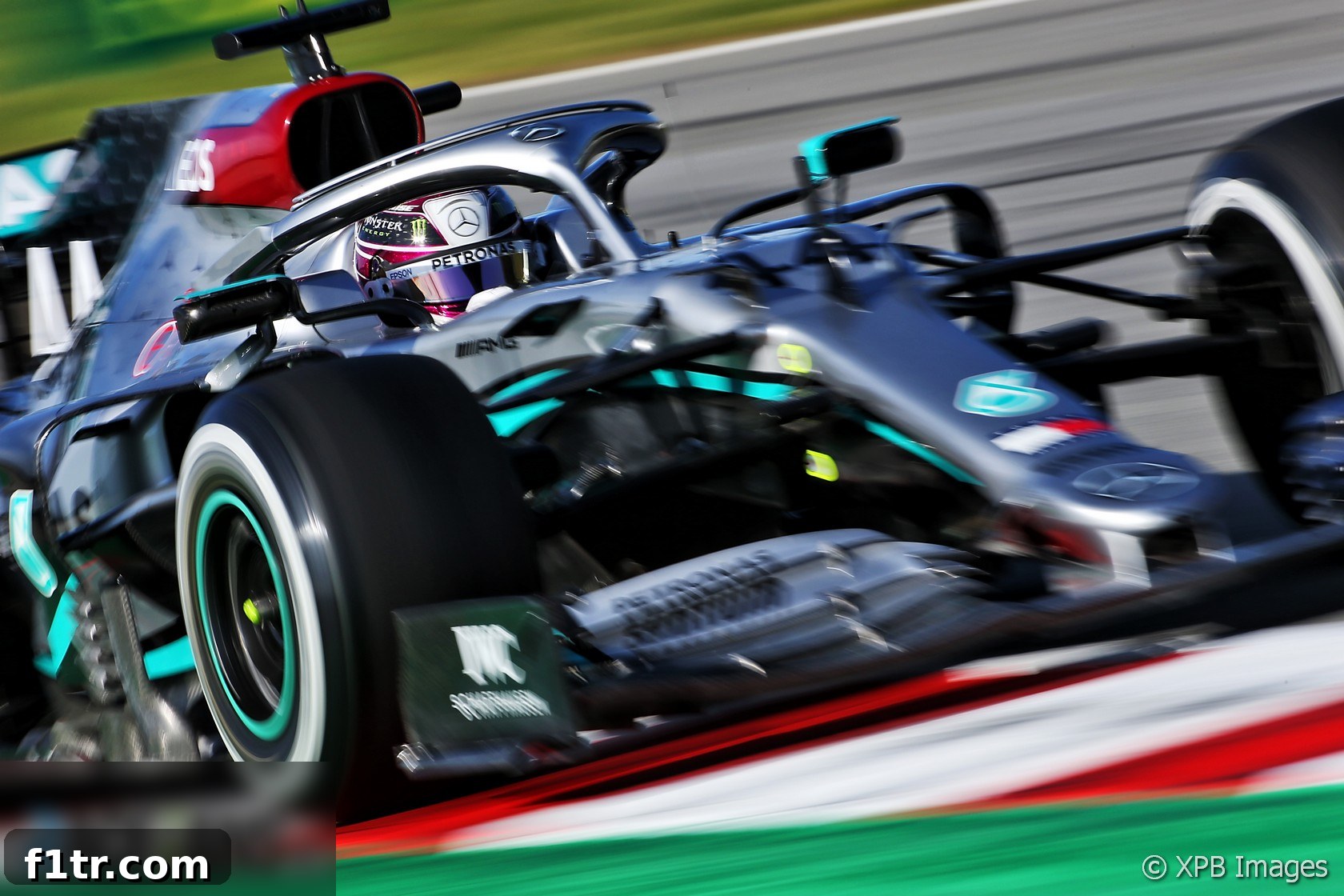
Lewis Hamilton Demands Better Pirelli F1 Tyres for 2021 Season Amidst Performance Concerns
Lewis Hamilton, the reigning Formula 1 champion, has voiced strong opinions regarding the urgent need for Pirelli to deliver superior tyres for the 2021 F1 season. His comments come after a unanimous decision by teams to reject the new tyre specifications initially designed for 2020, forcing the sport to continue with the less-than-ideal 2019 compounds for the upcoming year.
The decision to stick with the 2019-specification Pirelli tyres for the current season highlights a persistent challenge in Formula 1: finding the optimal balance between tyre durability, performance, and driver feedback. This situation, however, is unsustainable beyond 2020, as the sport is set to undergo a significant technical overhaul with the introduction of new 18-inch tyre formats in 2021. This transition represents both a fresh start and a considerable design hurdle for Pirelli.
The Unwanted 2020 Tyres: A Step Backward
Hamilton didn’t mince words about the prototypes intended for 2020. “They brought 2020 tyres which were worse,” he stated bluntly. This assessment underscores a critical failure in development, where the proposed upgrades were perceived as a downgrade by the very drivers who would be pushing them to their limits. The immediate consequence for the 2020 season is that Pirelli anticipates needing to set higher minimum tyre pressures when the 2019-specification rubber is used on the faster and more aerodynamically efficient 2020 cars. This increase in pressure is often a compromise, affecting grip and driver confidence.
“It’s easy for us to go into another season with the same tyres,” Hamilton acknowledged, addressing the short-term continuity. However, he quickly highlighted the problem with the increased pressures: “The fact that they pump them up more isn’t so great, because they were fine last year, but they’re definitely way too inflated.” Higher tyre pressures typically reduce the contact patch between the tyre and the track, leading to less mechanical grip, increased propensity for sliding, and a narrower operating window for peak performance. This makes it harder for drivers to extract maximum speed consistently and manage tyre wear over a race stint.
Hamilton’s message to the exclusive tyre supplier is clear: continuous improvement is non-negotiable. “We just need to make sure that we always want to be working with the best technology, the best technology partners, I think, moving forwards. We’re just going to keep on pushing them to try and do better. But these tyres will be OK for this year.” While he expressed resignation that the current tyres would suffice for the season, his underlying concern for the sport’s future performance and safety was palpable.
The Enduring Struggle with Thermal Degradation
The Mercedes driver stressed the gravity of the tyre situation, even suggesting that Formula 1 should be prepared to consider alternative suppliers if Pirelli cannot meet the required standards. This is a significant statement, given Pirelli is currently in the early stages of a four-year contract as F1’s sole tyre provider. “That’s a very, very important line that we need better tyres,” he emphasized.
A central point of contention for many years has been tyre degradation, specifically thermal degradation. This phenomenon occurs when tyres overheat, causing a significant drop in grip and performance, forcing drivers to manage their pace rather than push to the absolute limit. This often leads to less exciting racing and limits strategic options. Hamilton recounted a frustrating exchange: “We’ve been talking for years and years and years and years about tyre degradation, thermal degradation. Then we sat in the meeting room with Pirelli in Brazil and [they said] ‘we’ve never heard of the thermal deg, it’s the first time we hear about it’. So we’re trying to communicate with them better.” This apparent disconnect in understanding fundamental performance issues highlights the communication challenges between drivers and the tyre manufacturer.
Formula 1 dictates its annual tyre requirements to Pirelli through a comprehensive ‘target letter,’ outlining performance criteria, degradation rates, and other key specifications. Hamilton pointed fingers at the previous iteration of this document: “I don’t know who’s written it this year, but they obviously didn’t do a good job of the one for the 2020 tyres. So I hope for 2021 that we have a better target and one that they’re able to meet or a manufacturer is able to meet.” The target letter is a crucial document, shaping the direction of Pirelli’s tyre development, and its accuracy and ambition are paramount for the sport’s evolution.
Pirelli’s Commitment to a Better 2021
Responding to Hamilton’s forthright comments, Mario Isola, Pirelli’s head of Formula 1 and car racing, provided insight into their current process. He confirmed that Pirelli is actively involved in finalizing the ‘target letter’ for the 2021 season, acknowledging past difficulties in reaching a definitive agreement. “First of all, it’s important that we are now in the process of finalise the famous target letter, because last year we had many discussions but at the end of the day we didn’t finalise anything,” Isola explained. “At a certain point of the year, we said, OK, let’s focus on 2021. It is much better, we want to understand which are the targets for 2021.” This suggests a renewed focus and a more structured approach to defining the requirements for the upcoming regulatory changes.
Isola revealed that some of the fundamental requirements for the 2021 tyres have already been mutually agreed upon. “The main target, the priority is to reduce overheating. The second target that is very important is to have a wider working range, that is another common [point] from drivers.” A wider working range means the tyres will perform optimally over a broader temperature spectrum, making them less sensitive to track conditions, driving styles, and setup changes. This would provide drivers with more confidence and allow for more aggressive racing without fear of quickly dropping out of the optimal operating window.
Beyond these primary objectives, the target letter also includes quantitative metrics such as delta lap time (the difference in lap time between different compounds), the level of degradation over a stint, and overall wear life. However, Isola reiterated the core focus based on driver feedback: “But I believe that looking also at the comments from drivers, we need to be focused on overheating reduction and the wider working range. And the two are connected.” Indeed, reducing overheating naturally contributes to a wider working range, as tyres can operate effectively at higher temperatures without losing grip.
The Promise of 18-inch Tyres
A significant shift for the 2021 season will be the transition from the current 13-inch wheels to larger 18-inch rims, bringing Formula 1 more in line with road car technology. Pirelli has already commenced extensive testing of these prototype 18-inch tyres. Early trials have shown promise, with Charles Leclerc driving a modified Ferrari fitted with these new compounds at Jerez in Spain earlier in the month.
Isola shared encouraging feedback from the Ferrari star: “I spoke to Charles. Jerez is not a circuit where we go with Formula 1 very often, so it’s just a subjective feeling, but he told me that he felt much less overheating on the 18 inch tyres.” This initial positive indication is a hopeful sign for the future. Isola speculated on the reasons: “It could be because of the diameter, the cooling of the tyre itself or any other effect. But I believe that we are going in the right direction. Now we are at the start of the process so we want to continue in this direction.” The larger diameter and potentially different construction methods of the 18-inch tyres could fundamentally alter their thermal characteristics, offering a chance to finally mitigate the long-standing overheating issues.
Navigating the 2020 Season’s Tyre Challenges
Despite the optimism for 2021, Isola realistically anticipates that drivers will continue to face challenges with the 2019-specification tyres during the 2020 season. “I know the drivers will struggle with overheating this year with the tyres from last year,” he admitted. The problem is exacerbated by the continuous evolution of Formula 1 car performance, with each year’s chassis generally producing more downforce and speed than its predecessor.
“We don’t have any other solution than increasing the pressure because these cars are much quicker. Much quicker means that you put more energy on the tyres and we need the pressure inside the tyre. There is no other solution,” Isola stated unequivocally. This reinforces the difficult position Pirelli finds itself in for 2020: using a tyre designed for a less demanding car on a faster, more aggressive machine, with the only viable safety measure being increased pressures that compromise performance and driver feel.
The dialogue between drivers like Lewis Hamilton and Pirelli is crucial for the continuous improvement of Formula 1. Tyres are arguably the most critical component in connecting the immense power of an F1 car to the track. Their performance directly impacts the spectacle of racing, strategic options, and ultimately, driver satisfaction. As F1 looks towards its radical 2021 regulations, delivering on the promise of better, more raceable tyres will be paramount for Pirelli and the sport as a whole.
2020 F1 season
- Grosjean to make F1 test return tomorrow for first time since Bahrain horror crash
- Pictures: Wrecked chassis from Grosjean’s Bahrain fireball crash to go on display
- Bottas vs Rosberg: Hamilton’s Mercedes team mates compared after 78 races each
- F1 revenues fell by $877 million in Covid-struck 2020 season
- Hamilton and Mercedes finally announce new deal for 2021 season
Browse all 2020 F1 season articles