The Unstoppable Rise of Formula 1 in the United States: A New Era of Motorsport Popularity
Formula 1, the pinnacle of global motorsport, is experiencing an unprecedented surge in popularity across the United States. Three years after its acquisition by American media giant Liberty Media, the sport has strategically refocused its efforts on a market that has historically been challenging to penetrate. This renewed commitment has begun to yield remarkable results, transforming F1’s perception and fan base from a niche European pastime into a rapidly growing American sporting phenomenon.
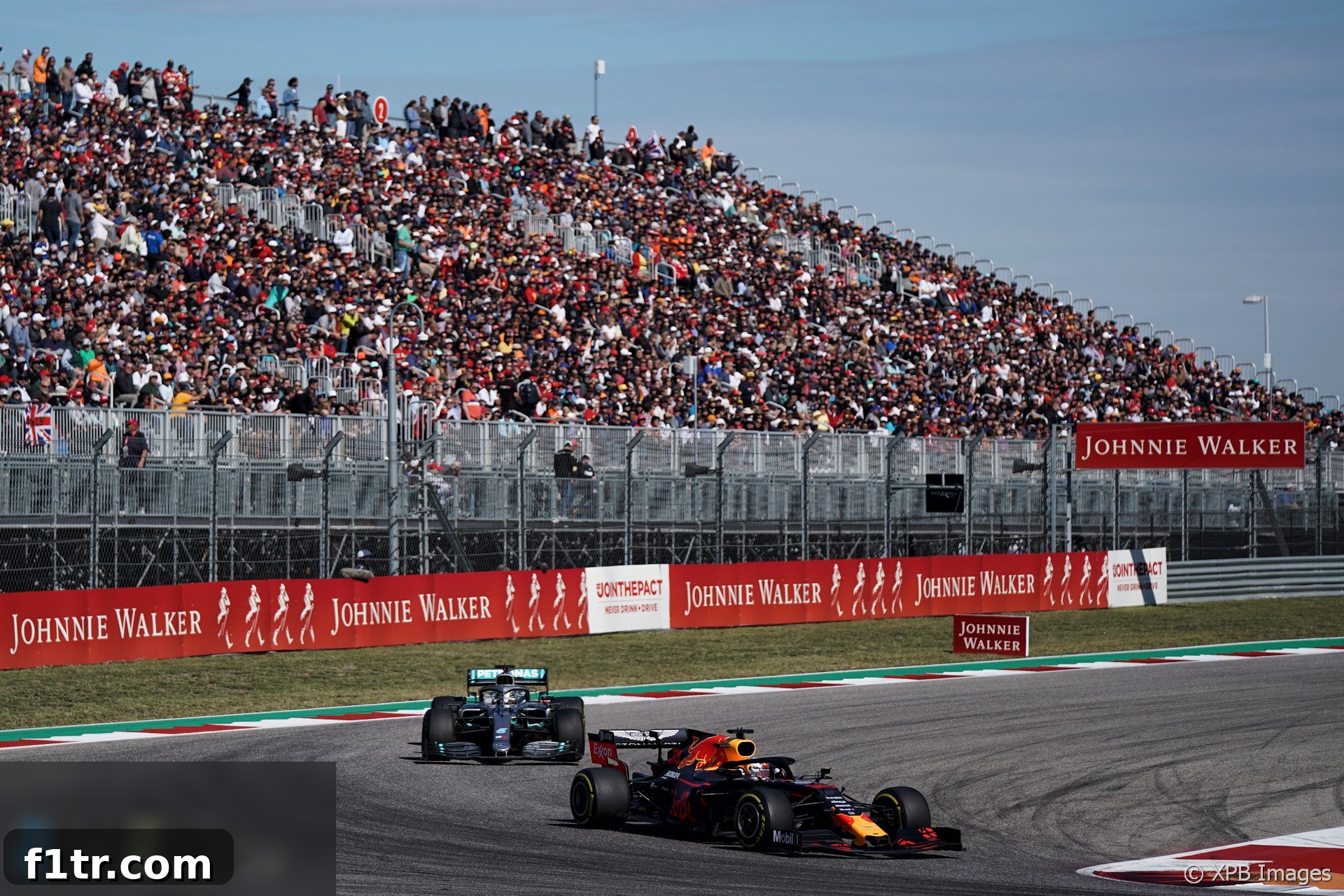
The recent United States Grand Prix at the Circuit of the Americas (COTA) serves as a powerful testament to this progress. The event drew a sold-out crowd of an astounding 120,000 fans on race day, creating an electric atmosphere as Lewis Hamilton clinched his sixth world championship title. Such attendance figures not only underscore the increasing interest but also highlight the success of Liberty Media’s multi-pronged approach to captivate the American audience.
A Strategic Revitalization: Liberty Media’s Vision for American Growth
For decades, Formula 1 struggled to firmly establish itself within the competitive American sports landscape. While races were held at various iconic venues like Watkins Glen, Long Beach, Phoenix, and Indianapolis, sustained interest often proved elusive. However, since taking the helm in 2017, Liberty Media has implemented a comprehensive strategy designed to demystify F1, enhance its accessibility, and foster deeper engagement with American fans. This strategy focuses heavily on digital presence, fan-centric events, and strategic media partnerships, moving away from the more traditional, exclusive approach that previously characterized the sport.
Central to this revitalization has been a concerted effort to connect with a younger, more diverse audience. This shift has not only broadened F1’s appeal but also injected new energy into its brand in the US. The results are visible not just in grandstand attendance but also in the broader cultural conversation surrounding the sport, indicating a fundamental shift in its American trajectory.
“Drive to Survive”: The Game-Changing Netflix Phenomenon
Perhaps the most significant catalyst for Formula 1’s recent explosion in American popularity is the Netflix docuseries “Formula 1: Drive to Survive.” Launched in 2019, the series offered an unprecedented, behind-the-scenes look at the teams, drivers, and high-stakes drama that define the sport. Circuit of the Americas chairman Bobby Epstein openly attributes much of the growing interest in the US Grand Prix to the show, noting its success in drawing in new demographics.
Unlike traditional sports coverage, “Drive to Survive” humanized the often-impersonal world of F1, showcasing the personalities, rivalries, triumphs, and heartbreaks of the drivers and team principals. This narrative-driven approach resonated deeply with American viewers, many of whom were previously unfamiliar with Formula 1. It transformed abstract race results into compelling human stories, converting casual observers into passionate fans and introducing the sport to millions who might never have otherwise tuned in. The success of its initial season quickly led to a second, further cementing its role as a key driver of F1’s US expansion.
Soaring Viewership: ESPN and the Television Landscape
The increase in Formula 1’s American television viewership figures provides concrete evidence of its burgeoning appeal. Since the championship’s broadcast rights transitioned from NBC to ESPN at the start of 2018, viewership has seen a consistent and impressive upward trend. Between 2017 and 2018, viewership rose by a remarkable 20%. This growth trend has continued unabated, with nearly every race in the subsequent year-to-date schedule recording higher viewership figures than the previous year, with only a few exceptions.
Recognizing this promising trajectory and the expanding audience, ESPN has proactively extended its broadcast contract with Liberty Media through the end of the 2022 season. This extended partnership ensures continued wide accessibility for American fans and signifies ESPN’s confidence in F1’s sustained growth. The United States Grand Prix itself, broadcast on ABC, a major national network, drew 861,000 viewers, marking a significant 9% increase compared to the previous year’s race. These robust viewership numbers are critical indicators of F1’s increasing mainstream acceptance and its ability to compete for attention within the highly saturated American sports market.
Deepening Fan Engagement and Brand Recognition
Beyond television screens, Formula 1 has actively pursued direct fan engagement. The days of F1 being a distant, largely inaccessible sport in the US are fading. Veteran driver Robert Kubica, who remembers F1’s previous American race at Indianapolis ending in 2007, observes a profound difference in fan interaction today. “I don’t remember such a big interest or knowledge of the people,” he remarked. “Many people stopped me, they recognised me, they want a picture, which I was surprised about. Normally I would say F1 is not as popular but this is good. It’s a big country with a bit different culture of motorsport but still it is a big country and there are a lot of motorsport fans.”
This sentiment is echoed by efforts such as The F1 Fan Fest in Los Angeles, an immersive event held prior to last weekend’s Grand Prix. These festivals provide an opportunity for fans to get up close with the sport, featuring driver appearances, interactive exhibits, and merchandise. Max Verstappen, a key figure in the sport, participated in the LA event and enthusiastically backed Liberty Media’s strategic goals. “I think it’s good for the sport, the owners as well, they want more races I think in the US. What we’re doing, at the moment, is trying to make the sport more popular and more well-known in the US,” he stated, highlighting the proactive efforts to boost F1’s visibility and appeal.

Verstappen further emphasized the broad appeal of F1 events in the US, regardless of location. “I enjoy being here. It doesn’t matter if it’s in Austin or LA or Miami or wherever in America, I think it’s just a very cool place to be. I think one or two more races, they wouldn’t hurt, as long as they are exciting of course and a lot of fans are attending.” This sentiment perfectly encapsulates Liberty Media’s ambition: to not just have a presence, but to deeply embed Formula 1 into the fabric of American sports culture through multiple high-profile events.
The Crucial Quest for a Second US Grand Prix
A top priority for Liberty Media remains the addition of a second annual Formula 1 Grand Prix in the United States. This expansion is seen as vital for maximizing market penetration, catering to the burgeoning fan base, and establishing F1 as a prominent fixture on the American sporting calendar.
Miami Grand Prix: Ambition Meets Local Resistance
Efforts to introduce a Miami Grand Prix have been ongoing, with an agreement in principle for a race on the 2021 F1 calendar having been announced. However, this ambitious project has encountered significant local opposition. Residents and community groups have raised concerns regarding noise pollution, traffic congestion, environmental impact, and disruption to local neighborhoods. These challenges highlight the complexities of staging a major international event in a densely populated urban area, requiring extensive negotiation and community buy-in to overcome.
Las Vegas: A Glimpse into the Past, Eyes on the Future
Another location that has been considered for a return is Las Vegas, which briefly hosted F1 races in the early 1980s. The allure of a glamorous street race in the entertainment capital of the world is undeniable, offering immense marketing potential. However, similar to Miami, efforts to secure a new deal for Las Vegas have so far proven unsuccessful, indicating the intricate logistical and financial hurdles involved in bringing F1 to such an iconic yet complex urban environment.
Indianapolis Motor Speedway: A Historic Opportunity
The landscape for a second US race received an unexpected and significant boost with the news that Roger Penske, a legendary figure in American motorsport, purchased the iconic Indianapolis Motor Speedway (IMS). Formula 1 previously raced on the road course at the famed oval between 2000 and 2007, though its tenure concluded amidst controversy. Following his acquisition, Penske indicated he would actively explore the possibility of reviving an F1 race at the venue. This development is particularly compelling because, besides the Circuit of the Americas, IMS is the only other track in the country that meets the FIA’s stringent Grade 1 standard for hosting Formula 1 events. A return to Indianapolis could represent a rapid and strategically sound win for the championship, adding its long-awaited second US round with minimal infrastructure changes required.
Formula 1’s Vision for North American Growth
Formula 1 Chairman and CEO Chase Carey reiterated the strategic importance of expanding in the US. “We’ve talked about adding a race here in the US, certainly that is something we’ve talked about for a while and we are actively engaged in a couple of opportunities here,” he stated. Carey emphasized the immense potential unearthed through digital analytics, suggesting that the existing fan base in the US is far larger than previously perceived. “We think the US is an exciting growth opportunity and as we’ve done more in areas like the digital world, we can see there’s a lot more interest and a lot more fans here in the US than people would expect on the surface.” This insight reinforces Liberty Media’s data-driven approach, confirming that their investment and efforts are tapping into a genuine, underserved appetite for Formula 1.
Looking Ahead: Sustaining Momentum in the American Market
The journey of Formula 1 in the United States under Liberty Media has been one of strategic repositioning, innovative fan engagement, and remarkable growth. From the transformative impact of “Drive to Survive” to surging television viewership and packed grandstands, the sport is finally finding its stride in America. While the quest for a second US Grand Prix continues to navigate complex challenges, the renewed interest from iconic venues like Indianapolis Motor Speedway, coupled with Liberty Media’s unwavering commitment, paints an optimistic picture for F1’s sustained success. The future of Formula 1 in the US is not just about holding races; it’s about building a lasting legacy and firmly embedding the thrill of Grand Prix racing into the heart of American motorsport culture.
Related Formula 1 Insights: 2019 Season Highlights
- Crying in the Melbourne car park at 2019 grand prix was my career low – Ocon
- McLaren Racing reports reduced £71 million loss in 2019
- Kvyat: Hockenheim podium last year was “my biggest achievement” so far
- How the FIA’s new encrypted fuel flow meter targets Ferrari’s suspected ‘aliasing’ trick
- “He smashed my office door”: 23 must-see moments from ‘Drive to Survive’ season two
Browse all 2019 F1 season articles